


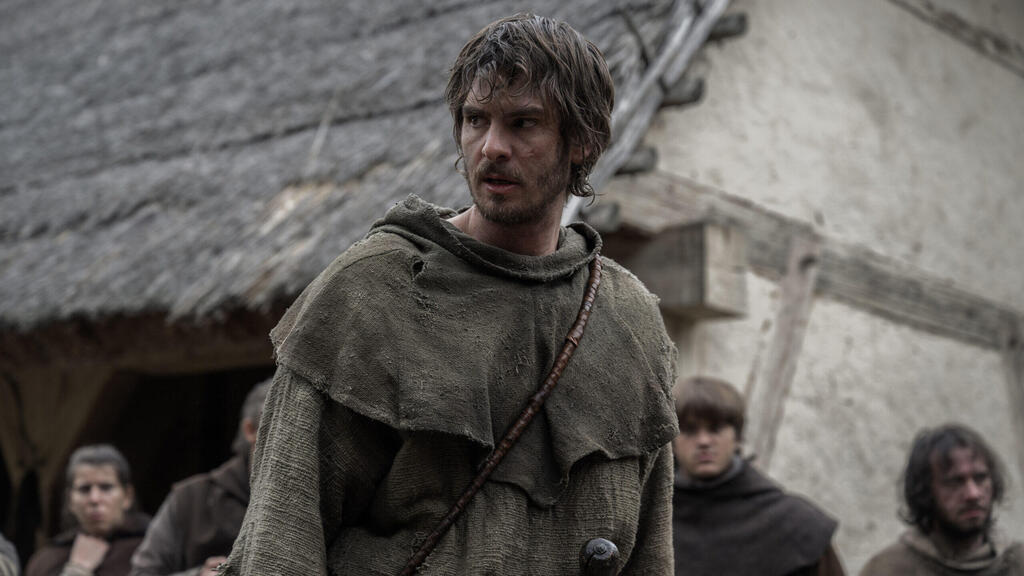
Something strange happened to Paul Greengrass’ new film, “The Uprising,” on its way to theaters. Early reports emphasized that the movie would be a realistic, semi-documentary-style reconstruction — very much in keeping with Greengrass’ usual approach — of the English Peasants’ Revolt of 1381, with Andrew Garfield playing a fictional peasant and one of the rebellion’s leaders, known only as “Ploughman.”
But about three weeks ago, the film’s U.S. distributors decided to add a baffling subtitle to its name: “The Rise of Robin Hood.” The internet erupted. Had Greengrass really made yet another Robin Hood movie? And if so, how exactly did that square with the fact that the folk legends about the mythical outlaw are set roughly 200 years before the events depicted in the film?
This is hardly the first time an original movie title has been altered to accommodate what distributors perceive as the ignorance of the average American viewer. Alan Bennett’s famous play “The Madness of George III,” for example, became “The Madness of King George” in Nicholas Hytner’s 1994 film adaptation because distributors feared American audiences might assume it was the third movie in a series.
In the case of “The Uprising,” however, the Robin Hood connection is not only historically implausible. The film’s British distributor also issued a statement saying promotional materials using Robin Hood’s image or name had neither been produced nor approved by it. So much for what Britain’s Guardian called a “marketing meltdown.” “The Uprising” seemed doomed before it ever reached the screen.
What is surprising about Greengrass’ new film is the way it applies his documentary-surveillance style to a historical story set in the 14th century.
Greengrass’ excellent early films focused on painstaking reconstructions of intense situations: the struggle between passengers and hijackers aboard one of the planes seized on Sept. 11, which ended with the aircraft crashing into a field in Pennsylvania in “United 93,” or the takeover of a container ship by Somali pirates in “Captain Phillips.”
Greengrass is not a pioneer in this regard. As early as 1964, British filmmaker Peter Watkins directed “Culloden,” presenting the famous 1746 battle, in which the British army defeated the Jacobite rebels, in the style of televised wartime news coverage.
Greengrass’ film does not include fictional interviews, as Watkins’ did, but it certainly portrays the violence with a camera that feels physically present inside the events themselves. The excellent cinematography is by Norwegian cinematographer Pål Ulvik Rokseth, who previously worked with Greengrass on “22 July,” his reconstruction of the 2011 massacre at a youth camp in Norway. Viewers sensitive to bloody imagery should take note.
Gallery
What does Robin Hood have to do with it? From 'The Uprising'
(Photo: Courtesy of Lev Cinemas)
At the center of the film is Ploughman, played by Garfield, who lost his family in the Black Death and barely manages to survive off his land. The crushing tax burden imposed in the aftermath of the Hundred Years’ War and intensified under the teenage King Richard II eventually triggers an uprising in one village that spreads through the surrounding counties.
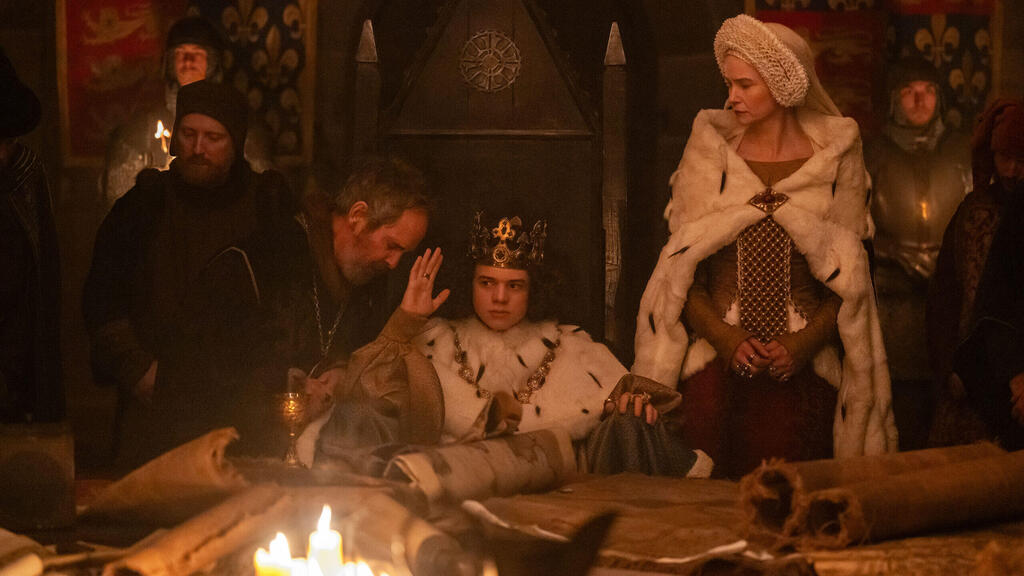
The rebels decide to march on London and confront the young, seemingly inexperienced king, who is being manipulated by his scheming advisers, including the mayor, played by Jonny Lee Miller. Once they reach the capital, the revolt turns violent as the peasants slaughter Flemish merchants in an especially graphic massacre scene.
When they finally meet the king, he agrees to their demands. But what first appears to be a victory for the peasants quickly takes a horrifying turn — at least for viewers who did not bother reading the Wikipedia entry on the revolt beforehand.
This focus on the violent collision between government power and popular protest brings us back to one of Greengrass’ earlier films, “Bloody Sunday” from 2002, which meticulously depicted, from multiple perspectives, the January 1972 march against the British government’s policy of internment without trial. The protest ended in bloodshed in the Northern Irish city of Derry after British soldiers opened fire on demonstrators.
“The Uprising,” by contrast, follows a more conventional narrative, primarily because it focuses on a single character, Ploughman, rather than shifting among different figures and perspectives on the same event — an approach that also gave “United 93” much of its dramatic power.
In that sense, Ploughman’s heroic character, whose tragic and human dimensions remain relatively understated, resembles a kind of medieval Jason Bourne. Greengrass, after all, directed three installments in the Bourne series starring Matt Damon.
Can you spoil historical events? From 'The Uprising'
(Photo: Courtesy of Lev Cinemas)
Ploughman may be fictional, but other characters in the film, as is often the case with Greengrass, are rooted in historical reality. These include Wat Tyler, played by Cosmo Jarvis, and the radical priest John Ball, played by Jamie Bell, both of whom were indeed among the leaders of the revolt.
Through Ploughman, Greengrass tries to adopt a bottom-up view of history through the eyes of an ordinary man. But casting Andrew Garfield makes that anonymity harder to sustain. Garfield carries with him a familiar screen persona as an idealistic hero of strong moral stature, from Spider-Man to Desmond Doss in “Hacksaw Ridge,” making it difficult from the outset to see Ploughman as simply another anonymous peasant.
Still, Garfield’s performance — like those of the rest of the cast — gives the film an immediate and compelling emotional presence.
It is difficult not to recognize contemporary echoes in the film, particularly when thinking about crowds around the world taking to the streets against authoritarian rule. Its realist style might have benefited from borrowing something of the smartphone aesthetic that has accompanied, and continues to accompany, such protests.
The overhead drone shots of crowds taking over the streets of London, for example, feel somewhat alien to Greengrass’ style. Yet the film’s strength also lies in its refusal to revel in the peasants’ moral righteousness.
Quite the opposite: it emphasizes their brutality and their excitement at bloodshed and the beheading of senior officials. A protest born of legitimate injustice, Greengrass suggests, is not immune to becoming cruel and indiscriminate violence.
“The Uprising” reaches its peak in the final act, when Greengrass creates a tense situation for anyone unfamiliar with how the historical events unfolded. Whether a historical event requires a spoiler warning is, of course, an interesting question in itself.
At this point, a character who until then had been relatively marginal also moves to the foreground: a young scribe, played by Sky Yang, who tragically finds himself taking on a far more significant role than the story initially seemed to have in store for him.
Praise is also due to young Woody Norman as King Richard II, who emerges as a shrewd, almost contemporary young man who is not under his mother’s thumb — a family dynamic that sounds disturbingly familiar.