

The runaway success of Christopher Nolan’s new film, “The Odyssey,” is not confined to movie theaters. It is also being felt in bookstores.
Magnes Press, which publishes the Hebrew translation of Homer’s Greek epic, has reported a sharp rise in demand for the book since the film’s release, a trend also evident at bookstores across Israel.
According to figures provided by the publisher to ynet, five times as many copies of “The Odyssey” were sold through the Magnes website in July as in the previous month.
Bookstore chains have also reported increased demand.
“Our distributor has already placed several orders this week for dozens of copies to meet demand,” the publisher said. “We have received repeated orders throughout the week.”
“Abraham Arouetty’s prose translation of this masterpiece faithfully reflects the epic poetry while paying close attention to sound and musicality,” the publisher said. “It is considered highly accurate, fluid and accessible to contemporary Hebrew readers. Naturally, the interest in and sales of the book have also led to increased sales of ‘The Iliad,’ Homer’s other epic.”
“The Odyssey,” believed to have been written in the eighth century B.C. and attributed to the Greek poet Homer, is considered one of the foundational works of Western literature.
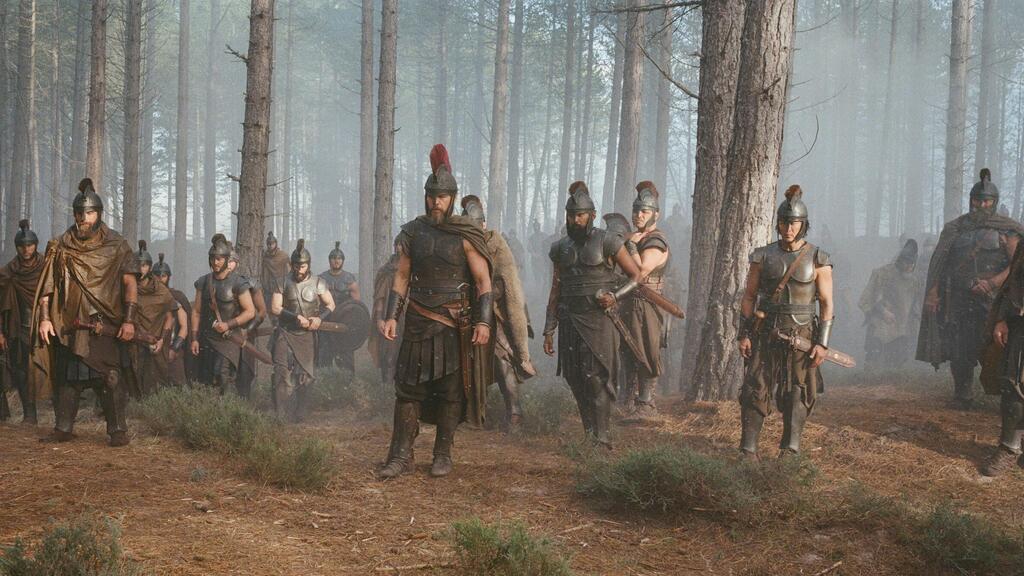
The epic follows Odysseus, king of Ithaca, on his journey home from the Trojan War. The voyage lasts 10 years and brings him into conflict with monsters, gods, temptations and other dangers as his wife, Penelope, and son, Telemachus, await his return.
Nolan’s new film, starring Matt Damon, Tom Holland, Zendaya, Anne Hathaway, Charlize Theron, Robert Pattinson, Lupita Nyong’o and Jon Bernthal, has become a commercial and critical success. Some are already predicting it could bring the director another Academy Award.
The film’s enormous success is being felt not only at the box office but also in bookstores worldwide.
According to a BBC report last week, British sales of the book rose about 70% compared with last year. In France, daily listening hours for “The Odyssey” on Spotify surged by more than 752% in mid-July compared with the previous month. In the United States, book sales have risen 76% since the beginning of the year, according to Circana BookScan.
The film adaptation has also fueled interest in studying Greek. According to Google Trends, searches for the phrase “learn Greek” jumped 5,000% within two weeks.
Variety also reported a sharp increase in audiobook listening.
Spotify said listening to “The Odyssey” rose by more than 500% on July 17, the day the film was released. Across 91 audiobook editions in 10 languages, listeners logged a combined total equivalent to more than 43 years of continuous listening.
The company said the work was particularly popular among younger audiences, with 81% of listeners belonging to Generation Z or the millennial generation.
Spotify also said about two-thirds of listeners to “The Odyssey” were men, giving it the highest proportion of male listeners of any book on the platform.
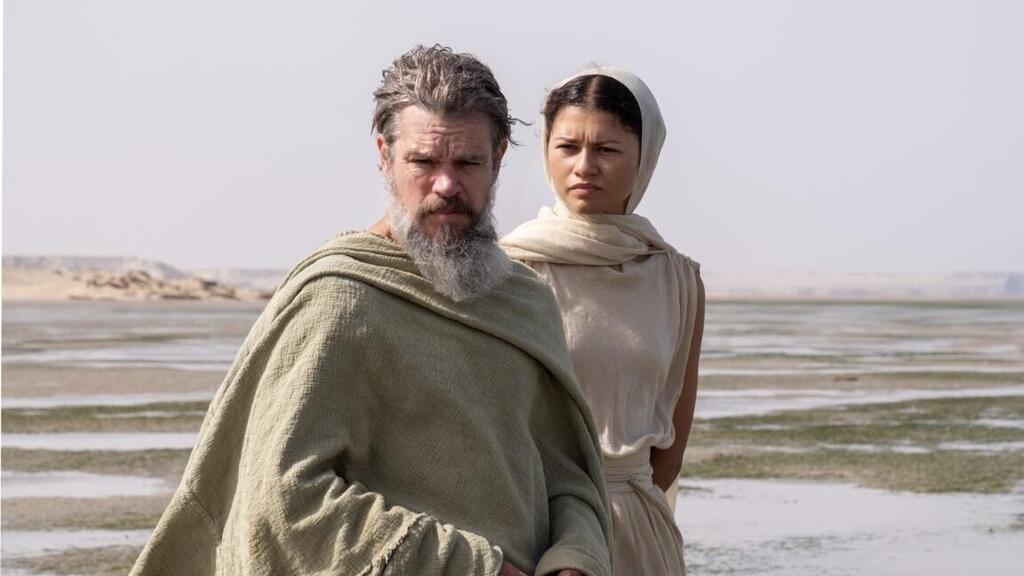
From 'The Odyssey'
(Photo: Courtesy of Tulip Entertainment)
Despite the enthusiasm, the adaptation has also drawn criticism.
Emily Wilson, a British American classics scholar who in 2017 became the first woman to publish an English verse translation of “The Odyssey,” wrote in the London Review of Books that the film suffered from “a usual combination of grandiosity and superficiality.”
“I had hoped that Nolan’s affinity with these Homeric themes might push him to new creative heights, and enable him to conjure more believable characters,” she wrote. “But ‘The Odyssey’ features his usual combination of grandiosity and superficiality. The film’s vision is too confused, its characters too underdeveloped, to deliver what it half-promises in terms of big ideas – although it is very good at conveying big bangs and big giants.”
Wilson added: “Nolan’s ‘The Odyssey’ lacks many of the elements that make the poem great. It has nothing convincing to say about time, memory, history, war, or about the relationship between one warrior’s glorious return and the lives of his family, adversaries, comrades, friends and neighbors.
“It lacks psychological, emotional, political and ethical depth. Its narrative structure is gimmicky. The writing is abysmal. None of the characters has convincing motivation for their actions or words. There are no sex scenes, and all the food looks horrible.”
Wilson nevertheless acknowledged that the film’s return of ancient Greek literature to the center of cultural discussion was significant, as was its contribution to the movie industry.
“It is still an event to celebrate,” she said. “This epic is bringing audiences back to cinemas. In what we are told is a time of declining literacy and the ‘death of the humanities,’ translations of ‘The Odyssey’, including mine, are flying off the shelves. Perhaps the film will persuade a few college administrators not to cut their literature, language and history departments. Nolan, who studied English at University College London – where students still study ‘The Odyssey’ as a first-year ‘foundational text’ – is doing his best to get the general public reading again, and I am grateful.”