

he central lawn of Kibbutz Nir Oz has served mainly as a place of mourning since October 7. On Monday night, it looked entirely different. Music filled the air. Blankets covered the grass. People walked barefoot, drank beer and gathered in their thousands for something resembling a small Woodstock in the heart of the devastated community.
At the center of it stood Sagui Dekel-Chen, a former hostage abducted from Nir Oz, presenting his debut album, Minus One. All nine songs on the album were written and composed in his head during the 498 days he spent in Hamas captivity. On Monday, nearly a year and a half after his release, he finally brought them before an audience.
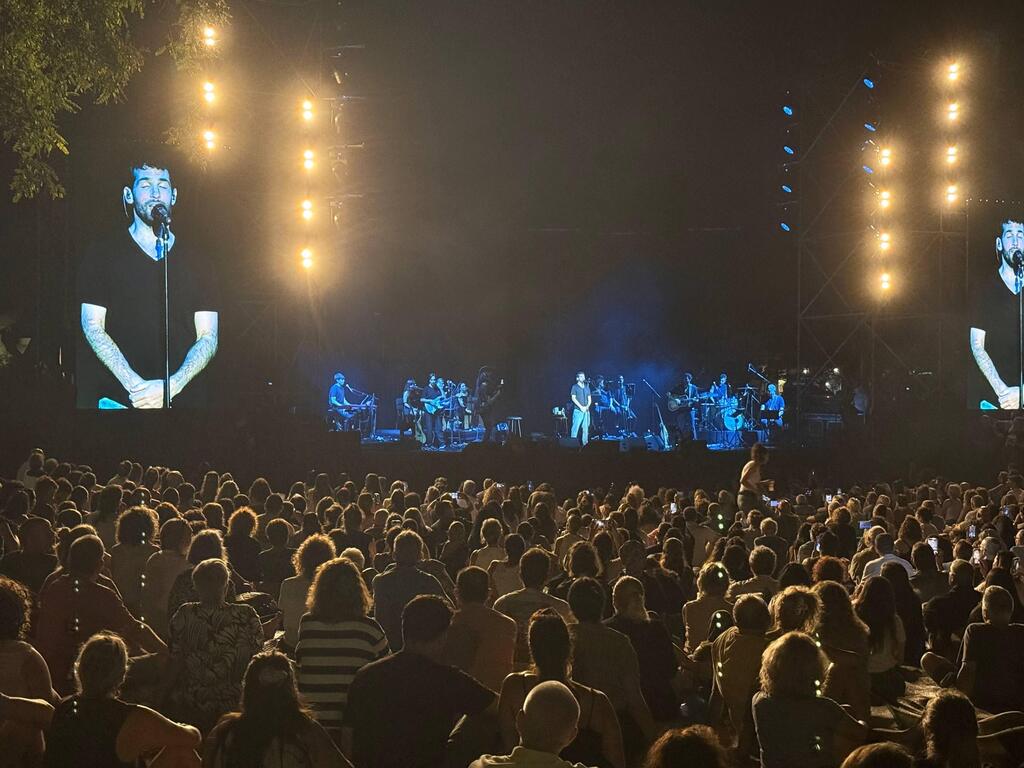
The album, named for the underground level of the tunnel where he was held and now available on streaming platforms, was launched in a special performance as part of the Israel Festival, which runs through August 20 at several venues across the country. Idan Raichel and Hatikva 6 also appeared.
Some 3,000 people attended, making it the first event of its kind held at Nir Oz since October 7. The crowd was so large that the concert was delayed after organizers announced there were traffic jams at the entrance to the kibbutz. “That says something,” one attendee remarked. The lawn was packed. Small song booklets were handed out to those arriving, with a familiar image of Dekel-Chen from the hostage-release campaign printed on the cover.
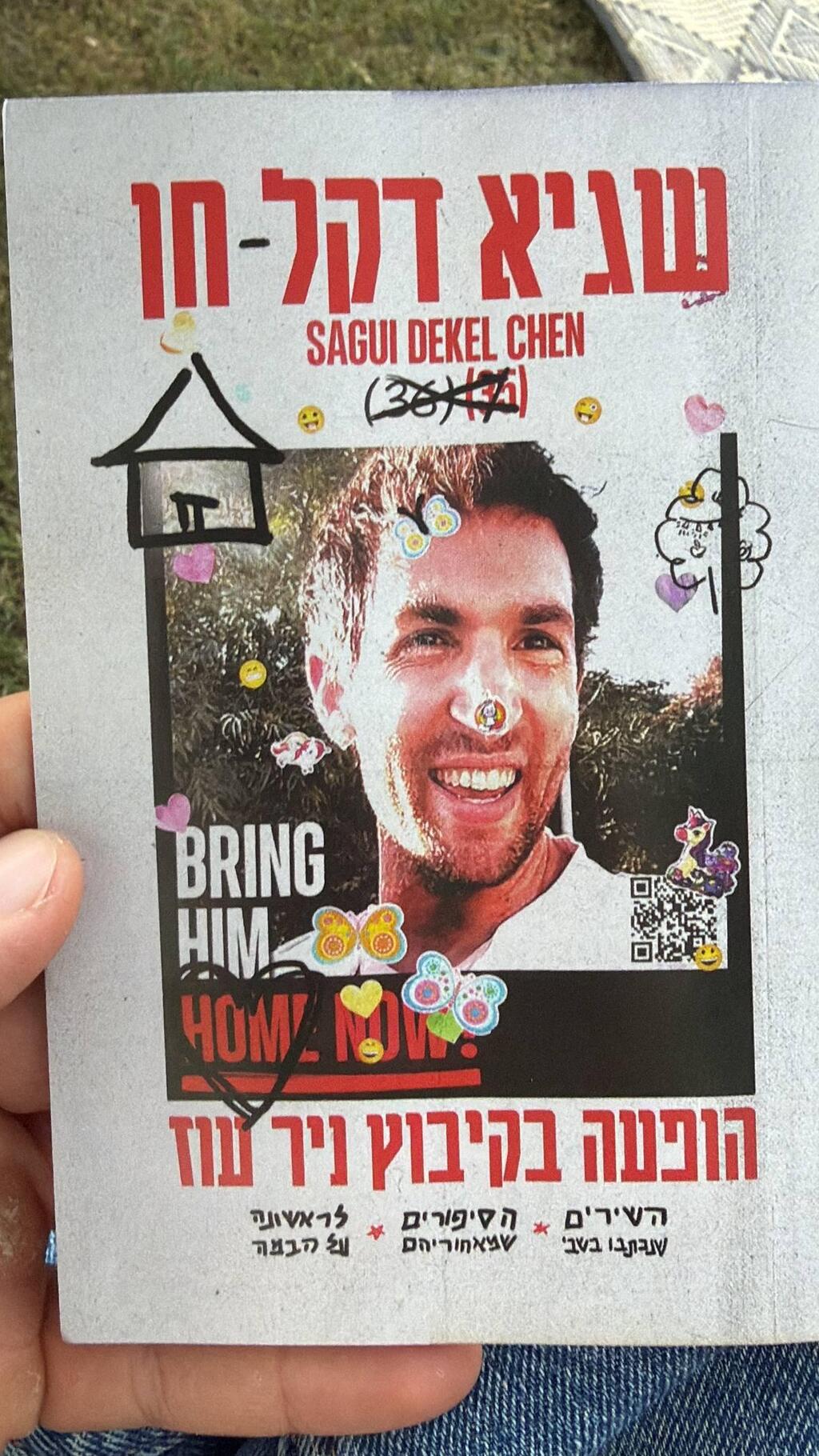
Cover of Sagui Dekel-Chen’s album songbook
(Photo: Roni Green Shaulov; cover design: Yael Yaakobi, Yuval Shavit)
At the end of the booklet, after the songs, he included a personal letter that he also used to open the performance. “I’m not a singer, I’m a father who sings,” he wrote. “I never intended to become a singer, or to sing. I was kidnapped, they took everything from me.”
He described waking in captivity in a hospital bed with an injured arm, a leg in a cast and his body restrained. “What they didn’t take, simply because they didn’t know about it, was the real strength from within,” he wrote. “That helped me preserve hope, health and sanity.” Music, he said, became one of the things that carried him through captivity.
At first, songs by other artists played repeatedly in his head. After several months, he began creating his own. He had no way to write them down and no instrument with which to test the melodies. Instead, he memorized the words and imagined the music.
Dekel-Chen was released from captivity on Feb. 15, 2025. Two nights later, while hospitalized, he went into a side room and quietly recorded all nine songs on his phone for the first time, preserving both the words and melodies that until then had existed only in his memory.
A few weeks later, he decided that one day he would release them in a live performance. That day was repeatedly postponed because of medical treatment, rehabilitation, family life and developments in Gaza, Iran and Lebanon. Most of all, he said, he could not bring himself to perform while hostages he had left behind remained in captivity.
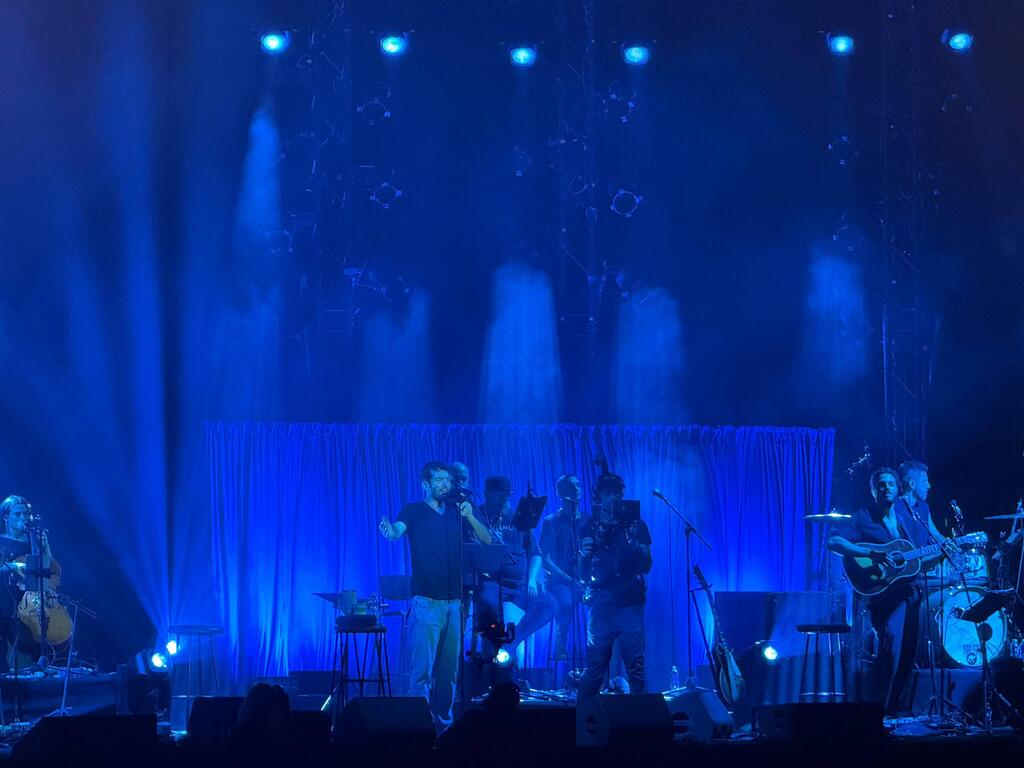
(Photo: Roni Green Shaulov)
Eventually, the moment arrived. “There was no chance my first performance would be anywhere other than here, in Nir Oz, at my home,” he wrote. He described the lawn as the same place where he had run as a child, first met his wife Avital, raised two daughters, fought on October 7 and lost friends. “This event is not a celebration, not a party, not closure, not a victory,” he wrote. “It is simply part of the story.”
Although Dekel-Chen chose not to return to live permanently in Nir Oz, he said the kibbutz remains deeply important to him and expressed hope that the event could become one small part of its rebuilding.
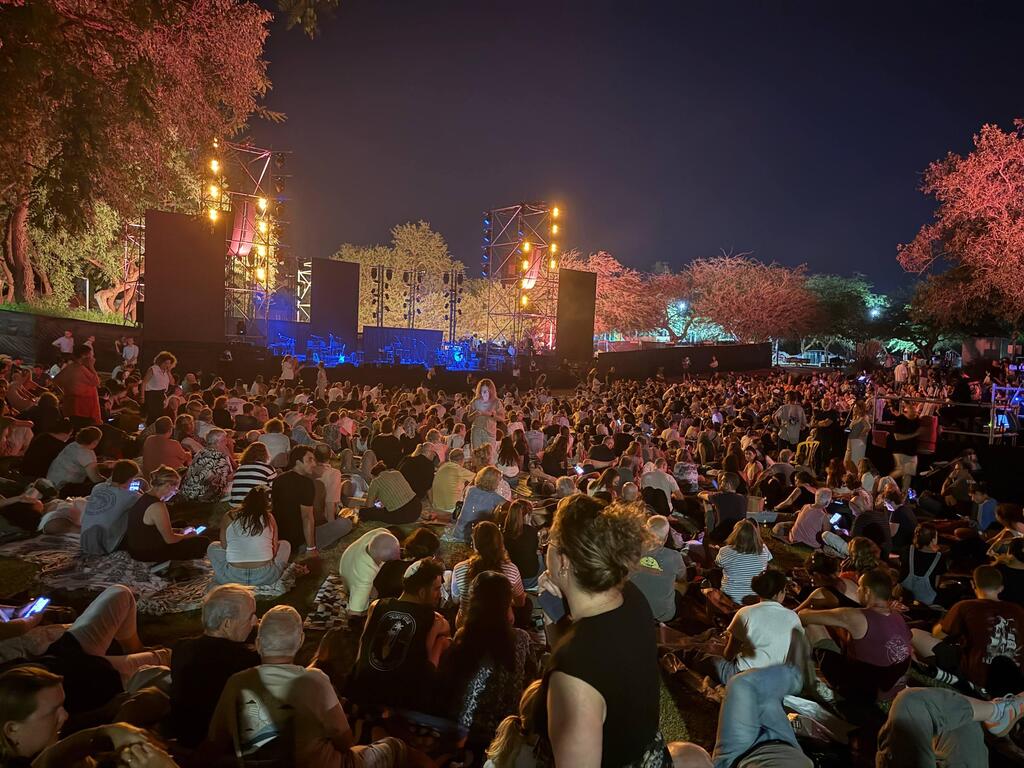
The crowd at Sagui Dekel-Chen’s Minus One performance
(Design: Yael Yaakobi, Yuval Shavit)
On stage, his emotion was unmistakable. His voice broke repeatedly as he performed songs written for his wife and daughters. One of the most personal was written for his daughter Shahar Mazal, who was born while he was in captivity and whom he had never met when he composed it.
Before another song, Dekel-Chen described the moment, about two months into captivity, when he unexpectedly saw himself in a mirror. “There are simple moments that get burned into your memory,” he told the crowd. “After about two months without seeing myself in a mirror, suddenly we reached a room where there was one in the hallway.”
The corridor was narrow, low and dark, he recalled, and he was not supposed to stop. “But I looked,” he said. “I looked terrible. Terrible.”
He said the sight forced him to confront how dramatically captivity had changed him. “I suddenly got slapped with the realization that I wasn’t the same person,” he said. “I had swollen hair, a long ginger beard, scars on my cheek, my facial bones sticking out. I just looked weak, and it broke me.”
The song booklet distributed at the concert included a photograph taken by Hamas in Rafah in January 2024, showing Dekel-Chen with his arm immobilized. “These are songs I wrote there in the tunnels, inside my head,” he told the audience. “Songs that at first I only memorized and imagined.”
After his release, he said, those songs finally came out of his mouth at Sheba Medical Center. Since then, they have gone through a studio, been played by professional musicians and even led him to take voice lessons, which he joked were “made in Khan Younis.”
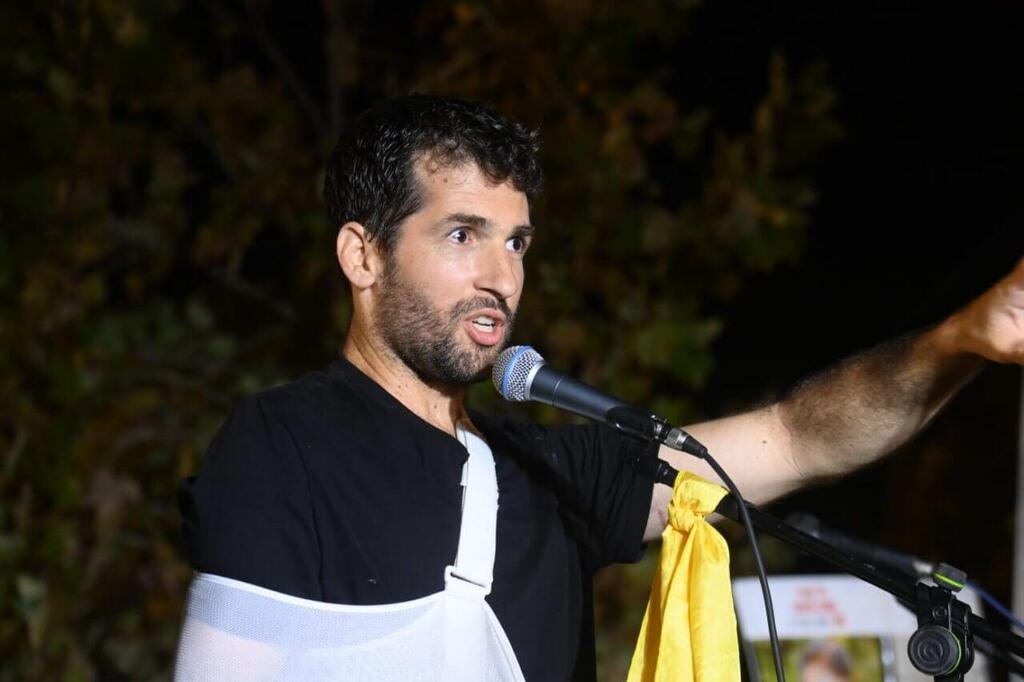
Sagui Dekel-Chen after returning to Israel
(Photo: Herzl Yosef)
The crowd sang, ate, drank and watched as Dekel-Chen finally gave sound and life to words that had remained trapped in his head for months. They were words he had wanted to say to his family, his friends and himself.
He chose to tell that story through the same thing that had helped preserve his sanity in captivity: music. And standing there in the center of Nir Oz, on a lawn that has carried so much grief since October 7, he allowed that music to be heard at last.