

It is not every day that a series creator turns to viewers and recommends that they avoid watching certain episodes. When the production of “Fauda” chose to issue an unusual content warning for episodes 7 and 8 of the current season and even took care to clarify that viewers who wish can skip them and still follow the storyline, it was clear this was not just another set of standard undercover action scenes. These two episodes, aired this week on Yes, recreate the horror of October 7 and touch on the most painful and open Israeli wound of recent decades.
Rawad Azar, a 37-year-old Israeli Arab actor, has previously played many roles as terrorists, criminals and other unsavory characters — “dirty work, but someone has to do it,” as he puts it — but even he felt shaken at the prospect of portraying a Nukhba terrorist from October 7 in “Fauda.”
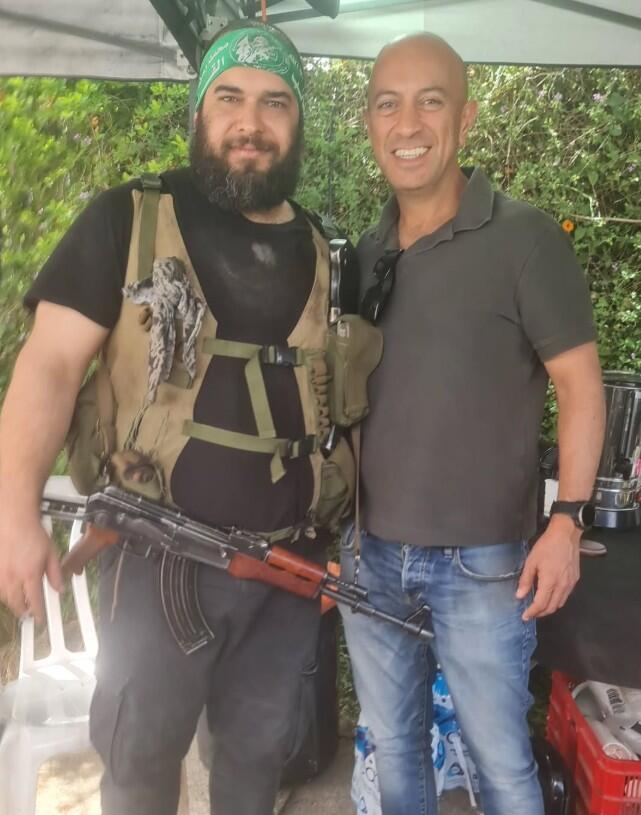
“It was not easy,” he admits. “There were nights I did not sleep. Just thinking about what these people did is already psychological trauma for an actor, and I have to get into it and be that. It felt too close because two of my friends were kidnapped — Gali and Ziv Berman — who we worked with in "Festigal." They were returned in the latest hostage deal and I kept seeing their brother and their aunt.”
“On October 7 I called my friends from Kfar Aza, and a friend said on the phone, ‘bro, tell everyone they are killing people here, shooting everyone’ — and hung up. I did not sleep for a few days. At that time I worked in a ‘intervention force’ role at parties like Nova (a rapid-response unit deployed for emergencies and extreme incidents). We are there in case of threats, fights or anything else, and we intervene. They offered me to work at Nova but because I had a new play at the time I said to them, ‘no, leave it, I want to build my career as an actor,’ and I did not go. The play saved my life. Maybe it is a sign God is telling me that this is my path.”
Did filming exhaust you emotionally?
“Yes, and even off set I would look left and right for police so they would not think I was actually a terrorist on my way home. When I went out to smoke a cigarette, they would leave someone with me because people were afraid. I was almost bald and with a beard like this,” he gestures with his hands. “Try walking past me like that at the time. People were already afraid anyway and there were complaints about gunfire.”
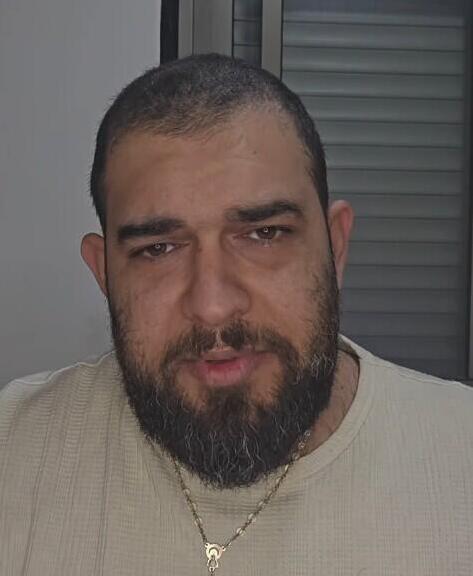
Rawad Azar: 'It wasn't easy. There were nights I didn't sleep.'
(Photo: From the actor's Instagram page)
Was it hard to come out of it?
“It took me time to let go. These are difficult roles. In ‘Rachel of Ofakim’ (a documentary about Rachel and David Edri), I also played a real-life character of a terrorist who was killed. A Nukhba commander. There too it took time. It is drama, I need to feel it, and all of this together is not easy for a person — all the emotions we bring out on set — but in the end you let it go because you have to let it go. You have to move on.”
After nearly a decade of stagnation in the acting world, Azar decided to study for a year at the Yoram Loewenstein acting school branch in Nazareth and since then he has been a busy actor. Busy enough to leave behind four years of accounting studies, from when he was still trying to find a respectable but dull livelihood. If you did not recognize him from “Tahrir,” the documentary about Lahav 433 interrogations, “Rachel of Ofakim” or “Red Dawn,” where he played a person who rescued survivors from Nova, you will have another chance to spot him in “Hill 338,” a new version of “Givat Halfon” set to be released soon (“I play a reservist soldier there,” he says), in “Friends from the Past,” which has not yet been released and in which he acted alongside Youssef Sweid and Tsahi Halevi, or in live theater and commercials.
“Usually they cast me in criminal roles,” he says. “Look at me. I leave the house and I get stopped for police searches. Just seeing me is enough. I was never allowed into clubs, I barely get into bars, at checkpoints security immediately says, ‘come in for inspection.’ Once in court they made me take my clothes off. Everywhere I go — chaos. There is nothing to do.”
Did you hesitate about taking the role in 'Fauda'?
“For me it is a mission to do these roles. In Hollywood’s biggest films they had to cast major actors to play Nazis. How is that different from me? Will Smith played a slave in a film not long ago. And between us, on October 7 they did not look to see if someone was Jewish, Muslim or Christian. They killed everyone. The terrorists did not say ‘this is a Jew, come…’ — they did not say anything. Arab, Jew, Muslim, Buddhist, atheist — they came to kill.”
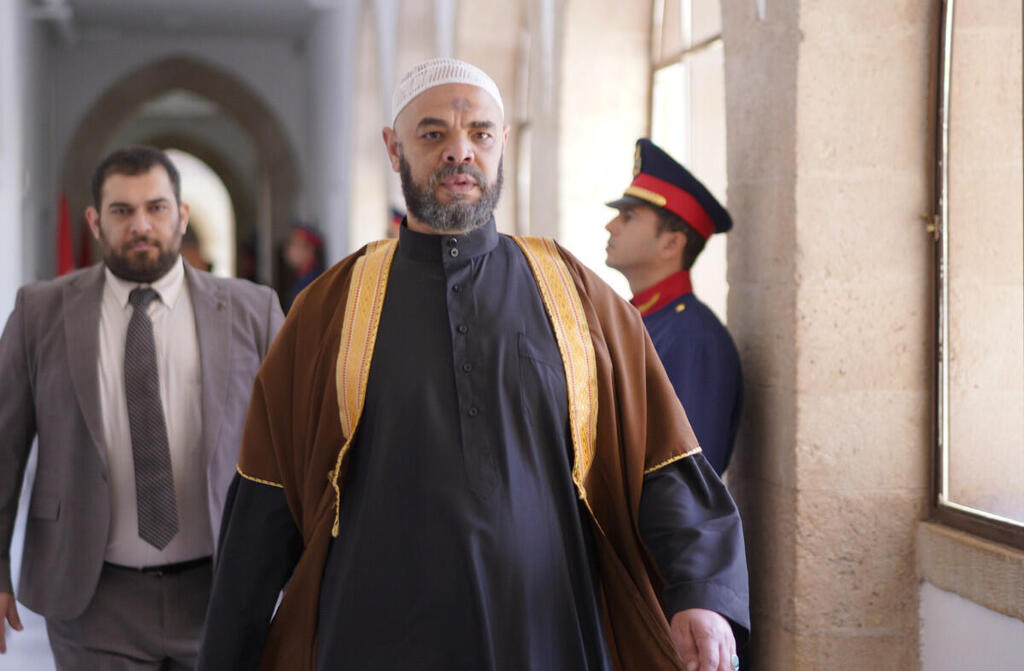
Rawad Azar (left) with Ali Ali, from 'Tahrir'
(Photo: Elia Spinopoulos, courtesy of Yes and +STING)
“I recently moved to Haifa from Kfar Vradim. The last Iranian missile that killed four people fell under my house, in the building next door. It did not explode, it just brought the building down. My whole family, all of us were at home in the shelter. If it had exploded — I would not be here today. I volunteered for the Border Police. My father is a former police officer and my uncle died in the military in the 1960s. We are a bereaved family, among the first to enlist in the army.”
And how does your environment receive your work?
“There are people who now call me a ‘traitorous Zionist’ just because I act in Israeli series. There are people who do not want to work with me. But I get a lot of responses specifically from bereaved families — they tell me, ‘thank you for doing this, you are an excellent actor,’ and I encourage them, send them kind words so they feel better. I cannot even imagine what they went through. On the other hand there are threats — they send me curses, many unfollowed me, they threatened to come after me. But I am not afraid, let them come. I say freely, with love, let them try to get here, I am here.”
“But honestly, the thing people asked me about the most was the cake. There is a scene in ‘Fauda’ where they try to open the door of the sons of Yaakov Zada’s character, and I am knocking on the door, ‘open up for me, open up for me.’ And how much can a person knock? I turned around, went to the fridge, took out a cake — what a delicious cake! The most delicious cake I have ever eaten in my life. Really, if you look there you can see a piece missing, a quarter of the cake — that was me. I went and ate the cake smiling. So everyone keeps asking me, ‘most important, how was the cake? Did you enjoy the cake?”