

Reality in the Middle East has once again outpaced the writers of “Tehran.” While Mossad agent Tamar Rabinyan continues her daring missions inside Iran on screen, the real world has delivered plot twists of its own. Israel’s dramatic preemptive strike that eliminated Iran’s dictator Ali Khamenei set a new benchmark for the internal world of one of the most expensive and successful series ever produced in Israel.
What was once a sophisticated espionage drama has begun to resemble a near-sensational reflection of reality unfolding in real time and at a staggering pace. If in the first two seasons, “Tehran” stretched the limits of imagination, now it often seems that events on the ground are generating twists more surprising than anything a writers’ room could produce, including operations like the pager attacks deep inside Hezbollah.
The series’ unusual partnership between Israel’s public broadcaster Kan and tech giant Apple TV+, which acquired global distribution rights, gave “Tehran” international prestige, but it also brought careful oversight from American executives at nearly every stage.
Political sensitivities during wartime can restrict and delay decisions, sometimes to the point where even small script changes require approval that feels almost like a corporate board vote. That is certainly the case with the broadcast date for the new season, which remains uncertain.
“It’s unbelievable,” said a senior member of the production. “From the very beginning ‘Tehran’ has succeeded globally against all odds, even though Israel has effectively become a pariah in parts of the international industry. Once again, most things are working against us, and once again we believe we’ll prevail.”
But the turmoil has not been limited to global politics. During filming of the fourth season in Athens, the show’s executive producer and creative driving force, Dana Eden, died unexpectedly. Eden was one of the architects of the show’s international vision and its emotional center. Her death left a void that the cast and crew still struggle to fill.
For many involved with the series, the fourth season will not only continue Tamar Rabinyan's story. It will also stand as a living memorial to the woman who believed an Israeli story like this could resonate with audiences worldwide, and she was right.
Rumors, conspiracies and a shocking loss
On February 4, Eden arrived in Athens with the cast of the fourth season. During the night between February 15 and 16 she was found dead in her hotel room. Within hours, Israeli websites began publishing false reports claiming she had been murdered in a nationalist attack. One outlet even claimed signs of violence were found on her body, citing unnamed sources in Greece.
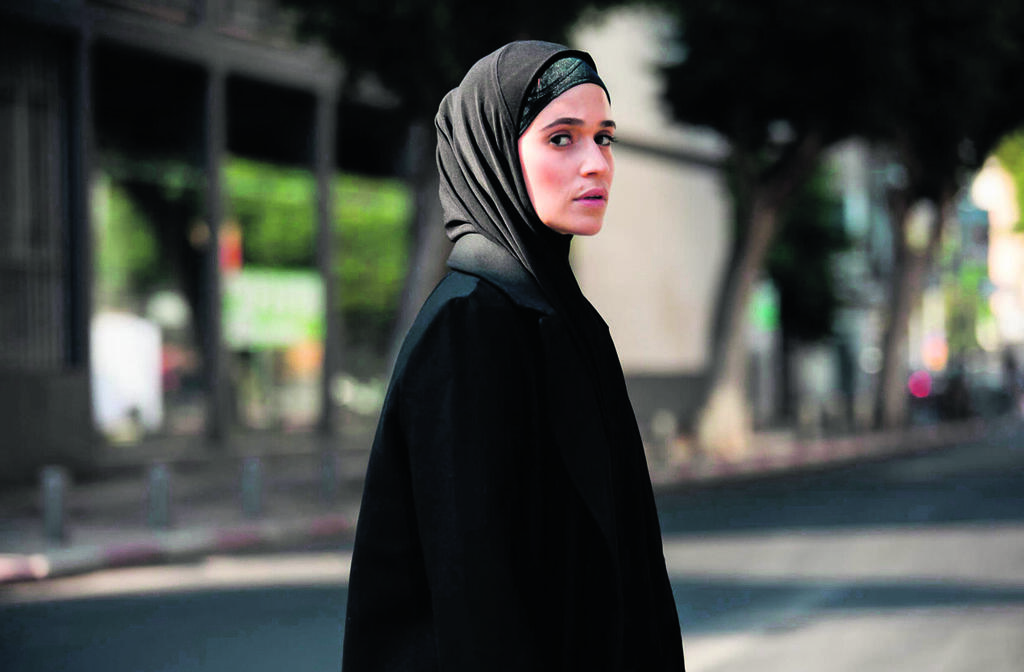
An Israeli producer who dies while filming a series about shadowy assassinations is the kind of story that instantly fuels clickbait headlines. The story spread quickly, and Greek media began quoting the Israeli reports, amplifying speculation about a supposed nationalist-motivated murder. But none of it was true.
The production team and Kan moved quickly to refute the rumors. “Rumors about what happened in Athens spread incredibly fast,” said Shula Spiegel, Eden’s production partner and close friend. “We had absolutely no control over it. While we were dealing with the tragedy itself, people were publishing lies.”
“The Greek police handled the matter properly and we brought Dana back to Israel during very difficult moments. I still can’t bring myself to say ‘may her memory be a blessing.’ The pain is enormous. What happened was terrible enough without all the nonsense that followed.”
“I immediately issued a statement saying that everything published was fake, and I think the message got across because after that we didn’t receive any more unnecessary questions about it. I was very surprised by the scale of the reaction.”
A television producer in Athens, speaking anonymously to Yedioth Ahronoth said Eden’s death shocked the local industry. “People here were very saddened,” he said. “Dana, of course, was completely unknown in Greece until a few years ago, but ‘Tehran’ was filmed here and somehow it ended up on Apple TV, who would have thought? Do you know how many projects I’ve tried to sell to Apple over the years? It’s almost impossible to get them interested. Since then Dana Eden became a name people here recognized.”
“There was real sadness, because we got the impression that the success may also have been difficult for her; she had everything, enormous success, a series at its peak, and eventually she found her death on the set of the dream she built; it's so sad.”
Israeli websites reported the possibility of murder.
“That speculation came up here for a brief moment too,” the Greek producer said. “But it was immediately clear it wasn’t the case. People should remember that there are friends and family involved before spreading nonsense. The police here left no room for such speculation. For us, Dana Eden left a significant mark as a successful woman in a very challenging industry, on a global level.”
The life’s work of Dana Eden
“Tehran” was Eden’s professional "holy grail", her life’s work. She once said that her partner, Spiegel, had mortgaged her home to keep the first season’s filming in Greece financed, and soon afterward, Apple entered the picture.
Her career began at the prestigious Thelma Yellin High School of the Arts. Her future in television had almost been written from birth: her father, director Yoram Levy, founded Dana Productions when she was still an infant.
At 23 she joined the company, and a year later produced her first series, “Dreams of Youth.” After her father became ill with Parkinson’s disease, she took over running the company. In 2007 she partnered with producer Shula Spiegel to form Shula and Dana Productions. Eden focused primarily on drama, while Spiegel handled documentaries and company management.
Together they produced numerous Israeli hits, but their biggest breakthrough came with “Teran,” created with writers Moshe Zonder and Maor Cohen and director Daniel Syrkin. In the new season, Oded Davidoff also joins the project as director of four episodes. Eden immediately recognized the show’s international potential.
She also strongly backed the casting of Niv Sultan as Tamar Rabinyan after meeting her on the set of “She Has It.” Sultan has since become one of Israel’s most successful actresses and may yet build an international career.
The real turning point arrived in June 2020 when Apple TV+ purchased “Tehran” before it had even premiered in Israel. The show could easily have ended after one season, as many series do. Instead it delivered strong viewership numbers, entered Apple TV’s list of top hits and received praise from critics in the U.S. and the UK.
In November 2021 it won the International Emmy Award, a rare achievement for an Israeli production. At the height of the show’s success, Eden died.
“At the beginning, Dana, Maor Cohen and I were fighting against the odds. No one wanted the series,” said Moshe Zonder, the creator who is also the head writer of “Fauda.” “That’s not unusual, but it seemed especially difficult for us with ‘Tehran.’ Dana never stopped believing. She pushed us forward with her endless energy and promised the series would be made.
“In the end, Roni Perry at the Kan public broadcaster believed in us. Omri Shenhar joined the writing team, we found a Canadian distribution company as a partner that completed the budget we needed, we wrote the first season and Danny Syrkin directed it.
“Two weeks before the series premiered in Israel, Apple TV bought it along with two additional seasons for a sum that, for us as Israelis, felt unimaginable. Timing matters a lot in life, and we were lucky. Apple had just entered the field with deep pockets and was looking for a non-American production to diversify its platform. Out of the endless projects placed before them, they chose us.
“Then the International Emmy arrived and positioned us in a place we never imagined we would reach. Dana and Shula Spiegel led all of us with a steady hand. When I was a student in the film department at Tel Aviv University, we used to hear urban legends about directors mortgaging their apartments to finance their first feature. Shula actually did it so the first season could be made, and we didn’t even know about it at the time.”
Returning to the set without her
Eden’s death created not only emotional grief but also a professional vacuum across nearly every sector of the production. For the actors and crew, she was more than the executive producer; she was a stabilizing force who could turn ambitious ideas into practical production reality.
Returning to the set in Athens was therefore done with a sense of reverence. “We’ve worked together for 19 years,” Spiegel said. “Now I’m entering a new reality without her. I can’t bring her back, but we have a dedicated team and we will continue.”
Spiegel brought the entire crew to Eden’s funeral in Israel. Filming was paused for three days before production resumed. “Everyone returned to work despite the difficulties,” she said. “I truly believe this will be a wonderful season. Honestly, just the challenges we’ve faced over the years could themselves make a dramatic series.”
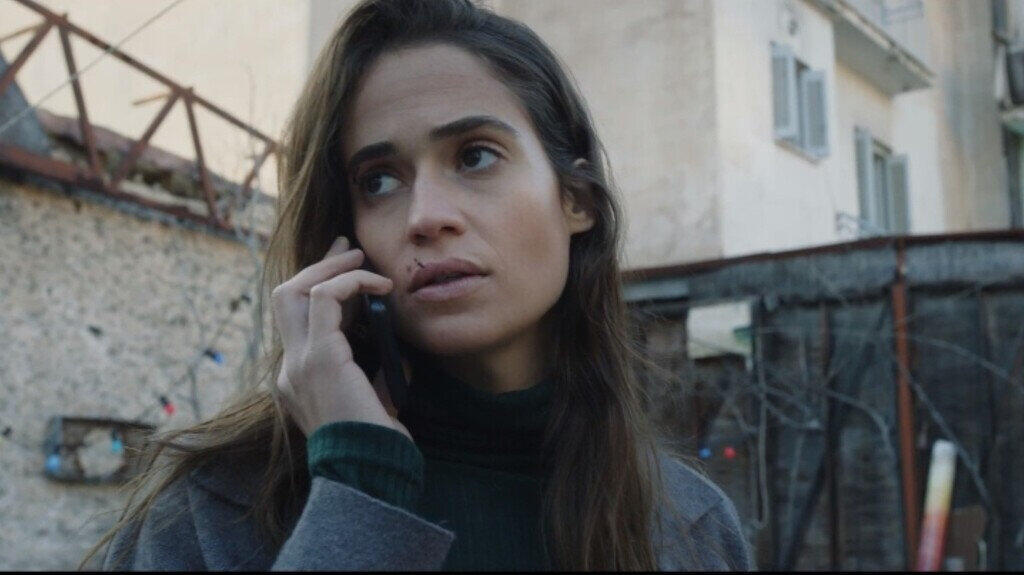
From the series ‘Tehran’
(Photo: Courtesy of Kan 11)
How do you encourage the actors and crew after such a tragedy during filming?
“I try to motivate them, and they encourage me just as much. It’s a terrible pain and a terrible disaster, a tragedy, because each of us feels that Dana was part of us. We’ve been working on ‘Tehran’ for five years now, almost continuously. A kind of family formed, and Dana played a major role in that family.
“Losing her on a series like this, and I’m not even talking about the emotional side, isn’t something you can simply move past. It takes a lot of self-discipline to keep working and maintain positive energy. I was there the day after it happened. It was very tough. I collected her belongings and was in contact with the police. I was very surprised by the reaction it sparked around the world.”
Maybe because you don’t fully grasp the scale of the success.
“I know the series is known around the world, but you’re still sometimes surprised by the level of interest around it. I’m sorry Dana didn’t get to see the incredible feedback that came after her death. Every tribute people paid to her was completely deserved.
“All the credit for this series’ success belongs to Dana. ‘Tehran’ was her. It was her dream, and I couldn’t help but join it. Maor Cohen came up with the original idea for the script, and I remember that the moment Dana saw the name ‘Tehran,’ she immediately understood the scale of its potential. She knew it was worth fighting for, and we went all in. “Choosing to work with the public broadcaster also proved to be the right decision.”
Ronny Perry, head of drama at Kan, does not try to downplay the magnitude of the drama in this case. “‘Tehran’ was a massive project from the very first season, and of course that continued after it was sold to Apple TV,” she said. “A lot of people are involved in leading this, a group of creators, producers and broadcasters. But it was always clear that Dana was the engine and the showrunner of ‘Tehran.’ And that’s not something simple to say about one person on a series this big, where many people are involved.
“It was clear to everyone that Dana was the one steering ‘Tehran.’ She was involved in every detail, commercial, production and artistic. When it came to this series, she held nothing back. She believed ‘Tehran’ would become an international series and a major success in Israel.
“It was very important to her to infect everyone with her enthusiasm for the show. She could talk with a spark in her eyes about characters, casting and plotlines. But if she sensed even for a moment that your enthusiasm was cooling, she could come at you with the intensity she was known for, because this was truly a project she took personally and loved. She was extremely dominant and completely committed.”
Who can carry all this forward?
“It’s really very difficult. But we have Shula Spiegel and director Danny Syrkin, people with a great deal of experience who are joining an already quite experienced team. “We knew the atmosphere was not easy after Dana’s death. We gave the production and the actors the freedom to decide what should happen next. It was a great loss for all of us, and the actors chose to take a few days off, which was completely understandable.
“This is a major loss for us and we miss her. When I speak to people who worked with her, they feel that everything happening on set now is happening without her. That’s why returning to filming was not simple at all.”
When reality rewrites the script
Alongside the mourning and the effort to regroup, reality outside the set has reached what may be one of the most extreme moments in the Middle East.
The expanding war involving Israel, the U.S. and Iran, along with Hezbollah’s entry into the fighting, has created an unprecedented dilemma for the creators, forcing the writers to reconsider parts of the storyline. The assassination of Khamenei raises questions about how future seasons should unfold when the series’ central antagonist has effectively disappeared from the real world.
If “Tehran” once drew inspiration from reality, now reality is racing ahead. Covert operations, targeted assassinations, cyberwarfare and regional escalation are unfolding in real time, raising questions about plotlines that have already been written or filmed.
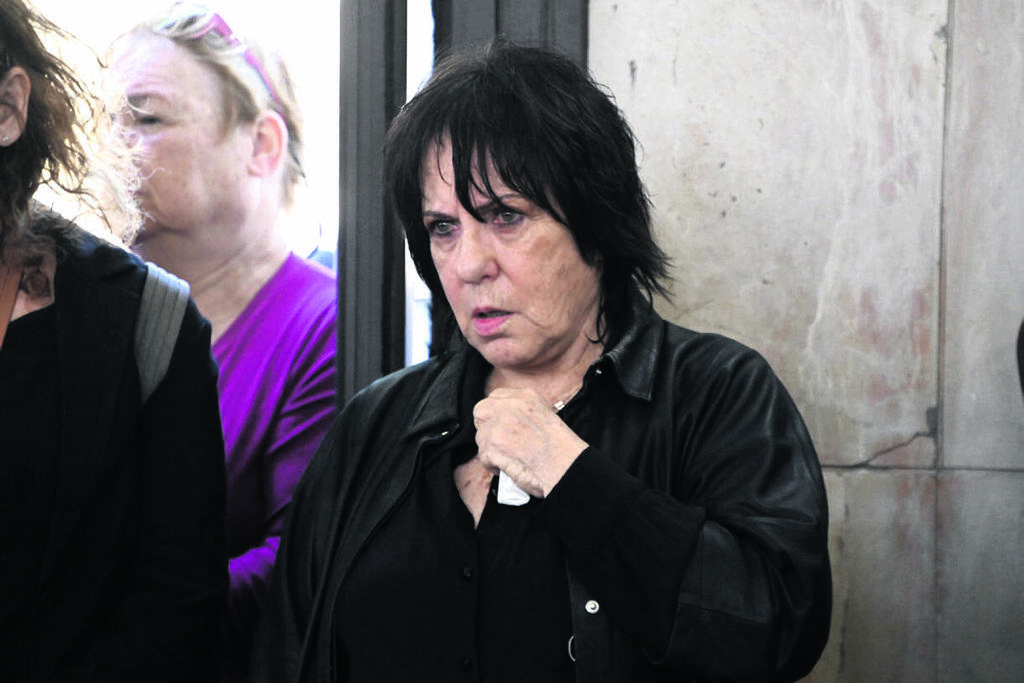
Shula Spiegel at the funeral of Dana Eden
(Photo: Yair Sagi)
“We’re not making a documentary,” a creative figure in the production emphasized. “But you can’t ignore what’s happening. You can’t tell a story that feels less believable than the morning news.”
Scripts are being reexamined, story emphasis adjusted and political themes reconsidered. Apple’s close involvement adds another layer of complexity, balancing Israeli authenticity with the sensitivities of a global audience.
On the other hand, the very clash between reality and written scripts only reinforces the relevance of “Tehran.” In an era when the lines between news and drama are increasingly blurred, “Tehran” is no longer just a strong Israeli story about sophisticated espionage but a dramatic reflection of its time.
This is where Apple enters the picture even more prominently. The company carefully monitors tone, narrative balance and political sensitivity to ensure its content remains accessible to international audiences.
The previous season was already delayed because of the war, and the upcoming season may also shift from its tentative schedule of late 2026 or early 2027. In the current political climate, every creative decision can quickly become a public relations decision.
Since Apple came on board, it has been clear that a series about Israeli intelligence and Iran is no longer just a regional thriller, but a global product consumed in the United States, Europe, Asia and the Middle East.
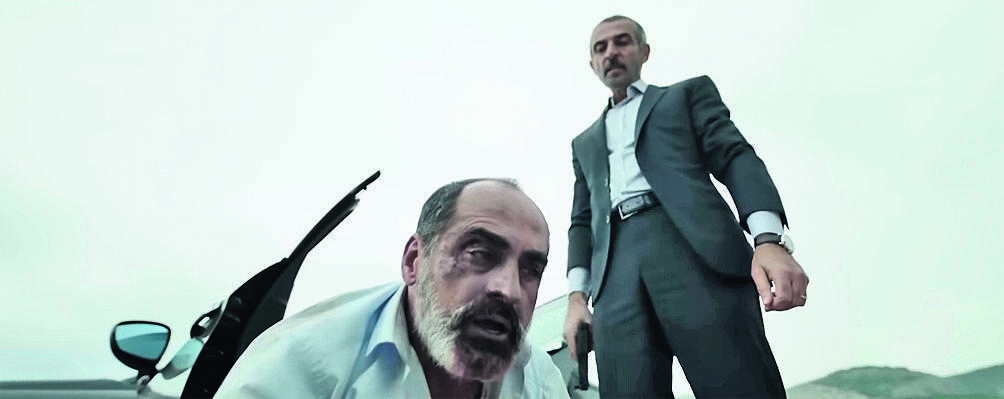
From Tehran
(Photo: Screenshot from ‘Tehran’)
Just ask Niv Sultan, who is now asked for selfies in places where she never imagined people would recognize her. That raises a broader question: can a series remain authentically Israeli when every frame is viewed through a global lens?
Apple is not merely a distributor. The company carefully monitors tone, narrative balance and political sensitivity to ensure its content remains accessible to international audiences.
Outside the studio, when war unfolds in real time, political nuance may be perceived as bias, authenticity can appear risky and attempts to soften the narrative may be criticized as overly politically correct.
“Everything is still very fresh,” Spiegel said. “We’re filming a season that’s already written, but we’re thinking about how to address dramatic developments like the killing of Khamenei. I honestly don’t have an answer yet. We’re thinking about whether to update the script and how to remain relevant in the face of reality. First of all, we’ll try to see to what extent it’s technically possible to make changes.”
"As we speak, four episodes have already been filmed and production continues on additional ones. A broadcast date exists in theory, but as with previous seasons, it may change. “The war keeps shaking things up,” she said. “Everything is fluid and unpredictable.”
Timing has never been more complicated. No serious TV executive wants to premiere a fictional drama about Iran while real-world events of historic magnitude are unfolding. Yet marketers also understand that such events can amplify attention around a show dealing with the same themes.
“The ruler is gone,” said Perry. “That’s obviously something we have to address. The season is written and mostly filmed, and we’ve already seen early cuts. Right now we’re thinking about what to do, but certainly not a season that isn’t relevant. We’re still in the middle of events, and right now I don’t think it makes sense to make changes because no one knows when this will end. The script for the next season requires complex thinking, and we’ll make decisions soon.”
What does Apple say?
"Apple is aware of the debate, but the production’s complexity means decisions will take time. Even if we rewrite the script tomorrow, reality might overtake us again a few hours later. So for now, we’re waiting. Every day of filming is very expensive. When you take into account all the costs and investors involved, this is certainly one of the most expensive series ever made in Israel.”
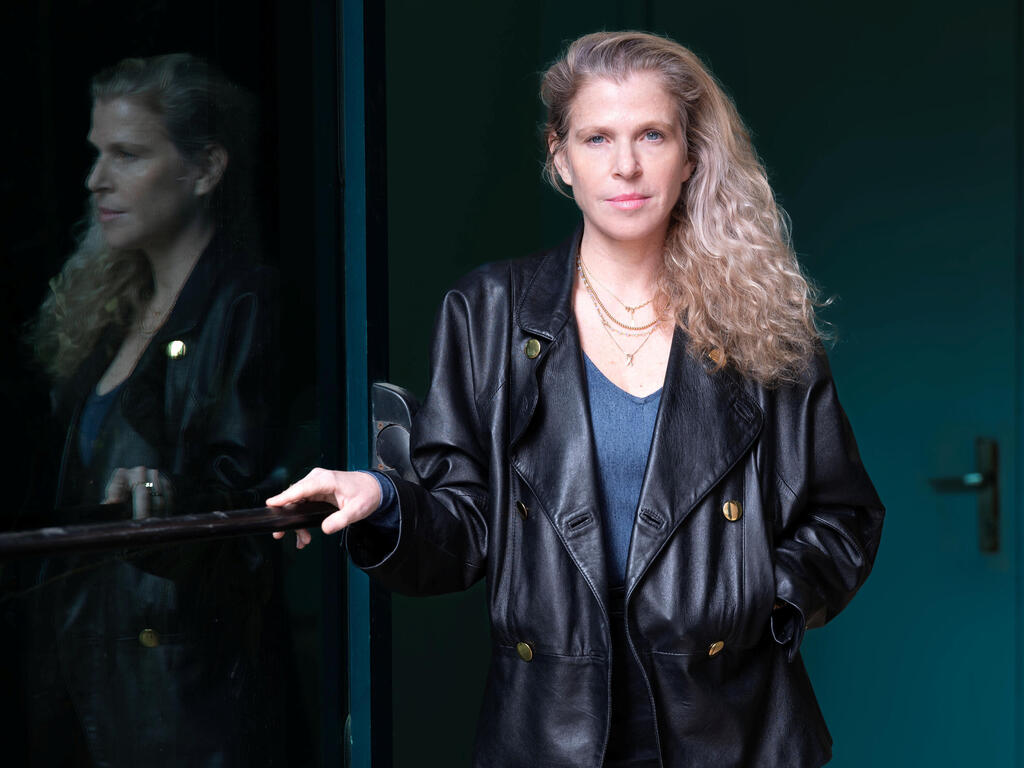
Dana Eden z"l
(Photo: Yuval Chen)
How do you air a series like this when a real war is unfolding outside?
“That’s true, but at the same time we want to broadcast it while it’s still relevant. There’s a very delicate balance between the major events unfolding outside and the timing of the broadcast.”
The delicate balance of global attention
Behind the scenes, producers quietly made another decision this season: they chose not to cast a major international star, after previous seasons featured Glenn Close and Hugh Laurie.
Laurie himself paid tribute to Eden on social media following her death. "Dana Eden, who co-created and produced 'Tehran', died he wrote on X. "It's a terrible thing. She was brilliant, and funny, and an exceptional leader. Love and condolences to all who knew her."
After receiving anti-Israel responses online, Laurie later added a blunt clarification. "Nothing I have ever said or done could lead a sane person to believe that I am a Zionist", he wrote. "However. If someone exults in the death of a friend of mine, yes I will block them. If you wouldn’t do the same in my position, you can fuck off too."
Hugh Laurie summed up in just a few words the dilemma facing international companies when buying or distributing high-quality Israeli content like “Tehran” amid the unfolding reality in the Middle East and the intensifying hostility fueled by anti-Israel actors.
The big question is how to navigate that and reach a broad audience without alienating it. Inside the production of “Tehran,” the goal remains simple. “In Dana’s spirit, we will make the best content we possibly can,” members of the team said. “The rest is beyond our control. That’s certainly what she would have wanted most.”
First published: 00:54, 03.14.26