

“Who is that?” religious fashion and lifestyle blogger Shalhevet Dadon jokes in one of her TikTok videos, describing her reaction to seeing herself in the mirror on Shabbat without makeup. Before discovering products approved for use on Shabbat, Dadon, 30, a mother of five with another child on the way who lives in Beit Shemesh, simply avoided applying makeup over the weekend because of Jewish religious law.
A former ultra-Orthodox woman who remains religious, Dadon says she had been interested in beauty from a young age. She worked as a hip-hop instructor, but during the COVID pandemic began teaching on Zoom and eventually found her way into social media. “It was only after about a year of dealing with makeup content that I discovered there was such a thing as ‘kosher makeup,’” she says.
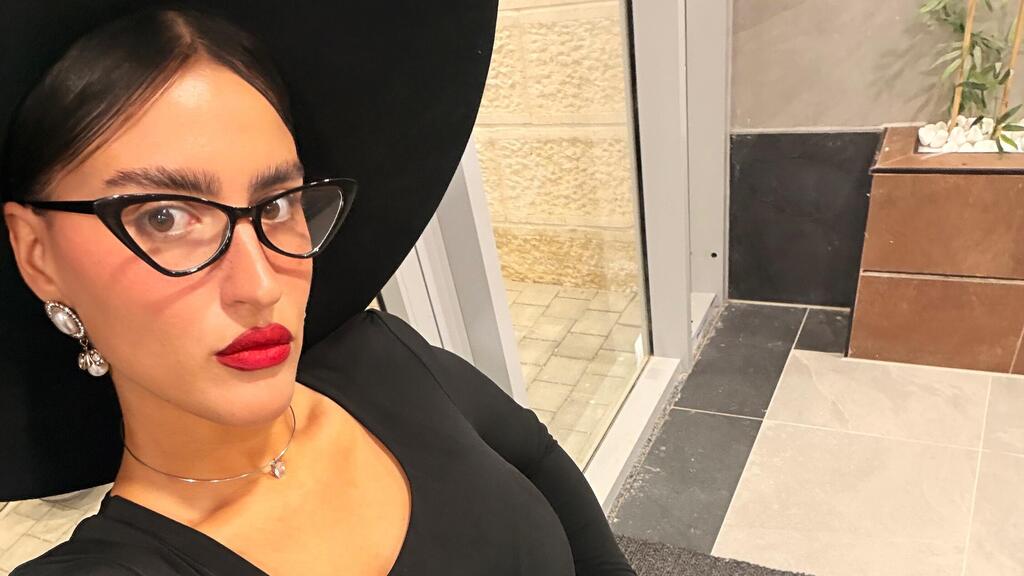
“Until then, I used regular makeup and dealt with the prohibition on applying it on Shabbat by using long-lasting products and trying to preserve them throughout the entire day. I barely ate or drank because I didn’t want the makeup to get ruined.”
“Even today,” Dadon adds, “when I talk about kosher makeup in my videos and work with Ada Lazorgan’s products, which have Badatz Beit Yosef approval, many women still don’t know that such a thing exists.”
Before you discovered Shabbat-approved makeup, what did you do?
“Nothing. I just wasn’t happy with how I looked. It was clear to me that on Shabbat I simply wasn’t at my best. Today I look at things differently and understand that beauty doesn’t depend only on makeup, and I can feel beautiful without it too. When I was younger, it mattered more to me.”
How does makeup and appearance fit with the religious value of modesty?
“They go hand in hand. A woman can and should look well-groomed and shouldn’t walk around feeling miserable about herself. Modesty in clothing is mainly about things like revealing necklines, but real modesty is also in the way you speak and behave. It’s a whole package.”
Drinking through a straw and sleeping on your back
Until roughly a decade ago, religious women who wanted to wear makeup on Shabbat and Jewish holidays had relatively few options.
Under traditional Jewish law, applying conventional makeup on Shabbat can raise several halachic issues. These can include tzovea, the prohibition on coloring; memare’ach, which relates to spreading or smoothing thick substances; and, in some circumstances, prohibitions connected with removing existing color.
The alternative offered by products certified for Shabbat use is generally loose mineral makeup in powder form, without liquid ingredients. Their use is permitted by the rabbinic authorities providing the certification, subject to the relevant instructions.
Before such products became more readily available, women who wanted their makeup to last through Shabbat sometimes developed less-than-convenient strategies. These included applying extremely durable makeup before Shabbat, drinking through a straw and even sleeping on their backs, sometimes while wearing sunglasses, to keep eye makeup from smudging.
Yael Cohen Shor, founder of the Shabbes Makeup brand, which carries Badatz Beit Yosef approval, is among several Israeli entrepreneurs now marketing cosmetics specifically designed for religious women who want to apply makeup on Shabbat and holidays.
“Ultra-Orthodox women are very connected to the world of beauty and makeup,” Cohen Shor says. “In a society where life is full of events, weddings, Sheva Brachot celebrations, Shabbat celebrations for newlyweds, holidays and family occasions, makeup is an inseparable part of preparing and wanting to look well-groomed and respectable.”
“There are women who wear makeup all week, and there are women I call ‘Cinderella women,’” she adds. “During the week they are caught up in work, the house, children and errands, but when Shabbat, a holiday or a family celebration arrives, something changes. That is the time to invest in yourself, get dressed and put on makeup.”
“Just as many ultra-Orthodox women have a special wig for Shabbat, a Shabbat dress and Shabbat shoes, for them putting on makeup is part of the transition from everyday life into the holiday atmosphere.”
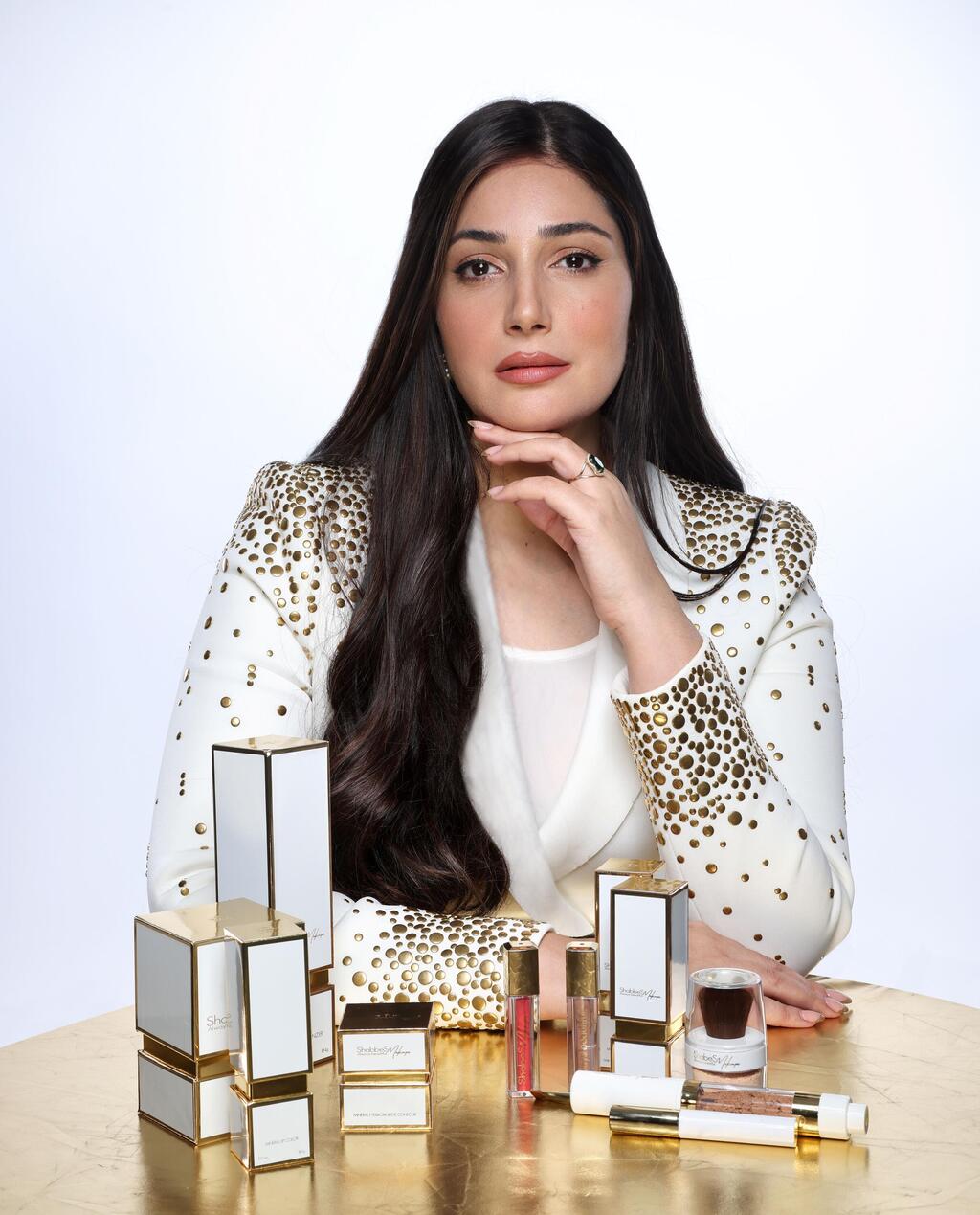
Yael Cohen Shor
(Photo: Mor Tzidon)
Cohen Shor, 42 and a mother of three, grew up in Kiryat Gat in a religious family. “Like my mother, I always loved grooming and beauty,” she says. “I loved dressing up and putting on makeup, and I also used to sew clothes.”
About 20 years ago, she opened a makeup store in Ashdod. Over time, she says, she became aware of a problem she wanted to solve.
“Women came up with all kinds of solutions, very long-lasting makeup that isn’t always good for the skin, applying multiple layers and all sorts of creative methods I heard about over the years, but none of them really solved the problem,” she says.
“I met women for whom having to remain without makeup was significant. No eye makeup, no defined eyebrows, pale skin without blush. Every woman has her own sensitivity.”
The issue can become particularly delicate when it coincides with immersion in a mikveh. Under Jewish law, a woman immerses without makeup. If immersion takes place on Friday night, conventional makeup cannot simply be reapplied afterward.
“That means something personal and discreet can suddenly become visible, especially if you are at synagogue on Shabbat or spending a holiday with your mother-in-law,” Cohen Shor says. “Women told me the embarrassment was sometimes so great that they preferred not to tell their husbands about immersing on Friday and to postpone it until after Shabbat.”
Cohen Shor spent eight years in the United States with her husband developing her product line for Shabbat use. The cosmetics are powder-based mineral products containing no liquid, and the manufacturing process is also supervised for compliance with the brand’s religious certification.
The products are now sold in Israel and abroad. “For me, the fact that this is mineral makeup permitted for use on Shabbat shouldn’t come at the expense of quality,” she says. “Makeup is an experience. My goal was to create something that feels like Chanel and looks like Dior, but that women can enjoy throughout the week and on Shabbat too.”
Adi Gilon, a 52-year-old biotechnology engineer, is the founder of Minerez, another mineral makeup brand certified for Shabbat use by Badatz Beit Yosef and additional rabbis. Gilon says her interest in cosmetics began in childhood, when she would sneak over to her mother’s and grandmother’s makeup tables, experiment with their products and try on their jewelry.
After the birth of her daughter, Raz, she returned to that childhood interest and began experimenting with making her own cosmetics. “After I got married, we moved to the United States,” she says. “As a new mother, I wanted to look good even when I was exhausted, but it was important to me that the makeup not transfer onto my baby while I was breastfeeding or rub off on her when I held her.”
“I began developing mineral products for myself in my basement, and the results were really good, mixtures of natural pigments in powder form, without oils, binding agents or silicones. People complimented me, and I began giving them to friends and family and sending them to Israel. Slowly it grew, and I began participating in exhibitions in the United States.”
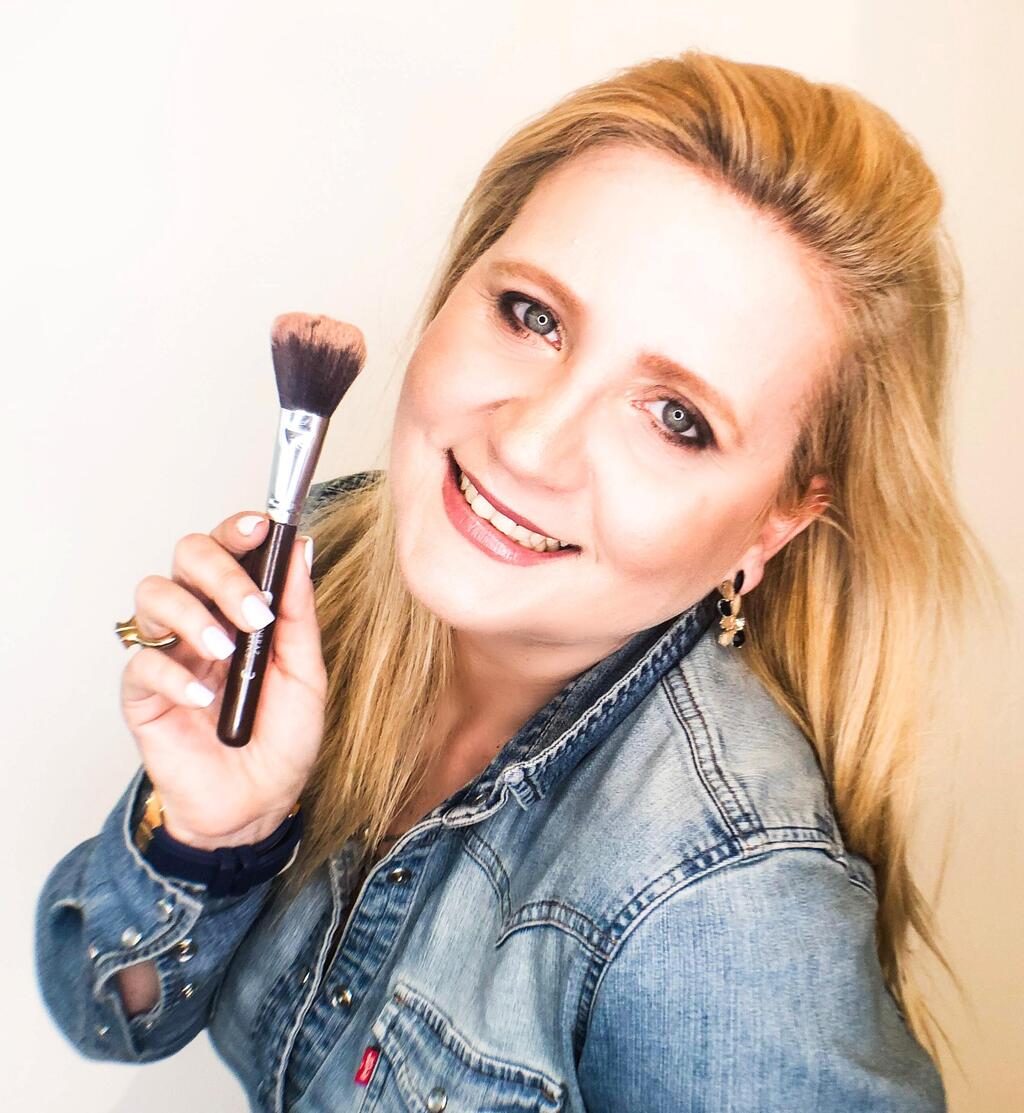
Adi Gilon
(Photo: Raz Gilon)
Several years later, Gilon separated from her then-husband and returned to Israel with her daughter, who was five at the time. “Just before I returned to Israel, I was approached by businesspeople in Brooklyn who were interested in products suitable for use on Shabbat,” she says. “At that stage I wasn’t familiar with the religious issue at all. I didn’t even know women had difficulty using makeup products on Shabbat.”
Because she had already decided to return to Israel, Gilon put the idea aside. It resurfaced later. “In Israel, I partnered with a factory that produces natural and organic cosmetics, and we began marketing my line with Health Ministry approval,” she says. “At that point, makeup artists and beauticians from the religious community began asking me whether the products were kosher for Shabbat, so I started researching it.”
She says the growth of beauty professions among religious women also helped create a larger market.
“Over the past decade, women from the religious community have become leading makeup artists and beauticians,” she says. “Appearance and fashion have become more prominent, particularly on Shabbat and at events, and it is also a profession that allows women to work independently from home while raising children and running a household.”
GAYA Cosmetics, founded by Shahar Gamliel in 2011, also sells a range of makeup products certified for Shabbat use in Israel, the United States and Europe. The company specializes in mineral, vegan and so-called clean-beauty cosmetics.
“The kosher line grew out of a need among Shabbat-observant women who wanted to feel well-groomed on Shabbat and holidays without compromising their religious observance, the quality of their makeup or their skin,” Gamliel says. The company’s Badatz Beit Yosef-approved range includes foundation, powder, blush, bronzer and highlighter.

Shahar Gamliel
(Photo: Courtesy)
“In the beginning, we had physical stores,” Gamliel says. “After COVID, we moved to online sales, with a team of makeup artists and questionnaires designed to match products to customers’ needs.”
Gamliel, who grew up religious, later became secular and eventually returned to religious observance, says his approach to the business has changed since October 7.
“I see a connection between faith, values and beauty,” he says, adding that the company now includes a pair of Shabbat candles and a message of support for Israeli soldiers and the public with each order.
For a growing number of observant women, the products have turned what was once an all-weekend exercise in preserving Friday afternoon makeup into another choice in their Shabbat routine.