

At the start of our meeting, I compliment Idit Ohel, the mother of former hostage Alon Ohel, on the determined and thoughtful campaign she led for his release. She pushes back. “I didn’t fight — that term doesn’t resonate with me,” she says firmly. “The word ‘struggle’ creates resistance and antagonism, and that’s not me. I worked hard, I connected with people, I created awareness, but I didn’t fight. When I met members of Knesset, I didn’t come from a place of struggle or anger, but from a respectful place that would help them see Alon. I never felt anger — not before he returned and not after.”
I saw you angry with my own eyes on a few occasions.
“Not a few — once, and it was a very uncharacteristic situation. It happened after Eli Sharabi was released from captivity. I was 20 minutes before a broadcast on Channel 12 when people from the army who knew I was there came into the studio and told us Alon’s real condition based on what Eli had said. We understood that he couldn’t see in his right eye. It wasn’t anger — it was helplessness, terror, distress. It was a mother’s cry, and it came out on air. I had to share what I’d heard so people would know, go out into the streets and be there for him. Throughout those two years, I made a conscious, considered choice not to be angry at anyone or anything.”
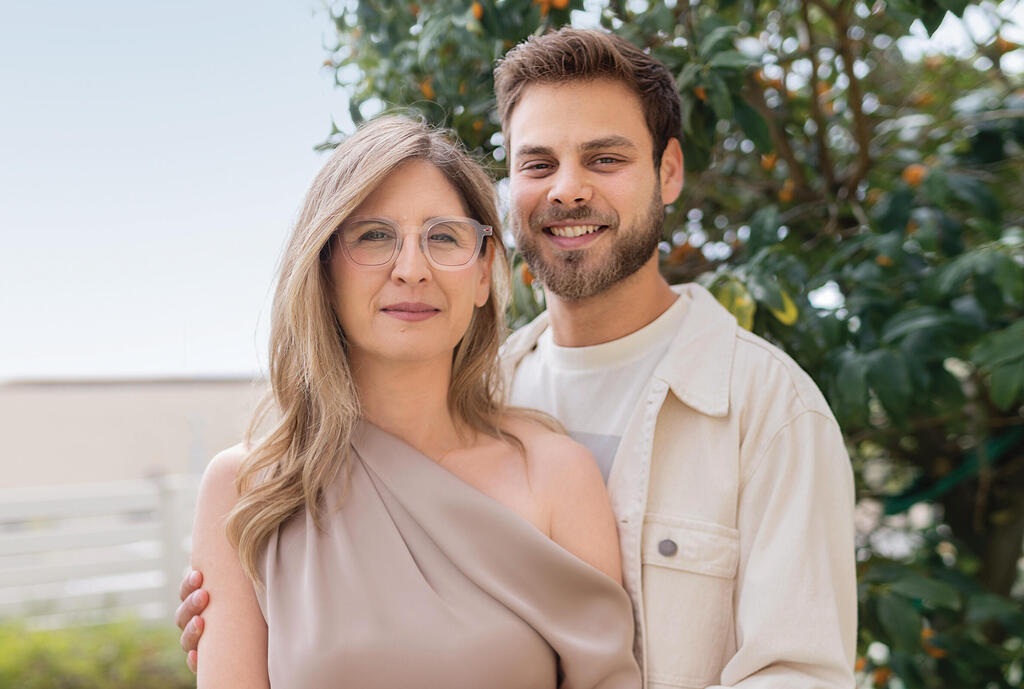
How can you stay composed and aware under those circumstances?“Because I understood I had a journey and a path, but I wasn’t alone in it. There were many good people around me who made sure he wasn’t forgotten. The fact that I chose a path of connection rather than struggle doesn’t mean those who chose differently were wrong. I truly believe everyone had their own way.”
Is that why you were less present at Hostages Square?
“The atmosphere there was very powerful and intense, but it doesn’t suit everyone. Suddenly I was a public figure and all eyes were on me — it was very difficult. Instead, I traveled across the country with my lecture and specifically reached places that identified less with the square — the religious sector, right-leaning audiences. My role was to try to connect different groups to our story. I was one of the mothers who founded ‘Mishmeret 101,’ to give an option to people who found the protests difficult. I also live in the north and had to run the household and be with my daughter, who was in school. Part of it was also preserving the home for Alon.”
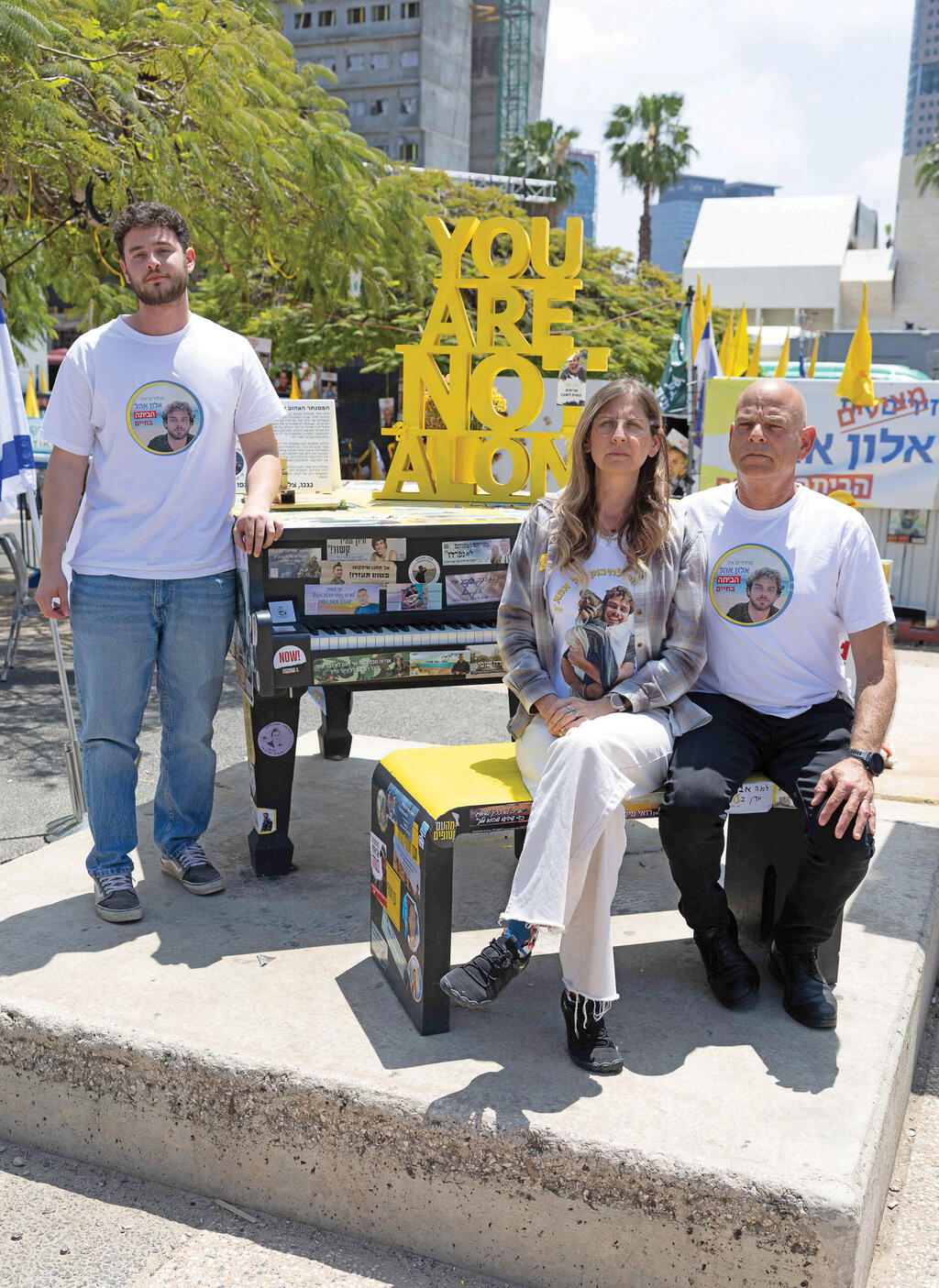
Idit, Kobi and Ronen Ohel next to the piano that was placed in honor of Alon in Hostages Square,
(Photo: Tal Shahar)
Do you think the protests contributed to Alon’s release?
“I think so. The large protests across the country over two years created global awareness. Trump said explicitly it influenced him to get involved, and Alon told me, ‘Mom, I knew people were fighting for me, and it gave me so much strength.’ Even if it took two years to bring him home, think about the strength it gave him — to feel he couldn’t give up on himself because no one was giving up on him.”
'I hung up on the reporter'
On the morning of October 7, she had already managed to walk the dog near her home in Lavon, near Karmiel, when her father called to ask where Alon was. “I knew he was going to the Nova music festival, but we didn’t know exactly where it was. He got there at 6 a.m., was there for a short time, and then everything started. He doesn’t see himself as a Nova survivor — he was abducted from a roadside shelter and jokingly calls himself a ‘shelter survivor.’”

Idit Ohel celebrates news of the release of Alon from captivity
(Photo: Yariv Katz)
Alon was among the last hostages released from Gaza, on October 13, 2025. “A reporter called me at 2 a.m. to say there was a deal and Alon was coming home,” Idit recalls. “She woke me up. I remember I was even a bit angry — I told her I hadn’t received any information and hung up on her. I didn’t sleep again that night, but it took time until our liaison officer called to confirm it officially.”
What was your first meeting like?
“It was simply wow — really. My whole body was in a crazy high. I went in first and hugged him, then Kobi, Inbari and Ronen (Alon’s siblings) came in, and we just sat with him on the bed and hugged him. I couldn’t stop looking at him, touching him, seeing that he was OK.”
Before her son was abducted, Ohel, 51, was an art teacher and homeroom educator at a middle school in Kfar Vradim. On October 7, she stopped teaching and has not returned since. Her husband Kobi returned to work only a month ago. “We have a very good relationship, we really complement each other, and that helped us through those two intense years while Alon was in captivity,” she says. “We were always in sync, tried to stay on the same wavelength. When I was down, he lifted me, and I lifted him in turn. Luckily, there was never a moment when both of us collapsed.”
What kind of child did you send to the party, and what kind did you receive back?
“I have a son who learned a great deal about himself — about his abilities and his strength. He realized he has endless resilience to face life. I see how strong he is. He speaks like a 40-year-old, very mature for his age. He was always very modest, and suddenly he’s famous — everywhere he goes, people gather around him — but it doesn’t go to his head. Becoming famous against your will is hard for anyone, especially someone who went through what he did, but I see he’s handling it very well.”
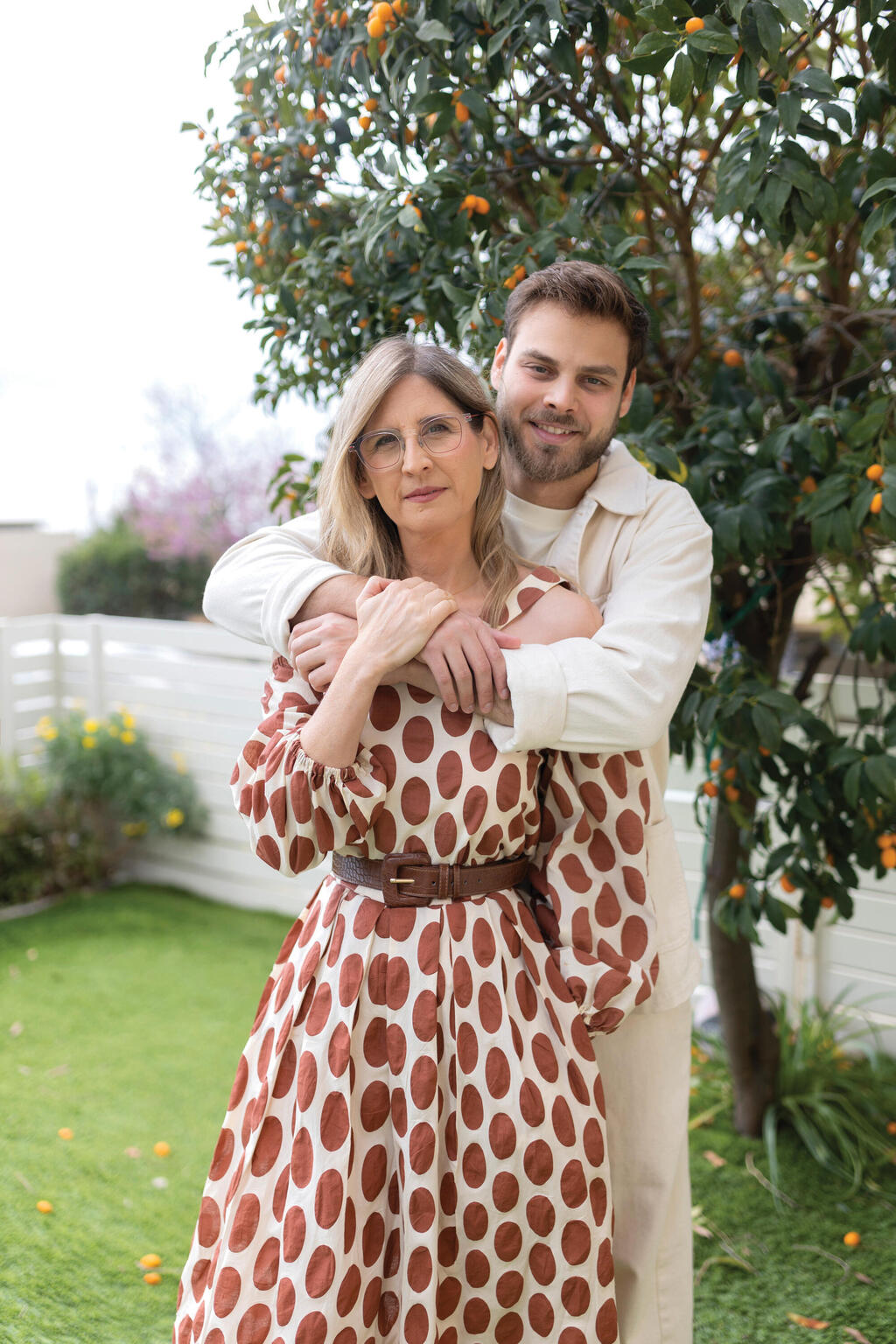
'I have a son who learned a great deal about himself — about his abilities and his strengths'
(Photo: Rotem Barak, Style: Sima Shoshan)
We’ve just gone through 40 days of war, and it continues in the north. How much do the bombings trigger him?
“He’s OK. It’s not a trigger for him because he didn’t experience that in captivity — he was in tunnels and didn’t hear the explosions in Gaza. His triggers are completely different. There was fear, but of a different kind.”
What is Alon doing these days?
“He’s doing what he always believed he would do — playing music. He’s incredibly talented. He started at age nine, did a classical piano recital for his matriculation exams and excelled. Music is truly part of him — it’s in his body, he’s constantly moving. Eli Sharabi described it beautifully when he said Alon would play music on his body in captivity, the music that was in his head. When Eli heard him play, he said, ‘I didn’t realize you were that good.’
“Alon knew music was part of him, but didn’t think he’d do it so publicly. If you had told him before captivity that at 24 he’d put on a show at Hangar 11 with artists like Shlomi Shaban, Alon Eder, Idan Amedi and Monica Sex, he wouldn’t have believed it. We all knew he was a gifted pianist before he did. The show happened because he wanted to say thank you — and because it heals him, gives him a sense of strength and victory. It’s something amazing.”
How is he physically?
“He’s recovering day by day, strengthening his body and treating his mind, and there’s constant improvement. On the day he was abducted he was injured in his right eye. After returning to Israel he underwent surgery, but he can barely see in it and it’s not repairable. It could have been fixed on October 7, but now it’s permanent damage.”
How did Alon’s captivity change you?
“Today I’m more aware of my strengths and abilities. Before, I was anonymous — maybe I influenced some students here and there — and now I feel I influence much wider circles. That’s something I did during those two years, and I want to continue — to spread light and goodness, to create hope, to believe we can emerge stronger from any crisis. People wished for me to return to being anonymous, but that’s not something I wish for myself. I now have a responsibility to show the world what I’ve learned and pass it on. We can overcome anything with love, giving and compassion. That’s what I talk about in my new lecture. I don’t think I need to go back to who I was — because in truth, I received many gifts on October 7. It wasn’t only hardship. I also saw the good things and the small gifts Alon sent me through various messages I felt I received from the universe.
“Amid all our personal joy at Alon’s return,” she adds, “we do not for a moment forget all those who lost their lives and the soldiers who sacrificed their lives or their physical and mental health. I think about the reservists and their spouses who carry this heavy burden. They are my heroes. On Passover eve we thought of them and mentioned them. They are always in our hearts, every day — not just on special occasions.”
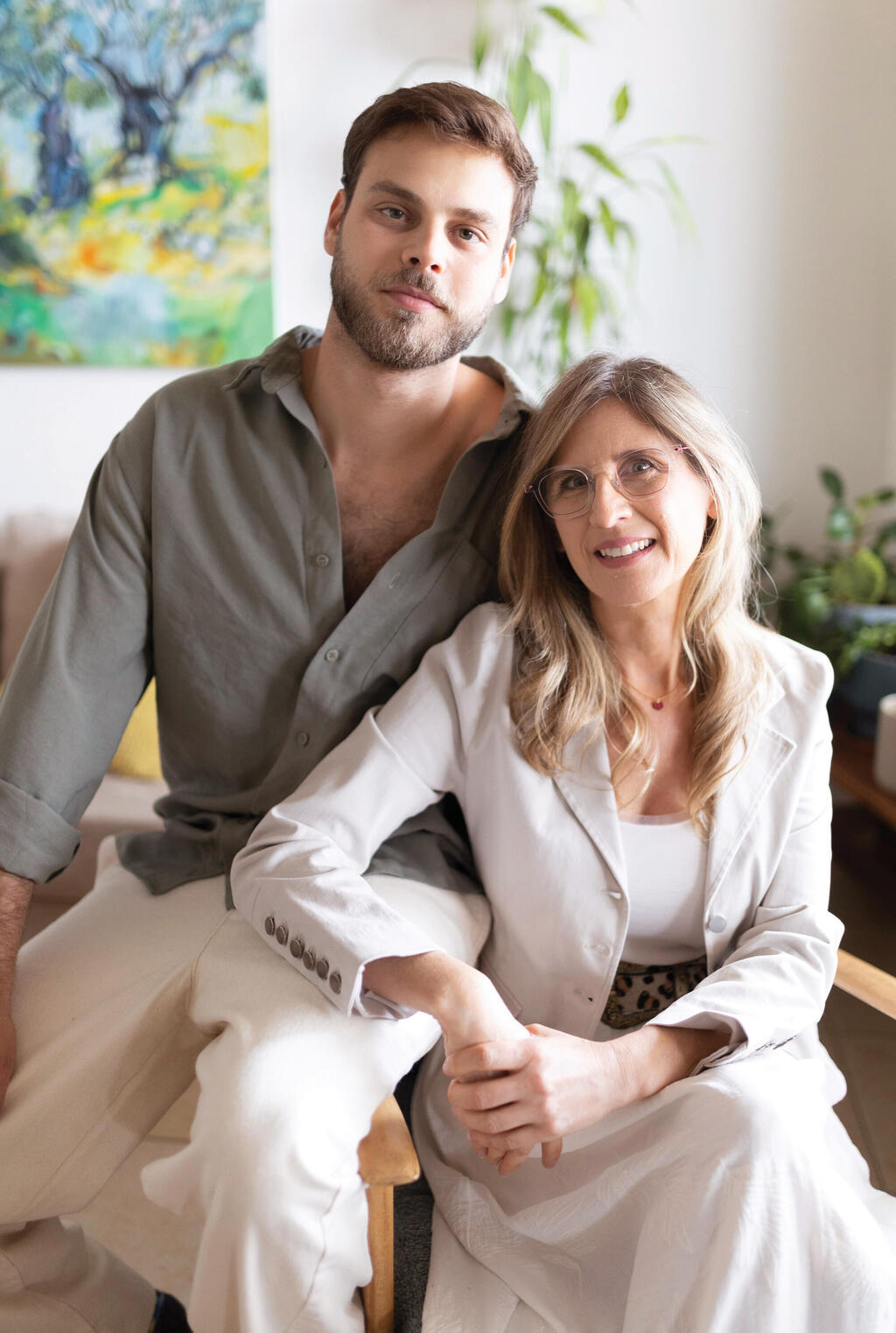
'The values and principles she instilled in me from a young age also helped me deal with the situations in captivity'
(Photo: Rotem Barak, Style: Sima Shoshan)
'I knew my mom was fighting for me like a lioness'
“I have a long recovery ahead of me. I’m dealing with traumas you read about in books, and also with the fact that I can’t see in one eye,” Alon Ohel says. “I think that simply telling my story helps me cope with those traumas. I go with the flow and try to remember what matters in life — the fact that I can open the fridge and take whatever I want to eat, that I can go wherever I want. I’m free.”
How did you react when you were exposed to your mother’s campaign for your release?
“It was clear to me that my mother was fighting for me like a lioness. The bond between a mother and a son is strong and can survive anything. The values and principles she instilled in me from a young age also helped me deal with the situations in captivity.”