

Lately, I have found myself storming through the house like a restless spirit, scooping up socks from the living room, running yet another load of laundry and wiping crumbs off the counter, all while muttering angry complaints into the air. They are not addressed to anyone in particular, but everyone at home knows exactly who they are meant for.
By sheer coincidence, and at exactly the right moment, a friend sent me an episode of the podcast "The Optimistic Home." She actually wanted to explain why I find it so hard to unpack a suitcase after a vacation. Without realizing it, she sent me into an eye-opening binge, guided by the calm, reassuring voice of Shirley Avnon Kraizel, involving our relationship with our homes.
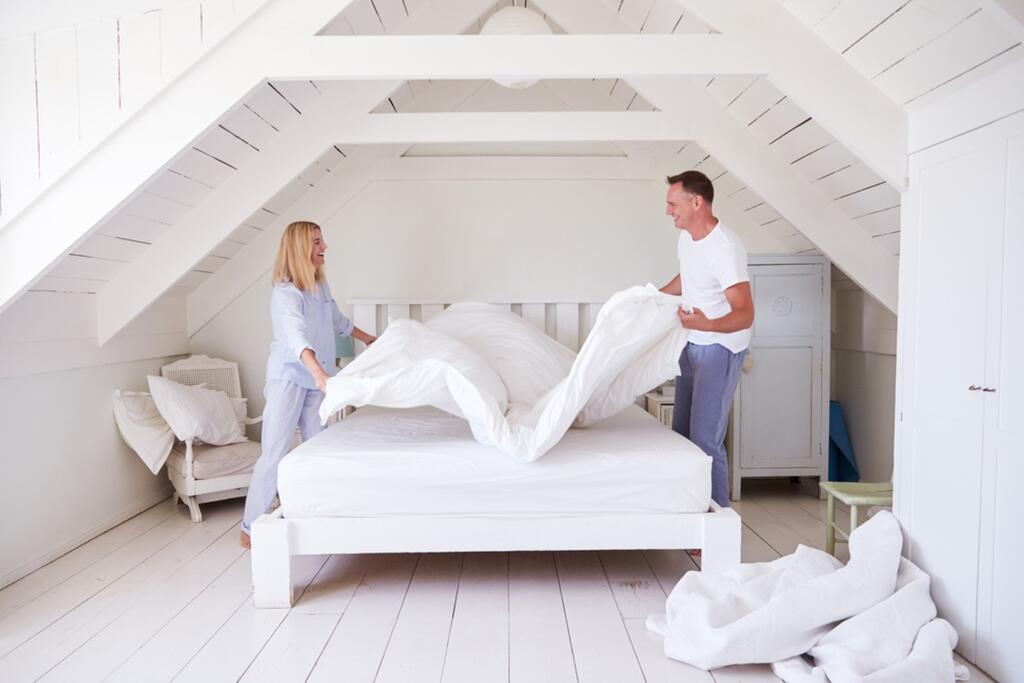
In her podcast and her book of the same name, Avnon Kraizel presents a holistic, empathetic philosophy toward the domestic space. "Our relationship with our home is just that, a relationship. Not employer and employee, but an intimate bond, a love relationship, similar to the ones we have with family," she says in an interview.
"It is something that needs care and investment. If we give the home love, it gives love back. It is not always easy, just as loving children or investing in a partnership is not always easy. But it is a deep relationship that lasts our entire lives, across different homes, from the house we are born into until the day we leave this world."

From therapy to the domestic sphere. Shirley Avnon Kraizel
(Photo: Sharon Stern)
Attention and love
Avnon Kraizel, 54, always knew she was drawn to therapeutic work. After completing her military service, she studied occupational therapy and worked in psychiatric wards, later continuing her studies in psychodrama. In her 30s, she met her husband, Oded, and gave birth to their three sons within four years.
"During all those early motherhood years, I worked at Tel Aviv University in the occupational therapy department. Personally, they were wonderful, meaningful years. Professionally, I always knew I had not yet found what I wanted to be. Something was missing, but I did not know what it was, and I was not free to figure it out," she says.
Her professional calling revealed itself almost by accident when she volunteered to organize the play corner at her son’s kindergarten. At the time, she was 40. The family had just moved from Tel Aviv to Kfar Saba, and she decided to quit her university job and take the opportunity to make a career change. The children were 6, 4 and 2.
"I finished unpacking the new house, hung pictures, and that was it. Two or three weeks passed and nothing happened. I felt bored and done. I knew the Montessori kindergarten was already chaotic early in the day. Because I love organizing and had time, I gathered my courage one morning and offered to organize the classroom. That is where it started. Within hours, I felt deeply connected to a passion of mine. I was doing what I loved most and what I was really good at. And it was not just me. The children, the parents, the teacher, everyone was shocked."
Until then, was organizing just a hobby?
"I've always loved tidying up and knew I was good at it, even as a teenager, when I would rearrange friends’ rooms."
Around that same period, three women close to her, two friends and her mother, were battling cancer. "I don't cook or bake, so when I visited them, I organized. They would lie on the couch and I would tidy up around them and say, 'If you are lying here, at least let it be pleasant.'
"Sadly, both my friends, Keren Yael, died. When Yael was dying in her bed and I came to say goodbye, we were lying together, looking at the ceiling, and I saw a filthy ceiling fan. I said, 'Yaeli, I cannot believe this is what you are seeing right now'. We both knew it was the end. I brought a ladder and a cloth and cleaned it. I am telling this story because, to me, that is giving. That is focused attention and love.
"There was a kind of clarity in it, an understanding that even in moments like those, this was what I could give. I see order as a gesture of love, just like baking or buying something. Even if she were alive today, there would be no reason to lie there and stare at a dirty ceiling fan."
Those years marked a turning point. Avnon Kraizel realized her hobby could become meaningful work. "I understood I had something to give that people needed. Everyone needs help at home. Suddenly, the words “home” and “therapy” connected. I called what I do “homes in treatment.” I realized I was still a therapist, just not in psychiatric wards, but with people inside their homes. Even when I am organizing a closet or a kitchen, I bring the therapist in me. It is deep, emotional work, because everything we are is inside the home."
After several years, she felt organizing alone was not enough and began styling homes. At 47, she decided to formally study interior design. "Not because clients demanded it, but because I felt it was necessary for my own confidence and professional grounding," she says.
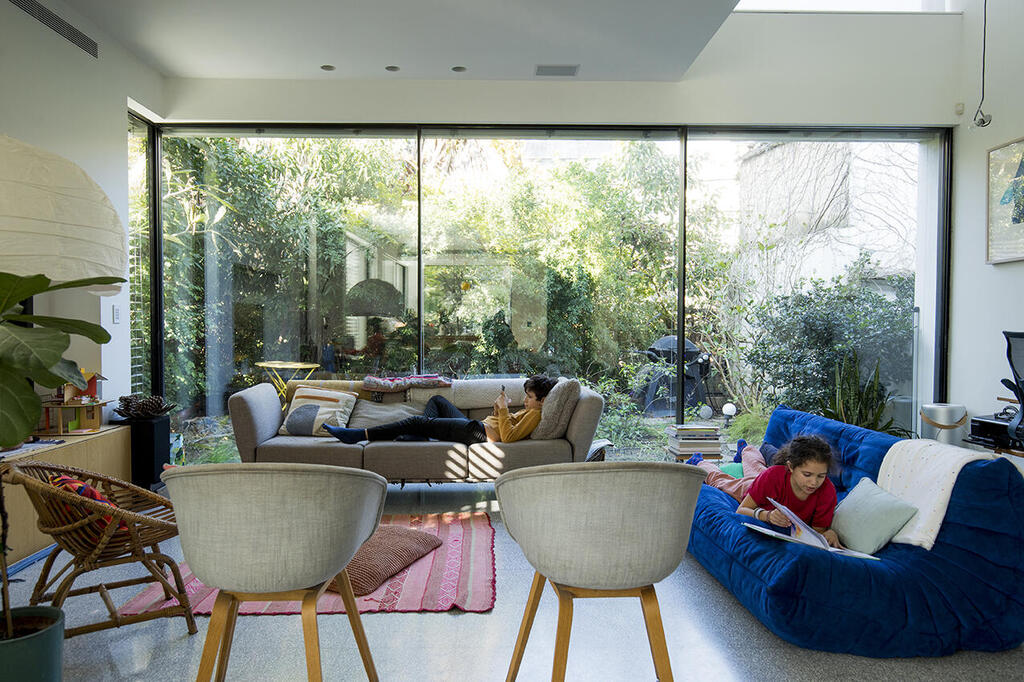
A book that would be like the Bible of the home, something to accompany you throughout your life
(Photo: Roni Cnaani)
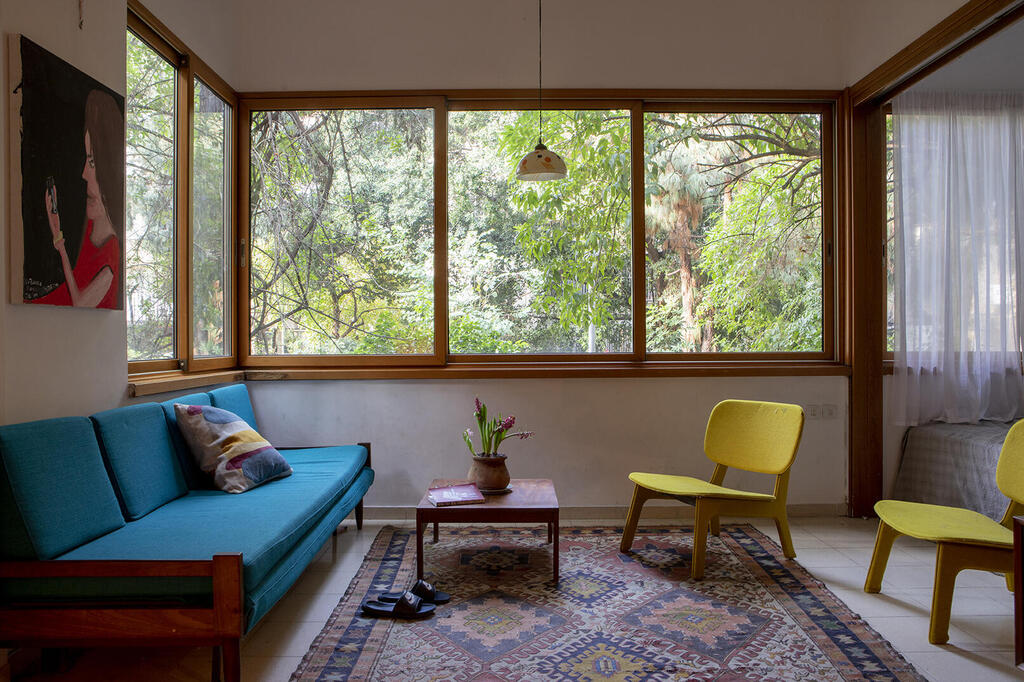
Intimate, inviting photographs, not the kind that create distance or turn people off
(Photo: Roni Cnaani)
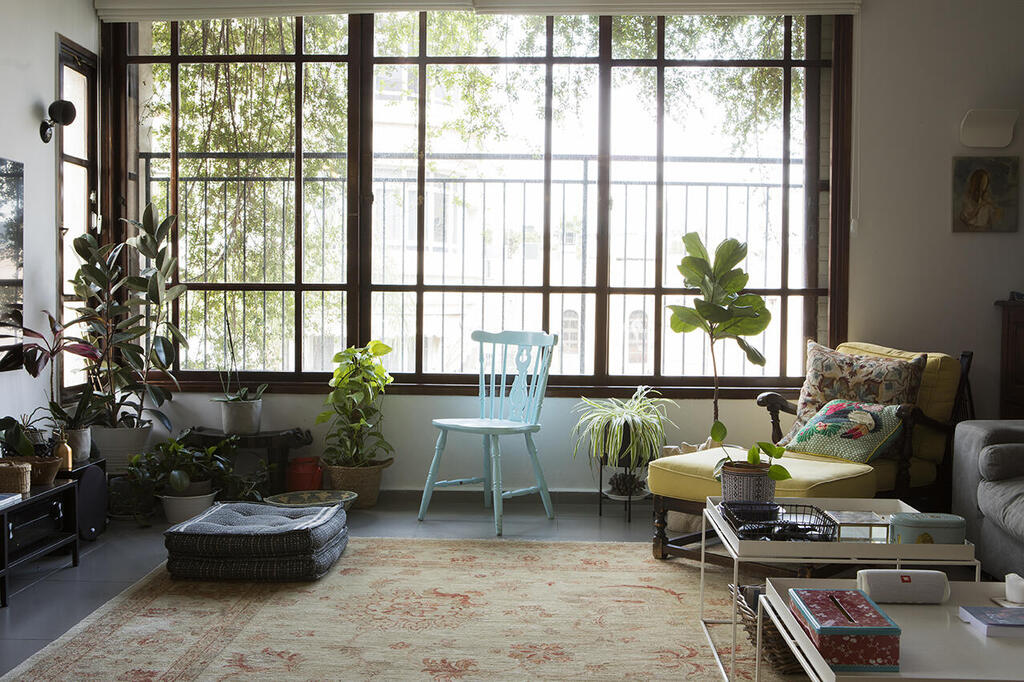
There is no single right kind of home
(Photo: Roni Cnaani)
When her studies ended, the COVID pandemic reshuffled everything. She began giving Zoom lectures on home organization, which led to a series of articles on the Haaretz website, distilling her accumulated insights about homes and the emotional dynamics within them. The reader responses repeatedly urged her to turn the material into a book.
"People wrote things like, 'My house never looked like this until I read your article,' or 'I wait for 8 p.m. Canada time to read your article aloud to the whole family.' One commenter, Avshalom, wrote every week, 'When is the book expected? I am waiting for the book.' I figured if there was one Avshalom, there were more. About four years ago, 'The Optimistic Home' was published."
What is it about?
"The book is both emotional and practical, she explains, aiming to answer how to give love to a home and receive love in return. It rests on three pillars: order and disorder, aesthetics and design, and relationships and dynamics within the household.
"I wanted it to be like a home bible, something that accompanies your life. You can open it, read a paragraph, recharge and give the house attention. Or decide you don't have the energy now and stay on the couch, letting the mess wait until tomorrow. The book includes texts and intimate photographs of homes that are loved, without any styling."
And that stands in contrast to the styled images we are used to seeing in magazines and on social media.
"That choice was deliberate. I wanted the photos to feel close, not like the images that turn you off. Seeing overly polished model shots can make you look in the mirror and feel self-loathing. Instead of that, I wanted to offer a different way of presenting things, one that does not showcase homes that are overly designed, overly wealthy, overly polished and heavily styled, but rather homes that are loved and normal.
"I wanted these to be homes that, when I look at their photographs, draw me closer to my own home and make me want to give it attention and love, while also creating an understanding that there is no single right kind of home. That is what a home looks like. That is good enough."
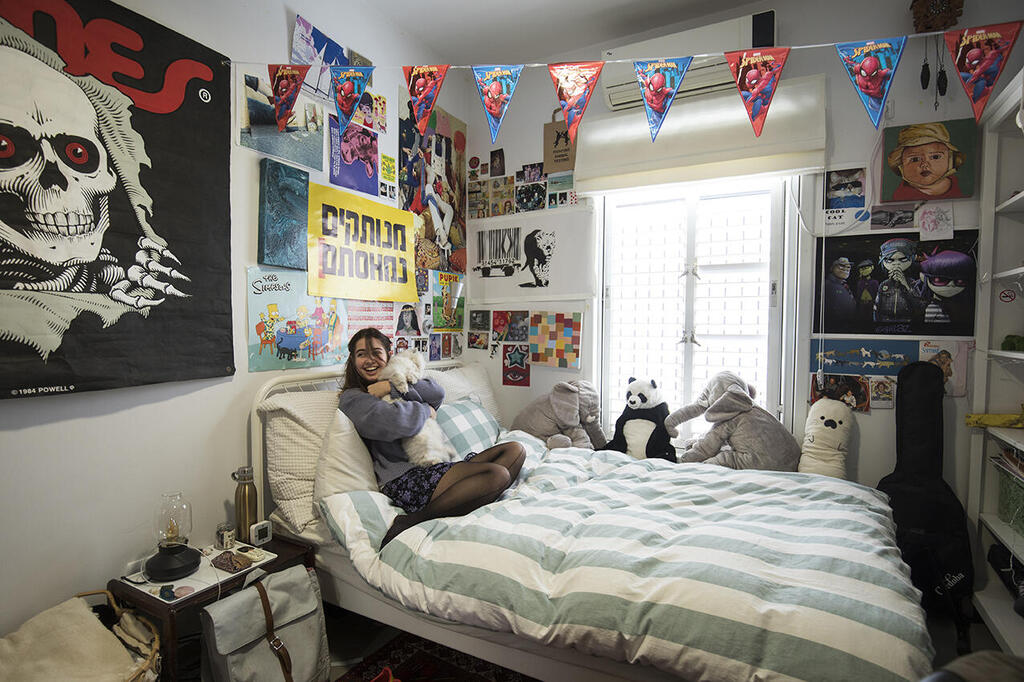
A good enough home: letting go of the fantasy of a perfect, social media–style house
(Photo: Roni Cnaani)
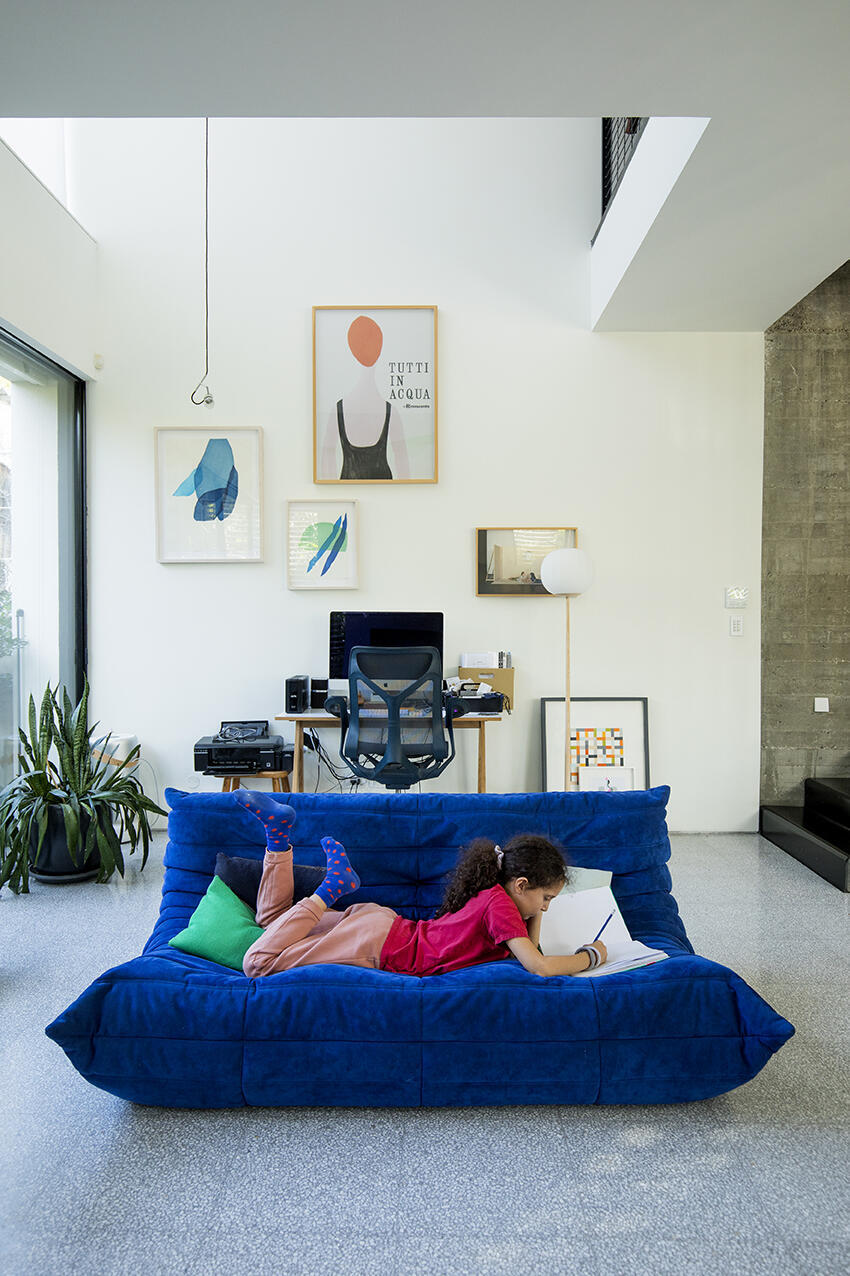
Order and disorder is cyclical
(Photo: Roni Cnaani)
What do you really think about the standards set by social media in this area?
"We live in a world with Instagram and Pinterest. Clearly, there is good and less good in it, but we have to live with it. We cannot cancel it, so I try to bring a voice of normalization and sanity.
"My content is about what I call a 'good enough home'. Letting go of the fantasy of a perfect home. Even those homes online required a lot of work, including removing life itself from the frame. You don't see cables or shoes. That is not real life."
"I am not saying there are no beautiful homes in the world, of course there are, and there are also well-cared-for homes. But we need to look at these images and understand how to take inspiration from them, not self-loathing. It is like looking at a model and still being able to recognize something of yourself, to take the material you are working with and do the best you can with it, to the best of your ability at this point."
How do you do that when your standards of order and cleanliness do not always match those of the rest of the household?
"This is the same idea of a 'good enough mother', meaning there is no perfect mother, only one who does the best she can; that is also the approach to the home. It means living in motion, with the understanding that sometimes I have the strength, energy, time and desire to give my home love, and it will be beautiful and cared for, and sometimes I do not.
"Objects move because people live here. When I lived alone, nothing moved. Today, I live with a husband, three sons and a dog. That's life."
Does that way of thinking help you make peace with the mess?
"It still drives me crazy sometimes. I am not meditating over piles of clutter all day. But I understand now that the home is our battery, and each of us recharges differently. Some people need everything in its place. Others need the comfort of things spread out."
She recalls a young woman who complained that her partner dropped his pants on the floor every day after work. Every time she would pick them up off the floor and fold them, while mumbling to herself, "What's wrong with him?" After a few months, when she finally worked up the courage and asked him why, he said, "I dream of that moment all day. It means I am home." He was not being lazy or provocative. It was his way of feeling at home.
Do you have any advice on how to overcome the sense of scorekeeping?
"Sometimes one side is very tidy and the other is very messy, and when the gaps are that wide, they often become fertile ground for conflict. It is complicated, and I don't have a simple formula. But one understanding I offer is this: if there is someone in the household who enjoys organizing and finds it easy, they should simply do it and let go of the sense of victimhood."
"It is also OK sometimes to feel like a victim, but at other times it is worth trying to let that go. You can tell yourself: I am organizing because it feels good to me, because it matters to me, because I enjoy it. If someone feels they need this, they are doing it for themselves, and along the way, everyone else benefits too."
She adds that life stages matter. "Our house is full all the time right now. There is no quiet reset moment. I accept that this is how it is, and it will not always be. I will miss it. Sometimes I zoom out and think how lucky I am. I have a family, a partnership, a dog. Everything is happening. It does not look like a poster. This is life."
After listening to several episodes, I admit I started finding something charming about mess.
"The writer Alona Frankel once said that all beautiful things are not orderly," Avnon Kraizel says. "Think about a festive table. It starts looking beautiful and arranged. Then you eat, enjoy, and how does it look at the end? Or how does a neatly made bed look after making love? That is what enjoyment looks like. This is the juice of life and it's not tidy."
She also finds comfort in thinking of order and disorder as cyclical. "Like the moon cycle. It is not a straight line. Order, mess, order again. If I accept that, I am not surprised or upset. If I know how to tidy up, I am not alarmed by mess. I know what to do."
A practice workbook and longing for home
Recently, she also launched the workbook, Simple Habits for an Optimistic Home, together with social psychologist Cilla Zack. It offers reflective exercises about habits, expectations and preferences at home.
"It is an adult workbook format, something I can sit with on my own or together with family members and answer different questions and exercises that reconnect me to the home. We all carry around certain truths, sometimes for an entire lifetime, without ever stopping to ask whether they are actually true."
Following October 7, she also co-founded a podcast called "Bereshit" (Genesis) with Ray Segev and Sharon Segev, created as a temporary home for someone who had lost her physical one.
"On October 10, 2023, three days after the war broke out, I remembered that I had once sent my book to a woman from Be’eri. I started searching my records and found the name Sharon Segev. I had no idea what had happened to her. Two weeks later, I saw her online and discovered that she and her family had survived, but their home had been completely burned down. The book, of course, burned with it.
"I decided to write to her on Instagram: 'Hi, this is Shirley, the writer of The Optimistic Home. You will have an optimistic home again. I will bring you a book for your new house.' A month later, I traveled to the Dead Sea with Ray, a podcaster and content creator, to record an episode with Sharon Segev about longing for the home she had lost. There was an immediate click, and that same day Sharon told us she wanted her own podcast. Ray and I decided to take it on as a project and created 'Bereshit.' It is a podcast by the three of us. Ray handles the technical side, I oversee the content, and Sharon is the voice. The goal was to create a podcast that would be her home until she has a new physical one."
Did you learn anything new about the concept of "home" as a result?
"I learned that home is many things. Walls, family, community. Haim Jelin returned to live in Be’eri just 36 hours after the war began, because for him, that was home, even though he was there alone. He needed to be on that land.
"Sharon, who was staying in a hotel, simply wanted a place of her own. Some people felt that if they were with their partner and children, that was their home, even if they moved from the kibbutz to Tel Aviv. For each person, home means something different, and for recovery, everyone needs an anchor. And that anchor is different for each person."
Avnon Kraizel’s tips for giving love to your home and receiving it back:
- When sorting belongings, divide them into three groups: keep, discard, donate. Plan the donation in advance, so bags do not linger by the door.
- Create a daily habit of letting items leave the house, just like taking out the trash.
- Organize before you buy. Deep sorting reveals what you actually need.
- A home, like a person, has different states. Everyday "good enough" look is fine. You may keep a festive look for guests.
- Caring for the home is a daily practice, just like caring for yourself.
- Use gentle language such as "putting things back" and "giving the home attention."
- Your relationship with your home changes over time, like waves.
- People fall on a spectrum between neat and messy, and those gaps shape household dynamics.
- Be compassionate with yourself. Organizing often means letting go of past choices and life stages. If you're not organizing your home, it may be genuinely hard for you to do so.
- A home is not a magazine spread, and tidying is not for inspection or photos.
- Embrace the idea that "good enough is the best I can do right now."