


The new film The Invite, directed by and starring Olivia Wilde, explores the relationship between Joe (Seth Rogen) and Angela (Olivia Wilde), who invite their upstairs neighbors — Pina (Penélope Cruz) and Hook (Edward Norton) — over for dinner. By the end of the evening, everything has unraveled, and neither couple will be the same again.
The film explores intimacy and desire in long-term relationships, asking what happens when one couple encounters another — and why those interactions so often trigger insecurity, comparison and emotional upheaval.
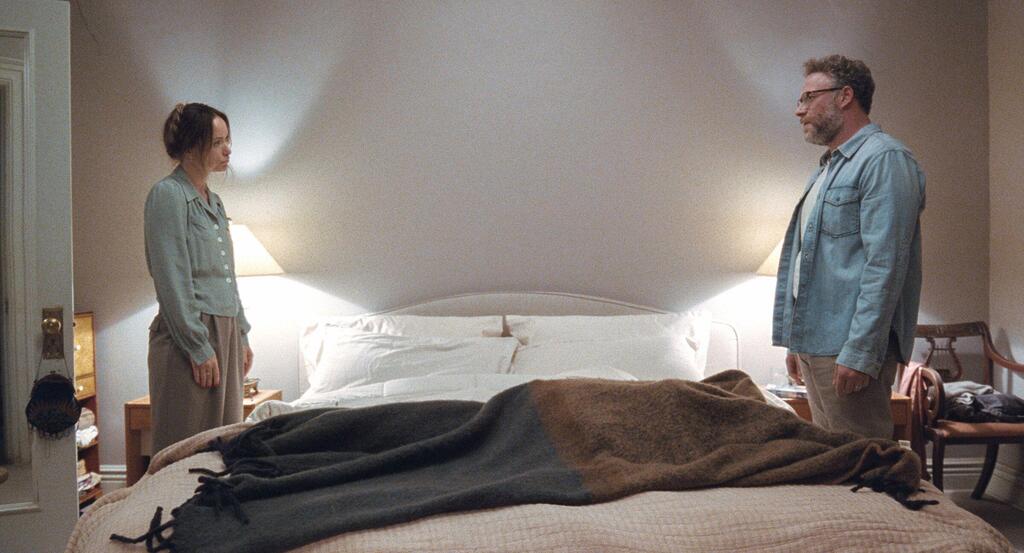
One of the film's more humorous questions is one many people have encountered in real life: Is it acceptable to tell your neighbors they're having sex too loudly?
Dr. Irit Kleiner Paz, a clinical psychologist, head of Tel Aviv University's psychoanalytic couples therapy program and author of The Coupled Unconscious, says it's legally permissible — but psychologically revealing.
"Legally, you're allowed to complain to your neighbors about loud moaning," she said. "But there's something missing in that reaction. The more interesting psychological question is: Why? Why do people feel compelled to confront their neighbors and say, 'We can hear you'? They could simply close the window, put in earplugs or protect themselves."
What do you think motivates that?
"It's not really the noise that's bothering them," she said. "I think it's an attempt to suppress something — to suppress the awareness that there is 'other sex,' as Israeli poet Yona Wallach described it. It's like hearing a party and wanting to silence it because you're hurt you weren't invited. It reflects the frustration of the people doing the silencing."
Is it jealousy?
"A person with greater self-awareness might say, 'Wow, I hear my neighbors having sex and it makes me jealous. It makes me long for something similar. I wish I had that kind of sex. I wish I could forget there are younger people out there enjoying life.' Instead, they go and tell the neighbors to be quiet. It's childish."
Why do other couples affect us so much? In The Invite, the dinner between the two couples stirs intense emotions. Kleiner Paz says that's hardly surprising.
"These kinds of gatherings are very common in Israel," she said. "People socialize with friends, parents from their children's preschool or neighbors. There's something inherently exciting about those encounters, even before sexuality enters the picture."
What makes them so emotionally charged?
"They invite comparison. Couples live together, but what people present to the outside world isn't what really happens behind closed doors. Reality is much more ordinary — children, chores, daily life. Passion and romance often fade over time. Then another couple comes along, and suddenly questions emerge."
Whether it's a preschool event or a neighborhood gathering, she said, couples inevitably begin observing one another. "There's tremendous curiosity, comparison and jealousy."
People in their 30s and 40s, she added, are often especially competitive. "These are the years when you're building yourself, your family and your home. You see it on social media all the time: Who has the nicer house? Whose wife is thinner? Who has better muscles? Men compete too. It's already a highly competitive and emotionally charged situation."
Seeing your partner through someone else's eyes
According to Kleiner Paz, encounters with other couples force people to reassess themselves.
"It's an opportunity to ask ourselves what we're worth and how we're perceived," she said. "Because long-term relationships tend to settle into routine, every new person who enters the picture stirs the water. Suddenly a woman meets another woman and starts seeing her husband differently because she's viewing him through the guest's eyes."
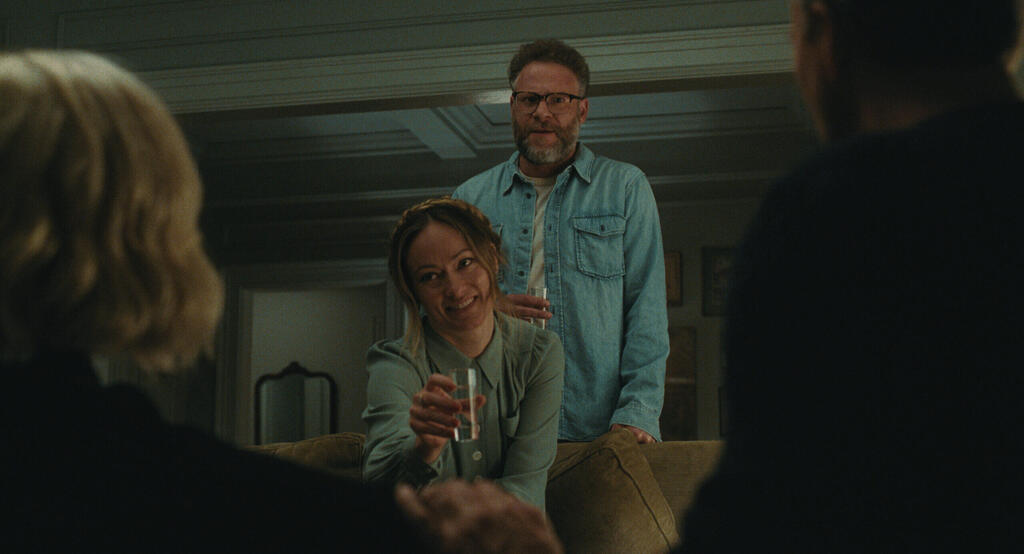
From 'The Invite'
(Photo: Courtesy of Lev Cinema)
So other people become mirrors?
"It's a reflection, and it can go in two directions. It can remind us why we fell in love with our partner in the first place. But it can also make us think, 'Maybe I could have found someone better. What am I doing with this person? That man is more interesting, earns more money, is more attractive or funnier.'"
Is the grass always greener?
"We're all susceptible to that. People post photos from vacations in a jacuzzi, not pictures of themselves cleaning up after dinner. The same happens when we host guests. We all present our best selves. We've dressed up, put on perfume. We're meeting one another's social masks, not reality. It's a hall of mirrors."
Every such encounter, she said, carries the potential to create emotional turbulence.
"It can leave us feeling that everyone else's relationship is more exciting than ours. That's the danger. There's so much happening beneath the surface — competition, influence, jealousy. It's important to remember that people bring their best selves to these gatherings, while we know the full reality only of our own lives."
Learning from other couples
Not all comparisons are harmful. Kleiner Paz recently led a workshop for couples affected by the war, where participants shared how they had coped with trauma.
"Each couple hears how others are dealing with things," she said. "A quieter couple may learn something valuable from a more open one. Meeting other couples can be incredibly enriching because it shows there are different ways to navigate relationships."
 Dr. Irit Kleiner Paz Photo: Courtesy
She believes that much of the benefit comes from breaking out of life's natural narrowing process.
"As we go through life, our world becomes smaller. We know only our own sexuality, our own routines, our own parenting style. Every other person or couple offers an alternative and reminds us that life can be different. That difference can become the starting point for renewal and growth."
Does the same dynamic exist in same-sex relationships? Does this mechanism also apply to gay, lesbian and bisexual couples?
"Absolutely. No one is immune to jealousy or comparison. It has nothing to do with sexual orientation."
She noted, however, that norms can differ. "In the gay community, there's greater acceptance of sexual freedom. Inviting another partner to an orgy can be considered normal. It's more acceptable to invite someone — whether familiar or not — into your sex life to introduce variety. Among lesbians, that's generally less common."
Why do people seek novelty? Where does the desire to involve another couple come from?
"When I lecture about open relationships, I begin with prehistory. Based on archaeological research, early humans probably formed pair bonds until a child reached about age 4, then returned to living as individuals within the group.
"If we're asking what our most basic nature is, it's probably what researchers call serial monogamy. After four or five years, people naturally begin wanting to experience another body. But social and religious norms tell us to remain with one partner, while our biological and evolutionary instincts seek novelty and variety. That's an unavoidable conflict."
She argues that longer life expectancy has only intensified the challenge.
"People used to marry, have two or three children and die around age 40. They didn't have time to become bored. Today people may live to 90. That means we're expected to spend about 60 years with the same sexual partner, and that creates genuine tension."
Keeping relationships alive
As a therapist, what do you recommend to couples who don't want an open relationship but feel dissatisfied?
"Spend time together — not only sexually. Stay curious. Curiosity is one of the best antidotes to boredom. Be curious about what else you can discover about yourself and about your partner — their feelings, thoughts, struggles and sexuality.
"A relationship that stays alive doesn't have to rely on bringing other people into it."