

For 11 years, she arrived at countless emergency scenes, from the Mount Meron stampede disaster and the October 7 attack to the collapse of the apartment building in Surfside, Florida. She knew how to identify and approach those who needed her, sometimes before the people around her understood it themselves, and brought comfort to many. This week, Lucy, the first therapy dog of United Hatzalah’s Resilience Unit, died at her home in Jerusalem.
“If I close my eyes and think of Lucy, the first thing that comes to mind is her gaze, which said so much,” said her owner and volunteer partner, Batya Yaffe. “She always knew how to take me to where help was needed. She was amazing at trauma scenes.”
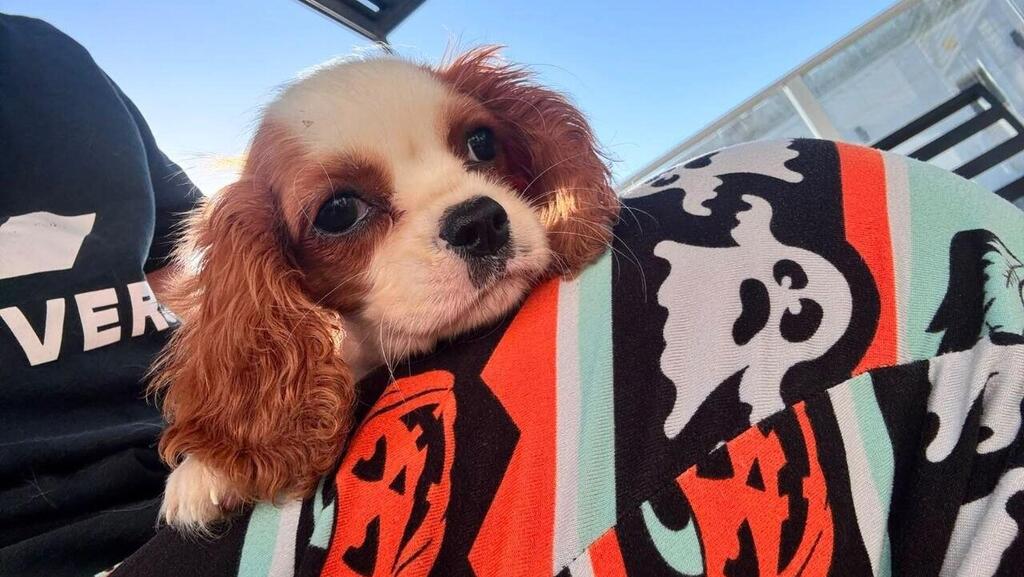
When Lucy was a young dog, Batya and her husband, Moshe Yaffe, a medic and therapist in United Hatzalah’s Resilience Unit, decided to train her using a unique method that would allow her to help trauma victims at emergency scenes. After about a year and a half of training, she became the first therapy dog to operate as part of United Hatzalah’s Resilience Unit, and the unit’s first four-legged volunteer.
At first, Batya said, the idea of bringing a dog to emergency and trauma scenes was not self-evident. “When I started the United Hatzalah Resilience course, no one understood what I was doing there with a dog, but United Hatzalah allowed me to do it. I would always ask in each case whether it was appropriate to bring Lucy, because we don’t want to bring more fear and more trauma into a trauma scene.”
Over the years, Batya and Lucy became part of the work of United Hatzalah’s Resilience Unit and responded together to countless calls, attacks, accidents and disasters. Lucy worked at the Mount Meron disaster, during the October 7 attack and the Swords of Iron War, and also during Operation Rising Lion. For Batya, the small moments within the major scenes demonstrated more than anything Lucy’s ability to identify on her own who needed help.
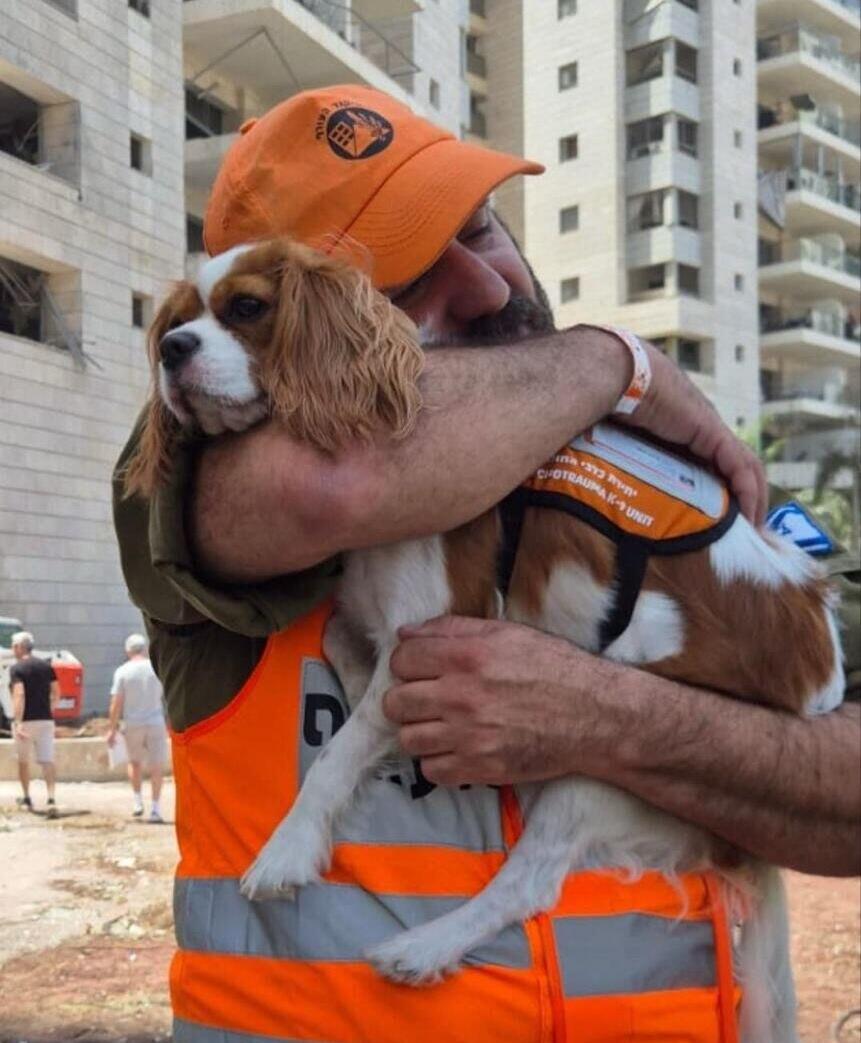
Lucy at the scene of a disaster
(Photo: United Hatzalah)
One of the first cases etched in her memory occurred during a fire at a fireworks factory in Kfar Saba. “We drove two hours to get there. I was walking around with Lucy, trying to approach children and people wandering around there who could receive support. Lucy pulled me toward a firefighter who was ready to enter the factory, and she was pulling me. I felt it was not appropriate to interrupt him, but she was pulling.”
Batya decided to trust her. “Then I saw that the firefighter really went down on his knees to receive Lucy. He took off his helmet and I saw he had tears in his eyes. He explained to me that his nephew was one of the two people inside the factory. Lucy strengthened him and gave him hope.”
One of the pair’s most prominent missions was in 2021, after the collapse of the residential tower in Surfside, Florida. “On the first day, we arrived at the hotel where the families of the missing were staying. The elevator opened and an elderly woman came out with her granddaughter. The girl asked what the dog was doing there, and I explained to her that we had come to help, and tears welled up in her eyes. The granddaughter said, ‘Grandma, this dog came for you.’ That grandmother lost three grandchildren in the disaster there. She hugged Lucy. At the hotel, Lucy approached everyone, and everyone started petting her and talking. That is how we reached every family circle. We were a real part of the help there.”
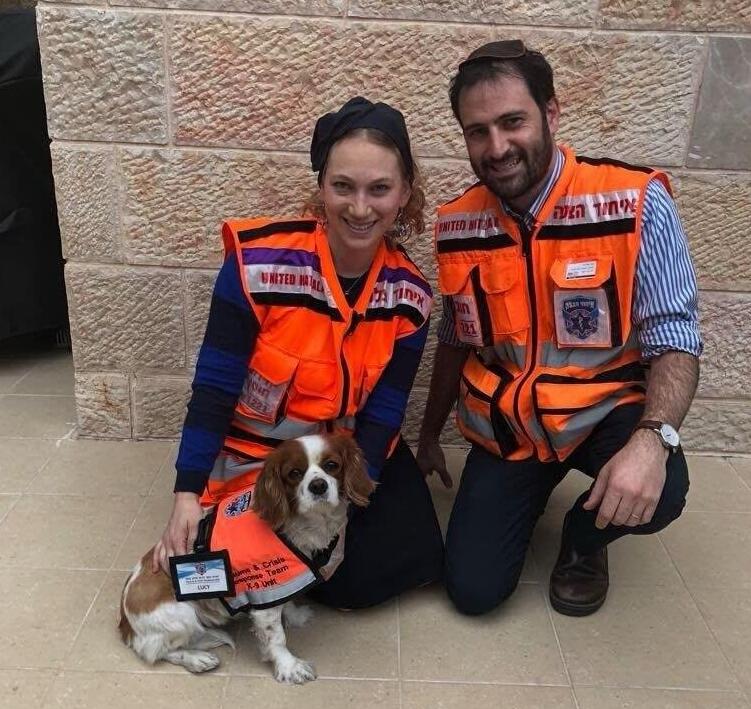
Lucy and her owners, Batya and Moshe Yaffe
(Photo: United Hatzalah)
What began more than a decade ago with Lucy became, over the years, part of the work of United Hatzalah’s Resilience Unit. After her, additional dogs were trained, and today dozens of dogs operate as part of the unit, helping trauma victims.
“Lucy was much more than a therapy dog,” said Eli Beer, president and founder of United Hatzalah, in his farewell to her. “She reached the most difficult places and managed to reach people’s hearts in moments when words were no longer enough. She paved a path that dozens of dogs and volunteers continue on today, and her legacy will continue to help people for many years to come.”
For Batya, Lucy was not only the dog she went on missions with, but also the partner who protected her. “Lucy and I went through so much. Reaching trauma scenes can be hard for me, too. And having my partner there who protects me, there is something very special in our bond, in the way we know how to protect each other.”