

A monumental dam excavated at the Siloam Pool in the City of David National Park has now been dated in a joint study by the Israel Antiquities Authority and the Weizmann Institute of Science to the reign of the kings of Judah, Joash or Amaziah. Its construction may have been a creative solution to the climate crisis about 2,800 years ago. Its dimensions are about 12 meters high, over 8 meters wide, and the uncovered length reaches 21 meters.
A climate crisis about 2,800 years ago brought the Kings of Judah to create a massive wall in Jerusalem, according to research published Monday in the prestigious scientific journal PNAS.
Gallery
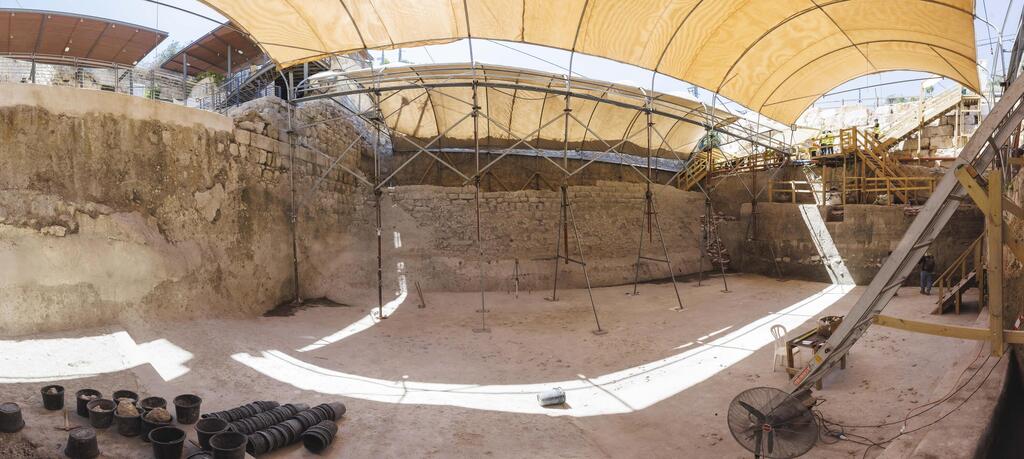
The massive dam wall uncovered in the Israel Antiquities Authority excavations at the Pool of Siloam in the City of David.
(Photo: Eliyahu Yanai, City of David)
The wall was uncovered in excavations of the Siloam Pool in the City of David National Park by the Israel Antiquities Authority. It was built around 805–795 BCE, during the reigns of Kings Joash or Amaziah of Judah.
“This is the largest dam ever discovered in Israel and the earliest one ever found in Jerusalem. Its dimensions are remarkable: about 12 meters high, over 8 meters wide, and the uncovered length reaches 21 meters – continuing beyond the limits of the current excavation," stated the excavation directors, Dr. Nahshon Szanton, Itamar Berko and Dr. Filip Vukosavović on behalf of the Israel Antiquities Authority.
"The dam was designed to collect waters from the Gihon Spring as well as floodwaters flowing down the main valley of ancient Jerusalem (the historical Tyropoeon Valley) to the Kidron Stream, providing a dual solution for both water shortages and flash floods.”
"The dam was designed to collect waters from the Gihon Spring as well as floodwaters flowing down the main valley of ancient Jerusalem (the historical Tyropoeon Valley) to the Kidron Stream, providing a dual solution for both water shortages and flash floods", the directors stated.
“Thanks to highly precise scientific dating, this is the first time it is possible to point with certainty to a structure that formed the basis for the construction of the Siloam Pool, which until now we knew only from the Bible and historical sources,” adds Itamar Berko.
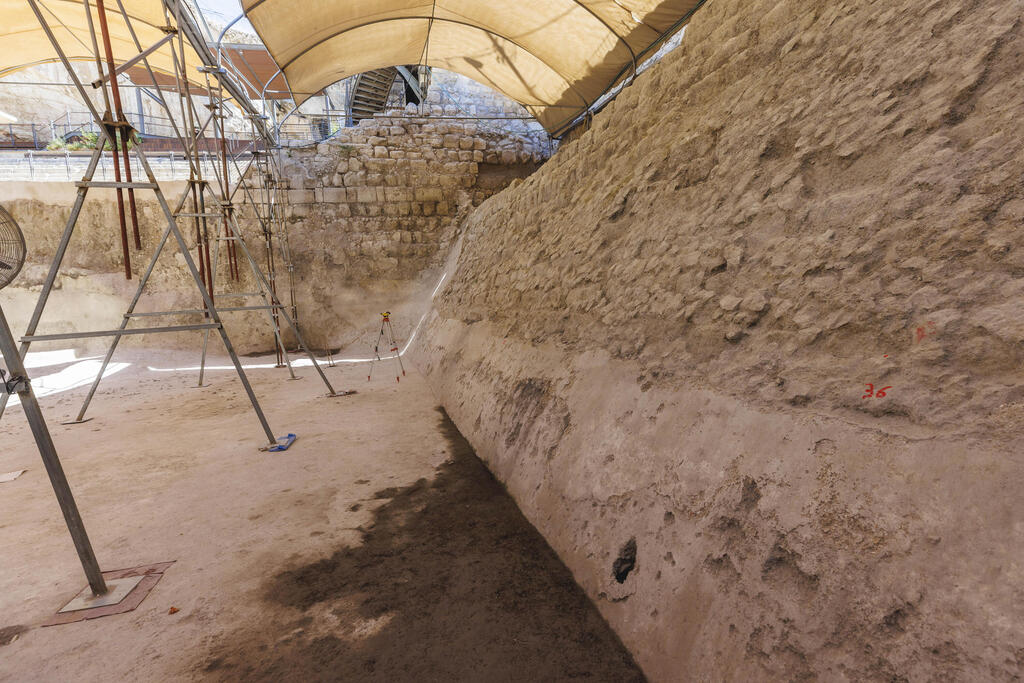
The wall of the dam. A look from the south
(Photo:Eliyahu Yanai, City of David)
Dr. Johanna Regev and Professor Elisabetta Boaretto of the Weizmann Institute of Science, who employed advanced micro-archaeological methods and extremely high-precision radiocarbon dating, explained: “Short-lived twigs and branches embedded in the dam’s construction mortar provided a clear date at the end of the 9th century BCE, with extraordinary resolution of only about 10 years – a rare achievement when dating ancient finds."
"To complete the climatic reconstruction, we integrated this dating with existing climate data from Dead Sea cores, from Soreq Cave, and from solar activity records influencing the formation of certain chemical elements. All the data pointed to a period of low rainfall in the Land of Israel, interspersed with short and intense storms that could cause flooding. It follows that the establishment of such large-scale water systems was a direct response to climate change and arid conditions that included flash floods."
The newly uncovered structure joins two other water systems from the same period discovered in the City of David: an imposing tower that dammed the Gihon Spring, and a water system that gathered water from the Gihon, directed through a channel into the Siloam Pool, where it was joined by floodwaters blocked by the dam.
These systems, according to the researchers, reflect comprehensive urban planning for managing Jerusalem’s water supply as early as the late 9th century BCE – clear evidence of the city’s power and sophistication.
According to Szanton: "The collaboration between the Weizmann Institute researchers and the Israel Antiquities Authority offers new insight into the challenges faced by the inhabitants of ancient Jerusalem. This massive royal construction project influenced the city’s development, particularly its southern and western parts – including Mount Zion – which relied on the waters of the Siloam Pool."

The steps of the Pool of Siloam
(Photo: Eliyahu Yanai, City of David)
Eli Escusido, director of the Israel Antiquities Authority, said: “This is one of the most impressive and significant First Temple-period remains in Jerusalem, and has been preserved to an extraordinary degree. The revealed dam is awe-inspiring and opens new avenues of research. The discovery of the dam and the Siloam Pool in the City of David is the result of perseverance, professionalism and archaeological determination. In recent years, Jerusalem has been revealed more than ever before, with all its periods, layers and cultures – and many surprises still await us."
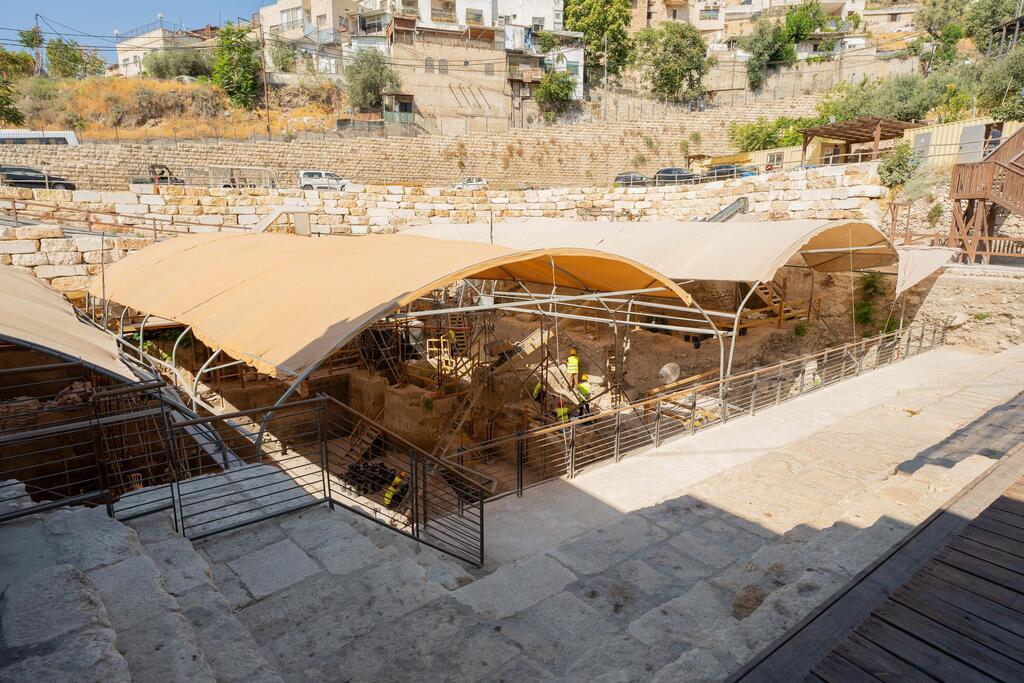
Israel Antiquities Authority excavations – the Pool of Siloam in the City of David
(Photo: Lior Daskal, City of David)
Heritage Minister Rabbi Amichai Eliyahu added, “The discovery of the largest dam ever found in Israel, in the heart of ancient Jerusalem, is tangible evidence of the strength of the Kingdom of Judah and the creativity of its kings in dealing with natural and environmental challenges. Already 2,800 years ago, the residents of Jerusalem found sophisticated ways to apply outstanding engineering ingenuity and devise creative solutions to a severe climate crisis. The combination of the exact sciences with archaeological research sheds new and indisputable light on our nation’s history in the days of the First Temple."
The new research will be presented at the 26th City of David Studies Conference in early September, under the title “The Lost Pool – The Enigma of Siloam.”