


Losing the shore: A new report by Adam Teva V’Din warns that Israel is in the 11th hour when it comes to saving its Mediterranean beaches.
“We must change our approach and thinking about the coastline,” the organization said.
Gallery
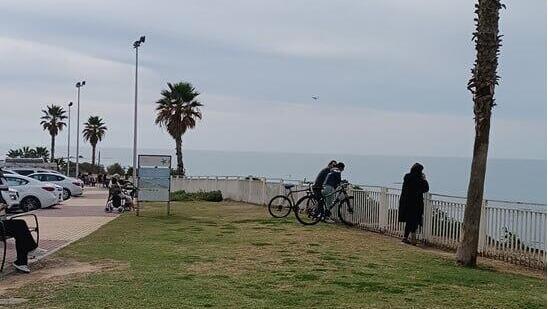
Here they want to build a 24-story building instead of a promenade that will be used by the general public
(Photo: Yael Dori)
The report outlines the main threats to Israel’s coastline, including development, breakwaters, runoff pollution, climate change, collapsing cliffs and beach management. In 2012, the Society for the Protection of Nature in Israel said each Israeli had less than 2 centimeters of beach left. Since then, Israel’s population has grown by more than a quarter, adding more than 2 million people to the crowded coastal strip.
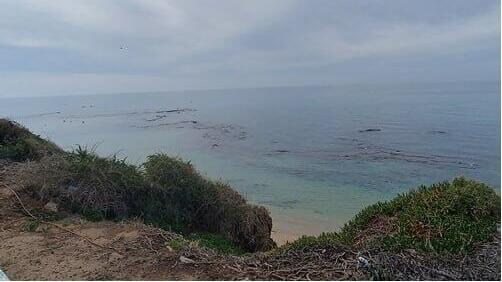
Beach on border between Bat Yam and Tel Aviv
(Photo: Yael Dori)
A private entrepreneur took over
The key threats are development, breakwaters, drainage systems that carry polluted runoff into the sea, climate change, cliff collapse and beach management. Despite the worsening situation, the organization says existing beaches can still be preserved and rehabilitated.
“Today, we must stop for a moment in the race to provide quick fixes, or as people say, ‘putting on Band-Aids,’ and promote holistic, forward-looking planning and management aimed at preserving the coastline, in all its aspects, for the years ahead,” said Yael Dori, head of planning at Adam Teva V’Din.
Blue Bay Beach, Netanya’s northernmost bathing beach, is cited as a troubling example. Surrounded by an impressive cliff, partly natural and undeveloped, the beach is crossed by the Israel National Trail and is considered one of the area’s most beautiful. It lies in an area once declared a nature reserve, but a private developer has taken over the beach and built a massive commercial structure almost up to the waterline. In winter, when the sea rises, passage along the beach becomes impossible. The organization is expected to file a petition demanding the demolition of the construction and the return of the beach to the public.
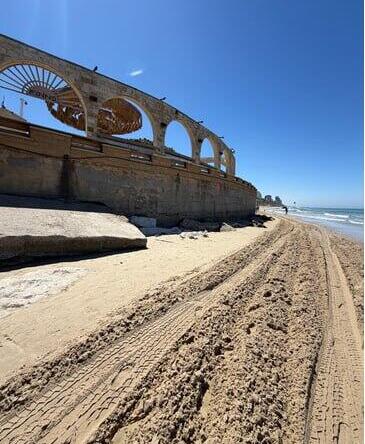
Blue Beach Bay, Netanya’s northernmost bathing beach
(Photo: Adam Teva V’Din )
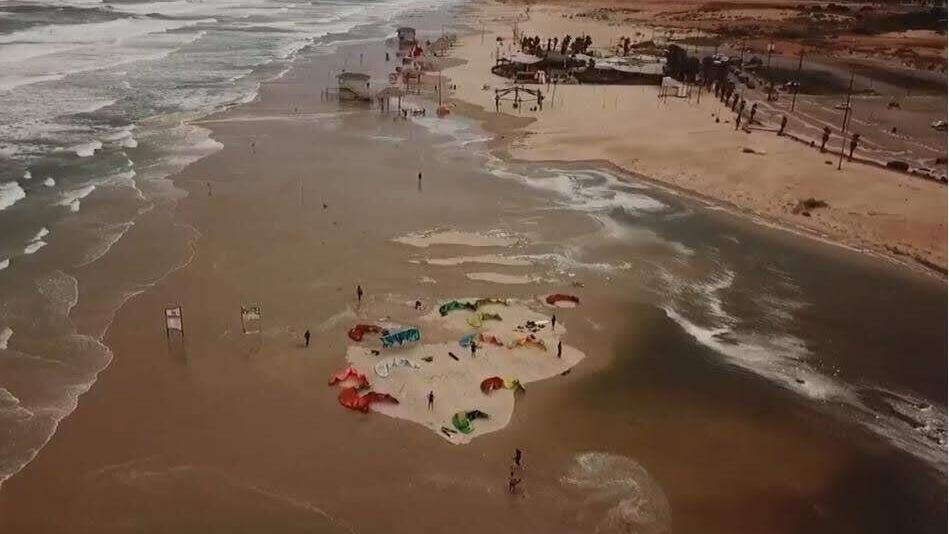
Poleg Beach in winter, almost no beach left
(Photo: Rika Edelman)
Poleg Beach is another sensitive coastal area. It serves as an ecological corridor linking the Poleg reserve and stream estuary to the south with the Irises Reserve and winter pond to the north. Yet an old plan is being advanced there to build six huge structures about 150 meters from the shore. Two are already under construction. The concern is that intensive development, lighting, human traffic, waste and related impacts will severely harm the ecological corridor and the area’s unique natural assets.
Between Tel Aviv and Herzliya, a rare natural coastal stretch remains, but plans to expand a separate beach nearby include new infrastructure and a 300-meter wall that would squeeze beachgoers between it and the nearby cliff.
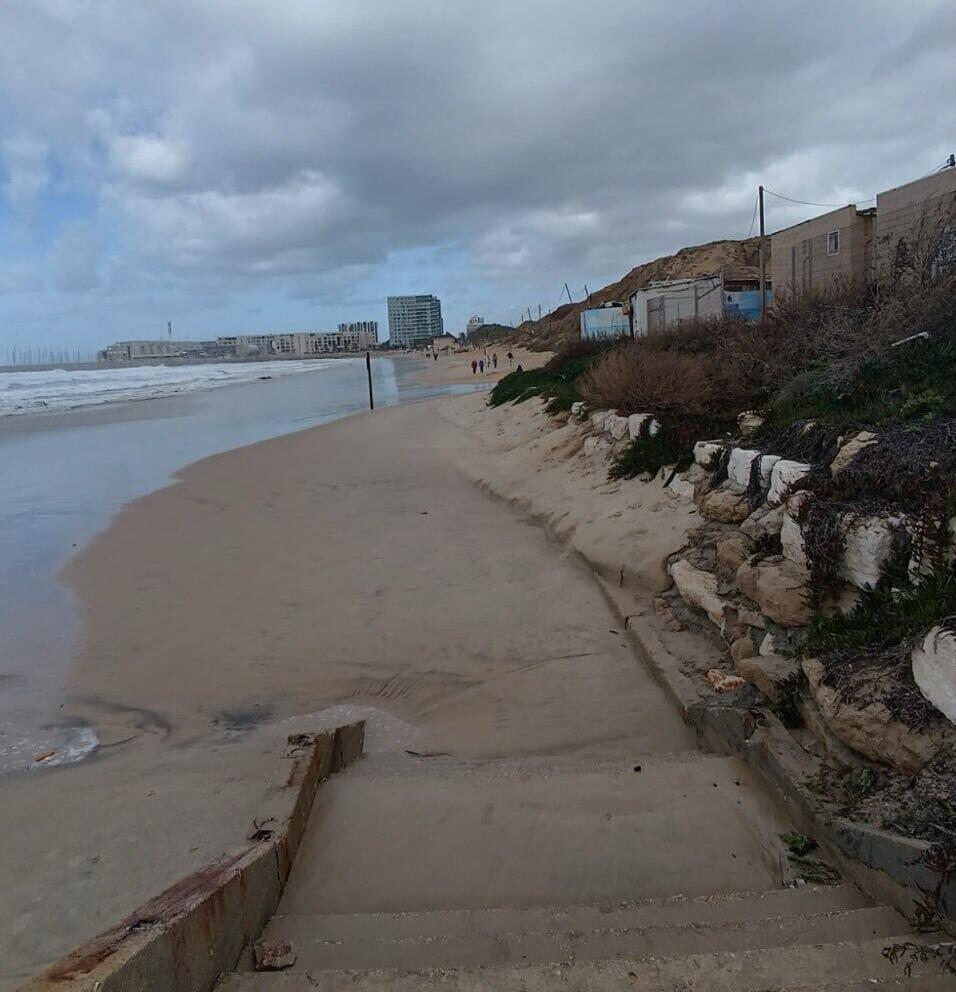
Beach in Herzliya
(Photo: Yael Dori)
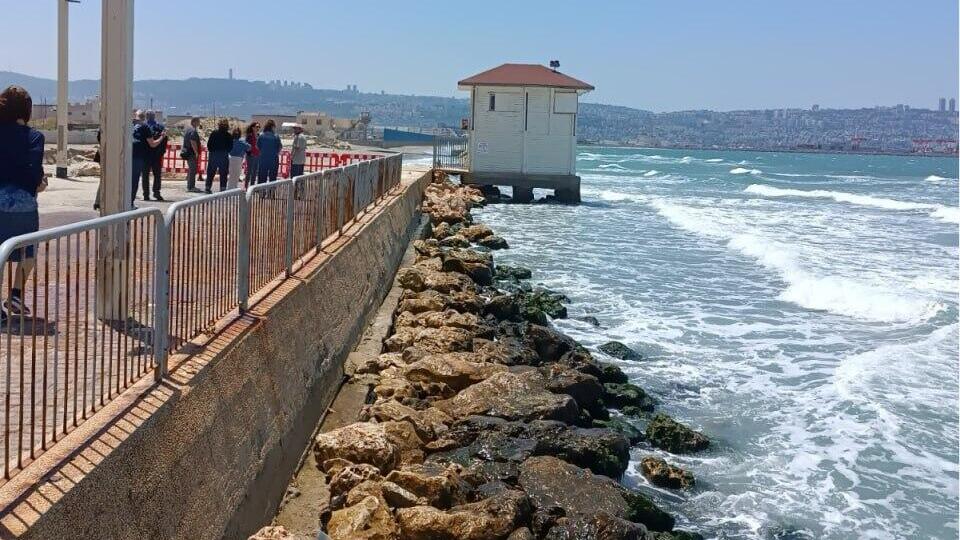
Breakwater at Kiryat Haim Beach
(Photo: Yael Dori)
The report also warns against relying on local breakwater projects, such as the plan for seven breakwaters in Kiryat Haim. Breakwaters may protect the beach directly behind them, but they increase erosion on neighboring beaches. Without a national plan, the organization warns, Israel could end up with a “wall of breakwaters” along its entire coastline.
The report also points to collapsing cliffs, rising sea levels and runoff as growing threats. Adam Teva V’Din says coastal authorities should direct runoff eastward, store it and allow it to seep into groundwater. It also calls for updating coastal planning based on future shoreline projections, warning that old plans allowing construction near the water could prove destructive.
Part of the Sidney Ali Cliff in Herzliya collapsed
(Photo: Boaz Gold)


“In Israel, sea level rise is significantly faster than the global average,” said attorney Ortal Senkar of the organization’s legal department. “The sea level keeps rising, and meanwhile massive construction is being approved on the beaches. If we do not wake up now and implement a comprehensive national plan to protect the beaches, one that addresses all the threats together, we will simply lose our beaches.”