


The softshell turtle was not always endangered in Israel. In the mid-20th century, relatively large populations existed in the country, but their numbers gradually declined until the species reached a critical level of endangerment. Today, following restoration and population recovery efforts by the Israel Nature and Parks Authority, in cooperation with drainage authorities, the turtles are classified as “only” endangered.
Most of Israel’s softshell turtle breeding activity takes place in coastal streams, where populations face pressures from development, hydrological changes, nest predation and damage to nesting areas. During every breeding season, authority employees patrol the streams in search of nesting sites. Egg nests nearing hatching are fenced off and guarded.
Turtle breeding activity at Alexander River
(צילום: אופיר בירקנשטיין ונעה עומייסי)


Dr. Dana Milstein, an aquatic habitat ecologist at the Israel Nature and Parks Authority, has led efforts to manage and conserve softshell turtles in recent years. According to her, the current breeding season is the best in years.
“If between 2018 and 2025 we recorded 77 to 113 nests per year in Israel, this year we passed 160 nests, and we are at the end of the nesting season, which is not over yet,” Milstein said excitedly. “Nothing like this has ever happened in Israel. We are also suddenly seeing egg-laying in places where we had never seen it before.”
In 2025, about 51% of nests hatched successfully. Lower predation rates were recorded at sites where intensive protection measures were implemented for nests and nesting areas. At Nahal Alexander, there are two permanent nesting sites that include fencing around areas containing eggs. At other locations, seasonal nesting sites have been established over the years. Last year, fences were installed at Ein Afek Nature Reserve and Nahal Na’aman.
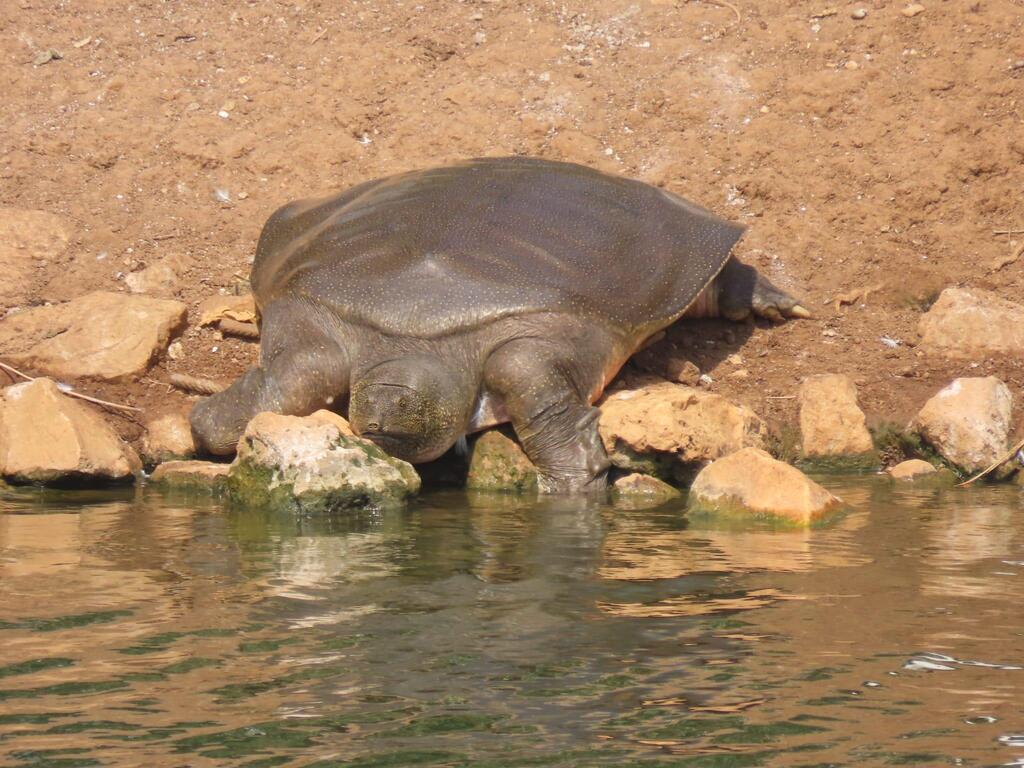
The softshell turtle (Trionyx triunguis) is one of Israel’s threatened reptile species. The local turtles are part of the Mediterranean population of the species, which is classified by the International Union for Conservation of Nature (IUCN) as critically endangered. The species is long-lived and can survive for more than 50 years.
Females lay eggs along riverbanks, usually between May and July, with clutches typically containing between 20 and 60 eggs. However, the number varies by location. At sites such as Nahal Ada, authority employees found only nine eggs in a nest, compared with about 60 eggs in nests at Nahal Alexander. Most of Israel’s softshell turtle nesting sites are located along coastal streams, including Nahal Na’aman and Ein Afek Nature Reserve, Nahal Dalia (the Nahal Dalia Marsh Reserve and the Nahal Dalia estuary), Nahal Taninim, Nahal Ada, Nahal Alexanderand the Yarkon River.
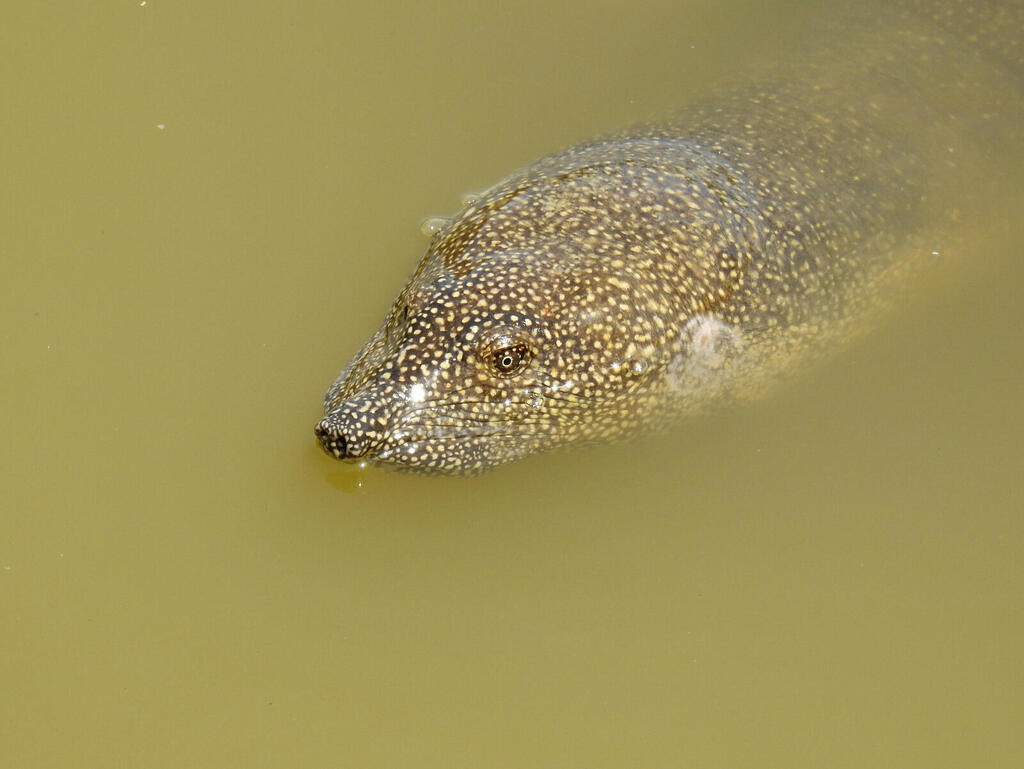
'There has been a dramatic increase in nesting'
(Photo: Olga Rybak, Israel Nature and Parks Authority)
The greatest excitement over the nesting activity has been recorded at the Yarkon River, as the nests are evidence of the successful rehabilitation of the riverbanks.
“We are very happy to see the softshell turtle nests,” said Liav Shalem, an ecologist with Ganei Yahushua. “We carried out restoration work at the site, which enabled the return of the softshell turtle to nesting areas. Among other things, we identified a nesting site near the Maccabiah Bridge, where the disaster occurred. We fenced off the nests to prevent jackals, another species that has begun establishing itself in the Tel Aviv area, from preying on them.”
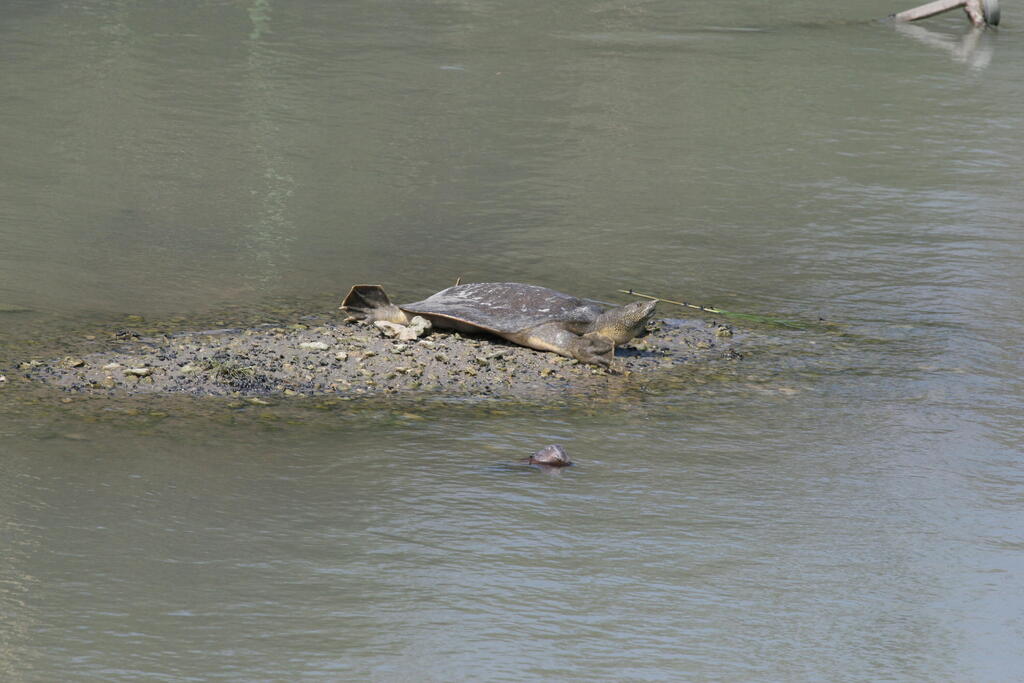
Most of Israel’s softshell turtle breeding activity takes place in coastal streams
(Photo: Dotan Rotem, Israel Nature and Parks Authority)
In addition to the coastal populations, there is a population in the Hula Valley that originated from the transfer of individual turtles to northern Israel in the 1960s. Following pollution in Nahal Alexander, softshell turtles were moved to wetland habitats in northern Israel, including the Hula Nature Reserve and the Sea of Galilee, where no natural population of the species existed.
“After several years, we realized that the population there was problematic because the softshell turtles prey on the eggs of ground-nesting birds. They are not part of the natural population,” Milstein explained. As a result, the Israel Nature and Parks Authority decided to remove adult turtles from the Hula Reserve and transfer them to coastal streams.
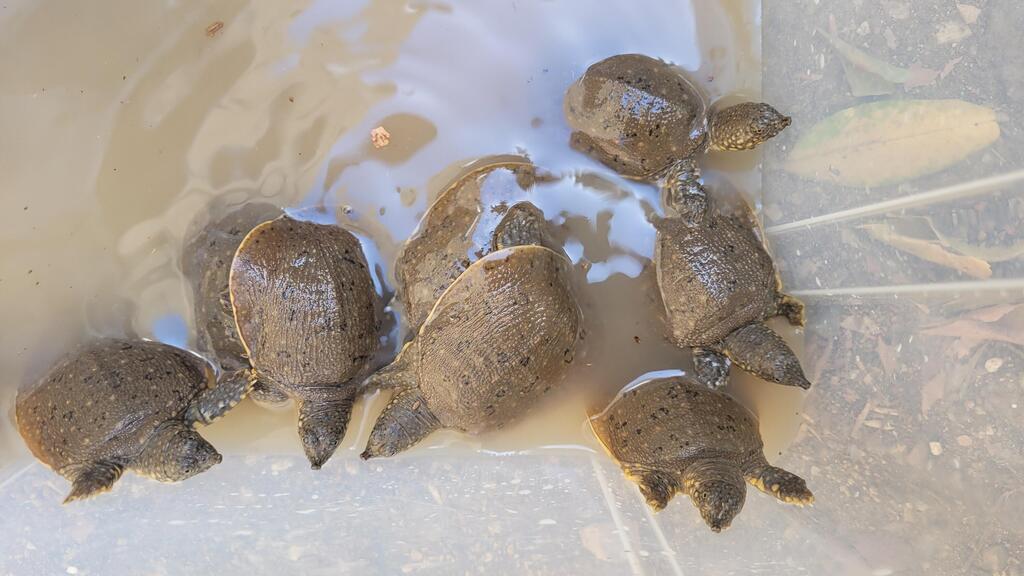
Softshell turtle
(Photo: Eti Nefrin, Israel Nature and Parks Authority)
So why has there been an increase in the number of nests? Is it because Israel experienced a rainy winter? “It is impossible to really know,” Milstein said. “But there has been a dramatic increase in nesting, especially at Nahal Na’aman. In the past, there were about 10 nests there per season, and today we have passed 60 nests. Something is happening there.”