


The mango industry has long been considered one of the most profitable sectors in Israeli agriculture. It produces an average of 55,000-65,000 tons a year, with about 30% of the crop exported, mainly to Europe.
But Israel’s competitive advantage has eroded. Major producers in Latin America and Africa are offering European consumers mangoes during longer parts of the year and at lower costs.
Gallery
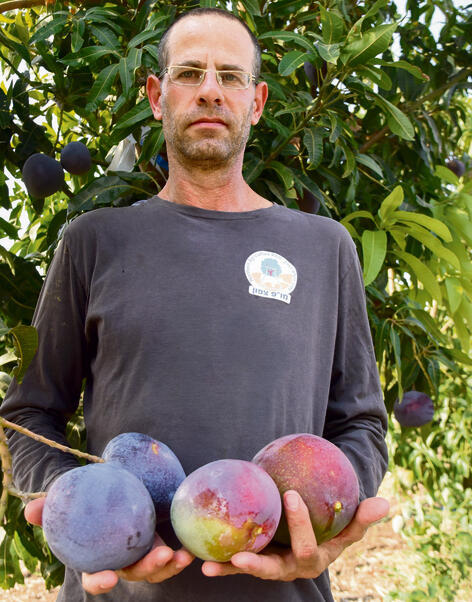
Dr. Navot Galpaz. He leads the project in cooperation with the Ministry of Agriculture and Food Security and the Mango Board at the Fruit Division
(Photo: Avihu Shapira)
At Northern R&D, the largest agricultural research and development center in northern Israel, researchers are trying to find a solution. In an experimental plot belonging to the center, which is part of the MIGAL research institute at Tel-Hai University, hundreds of different mango seedlings are currently being grown. Each differs from the others and carries different genetic traits as a result of crossbreeding varieties. From among them is expected to emerge the next generation of the popular fruit.
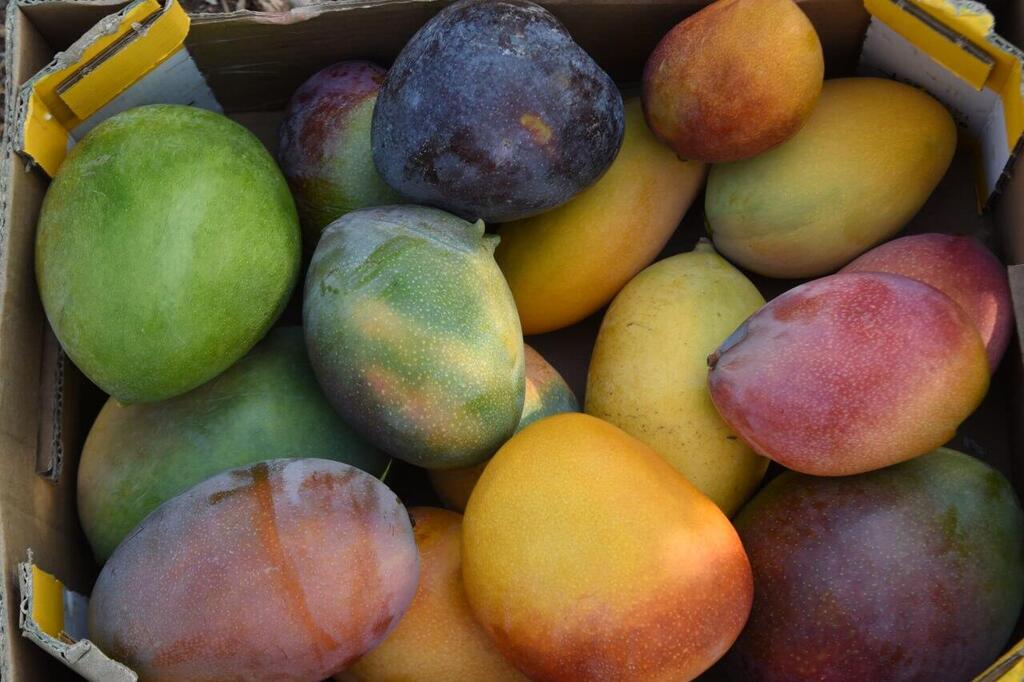
Researchers at Northern R&D explain that Israel’s main varieties suffer from commercial drawbacks that vary from one variety to another: small fruit, internal damage, green skin, a short marketing window and limited storage ability.
(Photo: Avihu Shapira)
“Keitt mango, for example, is considered one of the highest-quality varieties in terms of flavor and fruit quality, but its skin remains green, making it difficult to compete in European markets against more colorful varieties,” explains Dr. Navot Galpaz, who leads the project in cooperation with the Ministry of Agriculture and Food Security and the Mango Board at the Fruit Division. “We are trying to develop a variety that will preserve Keitt’s qualities but will also be more colorful, produce higher yields and be more resilient. It is a very complex combination.”
The goals defined for the breeding program include extending the marketing season (from the current July-September period to June-November), creating fruit without fibers, with a long shelf life, colorful skin and consistent yields. To achieve this, the research team combined about 20 wild species and varieties from different sources.
(Photo: Avihu Shapira)
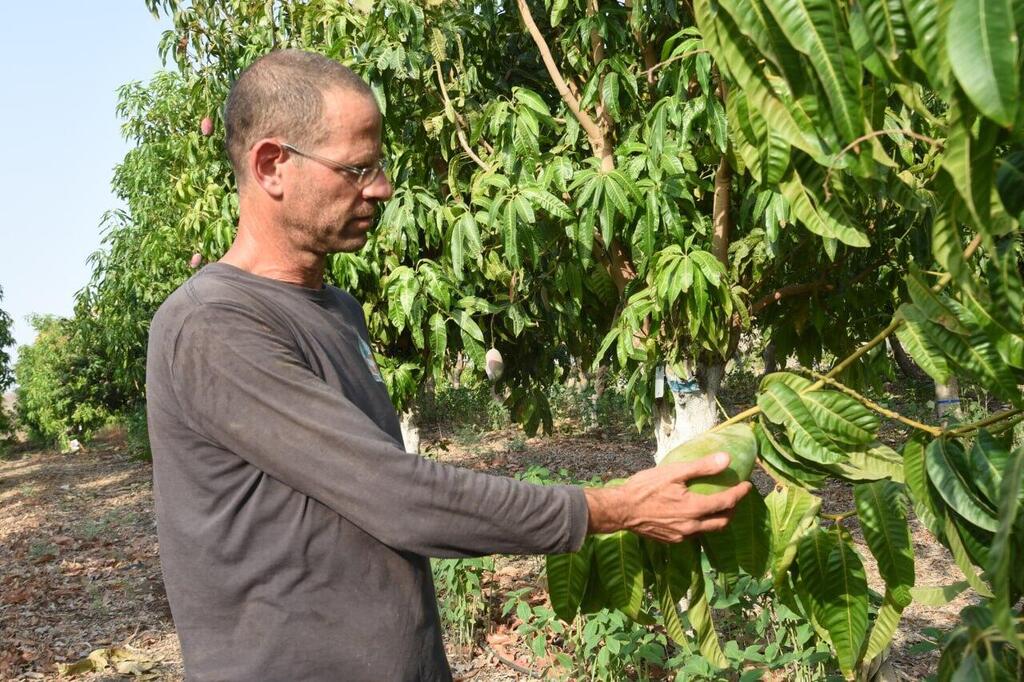
“In the first year of the study, 2025, about 700 different seeds were already characterized,” Dr. Galpaz says. “You can think of them as 700 siblings with a shared origin, but each one is genetically different. The more seeds we examine, the greater the chance of finding the ultimate fruit.”
At the end of the first year of activity, five promising types were selected. One of them, named “Deep Purple,” stood out due to its late ripening period, deep purple color, high fruit quality and significant yield potential. The variety was planted this summer in several experimental plots throughout Israel, and researchers are now waiting to see whether it can fulfill its potential on a larger scale.
“Developing a new fruit tree variety is a marathon, not a sprint,” Dr. Galpaz says. “The journey from identifying a promising candidate to commercial planting can take more than a decade. However, if the program succeeds, it could determine what Israeli mangoes will look like in international markets in the coming decades.”