

As temperatures rise and sea levels increase globally, placing millions at risk of severe flooding, Greenland is experiencing the opposite effect.
Researchers at the Lamont-Doherty Earth Observatory, a leading geophysical research center at Columbia University in New York, have found that sea levels around the world’s largest island are actually expected to fall, despite accelerating ice melt caused by heat-trapping emissions, Euronews reports.
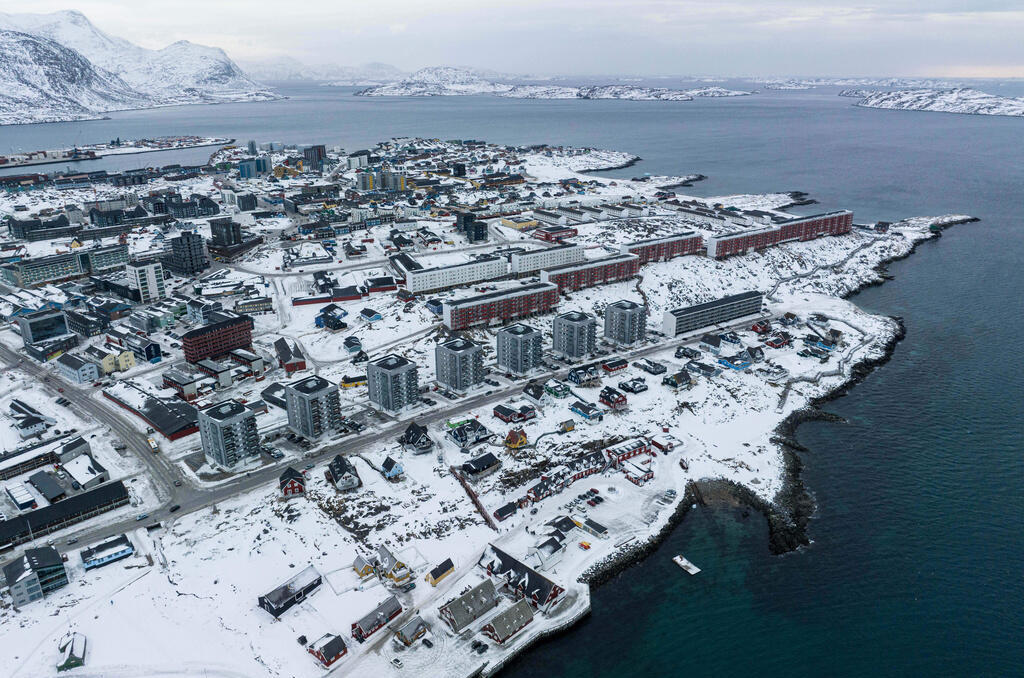
The study published in Science Communications projects that, under a low greenhouse gas emissions scenario, sea levels around Greenland could drop by up to 0.9 meters by 2100. Under a high-emissions scenario, the drop could reach 2.5 meters.
It may seem paradoxical for an island mostly covered in ice to see a drop in sea level as the planet warms, but that’s exactly why Greenland is an anomaly. Researchers point to two main reasons: First, the melting of the ice sheet—a glacier-like body up to a kilometer thick that covers 80% of the island—leads to land uplift beneath the ice. The second reason is gravity, a less widely recognized factor.
These two forces could account for up to 30% of Greenland’s projected sea-level drop, the researchers said.
Dr. Jacqueline Austermann, a co-author of the study, compares the land’s response to ice mass loss to the way a memory foam mattress rises when someone gets off it.
Lauren Lewright, a PhD candidate in geophysics at Lamont-Doherty, explained the gravity factor. “When the ice sheet is very large, it has a lot of mass. The sea surface is pulled toward the ice sheet because of that gravitational pull. As the ice sheet loses mass, its gravitational pull on the sea surface decreases, translating into sea level fall," she explains.
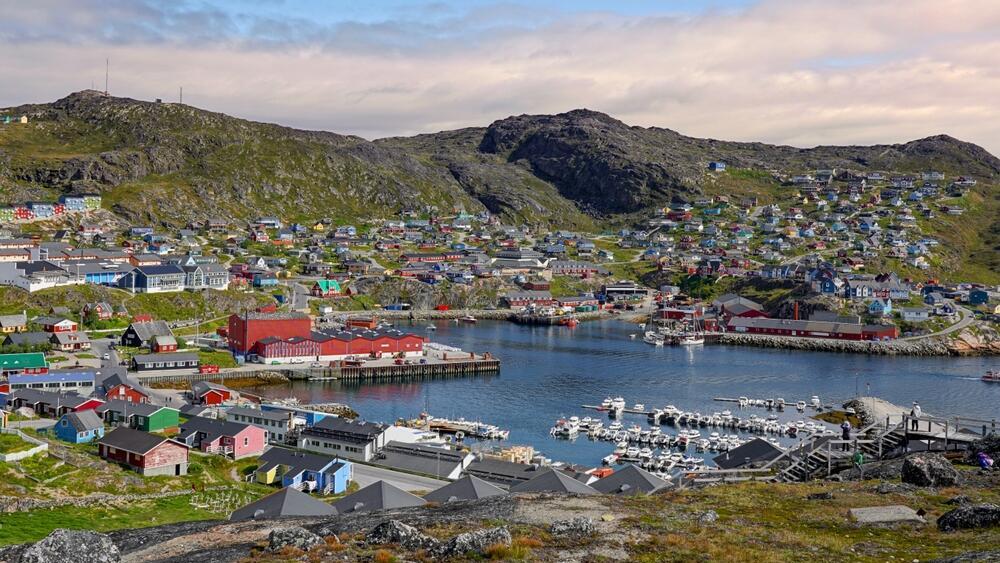
Qaqortoq, the most populous city in southern Greenland
(Photo: PT Hamilton/Shutterstock)
Globally, rising sea levels have been linked to worsening coastal floods and increased shoreline erosion. In fact, every centimeter of sea-level rise puts about 6 million people worldwide at risk of coastal flooding. But a local drop in sea level still comes with consequences.
“The impacts will be very different from almost anywhere else in the world,” said Austermann. In Greenland, the effects would mostly be felt by coastal communities, as well as by shipping routes, the fishing industry and infrastructure development.
As temperatures rise and sea levels increase global, placing millions at risk of severe flooding, nfluence sea level around the island. However, the researchers stress the importance of mapping sea level changes by location. While Greenland may stand out, other places—particularly small island nations—face the risk of disappearing under rising seas.
As such, the authors argue, any forecast or policy based on sea-level projections must be made with local or regional scales in mind.