

Let’s start at the end: This is going to be the most delicious recipe in the history of food. There may be things as tasty as this, but none tastier.
We are talking about home fries, small cubes of potato that are outrageously crisp. A little like French fries, but not quite. Better suited to home cooking. And no deep-frying, because we do have limits.
Before we go any further, assuming you will be forced, rightly, to make a mountain of these yourself, keep this in mind: There is no point in going into the kitchen for less than 2 kilograms (4.4 pounds) of potatoes. A reasonable person, not especially hungry and with moderate self-control, will demolish a kilo alone. Good home fries are beyond human reason.
What makes a crispy potato cube perfect? First, the immediate encounter with your hand or fork while it is still burning hot, its roasted shell deeply and precisely caramelized. That crust cracks or collapses with a crisp shatter, revealing inside a white, soft, buttery cloud like French mashed potatoes.
Home fries are nothing like the potatoes we toss into the oven with spices or soup powder. They are many times more indulgent.
When they are made carelessly, you get the common restaurant version: soft, wet potato cubes coated in a butter and chili sauce meant to hide failure with sugar and monosodium glutamate. You don't need us for that. Bad recipes are everywhere, and they are a waste of everyone’s time and money.
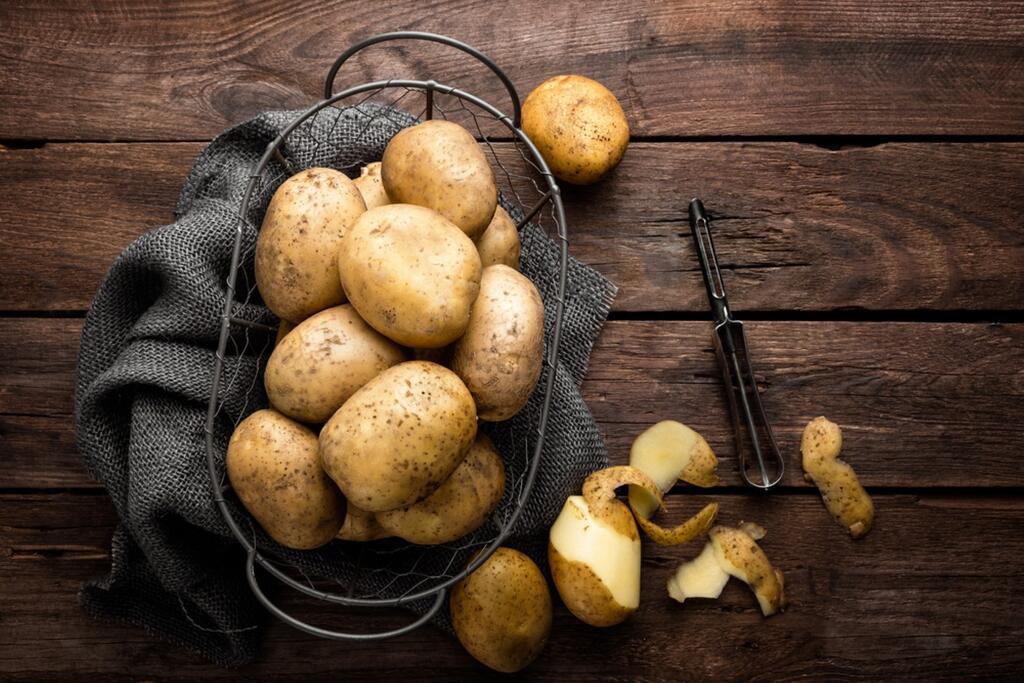
We have devoted substantial portions of our lives to cracking the unbelievable union between a solid body and a soft core, and to understanding how a single cube can contain two contradictory textures at once. To reach the desired result, there is no room here for “I think” or “I feel like it.” This is about chemistry and understanding processes. Once we get them right, we can go wild.
To understand how the legendary crust is created, you need to look at a potato not as a vegetable, but as a cluster of cells held together by a biological glue called pectin. In ordinary cooking, we try to preserve that structure. In pursuit of home fries, we are going to commit a kind of deliberate sabotage.
The first mistake would be to take potatoes, cut them into cubes and fry them. That is the safest way to get potatoes that are burned and bitter outside and raw inside. The solution is essential: They must be parboiled first.
Here is where the chemistry comes in.
If we add a little vinegar to the water (as with eggs Benedict to keep the eggs from spreading in the boiling water), the potato will remain firm and uniform. That is great for potato salad, but a disaster for home fries. By contrast, a tiny amount of an alkaline ingredient, baking soda, disrupts the potato’s molecular structure and causes its outer layers to break down quickly into a thin starchy paste.
That is exactly what we want.
This is where the challenge begins. Instinctively, you'll think the potatoes are ruined. They are falling apart on the outside but still hard inside, and where is this whole mess going?
But we do not scare easily anymore. That thin layer of starchy paste will absorb butter, or oil, though butter is better, and become an extremely crispy coating, three times crispier than any other crust. You could send the battered potatoes into hot oil for frying, but we remain strong supporters of the anti-home-frying camp here too. And yes, this can also be made in an air fryer (see below).
Home fries, the home version
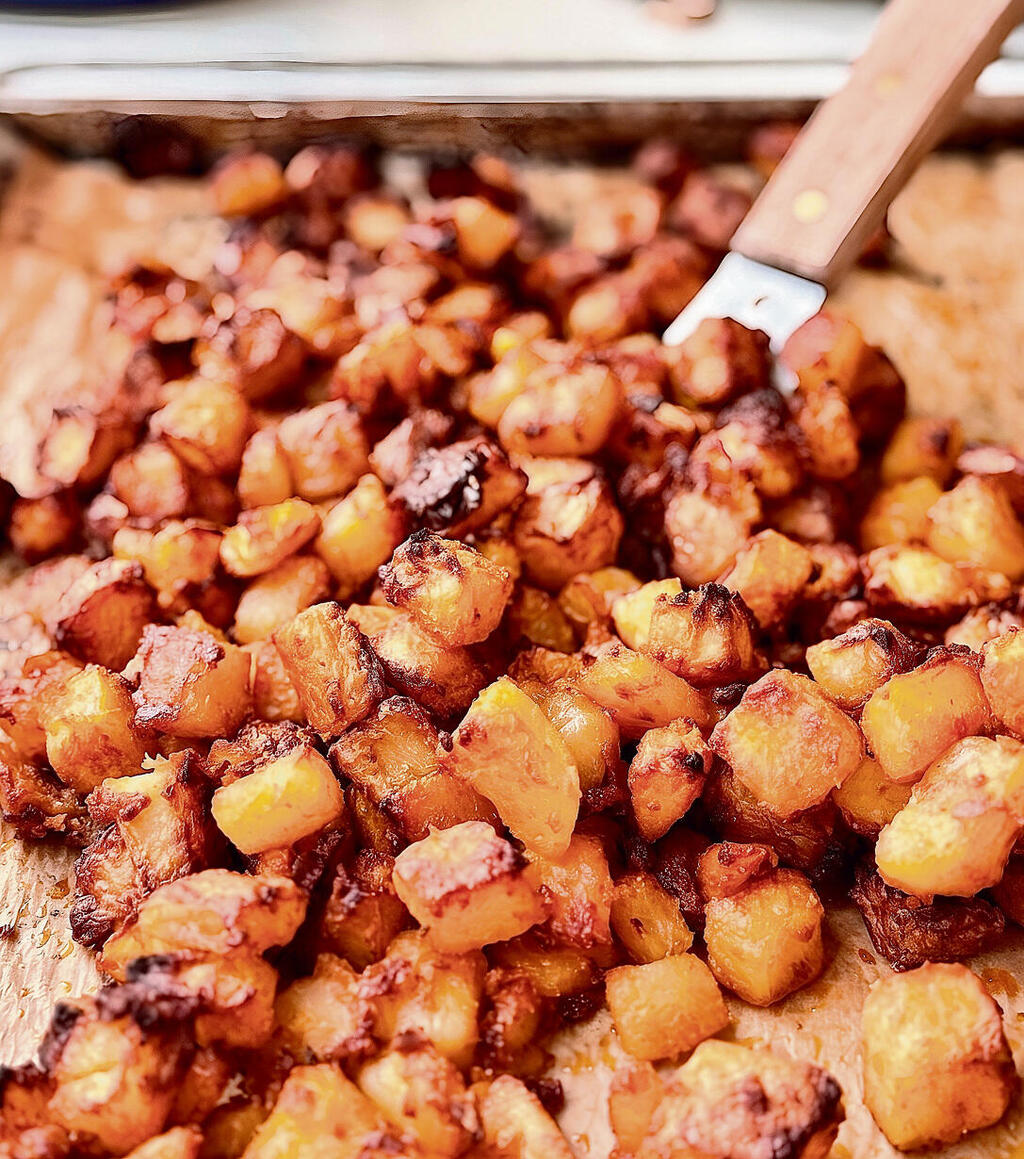
(Photo: Ruthie Rousso)
Ingredients:
2 kilograms (about 4.4 pounds) red-skinned potatoes
A large, wide pot, preferably
2 teaspoons salt
1/2 teaspoon baking soda
80 grams butter, (about 6 tbsp), or 1/3 cup neutral oil
Optional seasoning: 2 tablespoons smoked paprika, 2 teaspoons garlic powder, 1 teaspoon black pepper
1 teaspoon salt
Preparation:
- Preheat the oven to 220°C (425°F), on convection if available.
- Bring 2 liters (about 8 1/2 cups), of water with 2 teaspoons salt to a boil in a large, wide pot.
- Meanwhile, peel the potatoes and cut them into cubes about 1- 2.5 centimeters (1/2-1 inch).
- Add the potato cubes and baking soda to the water and boil for 1 minute. If the full quantity does not fit in the pot, work in two or more batches.
- Remove with a slotted spoon to a dry bowl.
- Once all the potato cubes have been briefly boiled, pour out the water and heat the pot again, preferably a large, wide one. Return the cubes to the pot over high heat and stir well until no water remains on the bottom. Note: The potatoes will stick a little to the bottom and look as if they are falling apart and being ruined. Trust the process.
- Add the butter and spices and stir gently. Scrape the bottom a little with a wooden spatula.
- Transfer the potatoes to a parchment-lined baking sheet in a single layer. Bake for 20 minutes. Stir the potatoes and bake for another 10 minutes, then stir again and return to the oven for a final 10 minutes, watching carefully so they do not burn. At this stage, they should look magnificent.
Upgrade: About halfway through baking, make a small opening among the potatoes and add two sliced onions that have been mixed with a little oil and a bit of salt. Let them roast with the potatoes, then mix everything.
Excellent additions:
- Lemon zest, Maldon salt and crushed chili
- Smoked paprika and finely chopped rosemary leaves
- Grated Parmesan and black pepper
- Thyme leaves and crispy fried onion, like the kind sold in spice shops
Sauces that work well
Honestly? You do not really need any. But we understand the urge to overdo it a little more. Here are some easy options:
Butter and chili: 60 grams melted butter mixed with 4 tablespoons sweet or hot chili sauce
Date aioli: 2 tablespoons mayonnaise, 1 tablespoon silan (date syrup), and a pinch of salt
Roasted garlic aioli: While the potatoes are in the oven, wrap a whole head of garlic in foil and roast until soft. Squeeze out the soft, sweet cloves and mix with 3 tablespoons mayonnaise, grated lemon zest, a little salt and, optionally, dried hot pepper to taste
Herb vinaigrette: 3 tablespoons olive oil, 2 tablespoons lemon juice, 2 tablespoons chopped parsley, 2 tablespoons chopped cilantro, a little grated lemon zest, chopped fresh hot green pepper to taste and, optionally, a little crushed fresh Israeli garlic
Air fryer home fries
Israel has produced a Ninja cult: people addicted to air frying. There is something a little misleading about the phrase “air frying,” since this is not the same high temperature as deep-frying. What it does have is a small chamber that heats very quickly, circulates air and draws out moisture in a way that maximizes crispness.
For home fries, the advantage is dramatic. In an air fryer with suitable perforated parchment paper, the potatoes get hot air from every direction. There is no need to stir them, no trapped moisture to make them soggy, and the process is shorter, more precise and maximally crisp.
The drawback? Most air fryer baskets we know are much smaller than a standard oven tray, so making 2 kilograms can be a bit challenging.
Sweet potato home fries
If you like this recipe and want to try another version, sweet potato is a wonderful option, though it behaves differently from regular potatoes. It has much more sugar and far less starch, which is critical for creating a crispy coating. So we treat it a little differently:
- Peel and cube the sweet potatoes, then soak them in cold water in the refrigerator for an hour to draw out some starch, soften them slightly and remove some of the surface sugar.
- Drain well and dry the cubes in a wide pot with oil or butter, then sprinkle them with cornstarch or potato starch and a little salt.
- Only then send them to a hot oven, 200°C, (400°F), and roast for 25 minutes, stirring occasionally.
Air frying also will work wonderfully here.