


The New York Times has awarded its highest restaurant rating to a venue outside New York City for the first time in its history, giving four stars to Albi, a Palestinian restaurant in Washington, D.C., led by Palestinian American chef Michael Rafidi.
The rating is the paper’s most prestigious restaurant score and is rarely given. The Times described Albi as a restaurant that builds a “wholly realized world” around Middle Eastern cooking, praising its use of bread, fire, Palestinian heritage and fine-dining service.
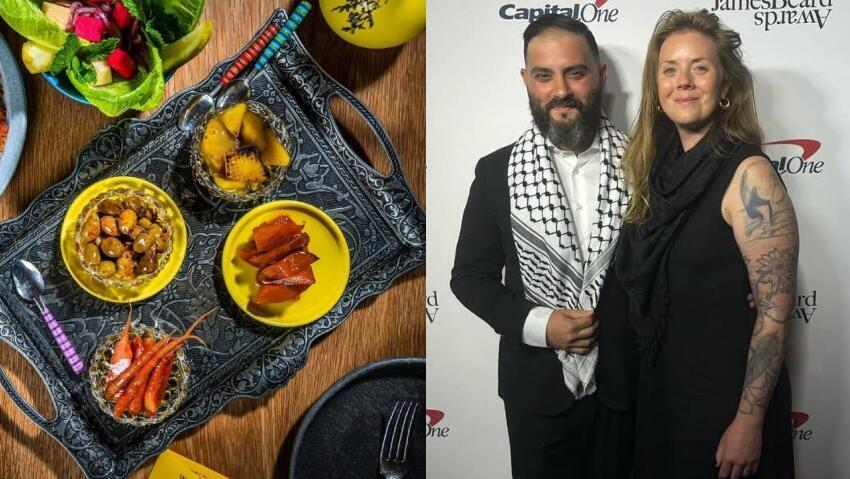
Albi’s selection comes as the Times food section increasingly highlights regional and national cuisines that were long treated as peripheral in the American culinary mainstream, including Arab and Palestinian cooking.
Rafidi, who grew up in Maryland, is descended from families from Ramallah on both sides. Albi opened in 2020 as a broader Levantine restaurant, but after a renovation last year, Rafidi sharpened its focus on his Palestinian roots. In the Times photos, as in many of his public appearances, he is seen wearing a black-and-white keffiyeh. Some of the kitchen staff and servers are also shown wearing keffiyehs. The restaurant entrance is decorated with Palestinian embroidery, and each table includes a small glossary explaining Arabic terms on the menu.
A $165 tasting menu
The Times review, written by chief restaurant critic Ligaya Mishan, opens with one of the restaurant’s many theatrical gestures: warm hand towels scented with roses. In another restaurant, she writes, such a touch might cleanse the palate. At Albi, “the target seems to be the soul.”
Mishan praises the restaurant’s amber-lit dining room, its open kitchen, its 10-foot hearth and wood-fired oven, and the fact that almost every dish passes through the flames. She highlights roasted dates from the Dead Sea, khubz, a flatbread similar to pita but made with sourdough starter and potato, two nightly versions of kibbeh nayeh, grilled oysters with butter and arak, lamb keftas grilled on cinnamon sticks, sfeeha inspired by Rafidi’s grandmother and maqluba cooked with crab stock.
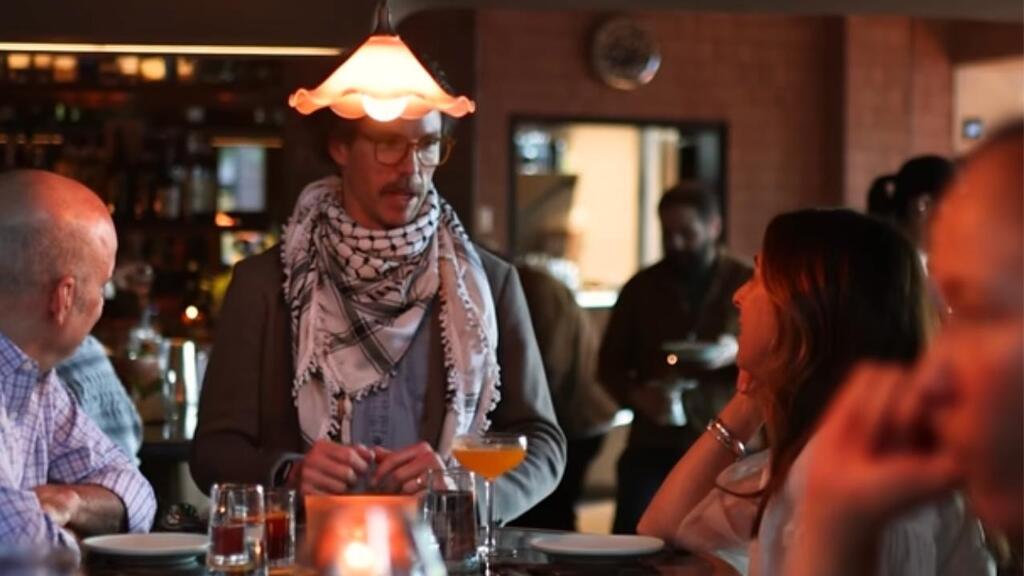
Albi, a Palestinian restaurant in Washington, D.C.
(Photo: Albi DC)
The crab, Rafidi told the Times, connects both to the Chesapeake Bay and to the blue crabs once harvested in Gazan waters in such abundance that they were known as “blue gold.”
Albi offers a full tasting menu, called sofra, for $165 per diner. The restaurant’s atmosphere is completed by music from across the Levant and North Africa, while cocktails include ingredients such as za’atar, amba and arak.
In June 2024, Rafidi won the James Beard Foundation’s Outstanding Chef award and dedicated it to “the people of Palestine.” In his remarks, he accused Israel of using food as a weapon of war and said his ancestral homeland was in danger.
Wines from the West Bank and Bekaa Valley
Albi’s wine list reflects the same identity-driven approach. According to the Times, it reads almost like a literary work, combining humor, scholarship and a case for eastern Mediterranean wine culture. The review calls it a “manifesto” for Lebanese vineyards.
The list does not include Israeli wines. It does, however, include wines from “the West Bank, Palestine,” among them a white wine called “Grapes of Wrath,” described as made from indigenous varieties and priced at $158. It also includes wines from Lebanon’s Bekaa Valley, where Hezbollah has a significant presence alongside a long winemaking tradition. One bottle, a 1970 Château Musar, is priced at $650.
The restaurant’s website notes that most of its meats, including lamb and sujuk sausages, are halal. A 3% employee wellness fee is added to each bill and does not count as a tip.
Mishan, who replaced longtime Times critic Pete Wells after he stepped down in 2024, represents a different generation of restaurant criticism, one that speaks openly about identity, power and representation. In an interview with Columbia Journalism School’s publication, she said restaurant criticism should help “subvert the existing order” and offer another way of seeing the world.
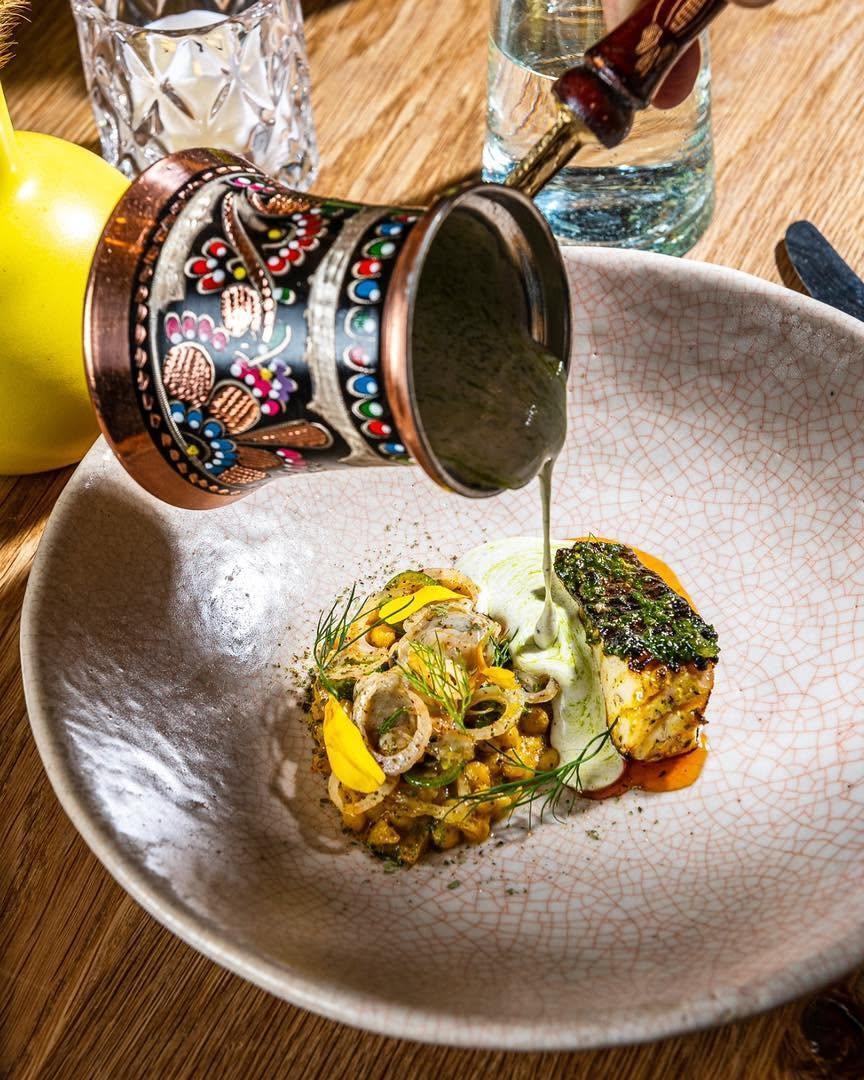
Albi also includes wines from Lebanon’s Bekaa Valley, where Hezbollah has a significant presence alongside a long winemaking tradition
(Photo: Albi DC)
That approach has been clear in her previous writing on Palestinian food. In a 2020 article titled “The Rise of Palestinian Food,” Mishan argued that Palestinian cuisine cannot be separated from life under Israeli control in the West Bank and the blockade of Gaza. She wrote that Palestinian cookbooks often function not only as recipe collections but also as testimony, a way of making Palestinian daily life visible to an international audience.
One recurring argument in that discourse is what Palestinian chefs and activists call culinary erasure: the claim that dishes such as hummus, falafel, labneh, tabbouleh and shawarma are marketed abroad as Israeli food without enough recognition of their Arab and Palestinian roots.
Mishan has written that food can be a powerful form of persuasion because it humanizes those who serve it. The Palestinian fear, as she described it, is that as dishes labeled Israeli gain popularity in the West, Palestinian versions, and Palestinians themselves, are pushed out of view.
A culinary honor, and a political flashpoint
The choice of Albi drew mixed reactions among devoted readers of the Times food section. Supporters saw it as overdue recognition for one of the most celebrated restaurants in the United States. Albi has held a Michelin star since 2022, ranked sixth on the 2026 list of North America’s 50 Best Restaurants and was named the best restaurant in the northeastern United States by the same ranking body.
Others argued that the praise cannot be separated from the political moment in which Palestinian identity is receiving heightened attention in American cultural institutions.
“Albi is an excellent restaurant,” one reader wrote, “but it is having a special moment for reasons that go beyond the food, drink and service.”
The review also landed against a wider debate over the Times food section’s treatment of Israeli and Jewish food. Critics say that since Mishan took over from Wells, Israeli-linked restaurants and chefs have become less visible in the paper’s major food lists, including its annual “100 Best Restaurants in New York.” They point to the disappearance of restaurants such as Taïm, the Israeli-founded falafel chain that had appeared in previous rankings.
They also note that the Times has described Yotam Ottolenghi as a British chef, omitting his Israeli background, removed the term “Israeli couscous” from some recipes and promoted a cookbook by figures associated with the boycott movement against Israel.
One reader responding to the Albi review suggested that Malka, Eyal Shani’s kosher restaurant on Manhattan’s Upper West Side, is also worthy of serious critical attention. He then answered his own question about why it has not received similar treatment: “Actually, there is no mystery here.”
Other readers who said they had eaten at Albi were less impressed, describing the experience as solid but overpraised.
In the end, the Times review turned Albi into more than a Washington fine-dining success story. It became another point of friction in the broader argument over how America’s most influential newspaper covers Palestinian identity, Israeli culture and the Middle East conflict through food.