

In the luxury kitchen of one of Paris’ most prestigious restaurants, between shining copper pots and a blazing grill, Ido Segev was living the dream of countless young chefs: working in a Michelin-starred kitchen.
But alongside the shouting, endless hours on the line, exhaustion and pursuit of the perfect dish, Segev discovered he was also facing antisemitic and anti-Israel comments that made his time there even harder. This was years before October 7, when hostility toward Israelis was far less common in global discourse.
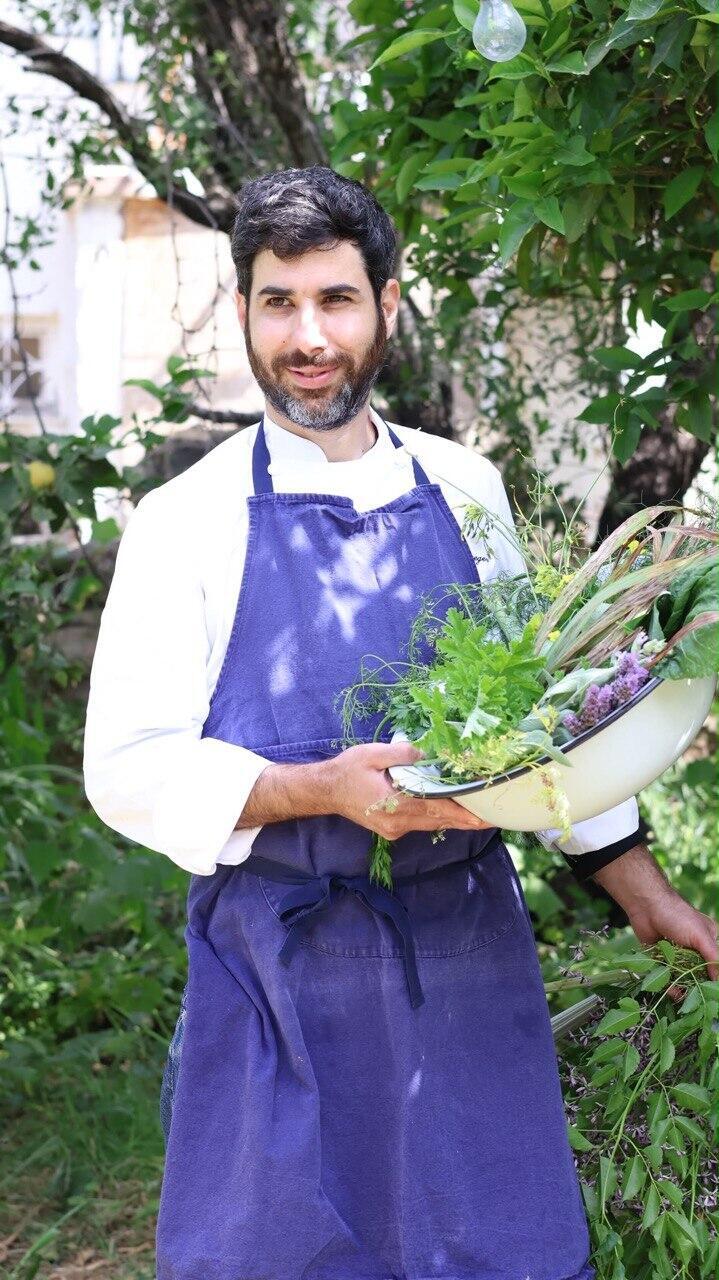
“The year was 2011, and I remember that even then I was afraid,” Segev recalls. “There had just been a military operation in Israel that was covered by foreign media, and suddenly they started calling me a ‘murderer’ in the kitchen.
“For them, the fact that I had served in the army was enough to make me a murderer. It didn’t matter that I had actually been a tractor mechanic. Even beyond that, there were always little jabs and comments. On top of the pressure of working in a demanding kitchen and my drive to succeed, I also had to deal with that. “They said it as if it was a joke, but when you hear it again and again, it stops being funny.”
How do you deal with that?
"For a long time, I kept my head down and didn’t tell anyone outside that I was from Israel. I wouldn’t introduce myself as Israeli, and every time I would change the country I came from. Once I said I was Greek, once Portuguese.
“Already back then, there were pro-Palestinian propaganda stands on the streets. A beautiful woman would welcome you, offer you coffee, talk to you, and eventually send you away with Palestinian merchandise. Many local French people had converted to Islam during that period.
“But all of that happened beneath the surface. On the outside, I was already fighting to survive in the French kitchen, which was difficult enough on its own, and then I had to deal with all this added pressure that made me feel extremely uncomfortable. More than anything, I just wanted to come home, back to Zichron Yaakov.”
A fish sperm sac? It’s actually a delicacy
After three years in some of the world’s most demanding kitchens and after studying at the prestigious French culinary school in Paris, Segev, 38, decided to return home. One morning, he walked away from everything.
He returned to where he grew up, stepped into his yard with a foraging basket, and opened his home to private dinners where the story behind each ingredient matters just as much as the final bite.
Segev was born in Haifa and raised in Zichron Yaakov. Today, he lives there with his wife and two children, hosting intimate chef dinners in a 130-year-old space.
He began his professional journey 16 years ago and quickly found himself studying at Le Cordon Bleu, the prestigious French culinary school in Paris. Later, he completed an internship in the kitchen of Michelin-starred chef Alain Ducasse at his restaurant inside the Plaza Athénée hotel, which held two Michelin stars. The road there was filled with hard work, but what won’t you do to make a dream come true?
Alongside his studies at Le Cordon Bleu, he worked at the school as an assistant, helping chefs with preparations and events, absorbing every bit of knowledge he could. “Doing an internship with Alain Ducasse was a huge dream of mine. I worked extremely hard to save money because I wanted to make that dream happen. I didn’t know a word of French, and while I was at the school, I gradually began to pick up the culinary language.
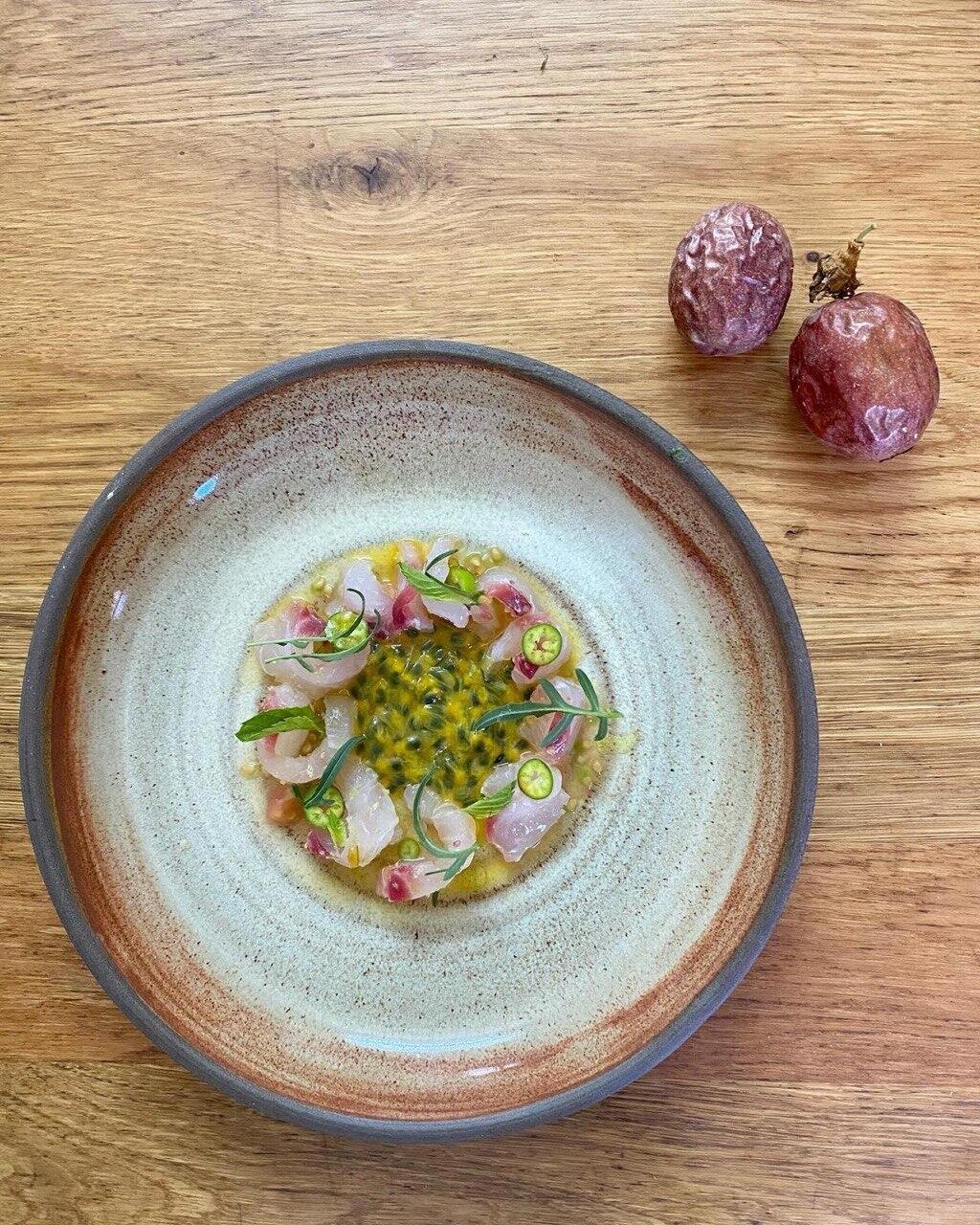
A dish by chef Ido Segev
(Photo: Private album)
“If you talk to me about politics, it probably won’t go very far, but when it comes to the language of the kitchen, I’m fluent. “While studying, we had the opportunity to work at the school between semesters in exchange for a reduction in tuition, so I became an assistant, helping chefs during classes and preparing ingredients for them. I had a hunger to learn; I was eager, curious, and thirsty for knowledge.”
When Segev decided to leave Paris and return to Israel, he sent an email from France to chef Rafi Cohen’s Raphael restaurant. Two days after landing back in Israel, he was already working there alongside chef Moti Titman.
A year later, he returned to Zichron Yaakov and became the chef of Tishbi Winery’s restaurant, where over time he expanded his role beyond the kitchen and became responsible for the restaurant floor as well. It was also during that chapter of his life that he met the woman who would later become his wife.
But his culinary curiosity did not allow him to stop there. He left the restaurant and traveled to Japan, a three-month journey that changed the way he saw food. If French cuisine had taught him technique, discipline and depth, Japanese cuisine taught him to treat seasonality, simplicity and the full use of ingredients with almost ritualistic respect.
There, he discovered that no part of a fish was unnecessary, that ingredients did not need to be hidden behind heavy sauces, and that restraint itself could become the highest form of creativity.
But Japan was not the end of the journey. From there, he continued to New York for an internship with chef Dan Barber at Blue Hill, a restaurant that exposed him to the deepest meaning of the farm-to-table philosophy.
In New York, Segev learned how almost every ingredient could be transformed into food, and how fermentation, preservation and sustainability could create an entire culinary world centered around a connection to the land.
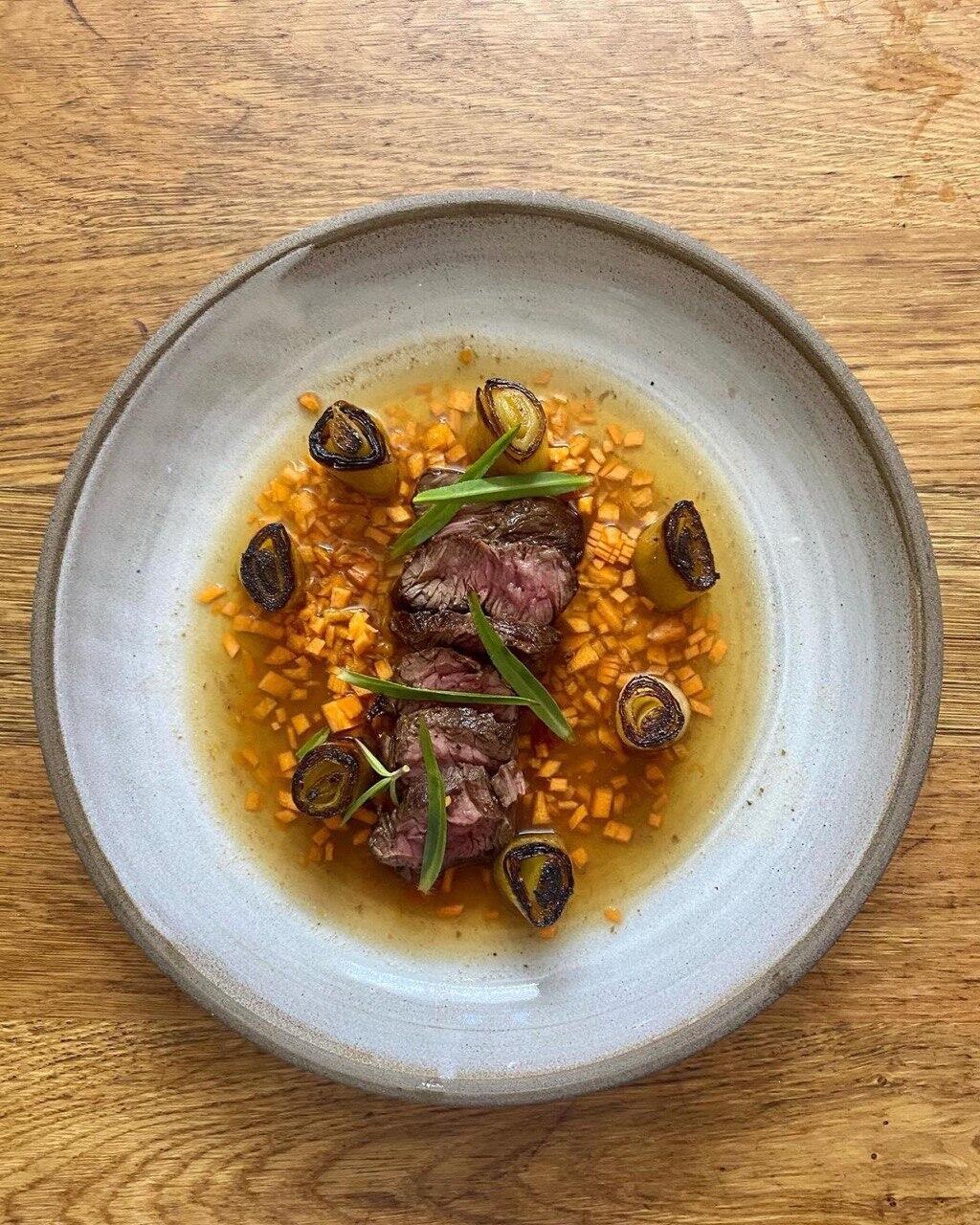
A dish by chef Ido Segev
(Photo: Private album)
What drew you to Japan?
“Something one of the chefs at school told us always stayed with me: ‘The best chefs are those who know how to cook French cuisine with Japanese cuisine.’ I carried that sentence with me, and that’s why I wanted to study and explore Japanese cuisine as well. They are two opposites that create a completely different culinary approach.
“French cuisine gives you the foundation, the depth of sauces and the precision of cutting techniques. Japanese cuisine taught me to respect seasons, colors and the maximum use of ingredients. I ate some crazy things there.”
How crazy?
“The Japanese cook the liver of the fish and also its sperm sac, and it comes out as a delicacy. I also ate fish skin with the scales still on, it’s delicious and crispy, almost like fries.
“At Dan Barber’s restaurant in New York, I was exposed to culinary techniques I had never seen before. For example, he would take beef bones, make stock from them, and then transform the leftover bones into charcoal.
“He aged vegetables in beef fat and developed fascinating fermentation techniques. At one point, he launched a major project in London where chefs created Michelin-level dishes using only food waste. New York completely opened my mind.”
From the kitchen to foraging herbs
Segev’s deepest connection to the land began after he returned to Israel and started working with chef Ezra Kedem in Ein Kerem, Jerusalem. There, among the Judean Hills, he found what he had been searching for all along: a daily, hands-on relationship with the soil. He grew vegetables, fruits, olives and citrus for Kedem, one of the pioneers of local Israeli cuisine.
Between the garden beds, something changed, as he began paying attention not only to what he planted, but also to what grew naturally around him. Wild herbs, which many people see as random weeds, became an entire world. He immersed himself in foraging books, which led to more tasting and more hikes, and eventually made foraging an inseparable part of his cooking.
How does someone suddenly decide to start collecting wild herbs?
“Ein Kerem is a magical place. That’s where I connected with my roots, with Israel, with a sense of place. I would collect sumac in the mountains, eat figs straight from the tree and swim in the water pools at Sataf. That’s how I connected to the land and to myself.
“At Ezra’s, the garden was my project. I took care of it and grew cabbage, cauliflower, chicory, tomatoes, cucumbers, turnips, artichokes and beans. While working there, I saw all kinds of little plants growing next to the vegetables I had planted. So I bought a foraging guide and started researching what they were. Suddenly, I saw all the abundance growing around me, and that’s where I discovered these fascinating wild plants.”

'I connected with my roots, with Israel, with a sense of place': Ein Kerem neighborhood, Jerusalem
(Photo: Alex Kolomoisky)
After Ein Kerem, Segev lived on a rooftop overlooking a church in Jaffa, a place that felt almost European. Even then, he hosted guests and grew vegetables in unused public spaces: small gardens beneath buildings and neglected areas behind structures that nobody cared about. "I cultivated an area near the building where I lived and grew vegetables there. I would forage capers and sea fennel along the Jaffa promenade.”
After his two children were born, Segev realized he wanted to be present in their lives and find a balance between fatherhood and his profession. Instead of choosing between career and family, he created a different model: hosting private meals at home, where he welcomes up to 16 guests around one table.
The number of dinners he hosts varies, depending on the season and the security situation in the country. He builds each menu around the guests, the time of year, and whatever the fields and garden have to offer that week. “I tailor the menu to each guest’s wishes, the way a wedding dress is tailored to a bride.” A meal costs 650 shekels per person (about $175) and includes 10 courses, along with wine and beer that he brews himself.
Alongside the private dinners, Segev runs a small community kitchen for locals. On Tuesdays, his courtyard becomes a takeaway stand serving hot dishes such as manti, bakhsh rice, fried pumpkin and Indian dal. On Fridays, neighbors from the surrounding area arrive to buy challahs, schnitzel sandwiches, cured salmon with foraged capers, labneh, chopped liver, homemade ice cream, liqueurs, fermented products inspired by his grandfather, and weekly-changing dishes such as pistachio meatballs. There is no sign outside and no advertising campaign. People know where it is and how to get there.
The inspiration behind it all came from his late grandfather, a Jerusalem native who lived by the principles of the slow food movement long before the culinary world embraced the term. His grandfather made labneh, pickled cucumbers, prepared homemade pomegranate molasses, ground his own spices and specialized in jams, all based on a philosophy of making full use of ingredients. It was the same approach Segev later discovered in New York.
After his grandfather died, Segev decided to recreate the flavors he never had the chance to learn directly from him. That became the foundation of the pantry that now accompanies his kitchen: a collection of jams, fermented foods, pickles and preserves that tell a family story just as much as they add flavor and depth to his dishes.
Was there ever a point when you considered opening a restaurant?
“No. I had a shift in perspective. When I was younger, I worked 18 hours a day, around the clock, like a machine. But at some point, I decided I wanted to be a father who was truly present for his children, so I put my family first and my career second.
“I knew the intensity that comes with running a restaurant, and I didn’t want to miss out on raising my children. I found a formula that allows me to have both without being tied to a restaurant where you have no time for yourself and no room to breathe.”
And when did your grandfather enter the picture?
“When my grandfather died, I wanted to preserve the memory of his flavors. He lived according to the principles of the Slow Food movement long before it became widely known. He grew up in Ohel Moshe, a neighborhood near Jerusalem’s Mahane Yehuda Market, and lived simply and prepared almost everything himself. He even grew vegetables in his own garden.
“He had a pomegranate tree that he used to make homemade pomegranate syrup and juice. He ground his own spices, made labneh from yogurt, prepared pickles and fermented vegetables. I started making jams and fermented foods because, at first, all I wanted was to preserve the flavors I remembered from his kitchen.
“He never had the chance to teach me, so I taught myself. I’m fascinated by reconnecting with my roots and with the traditional things people used to make. I’m not a chef who works with tweezers; I work with my hands, and I love it.”
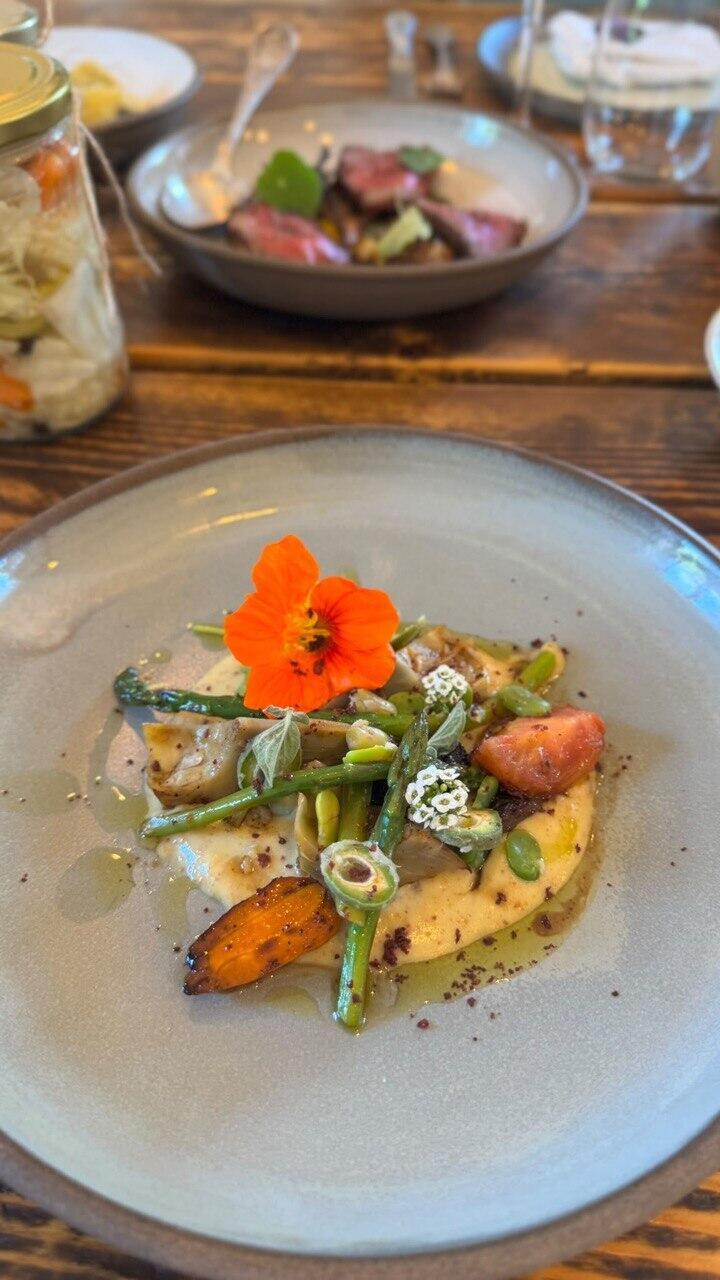
A dish by chef Ido Segev
(Photo: Private album)
I wonder what your grandfather would think about how expensive dining out has become.
“Restaurant owners and chefs are in a difficult position because everyone has a general idea of how much ingredients cost. It’s not like going to a mechanic and paying whatever price they ask because you don’t know how much a fuel filter costs.
“With food, people don’t always understand everything that goes into the final price of a dish. The cost of a restaurant salad isn’t just the price of the vegetables — it includes employee salaries, rent, property taxes, electricity and countless other expenses. Everything is expensive, not just meat and fish.
“If a chef buys a fish for 110 shekels per kilogram and decides to make sashimi from it, after cleaning and accounting for waste, that same fish already costs around 250 shekels per kilogram. Fruits and vegetables may be basic products, but they’re still expensive.”
“The problem is that chefs work in a field where prices are easy to compare. If someone buys tomatoes at the supermarket for 8 shekels per kilogram, they don’t understand why a restaurant charges 70 shekels for a salad.
“The industry is already brutal, and we make very little money. That’s why restaurants close and struggle to survive. Unless you have strong financial backing or a smart business plan, it’s extremely difficult to make a living. Do you know any millionaire chefs in Israel? I don’t. And I’m not talking about chefs who make money from TV shows or advertising; I mean chefs who actually run restaurants. There aren’t any.”
Kitchen tips Segev learned from his grandfather
- Buy whole spices and grind them yourself. Freshly ground spices are far more aromatic and flavorful than pre-ground versions.
- Grow herbs at home. Even in an apartment, a small planter can provide fresh herbs. Green onions, parsley and coriander can easily be regrown and taste completely different when freshly picked.
- Make jams. The peak fruit season is the perfect time to prepare homemade jams, a great way to preserve fruit that is past its prime and enjoy it throughout the winter.
- Prepare labneh at home. It is much easier than people think. All you need is a cloth, your favorite yogurt and a little salt.
- Reconnect with nature and the seasons. Go outside and pay attention to what grows naturally around you. Wild plants offer nutritional value that modern diets have moved away from. But foraging must always be done responsibly. Anyone who forages must do so only after proper identification and should only use plants they know.
- Fermentation and pickling are like cold cooking for vegetables. I believe that within this process are also the bacteria of the person who prepared the pickles. Someone who wants to recreate their grandmother’s pickles but cannot, it may be because they do not have the specific bacteria that existed in her body.