

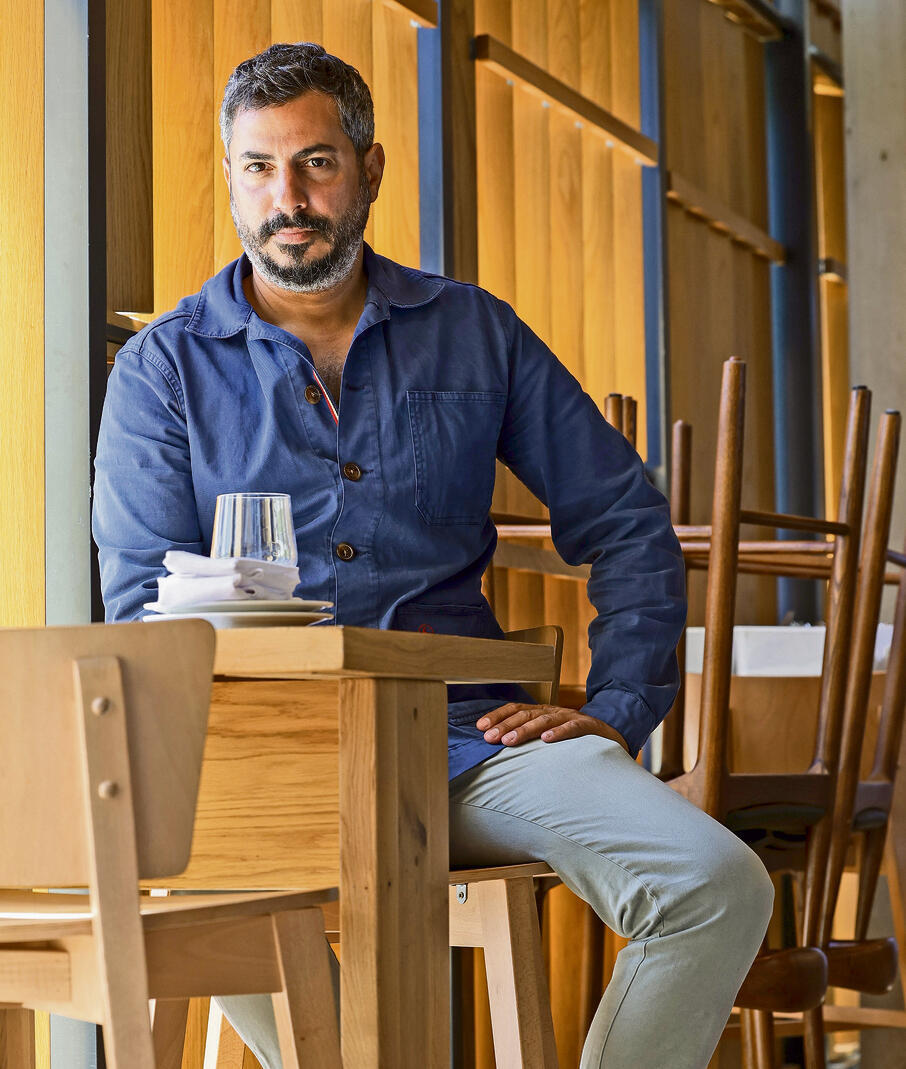
When chef and restaurateur Guy Gamzo, whose father immigrated from Iran, describes the dishes that will be served at his parents’ Passover Seder, it is hard not to feel envious. The menu sounds mouthwatering.
“Just from the salads on the table you’ll be full and won’t make it to the main courses,” Gamzo says. “My mother Rachel will of course serve gondi, kufta berenji (meatballs with ground meat, rice and herbs) and karpas (a traditional Seder vegetable). There might also be ‘happy rice’ — a festive dish with almonds, pistachios, rose petals, cinnamon, tarragon, cilantro and parsley, all mixed together and topped with tahdig (the crispy rice from the bottom of the pot). She also makes, for Passover, an Egyptian stew with Swiss chard stems, lemon and either beef, chicken or lung.”
Will you cook anything yourself?
“In the past, my mother would ask me to prepare my own dishes and everyone would end up eating only what I brought. Then I realized I can’t come to my mother’s house with food — it’s like bringing food into a restaurant. I can source the best fish or the highest-quality veal, but she’ll cook it. That’s her honor as the host.”
This year’s Passover comes against the backdrop of the ongoing war, and Gamzo says he has a complex relationship with Iran, his father David’s country of origin. “My grandparents told me what it was like living in Iran and about the 1979 revolution that was forced on them. After Khomeini came to power, they didn’t want to leave, but quickly realized the situation was not good and immigrated to Israel.
“On one hand, I’m in love with the younger generation there, people who want to rebuild, move forward and become more Western. In recent years I’ve been listening to Iranian music — there are amazing artists and incredible cultural development. It’s no surprise people want change and growth. But when missiles are fired at me, it’s clearly the regime and people who hate me and don’t want me to exist. So you end up both loving and hating different parts. I dream of visiting Tehran and Shiraz, exploring the food, markets and ingredients. Cooking real Persian rice — that’s something else entirely.”
The war has hit Israel’s restaurant industry hard, and Gamzo and his partners in the Nami restaurant group — Itzik Chengel and Mosh Budnik — have felt the impact. Their Tel Aviv venues, including Helena (a Spanish wine and tapas bar), Chacoli (a beachfront fish restaurant) and Asa (a Japanese izakaya near Rothschild Boulevard), were closed for several weeks.
“Safety comes first,” he says. “And we take care of our employees in every way.”
After the United States and Israel launched strikes, Gamzo, his partner Yulia and their two-year-old daughter Yumi decided to relocate temporarily to Eilat. “Our apartment in Tel Aviv doesn’t have a safe room or proper shelter. After two days of sleeping in a public shelter with everyone and their dogs — which is not a bad thing, just no privacy — I decided that was enough, and we moved to a hotel in Eilat.”
Unlike previous rounds of fighting, restaurant owners have been less publicly vocal during the current war.
“I usually don’t make noise during wars or operations — what does it achieve? I don’t believe in noise. If you don’t save a little money for a rainy day, you have no future. You can’t live hand to mouth. You need savings so you know you’re secure. Our group sets aside money every month for emergencies. That way we don’t need to ask for help or take loans. We operate in a very organized way.”
How will the war affect the restaurant industry?
“Every time we’re in a situation like this, the same question comes up. I could look at everything negatively and say the situation is bad, but I prefer to say: this happens once a year or every couple of years. The state has supported us and provided compensation — even if delayed and I needed some outside help from banks. Things will return to normal. It’s only a matter of time.”
Days before the latest escalation, the Nami group made headlines after winning a highly sought-after tender to take over the iconic Manta Ray restaurant on Tel Aviv’s beachfront near Jaffa. The venue had long been a staple of the city’s culinary scene, hosting international celebrities from Madonna to Bette Midler. When longtime owner Ofra Ganor announced she was stepping down after 27 years, several prominent groups competed for the site.
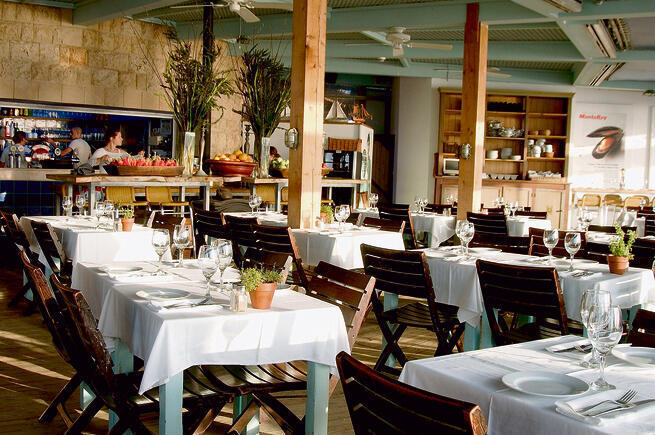
Manta Ray restaurant
(Photo: Adi Adar)
What was the reaction to your win?
“It was tense until we got the news. Then, when we were announced as the winners, even competitors congratulated us and wished us success. Ofra was very kind — she wrote a moving message saying she was happy it was us and that we would carry on her path in the right way.”
Did you encounter jealousy?
“Not that I heard. I assume there’s some chatter, but I don’t deal with that. I focus my energy on creating, moving forward and delivering results.”
Gamzo says the new restaurant is expected to open in November after extensive renovations, with a Balkan culinary direction. “Will we keep anything from Manta Ray? Good question. There’s a lot of soul there and people love nostalgic places, but it needs a conceptual refresh. The infrastructure is worn out — we’ll have to strip everything down to the skeleton and rebuild. We’re meeting with top designers and will choose the right one. Expectations are high.”
Chef Yarden Shay, known from the TV show MKR My Kitchen Rules and for her work at Chacoli, will lead the kitchen. “At first I thought of bringing in someone new, then I said to myself: ‘Are you crazy?’ Yarden is the ideal partner — talented, knowledgeable, with the hands of a traditional cook. When you guide her, you get brilliance. I’m always happy to bring in young people who can grow into partners.”
As for the name, “Manta Ray” will not remain. “We can’t keep someone else’s name. We’re bringing something new.” A new name has yet to be decided.
A missed judo champion
When Gamzo, 45, learned he had won the tender, he thought of the boy from the impoverished Tel Kabir neighborhood in south Tel Aviv who had come a long way. “At first I didn’t grasp how big it was. I got messages from everywhere — even from people I’m not in touch with. Then I realized the magnitude. Manta Ray changed Tel Aviv’s beachfront dining scene. It’s an iconic place, and now we own it.”
He describes a difficult childhood. “The neighborhood was tough, to say the least — a struggling population, and crime. There were things no one would want their children exposed to. I won’t expose my kids to what I saw.”
“For example, when I went outside to play, there was a drug addict sitting at the building entrance with a syringe. That’s a lifelong trauma. On the way to school I’d see discarded needles. When I was nine, I jumped barefoot into a sandbox and got pricked by a needle. As a child, you don’t understand — you think you’ll become an addict because the drug entered your body. I was afraid I’d become like them. I had anxiety for a year and didn’t tell anyone because I didn’t know what it meant.”
Were you poor?
“We were happy. I didn’t feel poor. I didn’t have everything, but I didn’t lack anything either. When I wanted a motorcycle as a teenager, I went to work — washing dishes and working as a busboy.”
His childhood was also shaped by his father’s serious illness during reserve military service. “His unit ate with Bedouins and drank unpasteurized milk. He got a stomach infection and dropped to 36 kilograms (about 79 pounds). He was hospitalized. My mother was pregnant and didn’t give up on him. She has eight siblings, so I moved from house to house. At age three, I slept in a different place each night while she worked and cared for him. Doctors didn’t think he would survive. He did, but with nervous system damage. He’s a true survivor.”
How did that shape you?
“It made me very cautious about drugs. I’ve always been afraid of them and still am. I don’t touch anything. I drink alcohol, but not much. I like to be in control. I grew up quickly — I was the eldest, taking responsibility for everyone from a young age.”
Those challenges helped shape him into a promising judoka. “I was very competitive, ranked second in Israel in my age group, but I quit because I wasn’t granted outstanding athlete status in the army.”
The world may have lost a judo champion, but gained a chef. “I was a kid who loved food — always around the pots, watching my mother cook. I loved going with her to markets. She was born in Israel with roots in Egypt, Morocco and Ukraine, so our table had everything from matbucha to Olivier salad, alongside Persian dishes. Before my parents married, my father’s family told her a Persian man needs the food he grew up with, so she learned to cook it.
“The neighborhood was tough, but full of good people, open doors and the smells of cooking everywhere. I was fascinated by what everyone made. When Bukharan immigrants arrived, they brought amazing food. My mother learned dishes like gozgoza from neighbors, and I was exposed to that cuisine too. It was a real melting pot.”
During his military service, Gamzo worked as a cook at Prison 4. “I was in charge of the staff kitchen and cooked for inmates as well. I worked with some very interesting people — from Rami Dotan (a senior Israeli Air Force officer convicted of bribery) to drug traffickers and arms dealers. I grew up around that environment, so I knew how to talk to them.”
After his service, Gamzo began his culinary career, working in a hummus restaurant and later at one of chef Eyal Shani’s establishments. “That was before he became a TV personality — he was less flamboyant,” Gamzo recalls. He later moved to the upscale Turquoise restaurant, before joining Raphael in 2006 as sous-chef under Raphi Cohen.
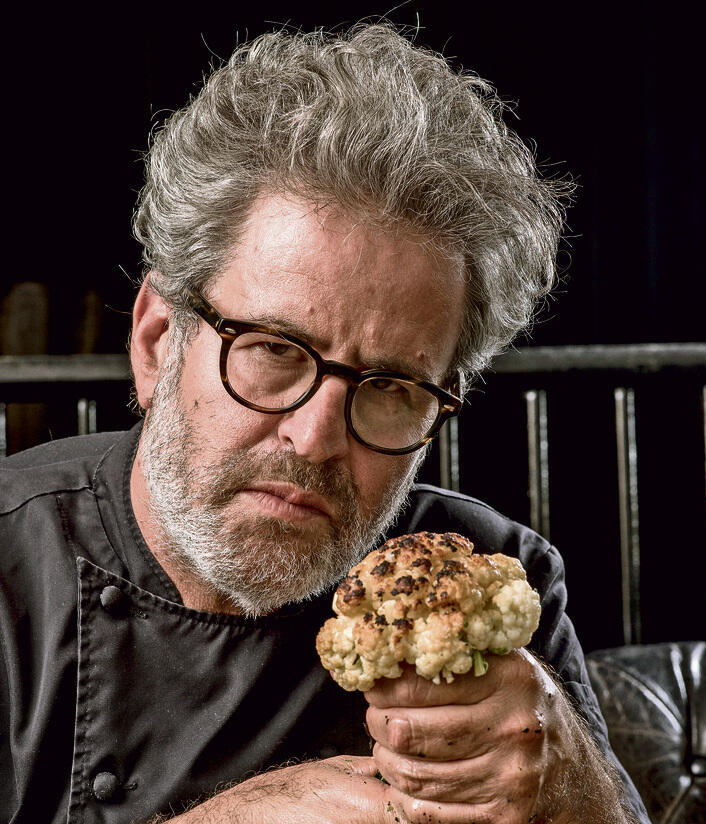
Eyal Shani
(Photo: Yuval Chen)
“Raphael” was at its peak at the time, attracting celebrities, business elites and politicians. Cohen, who fused Moroccan home cooking with modern techniques, was a major influence. “He was a mentor — one of the people who shaped my career. I also learned what not to do from him,” Gamzo says.
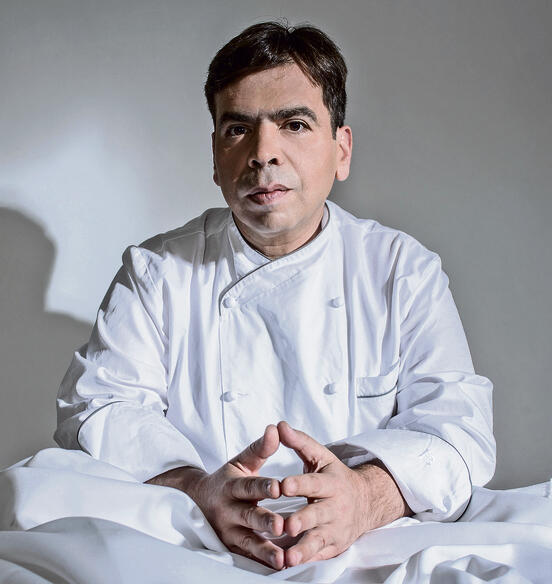
Raphi Cohen
(Photo: Ilya Melnikov)
After six years, Gamzo moved on and in 2012 opened Aria in a historic building on Nachalat Binyamin Street. “Aria was a mix of everything — a bit Japanese, a bit Spanish. I travel the world for inspiration.” The restaurant became a hotspot for celebrities and high-profile figures, including Bar Refaeli, Kanye West and Ronaldinho.
“When Kanye West came to Israel, he sat in my bar and ordered the entire menu. He asked us to play his songs — it was wild. Justin Bieber also tried to come, but couldn’t get in because of the crowds. At the end of the day, they’re all just people who need somewhere to eat.”
Embracing the scars
After a decade, Gamzo felt he had exhausted his time at Aria and moved on to new ventures, eventually partnering with veteran restaurateur Itzik Chengel and nightlife and spirits figure Mosh Budnik, forming what he describes as a perfect match.
“We don’t overcharge our customers. I have extensive experience with Israeli diners and know what they want. I can also identify trends,” he says. “I hardly cook these days. I mostly serve as a mentor to young chefs. Everything I achieved, I did with my own hands. No one came to lift me up — if anything, they held me back. As a mentor, a boss and a chef leading young people, I support them and stand by my word. I want to prove it can be done differently, without stepping on others. I guide them, refine their work, think with them, develop ideas and build menus together.”
The group is already planning a new Japanese food concept that could expand into a chain, potentially abroad. “There’s talk about restaurateurs making exits and big money — and it’s true there are companies investing because it’s liquid capital. If you have a profitable business and a solid plan, they see returns every quarter. In the end, they’re buying potential. If you take one or two profitable locations and scale them successfully, they’re essentially buying something ahead of a public offering. Instead of going to a bank, a restaurateur can bring in investors and leverage growth.”
Some chefs and restaurateurs have criticized the trend.
“Let them,” he says. “That’s probably their frustration. I don’t know if anyone will buy our group, but if they buy part of it, they’ll get all my abilities and creativity.”
He adds that the group was recently named “Nami,” Japanese for “wave.” “Everything we do is a new wave in cuisine. Our businesses relate to the sea and fish. Also, my kids say ‘nami’ instead of ‘yummy.’”
Gamzo is a father of three — Asa and Sani from his first marriage, and Yumi, his daughter with his current partner, Yulia.
What kind of father are you?
“It’s in the eye of the beholder. I’m career-driven, but I also listen to my children, support them and give what I can. I’m a loving, involved father who’s there when they need me.”
Does your family eat at your restaurants, which are not strictly kosher?
“My parents, brother and sister keep kosher. I grew up in a traditional home and respect that. I believe in live and let live. When my mother comes to eat at my place, she knows she’ll get kosher fish, kosher-slaughtered meat and kosher vegetables. Just because there’s no rabbinical certification doesn’t mean there’s nothing to eat. My mother is very proud of me. It makes me feel good.”
Who do you dream of cooking for?
“I don’t dream — I enjoy cooking for the people I serve today. For example, Maor Zaguri — he’s a friend, and he loves food.”
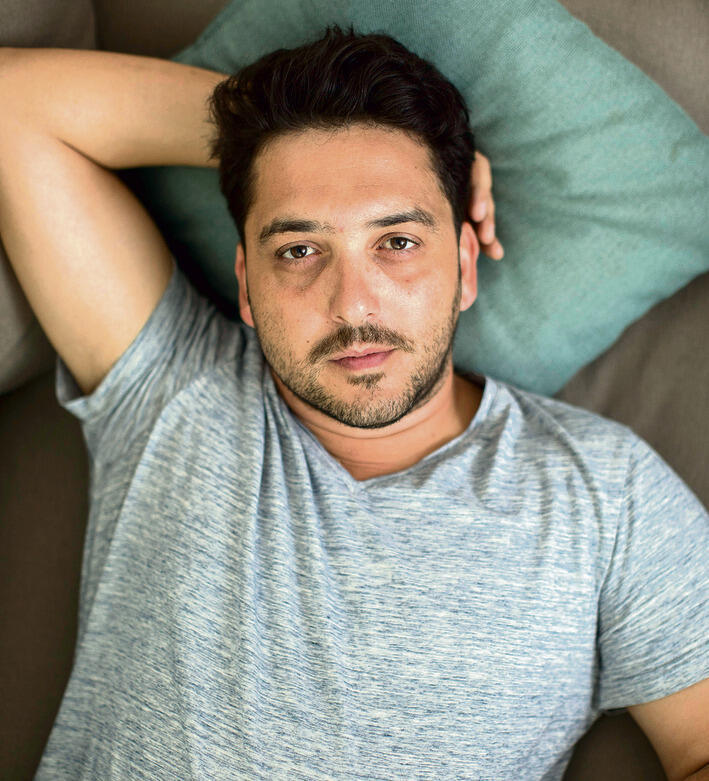
Maor Zaguri
(Photo: Eli Dasa)
Gamzo also maintains a close friendship with renowned Israeli chef Yisrael Aharoni. They met at the Raphael restaurant and are now working on a joint project touring markets, which may become a television show.
“Our connection is very special,” Gamzo says, his voice softening. “Aharoni used to come eat at Raphael and I would prepare special dishes for him. He would give advice and tips. After years of no contact, he came to Aria with his family, and from that moment we became friends again. Our friendship is very honest — we talk about both personal and professional matters.”
Is he a kind of father figure?
“He’s not a substitute for a father, but he is a father figure and someone who listens. He has experience and knowledge. He’s a mentor. I grew up quickly, as I said, so I connect easily with someone 30 years older — I feel closer to his age in conversation.”
Why don’t you appear on cooking shows?
“Reality TV never appealed to me. I once thought about offering myself as a judge on ‘MasterChef,’ and Aharoni asked me, ‘Why?’ — because it doesn’t seem to fit me, I’m more introverted. I told him introverts deserve a place too. It could also open new opportunities for me.”
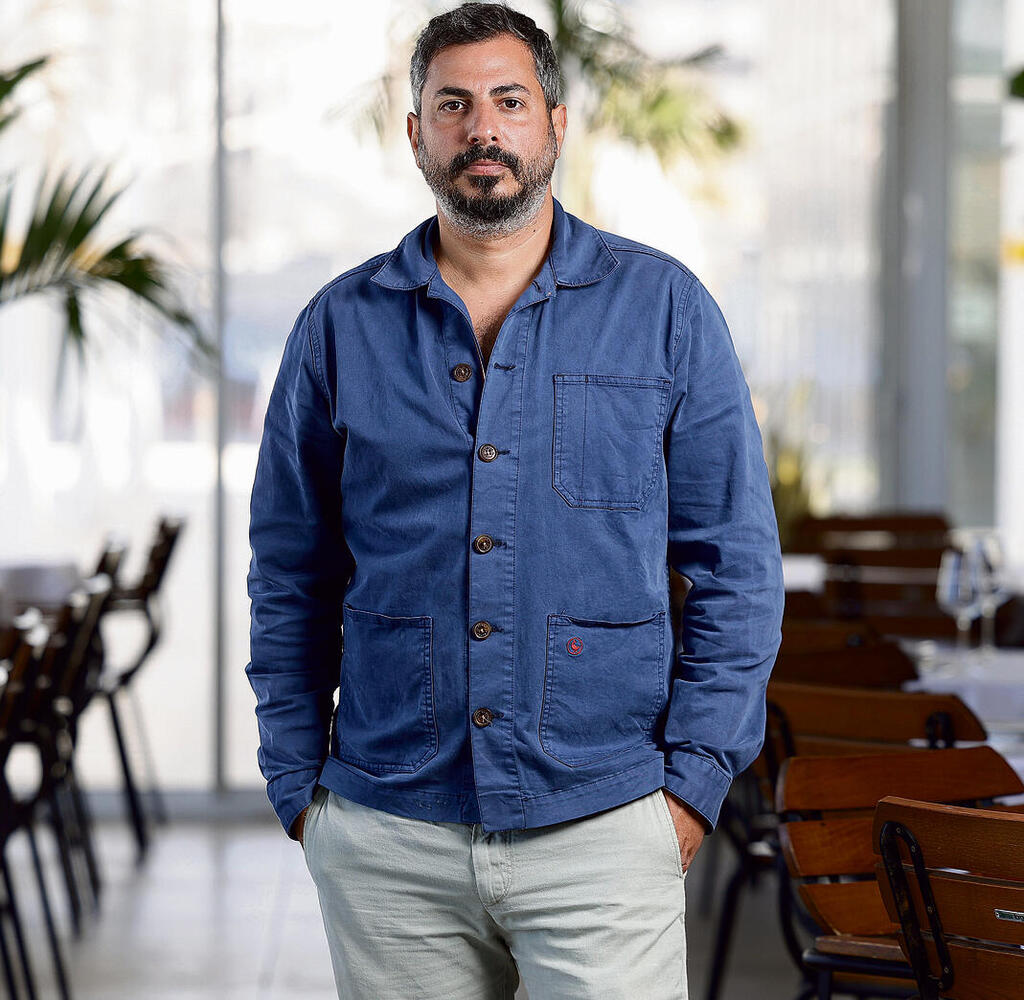
Gamzo
(Photo: Avigail Uzi)
Looking back on your journey, how do you feel?
“When I look at every scar I have, I appreciate it because it helped me understand and grow. I embrace my mistakes too. I wake up every morning grateful for what I have, and before I go to sleep I say thank you again. I believe in the hard road, not in easy living. If I hadn’t fought for my place, I wouldn’t be where I am today. There is luck in life, but you won’t get it if you don’t wake up at 6 a.m. on a Sunday.
“I have a goal: I don’t want to leave behind scorched earth, but a field of flowers for my children — something of value they can inherit and say I built something meaningful with my life.”