

There is pizza dough in our fridge right now. It has been resting there since last night, protected in an oiled bowl, quietly developing patience, air bubbles, flavor and personality. These days, when the outside world shuts down and the living room becomes a small private stadium, we will pull it out onto the counter.
World Cup days are a wonderful time for the healthy tension of sport, and they bring with them a primal, stubborn hunger for something crisp. Preferably a scorching carbohydrate that comes out of the oven just at the edge of halftime.
As one wise woman recently put it: It does not matter how full I am or how exhausted I feel, nothing will stop me from eating dough that has just come out of the oven. Nothing.
Pizza in Israel, it must be said honestly, is no longer the tired industrial stain it once was. Everywhere we go, cooks talk knowingly about hydration and long fermentation. Even in the most remote towns, you can now find careful, shiny, bubbling pizza. But recently, when we ordered a modest pizza from a decent neighborhood place, we discovered the bill was proudly kissing 100 shekels per tray. For a family with teenagers, that easily becomes 200 to 300 shekels.
With a full month of matches, extra time and tension ahead, that is an economic surrender agreement.
So let us return to flour. White flour, pizza flour or bread flour, a little yeast and a lot of water, and you are set. Dough in the oven never hurt anyone.
The recipe below is for excellent homemade pizza dough. The actual work takes exactly 15 minutes, and for 10 of those minutes you are really on Instagram or the phone, waiting for the chemical magic to happen by itself. The dough does require a long rest in the fridge, but it can happily wait there for you for a full week. The strategic meaning is clear: Make a large batch at the start of the week and simply pull out a ball whenever the craving hits, which is, of course, always.
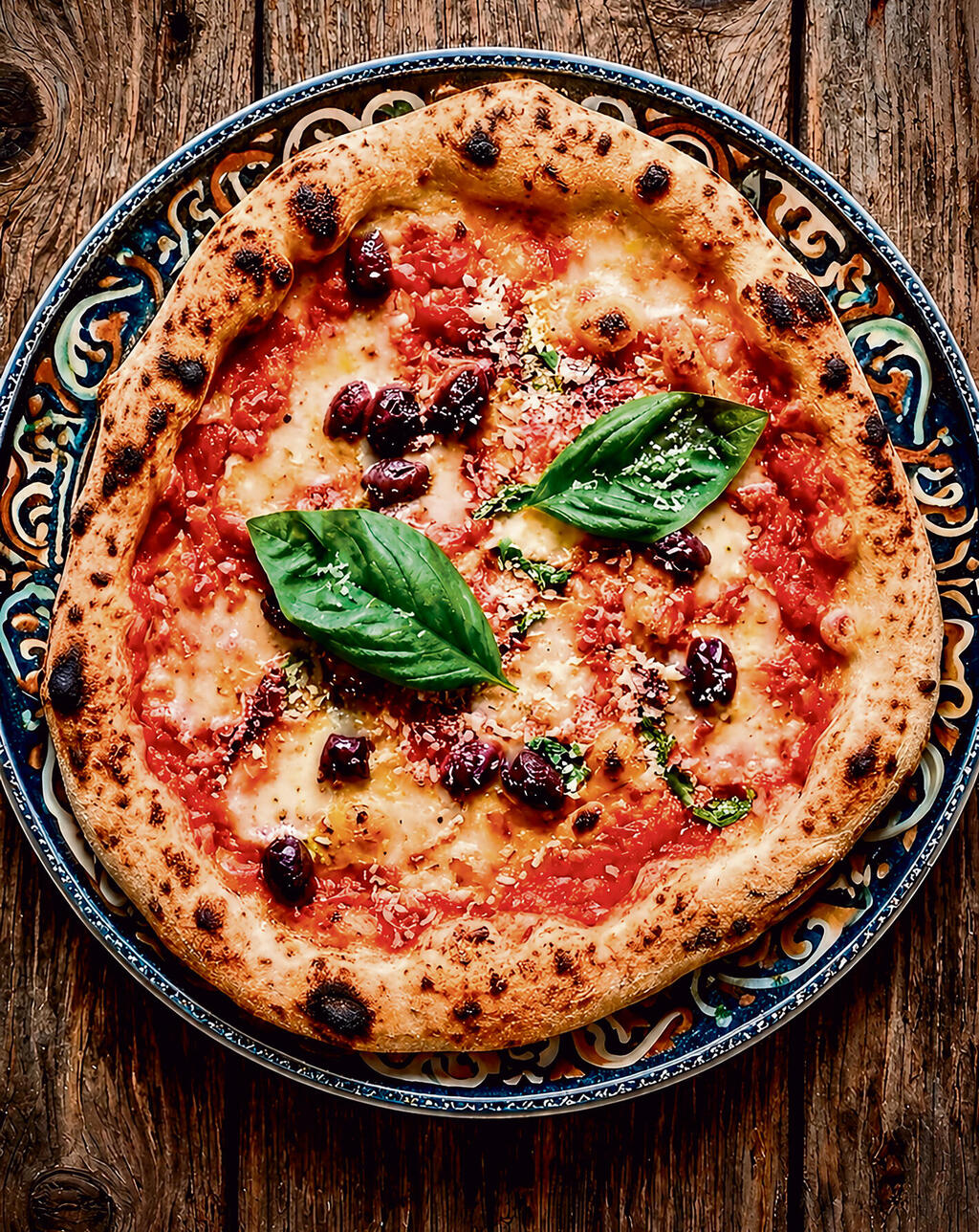
Perfect pizza dough is a living creature. When it comes out of the fridge, it is soft, elastic and willingly gives in to gravity and the gentle stretching of your hands. In a blazing oven, one that has been preheated for an hour at the highest temperature possible, it gets a violent blast of heat and suddenly reacts with ecstasy. The edges swell into huge air bubbles, crisp and firm outside, while keeping a fleshy, soft, cloudlike center. The crust turns a deep rusty color, dotted with brown burns of real baking, and the bottom crust cracks clearly in the mouth. It is not bread, and it is certainly not the tray-baked pie the aunties used to place in a square pan. It is a miracle.
Lock the rolling pin in the cupboard, open the dough gently with your fingers only, and let the heat do its work.
Homemade pizza dough
Double the quantities according to the size of your mixer, but there is really no logic in making only half a kilo. You definitely need a kilo.
This dough will look too wet and rough at first, but do not be tempted to push more flour into it. Let the mixer work, and within a few minutes you will see it become friendly, smooth and elastic to the touch. After the long rise, it changes completely.
Ingredients:
500 grams pizza flour or bread flour, though regular white flour will also work
350 ml cool water
1/2 teaspoon, or 2 grams, dry yeast
1 heaping teaspoon salt
1 teaspoon olive oil, for greasing the bowls
Preparation:
- Pour the water and salt into the mixer bowl fitted with the dough hook and mix lightly until the salt disappears. It has probably dissolved. In a separate bowl, mix the pizza flour with the dry yeast. Turn the mixer on low speed and gradually add the flour, half a cup at a time.
- Once a rough dough forms, turn off the mixer, cover with a towel and let it rest for 10 minutes. This is your phone time. This small nuance allows the flour to absorb the liquid on its own. Turn the mixer back on and knead at medium speed for another 8 to 10 minutes, until the dough is smooth, shiny and uniform.
- Lightly flour your hands, remove the dough and divide it into four equal pieces. Shape each piece into a tight, smooth ball. Lightly oil four small bowls, or one spacious tray, place the balls inside, brush the tops with a little olive oil so a crust does not form, and cover with plastic wrap. Send them to the fridge for at least 24 hours. They can wait for you there for up to a week.
- One hour before baking, turn the home oven to its highest setting, top and bottom heat. Take out as many dough balls as the number of pizzas you want to make.
- If you have a pizza stone, place it in the oven on the bottom or on a baking tray in the lower part of the oven.
- Flour a work surface generously. Fine semolina or pasta flour is even better, because they create a wonderful crust and do not burn in the oven. Place one dough ball on the surface and, using your fingertips, begin pushing the air from the center toward the edges. Lift the dough and stretch it with the backs of your hands, using attentive circular movements, until you get a thin sheet with fleshy edges.
- Important: Pizza absolutely does not have to be round.
- Also important: Do not ball up the dough again, even if it seems to you that it did not work. It worked. So the pizza will be shaped like an amoeba. That is the joy of homemade food.
- Place the dough on a pizza screen, an upside-down flat plate or an upside-down floured baking tray. Spread on 3 to 4 tablespoons of sauce, scatter a handful of mozzarella and toppings, and put it in the oven. You can place the screen on the pizza stone or simply use a tray. Open the oven, slide the pizza quickly onto the blazing stone and close the door within a second. Bake for 7 to 9 minutes, until the crust is browned and spotted and the cheese is bubbling furiously.
Basic no-pretension pizza sauce
Ingredients:
1 can high-quality peeled plum tomatoes
2 tablespoons olive oil
A generous pinch of sea salt
Preparation:
Blend everything and that is it. Do not cook the sauce in advance. It will cook in the oven.
The six commandments of dough
- Lock the rolling pin in the cupboard. A rolling pin is pizza’s sworn enemy. It crushes and tramples the air bubbles the yeast worked on for days in the fridge. Open the dough only with your fingers and the backs of your hands.
- The flour makes the crust. It is worth making an effort to get pizza flour or bread flour for a crust people will talk about for months. Dedicated pizza flour, 00 flour, is rich in gluten and protein. It gives the dough the strength to stretch without tearing, and creates the texture that is crisp outside and cloudlike inside.
- The oven must be blazing hot. A home oven loses about 30 degrees the moment you open its door. That is why you preheat it for an hour at the highest possible temperature. When the pizza is ready, open, shove it in and close within five seconds.
- A pizza stone helps. Its power is that it preserves the oven’s heat even when you open the door to put the pizza inside. We are very much in favor. But we have also managed without one for years. That is the truth. We warmly recommend it, but you can survive without it.
- No puddles. Do not overload the sauce and do not flood the pizza with cheese. Too much liquid will turn the center into a soggy swamp that will never bake properly. Four tablespoons of sauce and a handful of dry mozzarella are the whole story.
- Patience is flavor. Dough that rises quickly in a warm place develops the taste of tired yeast. Dough that rests in the fridge for at least 24 hours breaks starches down into sugars, giving it a deep, nutty flavor and that gorgeous rusty color in baking.
The maestro
“Do not expect some fancy dough that sat in the fridge for three days with hydration and all that,” Adam Snirer explained when we sat down at his place. “Here, this is periphery pizza. Basically, we make bread dough in the morning and put in a lot of yeast so it rises fast. We also recently added mozzarella to the cheeses, but it does not replace Emek cheese, which everyone here is used to. It is in addition, otherwise they will kill us. Just do not move anyone’s cheese.”
He kept lowering expectations for his pizza. It is not this and it is not that.
Oh, and it comes with ketchup and chili sauce on the side.
In our heads, we heard all of Italy clapping its hands in fury.
What do you mean ketchup? Where do you put the ketchup?
On top. The chili is also drizzled over the pizza, and then you add the pizza seasoning. That is how people eat it.
From the kitchen came the cook, a rock-and-roll type, holding a personal pizza baked inside an aluminum plate-tray with slightly raised edges.
It looked a little homemade.
With some apprehension, we added a little of the sauces and lifted a slice.
The cheese stretched from the tray. The dough was strong enough to carry both the sauce and the cheese. It really did remind us a little of bread, but fresh bread, baked with sauce and cheese on top.
We cannot say with certainty that it was pizza, or at least not pizza as strict observers define the category. We can say with certainty that the dough was excellent and the combination was exactly right. Mostly, it was very Israeli and very suited to the local palate. Pizza Maestro in downtown Migdal HaEmek may not have a life outside Israel’s borders, but inside those borders, as a neighborhood pizza place where all the children gather, pile on chili sauce and chirp with happiness, it absolutely does.
And we have not even written about the Nutella and halva-hair rozalach, made from the same dough in the same blazing oven. But wow, this simple thing is delicious.
Three weeks have passed since we visited, and maybe it was Adam himself, sweet, honest and funny, but the bottom line is that we find ourselves fantasizing about it. A simply wonderful pizza.
Pizza Maestro, 16 Derech HaEmek, Migdal HaEmek