

We call it giardiniera, though it never answers. It is a kind of chutney or relish with sour, sweet and salty flavors, and it can also be spicy, if that is what you want.
This condiment originated in farming regions across Italy and could not be easier to prepare. It is made entirely from vegetables, whether homemade, bought at the supermarket or purchased from the greengrocer. Fresh or dried fruit can also be added, and you can use whatever appeals to you. When nothing appeals to you, simply make it from good-quality canned vegetables.
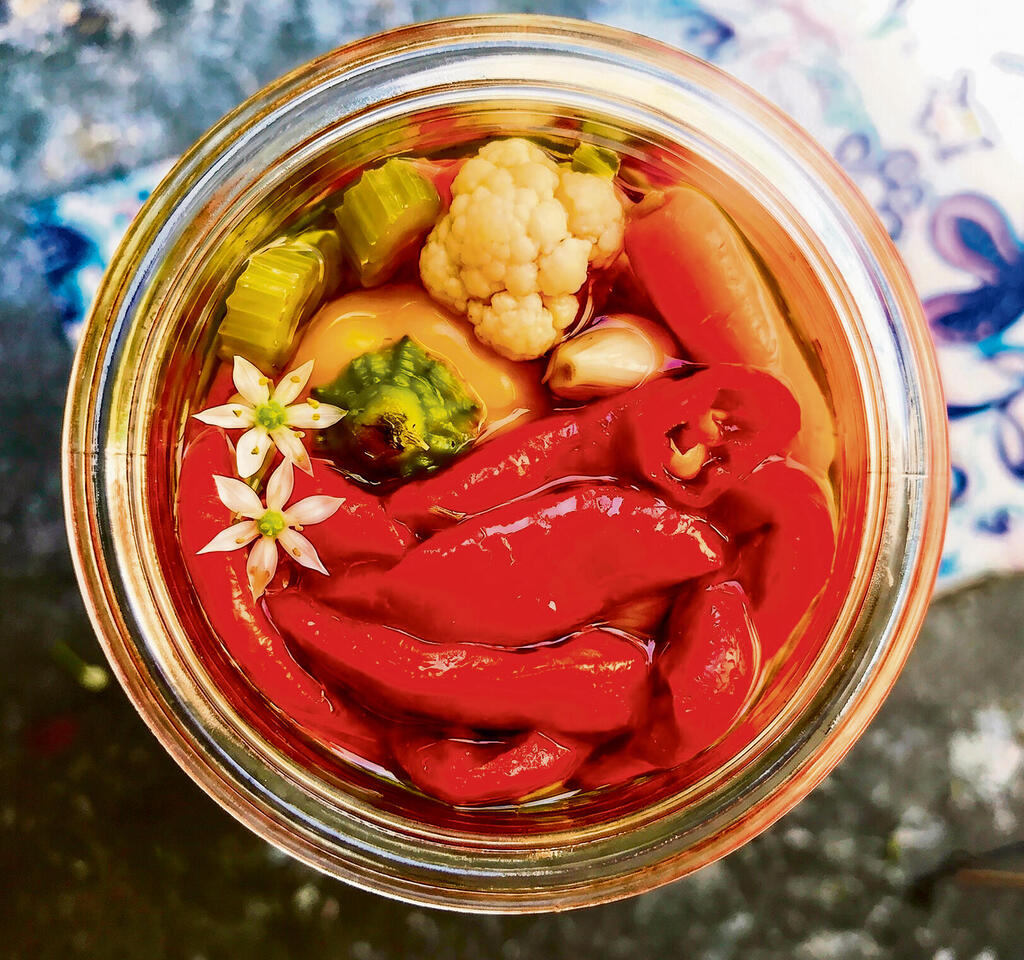
In Italy’s mountain regions, people emerge from a harsh winter and welcome the sun with an outpouring of fruit and vegetables, nourished by rich volcanic soil and the long winter rest of the fields.
The contents of the glass jar, which must have a lid, change according to whatever happens to be growing in each temperamental farmer’s garden. As long as you follow the simple formula of vegetables, or fruit and vegetables, this delicacy can be varied endlessly and used in countless ways. Italian farming neighbors taught us that the relish will keep, covered and refrigerated, for three weeks and often longer.
To transform this abundance of ideas into one reliable dish that is easy to work with, we have assembled the complete formula. It combines a simple base with possible additions, variations and upgrades, allowing you to build your ideal jar step by step.
The basic giardiniera ingredients
- The main vegetable: Use two jars of preserved vegetables together with their liquid. The simplest version uses a single vegetable, such as 1 kilogram of preserved peppers. Ideally, use peppers pickled in a sweet-and-sour sauce.
- Onions: Use two peeled and chopped onions. The onions add a heavenly flavor. This is not a mistake. There is no need to fry or sauté them, or season them with countless spices. The recipe is meant to be simple.
- A sweet addition: Add one small can of sweet corn, including its liquid.
- Optional flavor upgrades: These are pantry ingredients that are not essential, but each one, or any combination of them, adds flavor that develops further while the jar sits in the refrigerator. Everything here is optional, so choose whatever you like.
- Seasoning by instinct: Add a pinch of grated ginger, red chili to taste or another hot pepper you already know and enjoy. This is not the moment to experiment with an exotic habanero, unless you want to produce a jar of fire. Add a pinch of salt and perhaps a little black pepper. That is all. The choice of vegetables is flexible and depends on the season and your preferences. During the final cooking or mixing stage, add salt, pepper and sweetness to taste. Most importantly, the vegetables must remain covered with liquid.
Now we have reached the recipe itself. There are two methods, and both are extremely easy.
Method 1: Quick cold-soaked giardiniera
This short recipe requires only chopping and cleaning. It is based on mixing pantry ingredients and allowing them to marinate in the refrigerator.
Ingredients
1 kilogram preserved peppers, preferably pickled in sweet-and-sour sauce, including all their liquid
2 large onions, peeled and diced
1 small can sweet corn, including all the liquid
Optional additions: Choose some, all or none:
2 tablespoons sugar
½ tablespoon green or red Tabasco
1 tablespoon sweet or hot paprika
1 tablespoon finely chopped dill, without the stems
1 cup canned white or brown beans, including the sauce
½ cup peeled, finely grated beetroot, an excellent idea for both flavor and color
1 cup canned green beans, or frozen green beans that have been thawed
1 cup young peeled carrots, grated or cut into small cubes
1 jar marinated artichoke hearts in olive oil, chopped
1 to 2 cups fresh celery, cleaned and finely chopped, using only the inner stalks
½ kilogram sturdy, very ripe Magi tomatoes, even slightly soft ones, diced
Seasoning: A pinch of grated ginger, red chili to taste, or another hot pepper, but not habanero, a pinch of salt, a little black pepper.
Preparation
1. Clean and scrub the fresh vegetables. There is no need to clean vegetables that are already pickled. This may sound obvious, but we have discovered that it is not obvious to everyone.
2. Cut all the vegetables you are using, including the onions, peppers, tomatoes and celery, into small cubes.
3. Immediately place all the ingredients, vegetables, spices and preserving liquids in a large bowl. Mix well and refrigerate for one hour.
4. Meanwhile, prepare four to six sterilized half-liter jars with tightly fitting lids. The exact number depends on how many vegetables you added.
5. Divide the mixture among the jars. Smaller jars simply mean using more of them. Larger jars are also fine. Everything here should remain homemade, simple, accessible and relaxed.
6. Store in the refrigerator for about three weeks.
Method 2: Warm giardiniera softened in a pot
This is the classic method. Use exactly the same ingredients and quantities, but bring them together through brief cooking and the blending of their liquids.
Preparation
1. Place the chosen vegetables and all their liquids in a large pot.
2. Add boiling water to cover if the preserving liquids are insufficient. It is essential that the vegetables remain completely submerged.
3. Add salt, black pepper, sugar, paprika and Tabasco to taste.
4. Heat gently over low to medium heat for about 10 minutes.
5. Turn off the heat and leave the vegetables in the covered pot for another 30 minutes, allowing them to cool and absorb the flavors.
6. Divide the finished giardiniera among clean jars and refrigerate.
A special chapter: Overnight-roasted pepper giardiniera
We have all experienced the power of peppers and eggplants roasted over an open flame. But handling scorching vegetables, peeling and cleaning them, and frying them in the heat of the afternoon causes many sensible people to abandon the entire idea and postpone the delicacy until October.
Almost every summer, we remind our battered citizens, whether before or after yet another war, that there is a wonderful way to roast peppers. You go to sleep, and the oven works hard on your behalf. It is astonishingly simple.
This method has many advantages. It requires no oil and no frying. You only need to turn off the oven after one hour, or set a timer to do it for you.
Ingredients for the roasted peppers
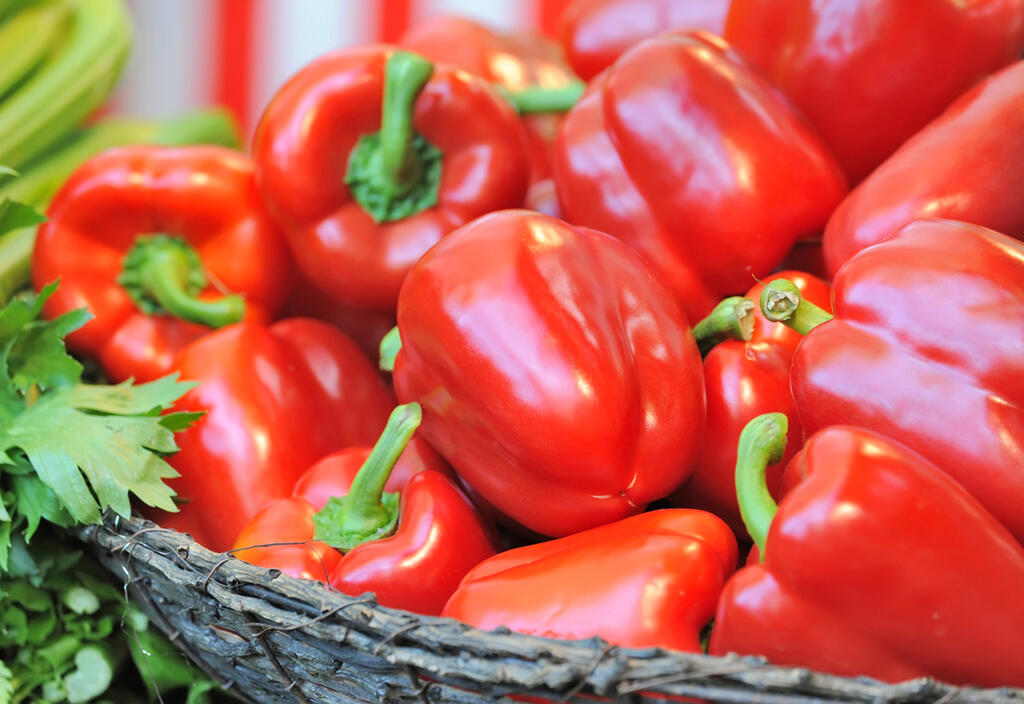
Medium red and orange peppers
A pinch of salt
A simple vinaigrette made from white wine vinegar and olive oil, using a ratio of three parts olive oil to one part vinegar
(Photo: shutterstock)
Add tomatoes
There is one more especially wonderful addition. Garden-vegetable giardiniera becomes perfect with sturdy but ripe Magi tomatoes. Choose as many as you like, about 500 to 750 grams. Select tomatoes that do not appeal to you at all. They should be extremely ripe, dark and perhaps even the soft ones you would no longer put in a salad.
Cut the tomatoes into cubes, slices or small wedges and add them directly to the finished giardiniera without cooking. They contribute enormously, including when the relish is served with hummus and tahini. These pickled tomatoes create a wonderful match between Middle Eastern and European cooking.
When the weather is extremely hot, sauté the tomatoes in a hot pan for five minutes before adding them to the giardiniera and refrigerating. This will help them keep longer.
The secret behind the roasted peppers
Do not peel the peppers before roasting them. Do not spread them with garlic, oil or sauce, and do not cut them in half. In this remarkable method, heat accumulates inside the whole pepper, creating a kind of miniature oven.
How to roast the peppers overnight
1. Sprinkle a little salt over a baking tray lined with parchment paper.
2. Wash and dry the peppers. Keep them completely whole, including the remaining stem, and arrange them on the tray.
3. Place them in the oven and set a timer to switch it off after one hour. Continue sleeping.
4. Even after it switches off, the closed oven continues working through residual heat. The temperature falls slowly while the flesh of the peppers continues to soften.
5. Then something miraculous happens. The skins separate from the flesh on their own.
6. In the morning, when the house is filled with the aroma of roasting peppers, remove them from the flavorful liquid that has collected at the bottom of the tray.
7. Pour the roasting liquid into a tightly sealed container and refrigerate.
8. Remove the remaining skins easily, without burns or effort. Open the softened peppers, cut them into broad strips and remove some of the seeds.
9. Layer the pepper strips in a container and drizzle them with vinaigrette, olive oil, the roasting liquid or a combination.
10. Refrigerate. Some people add honey and garlic cloves. This is wonderful, but not essential. The roasted peppers can also be eaten as they are, with a drizzle of your preferred oil, or seasoned with salt, pepper and glassa, a concentrated sweet balsamic glaze.
Gazpacho with roasted peppers
Some of the vegetables from the giardiniera can be used in gazpacho, but roasted peppers provide a particularly effective upgrade.
Add several pieces of pickled roasted pepper to your usual gazpacho recipe.
Add a little red horseradish. If you can find white horseradish at this time of year, all the better.
Serve the gazpacho with small cubes of sweet watermelon. A little watermelon can also be added to the blender for subtle sweetness. Half a peach also works.
At the crucial moment, depending on the occasion and your condition, a touch of frozen vodka will work beautifully here. When does it not?