

“In one image from the volcanic eruption in Sicily, I saw crowds of people fleeing and a single couple walking toward the erupting crater,” Joshua Tripp, a board member at World Central Kitchen (WCK), tells me. “I looked at that couple. If I were there, it would probably be me,” he said, and I immediately related.
World Central Kitchen, founded by Spanish chef José Andrés, provides high-quality food in disaster and war zones around the world. I joined them at the outbreak of the war in Ukraine, and since October 8 I have been managing the organization’s operations in Israel. We have distributed more than two million meals to evacuees and to security and rescue forces, with a significant portion of the work taking place in the north under fire, serving isolated elderly residents.
Last week in Madrid, at the organization’s global field managers’ conference, 150 of us sat in one room. People from Guatemala, Thailand, Mexico, Ukraine, Turkey, Jordan, Israel of course, and from every corner of the world. A strange group of people who are less interested in talking and more in doing: people who share a collection of stories about rescuing a lone elderly woman from a mudslide or feeding people under shelling.
When the Ukrainian team (for most of whom this was the first time outside their country since the outbreak of the war in February 2022) took the stage, the entire hall rose in a prolonged standing ovation. They broke down in tears, and we all cried with them. Because if there is anyone in the world who can understand, without words, what an entire life looks like inside the mouth of a volcano, it is the people in that room.
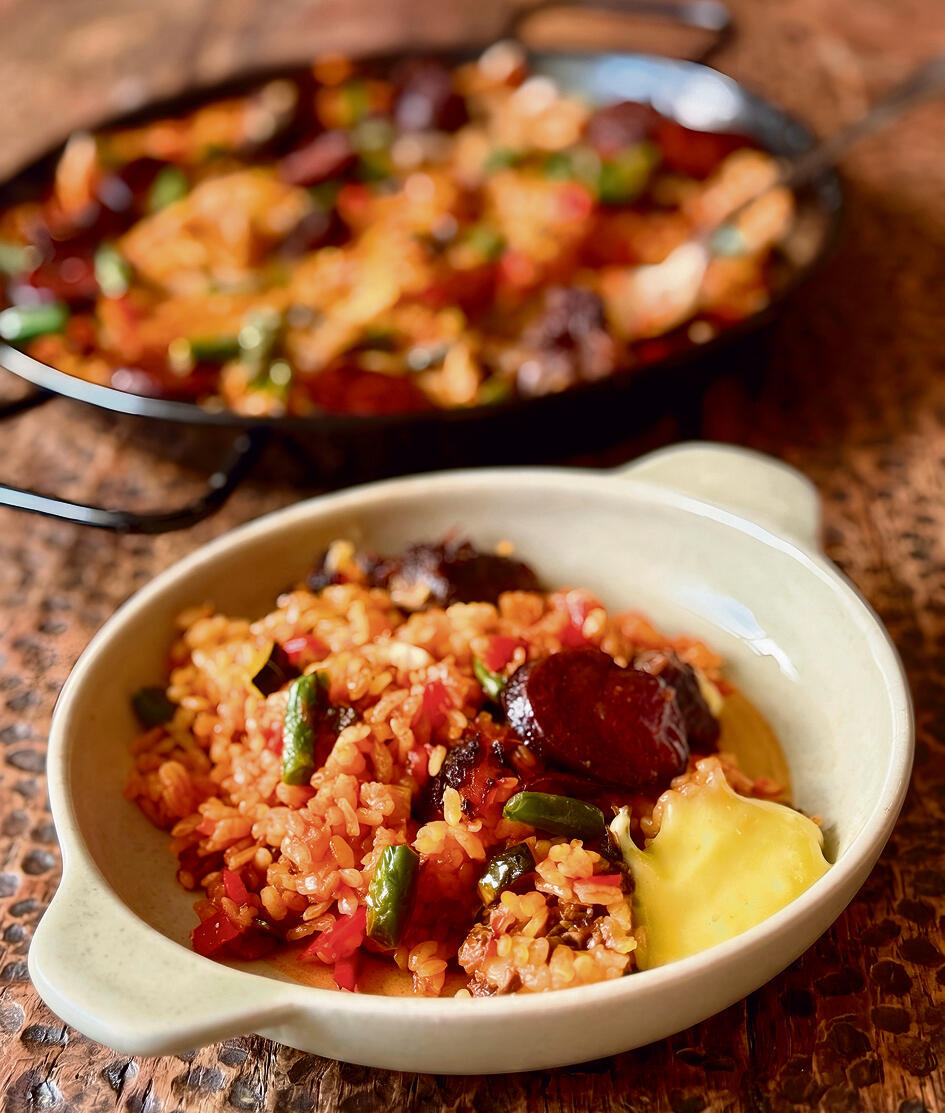
At lunchtime, when it was time to come down from the volcano back to the ground, we all gathered around giant pans of paella. The organization is Spanish at its core, and so is its food philosophy.
José Andrés, who has faced considerable criticism for his decision to feed people wherever they are, on all sides of conflicts, often says: “People are not their governments or their leaders. Instead of building higher walls, we should build longer tables.”
I remembered one of his recent visits to Israel. We went to Asaf Doctor’s Dok restaurant in Tel Aviv. It was closed that evening. José, a large, warm man who radiates a deep sense of humanity, stood in the kitchen and made a giant paella. He sliced fish, drizzled fig balsamic, and fed us directly at the counter like chicks at a bar. He prepared fish stock, tomato and pepper stock, and poured it into a mound of round rice until a bright, deep and joyful paella was formed.
Few meals in life are priceless, bigger than Michelin, plating, or price tags. They are one-off moments because they are a pure distillation of community, hope, and a long table.
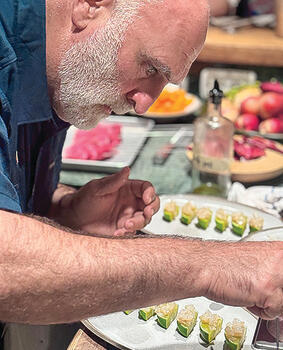
José Andrés in action
(Photo: Ruthie Rousso)
Paella is exactly that. It was born in the fields, cooked outdoors, open to improvisation and made for people to share from a single pan.
Now, after returning from Madrid, all I wanted was to set up a pan like that at home, invite my people, and build a slightly longer table.
Meat and vegetable paella
A paella pan is wide and shallow, with sloping sides and two handles. Like a tagine, the name refers first to the vessel. In practice, the rice and cooking method also matter. Beyond that, paella has as many variations as there are Spanish households.
The meat can be beef, chicken, rich spicy sausage, fish or seafood. The vegetables can be whatever is seasonal and available. The seasoning depends on what people like at home.
What usually does not change is the rice and the method: caramelized vegetable sofrito, rice and spices, stock poured over the top and open-pan cooking until the rice absorbs the liquid and develops the crisp socarrat layer at the bottom.
The result should feel like an event. If it does not, the paella is not doing its job. The stock needs to be rich and high-quality, almost like ramen broth.
This version uses beef short ribs, chicken and sausage, but the recipe is flexible. The beef can be replaced with another cut, the dish can be made with chorizo alone, chorizo can be combined with fish, or the stock can be shifted toward vegetables and mushrooms. We still recommend using rendered beef or chicken fat for the sofrito and smoked paprika for depth.
Ingredients:
80-100 grams (2.8–3.5 oz) Spanish chorizo or quality kabanos, sliced diagonally
300 grams (10.5 oz) bone-in short ribs
1 chicken leg quarter
100 grams (3.5 oz) fresh green beans, cut into 1-cm (0.4 inch) pieces
1 zucchini, finely diced
1 red sweet pepper, seeded and finely diced
1 onion, peeled and finely diced
1 level tbsp smoked paprika
2 grated tomatoes
About 12 saffron threads
1/2 tsp salt
1 cup sushi rice
For the chicken stock:
1 large onion, roughly chopped
1 leek, well washed and sliced
3 carrots, peeled and roughly chopped
1 parsley root, peeled and roughly chopped
1 bunch celery stalks, cleaned and washed
A little oil
3 chicken leg quarters, separated into thighs and drumsticks
Preparation:
- Place the short ribs and chicken leg quarter in the oven or air fryer and roast uncovered at 160°C (320°F). Remove the chicken after 50 minutes and leave the short ribs in for two hours.
- Meanwhile, prepare the stock. Fry the onion in a little oil until lightly caramelized. Add the remaining vegetables and cook together for about 10 minutes over high heat, stirring occasionally.
- Add the chicken. Those who want can roast the stock chicken in the oven with the short ribs until browned before adding it to the pot. Add 2.5 liters (10.5 cups) of water, bring to a boil and simmer gently for 90 minutes.
- The short ribs and stock should be ready at around the same time.
- Rinse the sushi rice well. Do not soak it.
- When the short ribs are well roasted and have released fat and juices, remove them from the oven, separate the meat from the bone and cut into cubes. Use the rendered fat to fry the paella components.
- Heat the rendered fat in the paella pan. Add the sliced sausage and short-rib cubes. Pull the chicken from the bone and fry everything together until the chorizo releases its seasoning into the fat. Transfer the meat to a bowl.
- In the same pan, fry the green beans for three minutes. Transfer to a bowl.
- Again in the same pan, fry the onion, zucchini and pepper for seven minutes, until softened and lightly caramelized.
- Add the smoked paprika and fry for 15 seconds. Add the grated tomatoes and salt and cook for three minutes, until the tomato sauce reduces.
- Add the rice and stir gently for one minute.
- Return the meat and green beans to the pan and spread them evenly over the rice.
- Lightly crush the saffron between two teaspoons and mix it with 1/2 cup chicken stock. Pour it over the rice. Add more chicken stock until the liquid reaches about 1/2 centimeter (0.2 inch) above the rice, roughly 2 to 2.5 cups total.
- Cook uncovered over medium heat until all the liquid has evaporated. Raise the heat to medium-high for another three minutes, until you hear the rice crackle at the bottom and form a crisp layer.
- Turn off the heat, cover with a towel or aluminum foil and let rest for two to three minutes.
- Squeeze a little lemon juice over the top.
- Serve with garlic aioli, if desired.
Garlic aioli
Ingredients:
1 egg yolk
3 tbsp fresh lemon juice
1/2 teaspoon Dijon mustard
1/2 level teaspoon salt
2/3 cup sunflower oil, or quality olive oil
1 crushed garlic clove
Optional: 1/4 tsp honey
Preparation:
- Mix the egg yolk, lemon juice, mustard, salt, garlic and honey in a bowl.
- Whisk quickly while adding the oil in a very thin stream, until a stable emulsion forms with the texture of mayonnaise.
- Serve a spoonful of aioli alongside the paella.
Basic paella terms
Bomba rice: A round Spanish rice suited to paella because it absorbs a large amount of liquid while staying al dente. It produces flavorful rice without turning the dish into porridge.
Sofrito: From the Spanish for fried or sautéed. The components of the dish are fried and browned until caramelized, then release their roasted flavor into the whole pan.
Socarrat: The Spanish version of tahdig, the slightly scorched, crisp rice layer at the bottom of the paella pan. It forms when the rice starches fry and dry out. Everyone fights over it, for good reason.
Rice
Traditional paella is made with Spanish bomba rice. Its strength is that it is not very starchy, unlike risotto rice, though the two may look similar. Bomba rice can absorb about three times its volume in liquid without falling apart, which means it becomes full of flavor while remaining pleasantly firm.
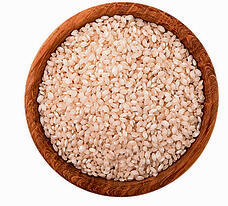
Bomba rice
(Photo: AB-7272, Shutterstock)
Since bomba rice can be hard to find locally, sushi rice is the best substitute, and preferable to ri
sotto rice. It absorbs liquid well, about two to two and a half times its volume, and can work beautifully if handled correctly.
That means rinsing it well before use but not soaking it, since soaking can lead to overcooking. After adding the rice to the vegetables and giving it a gentle stir, do not stir again. Not after adding the meat, and certainly not after adding the stock. Any further stirring releases starch and turns the paella toward porridge.
If sushi rice is not available, Persian rice can work, but it absorbs much less liquid than sushi or bomba rice, so the result will be less flavorful.
Paella pan
A paella pan is ideal for this dish. It is wide and relatively shallow, allowing the liquid to evaporate across a large surface area and stopping the rice from overcooking. It also has two comfortable handles.
It resembles the Israeli shakshuka pan, only larger. Paella pans can be found in professional cooking stores and online. If using what is already at home, choose the widest possible casserole-style pan, with raised but not high sides and at least one handle.