

For years, millions of followers knew Georges Hanna Dib as Dr. Food — the man who turned tastings, recipes and factory tours into a social media empire with more than eight million followers on TikTok. But behind the smiles, sweets and giveaways, Lebanese authorities were pursuing a particularly serious criminal case against him: drug smuggling concealed in food products.
On August 23, the virtual drama became reality when he was arrested at a home in the Akkar region of northern Lebanon. The arrest ended a lengthy period on the run that peaked about a month earlier, when a Lebanese court convicted him in absentia on drug charges and sentenced him to life imprisonment with hard labor, a fine and the loss of civil rights. Because Dib was not present in court when he was convicted, however, the legal proceedings may now be reopened in his presence, meaning he will not automatically begin serving the sentence.
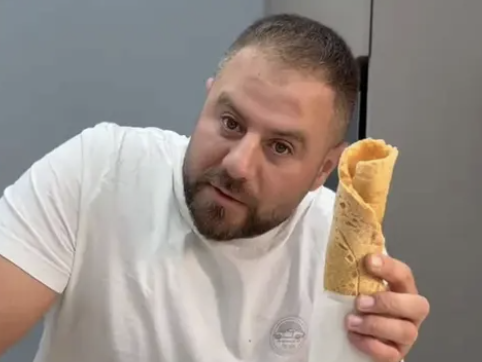
820 kilograms of hashish in cookies
The roots of the case go back to 2024, when shipments containing hundreds of kilograms of hashish were seized. According to local legal sources, the investigation involved about 820 kilograms of hashish, some of it carefully concealed inside cakes, sweets and food packages intended for shipment outside the country.
Authorities quickly linked some of the packaging to Dib’s food brand and alleged that chocolate and biscuit products were used as cover. Although the precise details of the shipments vary among different reports, Dib consistently maintained his innocence.
An arrest warrant was issued for him in May 2024 and the information was passed to Interpol, but he continued broadcasting online as if nothing had happened. In July, immediately after the sentence was handed down, he even posted a video in which he again proclaimed his innocence and urged followers not to believe the media.
A fugitive who could not stay offline
Here the story becomes surreal: While security forces were conducting a broad manhunt for him, Dr.r Food continued being Dr. Food. He refused to disappear from the screen and kept uploading videos about food production, showing the process of making cheese and even documenting himself handing out food to people displaced by the war between Israel and Hezbollah.
Security officials said he had been under surveillance for about a month. His method for covering his tracks was relatively simple: arrive at a location, film a video and immediately disappear, switching vehicles, phone numbers and hiding places.
But according to a report in The Guardian, it was precisely his obsessive need to maintain an online presence that became the weakness that brought him down. His videos and digital activity provided investigators with valuable intelligence that helped them trace his movements.
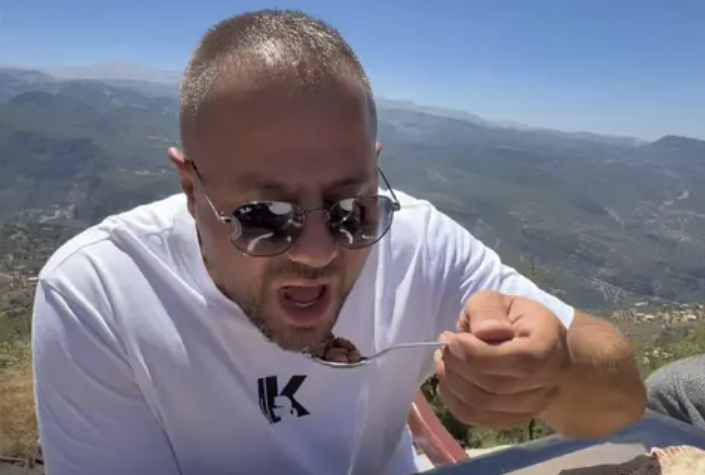
His obsessive need to maintain an online presence became the weakness that brought him down
(Photo: TikTok, @drfood.worldwide)
Finally, on August 23, judicial police raided his hiding place and arrested him. Shortly afterward, a photo was published showing him in handcuffs. The irony is that even the arrest did not stop the content machine: According to the report, while Dib was already in the custody of authorities, his Instagram account continued publishing scheduled food giveaways.
A divorce party in the shadow of the arrest
The dramatic arrest came with another bizarre twist in timing, just one day after his former wife, Canadian-Palestinian influencer Shrouq Sunshine, held a large divorce party in Lebanon.
Their relationship had become a public saga in recent months, including allegations of violence on her part and threats from him to release legal evidence. One report in Lebanon claimed that a complaint connected to the dispute accelerated the arrest, but the official statement from security forces made clear that the arrest was the result of prolonged surveillance in the drug case, not the marital dispute.
For Lebanon’s government, which has spent years trying to combat the smuggling of hashish and Captagon to Gulf states through Beirut’s seaports and airport, the arrest represents a significant achievement.
But in Dr. Food’s case, the irony is hard to miss: The man who built his social media empire on constantly revealing where he was and what he was producing kept broadcasting even while he was wanted by authorities. In the end, the same digital presence that built him helped authorities find him.