

“If Bordeaux is the king of wines, Burgundy is the pope,” goes an old French saying. Burgundy has long inspired that kind of reverence, a wine region where soil, history, family and prestige can turn a bottle made from the same grape as its neighbor into an object worth thousands of dollars.
That world is the subject of “Burgundy,” the new documentary by American filmmakers Michael Dweck and Gregory Kershaw, the team behind “The Truffle Hunters.” The film premiered this month at the Venice Film Festival and will screen at the Haifa International Film Festival during Sukkot.
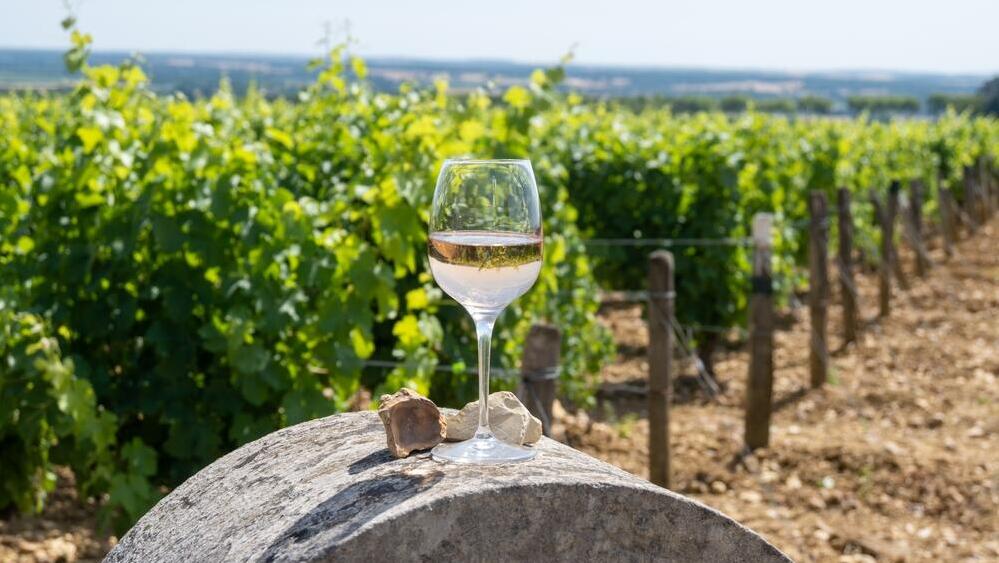
The pair arrived in Burgundy after exploring several French wine regions. What kept them there, they say, was something less technical than terroir.
“In Burgundy, there’s a sense of pleasure in this community that everybody was there for the same reason,” Dweck said during an interview at Venice. “It was all about pleasure.”
That feeling persuaded them to spend the next 2½ years making the film.
‘The nuances of the wine can change by the meter’
Kershaw said Burgundy has “recently become, I think, the obsession of the wine community,” in large part because of the extraordinary specificity of its wines.
The familiar concept of terroir goes even further there, he said, through what Burgundy calls the climat: not simply the soil from which the wine comes, but “the interaction that it’s had with history, that it has with the people who are tending to the land.”
“All that produces a wine that is very specific,” Kershaw said.
The scale can be minute.
“A great winemaker might just own, I don’t know, they might own two rows of vines,” he said. “The nuances of the wine can change by the meter there.”
That intimacy is part of what has drawn drinkers away from wine regions dominated by larger industrial production, he said.
“It was the thing that drew us to Burgundy also, that deep connection that people have to the land, the connection that people have to history and the different generations that have worked the land.”
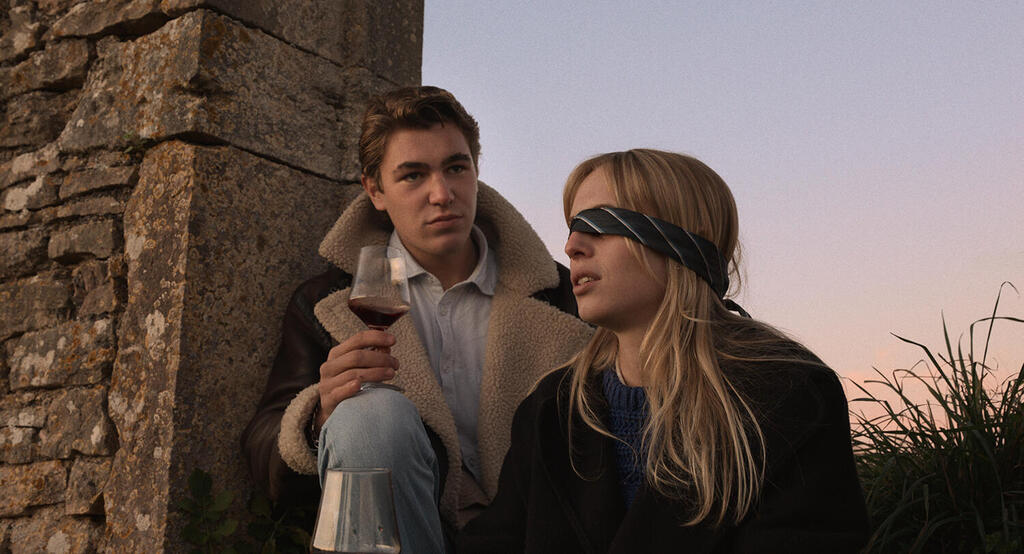
From the documentary ‘Burgundy’
Dweck pointed to the central paradox. Burgundy is overwhelmingly built around two grapes, Pinot Noir for red wine and Chardonnay for white.
“They’re all growing the exact same grape with the exact same root,” he said. Yet one row can produce a bottle worth $10,000 when the wine is only three years old, while a wine from roughly a meter away might sell for about $50.
The distinction, he said, comes from the appellation system and a hierarchy of land rooted partly in assessments made centuries ago.
“The monks came after the Romans and the monks determined, OK, this piece of land is extraordinary, this piece of land is ordinary,” Dweck said.
That classification still shapes Burgundy today.
“There’s 3,600 different appellations within Burgundy, and every wine, every grape is the same, but every wine tastes completely different.”
They went looking for winemakers and found Guillaume
Dweck and Kershaw initially expected the film to revolve around winemakers. To gain access, they enlisted Guillaume, a wine journalist who seemed to know everybody.
“They don’t say no when he wants an appointment,” Dweck said.
The filmmakers accompanied him to roughly 120 winemakers in three weeks, tasting wine, spitting it out and hearing the histories of the families behind it.
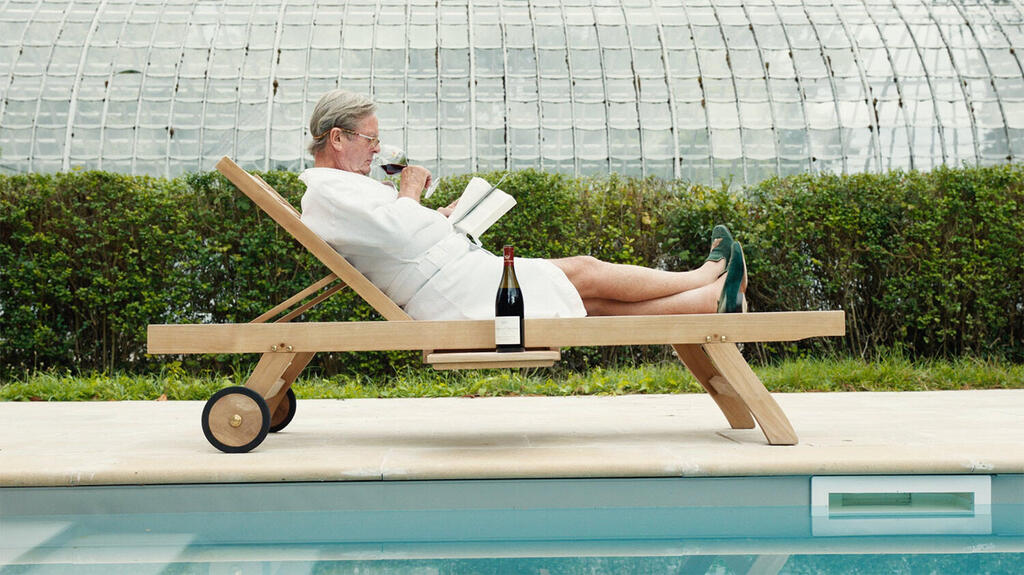
“They were all interesting, but none of them are as interesting as Guillaume,” Dweck said.
Guillaume became one of the film’s central characters.
“What’s interesting about Guillaume, as you see in the film, is Guillaume lives for pleasure,” Dweck said. “His mistress is wine. And there are consequences for that.”
A hypnosis sequence in the film reveals something deeper, Dweck said. Guillaume seems to yearn for a perfect wine capable of carrying him back into childhood and memories of his father and grandfather.
“He thinks somewhere out there there’s a perfect wine that brings him back to the time when he was a child with his father and grandfather.”
For the filmmakers, Guillaume embodied the emotional quality they had sensed throughout Burgundy.
‘It’s grape juice’
The link between “Burgundy” and “The Truffle Hunters” is not merely luxury, Kershaw said. Both films revolve around simple things that come from the earth and then become the center of elaborate cultures of desire.
A truffle, after all, “is a fungus that grows underneath the ground,” he said, yet it sits at the center of what he called “this kind of bizarre, over-the-top, excessive economy.”
Wine is similar.
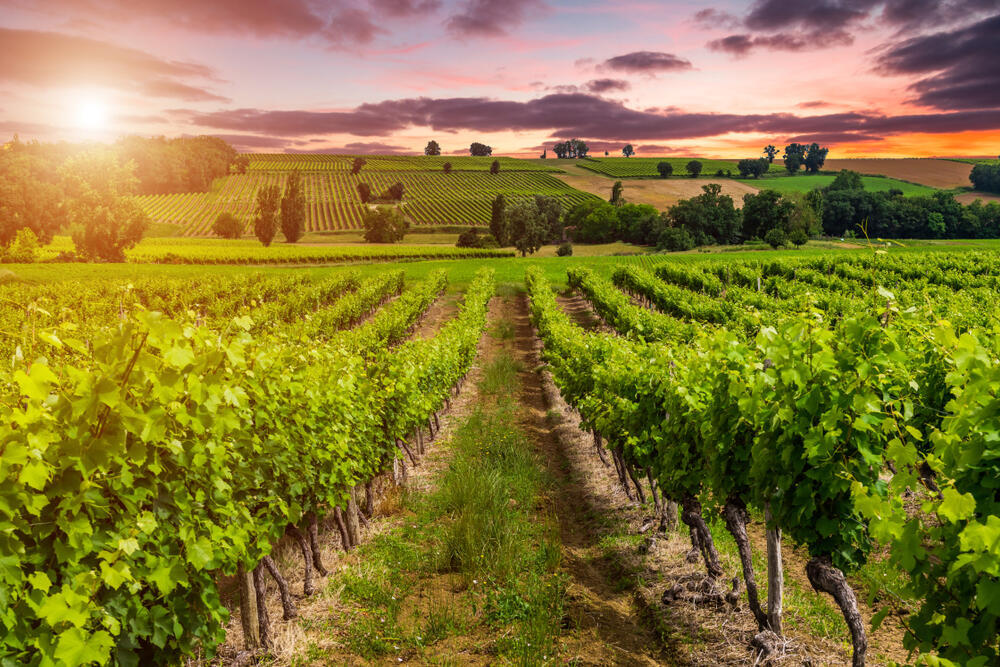
A vineyard in Burgundy, France. During their time in the region, the filmmakers found more colorful characters who became part of the film
(Photo: Shutterstock)
“Wine is grape juice,” Kershaw said. “Even when you talk to a great winemaker, what they tell you is, ‘I’m a farmer. I grow grapes and then I ferment them, and that’s the wine.’”
The simplicity of the product, however, sits alongside something much harder to define.
“There’s this kind of magical component that’s a process of that coming into being,” he said. “It’s the alchemy of human beings interacting with the environment, the very delicate, gentle, simple craft that produces these things.”
Then comes the money.
“What makes a bottle of wine? It’s a bottle of wine, it’s a bottle of grape juice, but people are willing to pay $5,000, $10,000 for it right now.”
Kershaw said that market may reflect “part of maybe the excesses of capitalism that allowed that to happen,” but he rejected the idea that the value is entirely artificial.
“There’s something also real that exists in a bottle of wine or even a truffle,” he said.
A buyer is paying not merely for the object, he argued, but for “the history, the different generations that ran this domaine, the interaction with human beings and the environment.”
Marketing is also central.
“There’s something very real to what makes a great wine,” Kershaw said. “There’s also some of the most sophisticated marketing in the world that goes into what creates a great wine, or what the public perceive as a great wine.”
Burgundy’s other divide: who gets to make the wine
The documentary also examines a less romantic side of Burgundy: a rigid social hierarchy built around who owns land.
“The social structure, the social strata is very clear,” Kershaw said.
Land prices have climbed so high, he said, that entering Burgundy as a new winemaker has become almost impossible.
“To be a winemaker there, the land has become so expensive, you really can’t buy into it,” he said. “You have to be a billionaire, and then you’re just gonna lose a lot of money.”
For most people, he said, the viable route is inheritance.
“You have to be sort of born into a winemaking family to be a winemaker there.”
Within Burgundy, status follows ownership, production and reputation.
“Your status within society is very closely related to the quality of the wine you make, how much wine you make, how much land you have.”
Successful Burgundy producers now enjoy what Kershaw described as “rock star status.”
“In the wine world, these winemakers are these wine gods almost.”
That hierarchy is embodied in Enzo, who began working in vineyards when he was 15 and spent five years working while attending school.
During filming, he realized that becoming a domaine owner himself was likely beyond reach.
“If you’re a young winemaker trying to enter into this world, it really is almost impossible,” Kershaw said, particularly in the Côte d’Or, home to Burgundy’s most coveted wines.
Enzo’s story was specifically Burgundian, he said, but also universal.
It is the experience of being young and ambitious, then “butting heads with the economic realities of the world” and discovering that divisions of class and society “are not as permeable as you might have hoped or wished.”
Documentary, fiction and ‘the magic that we felt’
“Burgundy” also marks an evolution in the filmmakers’ method.
“This film isn’t scripted, none of our films are scripted, but they are all very directed,” Kershaw said.
He said the line between documentary and fiction can become difficult to define after filmmakers spend years inside their subjects’ lives.
“We don’t really know exactly where the documentary ends or where the fiction begins.”
The process begins with immersion rather than a predetermined plot.
Before filming, Dweck said, they spend “weeks and sometimes months” getting to know a community.
“Looking for characters, looking for movie stars, stories,” he said. “We never have a story going into a community.”
They become deeply involved with their subjects, Kershaw said, sharing ideas about the movie while the people being filmed tell them what is happening in their lives.
The aim is not to record reality mechanically, but to transform it into cinema.
“How do we take what’s happening in front of us? How do we take this world and how do we create cinema out of it?”
The film’s 8mm footage is part of that approach. Dweck said the format felt appropriate for Enzo’s world and for a film trying to recreate the altered sensory experience of drinking wine.
“You drink a glass of wine, conversation becomes really interesting. You drink another glass of wine, everybody looks really beautiful, the light’s all of a sudden really great,” he said.
“So that’s kind of what we decided to do with cinema.”
The filmmakers use color, sound, music and different formats intuitively, he said.
“Nothing is planned at all. It just happens on the fly.”
A French landowner straight out of James Bond
Their method also led them to Bertrand, a wealthy landowner whom acquaintances in Paris had warned them would never speak to outsiders.
“People of his stature won’t talk to anybody, even Parisians,” Dweck recalled being told.
Instead, Bertrand entered their film almost accidentally.
The filmmakers met his daughter on a hot day, and she invited them into the family home for lemonade. They did not realize her father was there.
Then a man appeared in a bathrobe over a wet swimsuit, fresh from a swim.
“He said to us, hello, and what are you doing on my property?” Dweck recalled.
After they explained, Bertrand sat down to talk.
“His life was so interesting,” Dweck said. “He was like a James Bond, Ernest Hemingway character. He lives large. He lives for pleasure.”
Bertrand later showed them a photograph of himself galloping on horseback while photographing giraffes in Botswana. The following week, he was preparing for a diving trip in South America.
“He was constantly doing these high-risk adventures,” Dweck said.
For him, Bertrand captured something essential about the region.
“That’s kind of what Burgundy told us.”
‘Our objective is pleasure’
The filmmakers said that same idea shaped the entire project.
“Our objective is pleasure with this film,” Dweck said. “You should feel the way we felt when we were there.”
The challenge was to translate sensations unavailable to a cinema audience.
“How do you taste the wine? How do you smell it? How do you feel the earth? How do you do that with cinema and feel how we felt there?”
After 2½ years inside Burgundy, their view of wine also changed.
Kershaw said he often thinks about something Guillaume told them: “The greatest bottle of wine is the wine that’s finished.”
Guillaume was being playful, he said, but there was truth behind it.
“When you taste a good wine, your body just kind of knows it’s a good wine,” Kershaw said. “It’s not necessarily the one that is the most expensive.”
Burgundy’s speculative market, he added, has driven some prices “into this level of absurdity.”
Ultimately, he said, a great bottle is simpler than all of that.
“A great bottle of wine is just the wine that you like and you drink and that your body just says yes to.”
And did two and a half years of wine tastings leave the filmmakers perpetually drunk?
Dweck laughed.
“You learn to spit your wine after you taste it.”