

Prosecutors in South Korea are seeking a one-year prison sentence for the owner of an upscale 2-Michelin-star restaurant in Seoul after diners were served ants that are not approved for consumption in the country. Prosecutors also asked that a fine of 20 million won, about $13,500, be imposed on the company that operates the restaurant.
The case came to light after officials from South Korea’s Ministry of Food and Drug Safety found reviews by diners on blogs and social media, along with photos showing ants scattered on dishes served at the restaurant. Following the posts, an investigation was opened, and the restaurant’s owner and the company that operates it were put on trial for violating food sanitation laws.
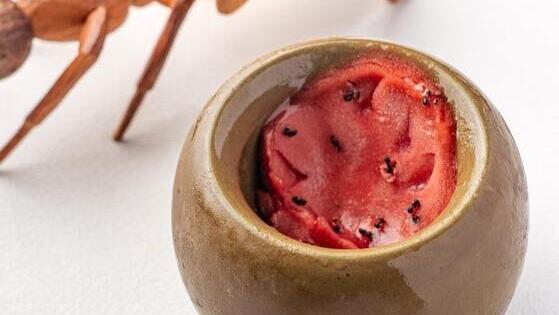
According to the investigation’s findings, between April 2021 and November 2024, the restaurant imported two types of dried ants from the United States and Thailand. The shipments arrived by international mail, and the ants were served to diners until January 2025, for about three years and nine months. Each dish was usually topped with three to five ants, intended to add acidity. According to South Korea’s Yonhap news agency, the business did not go through the approval process required to use them as an ingredient.
The dish at the center of the case was a sorbet based on sikhye, a traditional sweet Korean rice drink. According to prosecutors, the dessert was sold more than 12,200 times, with sales totaling about 120 million won, or about $81,000. Based on the number of servings and the number of ants placed on each one, investigators estimated that about 49,000 ants were used in total.
Health authorities also found that the ants served contained concentrations of heavy metals up to 55 times higher than those found in insects approved for consumption.
The restaurant admitted to most of the facts in the indictment, but disputed the prosecution’s calculations. It argued that the estimate of 49,000 ants was based on the assumption that every diner who ordered the dessert agreed to receive them, even though in practice only about 60% of diners chose to try the unusual topping. According to the restaurant, customers were asked in advance whether they wanted ants, and those who refused were given alternatives such as fermented vinegar and edible flowers. It also argued that the ants appeared only in the sorbet dish, which was a small part of a 15-course tasting menu. “They calculated as though all the diners had agreed,” the restaurant said.
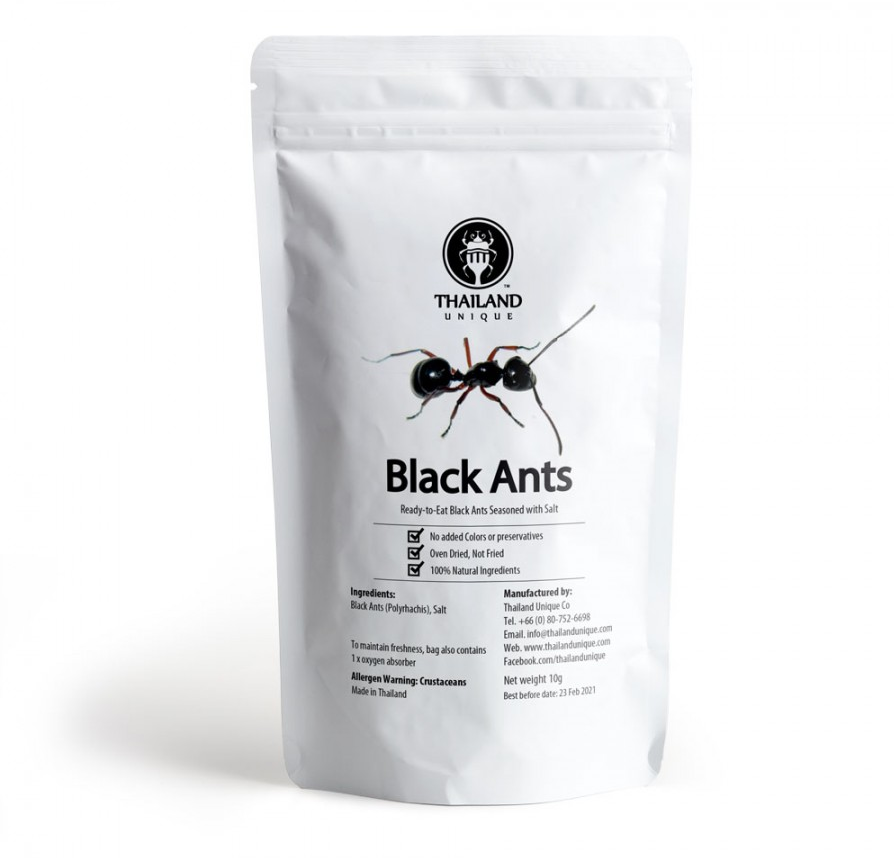
The dried ants ordered from Thailand and the United States
(Photo: Thailand Unique, from Bizarre Food)
The choice of ants was not accidental. Studies have found that in certain species the formic acid secreted by ants gives them a sour taste reminiscent of vinegar or lemon. Researchers who examined several ant species also found nutty, roasted, woody and even caramel-like flavors, which is why chefs in various countries use them as an ingredient and not only as a garnish. According to the American Chemical Society, common black ants may even be used in dishes as a substitute for lemon juice.
Despite that, South Korean law permits only 10 insect species for consumption, including grasshoppers, beetles and crickets. Ants do not appear on the list, but their use is not necessarily permanently prohibited: A business that wants to serve them may request temporary approval, subject to tests for toxicity, nutritional value, health risks and the possibility of raising and processing them under hygienic conditions. The restaurant did not request such approval.
South Korean media reported that the restaurant in question is Evett, in Seoul’s Gangnam district. The restaurant was founded by Australian chef Joseph Lidgerwood and his Korean wife, Ginny Kim, who operate it together. Reports on the trial did not reveal the full name of the person for whom prosecutors requested the prison sentence, identifying the defendant only as a representative of the operating company whose surname is Kim — meaning it is most likely Lidgerwood’s wife, who is considered co-owner and CEO. Lidgerwood is listed as chef-owner, and previously took part in Netflix’s cooking competition “Culinary Class Wars.”
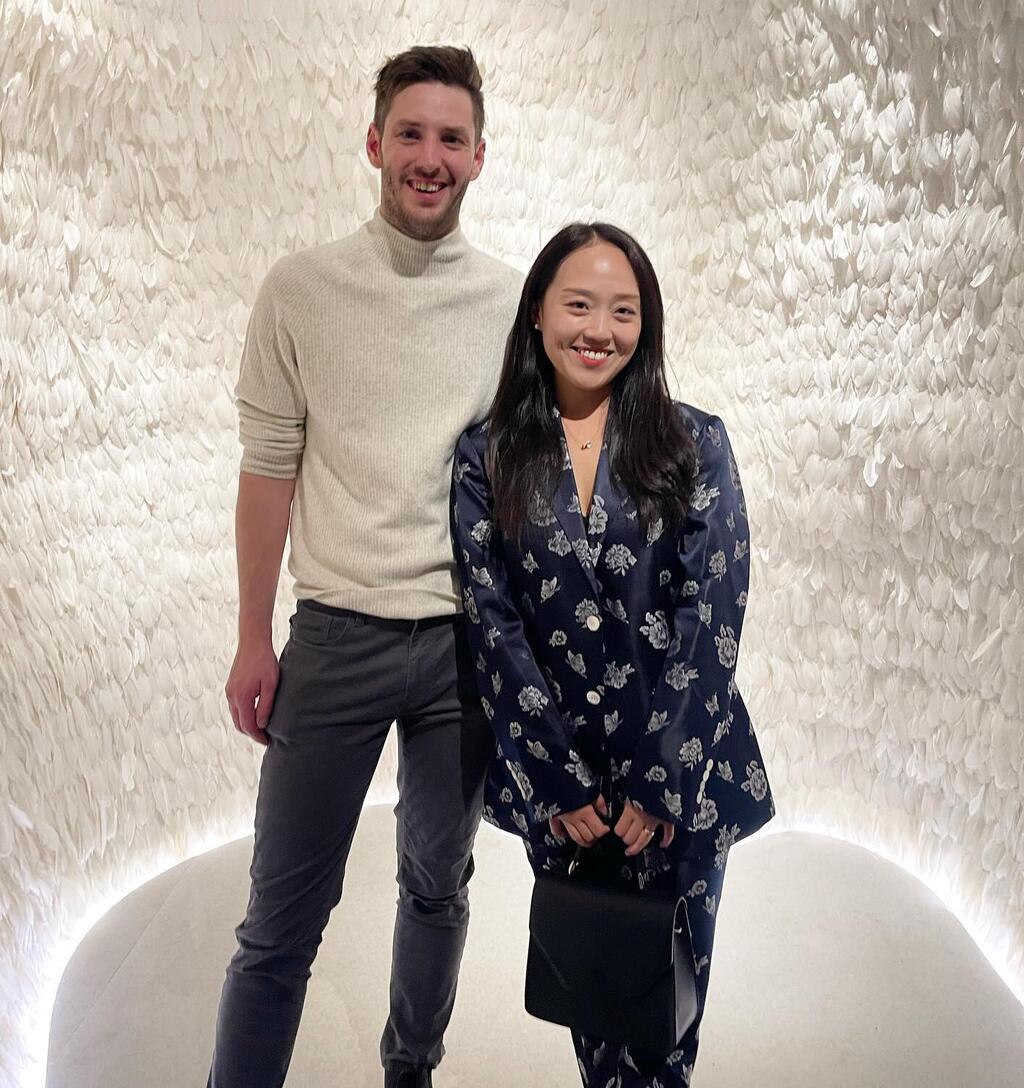
Australian chef Joseph Lidgerwood and his Korean wife, Ginny Kim
(Photo: Instagram)
Evett opened in 2019 and specializes in a modern interpretation of Korean ingredients and culinary traditions, using foraging, fermentation and in-house production of sauces. Today, it holds two Michelin stars — a rating that, according to the guide, denotes “excellent cooking” worth a detour. Only 10 restaurants in South Korea hold that rating, all of them in Seoul.
The lawyer representing the restaurant stressed that it had won its first star before it began serving ants, and that it received two stars after it stopped using them. “The restaurant’s success did not stem from the ants,” the lawyer argued, noting that restaurants in Denmark, Britain and Australia also use ants as an ingredient.
The defendants told the court they had erred by not thoroughly familiarizing themselves with the local regulations. They said they had learned lessons from the case and would now make sure to check the legal requirements for every ingredient they use. The Seoul Western District Court is expected to deliver its ruling on September 2.
Eating ants in itself is not unusual in many parts of the world. Weaver ants and their eggs are used in the cuisines of Thailand and Cambodia, and in Colombia queen ants are considered a luxury delicacy whose status has been compared to that of caviar. But in the South Korean case, the question is not whether ants may be fit for consumption, but whether the restaurant was allowed to serve the specific species it imported without testing and approval.