

A meal costing 1,600 shekels per person is hardly an everyday indulgence, but Israeli chef Moshik Roth, whose former Amsterdam restaurant held two Michelin stars, believes diners are looking at the price the wrong way. Instead of going out to eat several times a month, he suggests saving up for a single exceptional experience. And while he readily acknowledges that his prices are high, he insists they are justified by the costs of running his restaurant and the experience it provides.
"Yes, my prices are high," Roth said during a panel discussion at the People of the Nation conference hosted by ynet and Yedioth Ahronoth, where he appeared alongside food blogger, culinary consultant and restaurant critic Gal Zehavi. Asked about the average cost of 1,600 shekels per diner, a sum comparable to a small family's monthly grocery budget, Roth defended his pricing without apology.
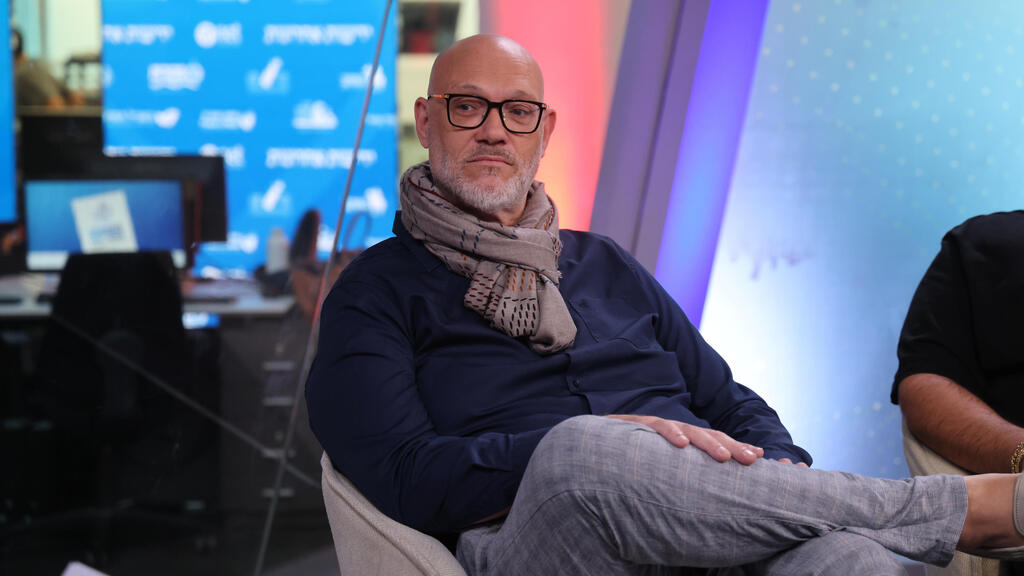
"I'm not trying to judge who wants to come and eat at my restaurant," he explained. "It's like buying a house. You can buy a house in Ramat Hasharon, or you can buy one 50 kilometers farther north. Both are perfectly fine. I know the price is high, absolutely, but it's not really expensive when I look at the costs and what remains at the end of the month."
When Zehavi asked whether he ever grew tired of having to justify the price, Roth acknowledged that 1,600 shekels could buy plenty of other things. But he argued that diners should consider the experience rather than simply compare the cost of individual meals.
"You can go out four times a month, eat at a different restaurant every week and spend 300 or 400 shekels each time," he said. "Or you can go out once and allow yourself, maybe every two or three months, to have that experience. It's your choice. You don't have to. But if you've decided to do it, come."
Roth said the ultimate measure of whether the experience justified its price was the response from diners themselves. "What ultimately drives me to do the right thing is the customer, the guest who comes to my restaurant and the feedback I receive," he said. "Every morning, I read our guests' feedback."
‘It's the closest thing to traveling abroad’
Zehavi, who regularly reviews restaurants and shares culinary experiences online, defended the idea of spending considerable amounts on fine dining, describing it as his preferred form of entertainment. "I'm not here to be Moshik's defense attorney, but my experiences today are culinary," he said. "I don't gamble or do anything illegal, and I don't use illegal substances. My experience is going to a restaurant, and I'm willing to spend that money because it's a culinary experience."
"It's the closest thing to traveling abroad," he added. "It's a ritual, an occasion you dress up for." Roth offered a comparison of his own, asking the moderator: "If you're traveling to see Coldplay in concert, wouldn't you want a good seat?"
For Roth, who once co-owned the two-Michelin-star Moshik restaurant in Amsterdam and recently launched FRANKCO, a gourmet hot dog and Dutch fries chain, the value of dining lies in something that goes beyond the food itself. He argued that the culinary world has become more professional as global travel and social media have made exceptional food experiences more accessible, pushing chefs to find new ways to impress diners.
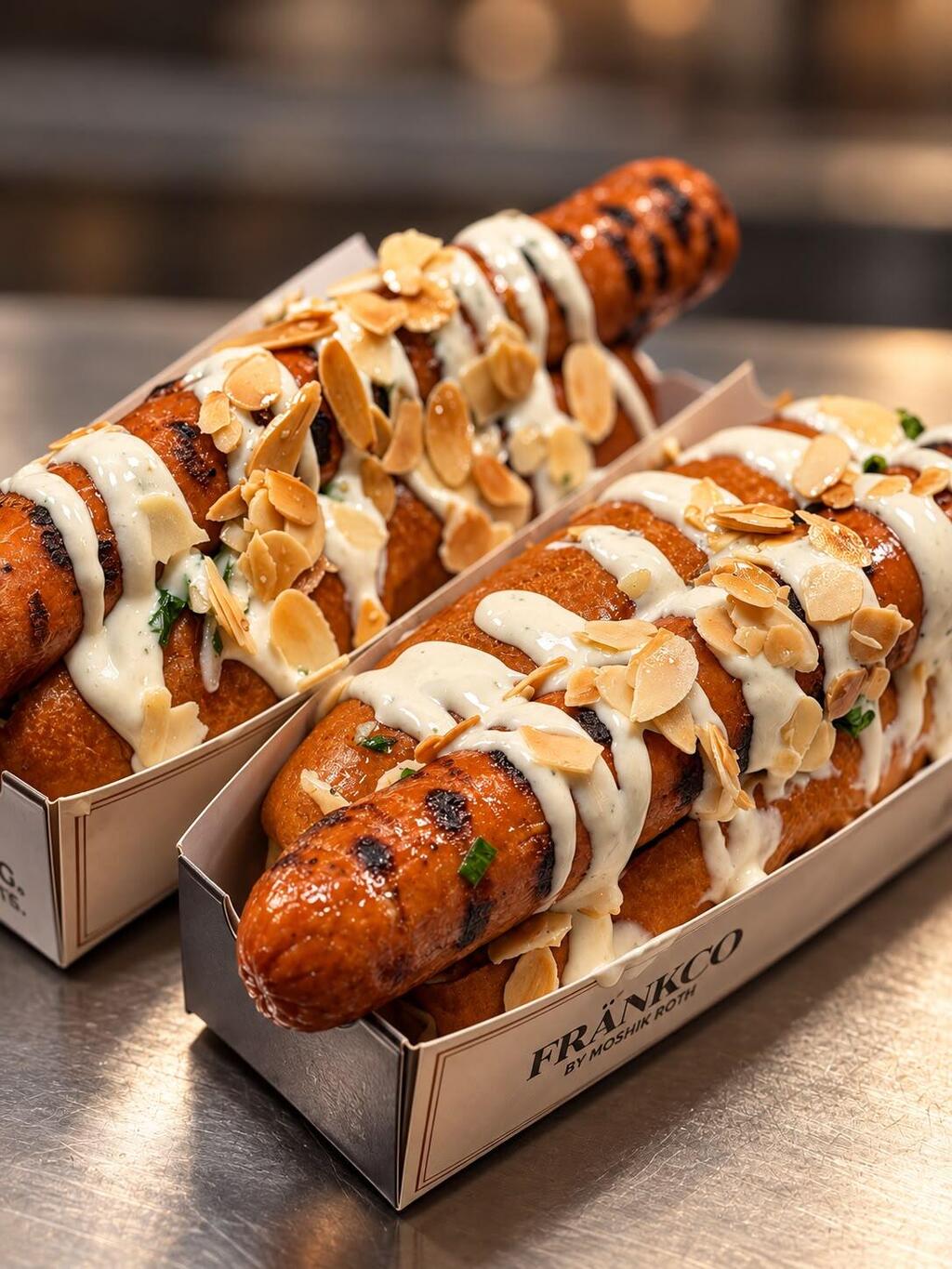
Hot dogs from Moshik Roth’s FRANKCO chain
(Photo: Danit Dahan)
"I don't think the culinary world is changing. I think it's evolving and becoming more professional," he said. "Once, just to find out what was on a restaurant's menu, you had to travel there, find a cookbook or go to a library. You had to work much harder to get that information. Today, information is immediately available. You can explore it in real time, except for one thing: the sense of taste."
That, Roth explained, still requires people to travel, explore restaurants and experience food firsthand. Zehavi agreed that greater access to international food culture had raised expectations, but said it had also created new challenges for chefs and content creators who constantly need to reinvent themselves.
"You see something happening in the United States and think, sooner or later, it's going to reach Israel, so let's get ahead of it," Zehavi said. "Then you experiment, take risks and sometimes bring over a viral trend that's hugely successful abroad but doesn't really suit Israel. And you get criticized for it."
‘Only romance will survive’
Asked whether diners were becoming increasingly difficult to impress, Roth said the real challenge was creating an emotional experience rather than simply serving extraordinary food. "At the end of the day, it's food, but when we talk about excitement, we're really talking about the experience," he explained. "The food obviously has to be amazing, but you also have to ask how you build the experience around it and where the emotion comes from."
"If I can't get excited about the food I'm making, if that feeling doesn't come from within me, I won't be able to pass it on to the guest," he said. Roth also rejected the idea that he was a perfectionist, describing himself as scattered and disorganized but saying he deliberately surrounded himself with highly meticulous professionals who could execute his vision.
When it comes to flavor, however, he believes the responsibility is entirely his. "When it comes to taste, to creating that real 'wow' moment for the guest, that's something that comes from me, and the challenge keeps growing," he said. "Once you've experienced the world, the bar keeps rising."
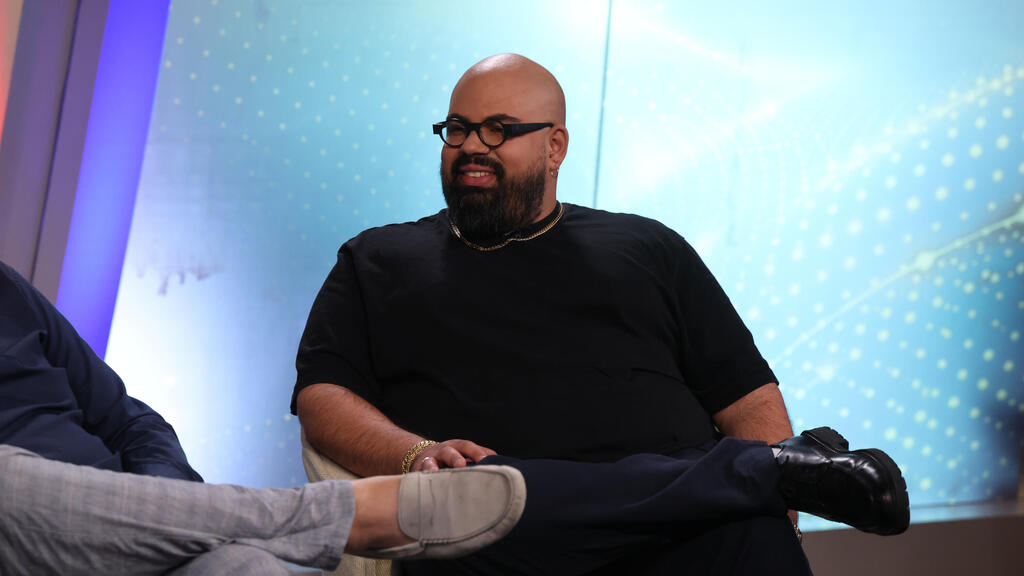
Food blogger Gal Zehavi
(Photo: Yariv Katz)
He recalled that 20 years ago, sitting at the counter of a 90-year-old sushi master in Japan and eating extraordinary sushi seemed almost unattainable, while such experiences have since become far more accessible. But despite the rising standards, Roth insisted that chefs must remain true to themselves. "You always have to return to yourself and think about your own authenticity," he said.
When the moderator described him as a romantic, Roth was emphatic. "Only romance will survive," he said. "I believe that because it's what sets us apart from everything else."
Zehavi argued that the COVID-19 pandemic had helped restore some of that emotional connection to food by bringing people back into their kitchens. "COVID made all of us cook. We started understanding what gastronomy really was," he said. "Food bloggers became increasingly sophisticated, making restaurant-style dishes, sashimi and all kinds of elaborate food. But we also brought romance back home by returning to home cooking, while still treating a visit to a chef's restaurant as an incredibly romantic experience."
For Roth, that connection also extends to family traditions. "I grew up in a Jewish country, and for me, Friday night dinner is something I preserve, whether or not I'm religious or observant. That's my family romance."
From expensive dining experiences to the perfect omelet
The conversation also addressed the growing influence of food bloggers and whether paid restaurant visits undermine the credibility of online reviews. Roth acknowledged that restaurants now invest in influencers much as they once purchased newspaper advertisements, but insisted that maintaining objectivity was the responsibility of the content creators themselves.
"Instead of buying that advertisement, I buy their services," he explained. "I don't look at it from the perspective of whether they're objective. That's their responsibility, not mine. If I want to advertise through bloggers and influencers whom I invite to eat at my restaurant, the responsibility to say whether it's good or bad is theirs."
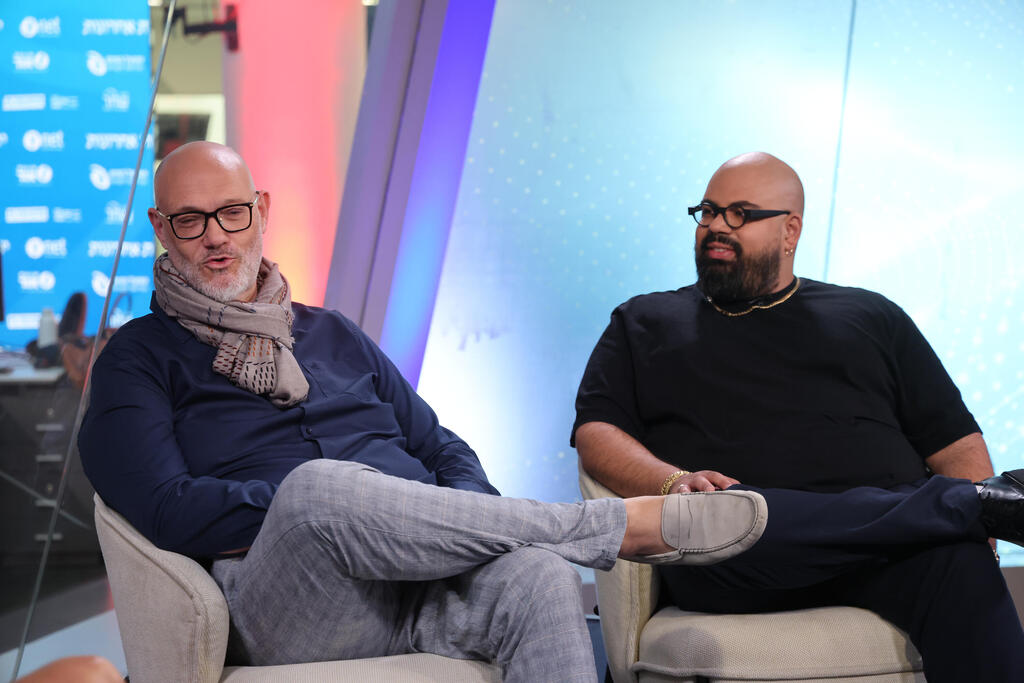
(Photo: Yariv Katz)
Despite the industry's pursuit of increasingly elaborate culinary experiences, Zehavi believes the next major food trend is something far simpler: mastering the basics. "In the past, a viral recipe was usually some trend arriving from abroad," he said. "Then it became about life hacks, shortcuts in the kitchen. Today, I feel people are returning to basic cooking."
According to Zehavi, audiences increasingly want to learn how to make rice, keep an omelet from sticking to the pan, season chicken thighs or transform an ordinary salad into something special. When he asked his followers what they wanted to learn, many gave the same answer: rice.
"We're going back to basics, where the real trend is providing value," he said. "If I'm not offering something useful, I won't get likes or shares."
Roth responded with a story from his own kitchens. "You know, many years ago, the requirement for getting hired at my restaurant was passing the omelet test," he said, explaining that prospective employees had to demonstrate their ability to prepare the seemingly simple dish.
"Oh no, then I have a confession," Zehavi replied. "Sometimes my omelets still don't flip properly. I'm still learning how to do that."