

Moshe Basson, 75, executive chef and owner of The Eucalyptus Restaurant in Jerusalem, has a quiet smile. His eyes, framed by deep lines in his dark, Iraq-born skin, sparkle. But they also carry history that seems to reach all the way to his soul.
Born in Iraq in 1950, Basson immigrated to Israel with his family when he was just one year old. Now gray-haired and wearing a short ponytail, Basson grew up in a refugee absorption camp in Jerusalem’s Talpiot neighborhood before later moving to Beit Safafa. There, he began developing the culinary roots that would eventually become Eucalyptus.
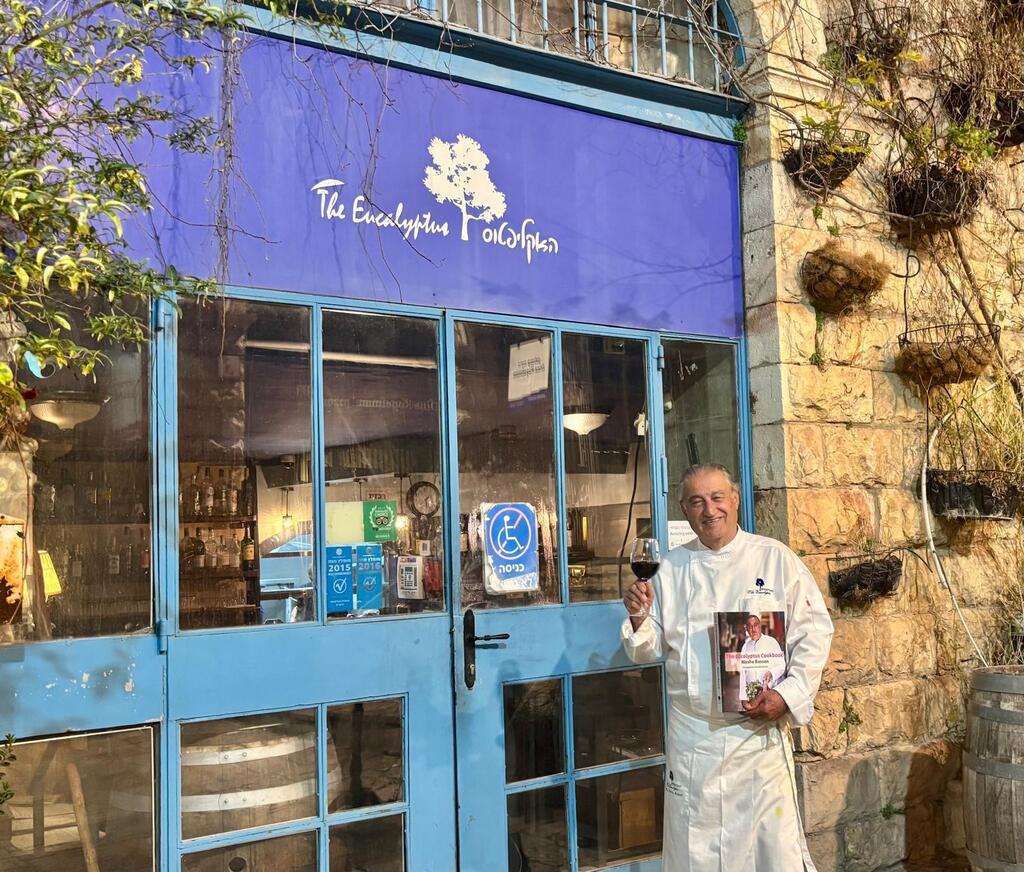
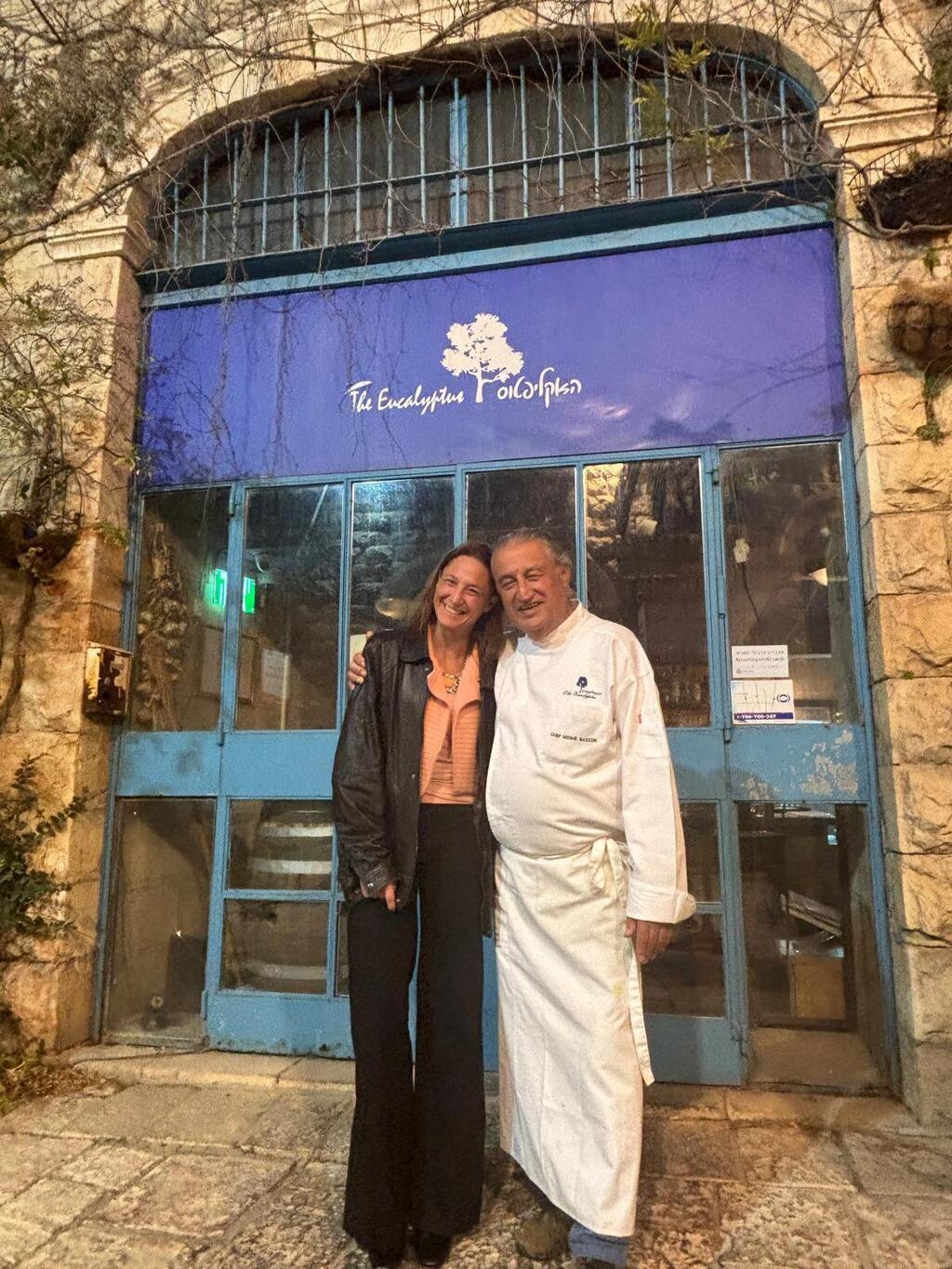
The author with Moshe Basson outside his Jerusalem restaurant
(Photo: Maayan Hoffman/The Media Line)
Nearly four decades ago, he opened what would become one of Jerusalem’s most iconic restaurants, known for its use of biblical herbs and spices and for blending ancient tradition with modern Jerusalem. Now, 39 years later, the restaurant in the Artists’ Colony will close its doors on Thursday.
Basson said he will miss the people more than the walls. The children who were born to staff members. The visitors who grew up at his tables and now return with children of their own.
Italian author Umberto Eco, author of The Name of the Rose, visited Eucalyptus and wrote in its guest book in Italian, “I will be a pilgrim to Jerusalem for your kitchen.” The late Israeli President Shimon Peres also signed, in Hebrew, Basson recalled.
Basson recalled that one day an older man walked into the restaurant. He looked familiar. Basson asked whether they had ever met. The man was certain they had not.
Then Basson asked if his father was Gozal Nesharim, a tour guide who had visited years earlier. It was.
“I remember him coming with his father,” Basson said. “His eyes, after so many years, had not changed.”
Basson said moments like this happen “not every day, but always the same story.”
He knows he has touched thousands of people. There were years, he said, when as many as 700 diners would pass through in a single lunch or dinner service, filling the outdoor courtyard, the rooftop seating, and the main and upper halls for weddings, bar mitzvahs, and other celebrations.
Now, as the restaurant prepares to close at the end of the week, the children of former staff members and adults who once worked there as teenagers have returned to help out. They are being paid, Basson explained, but they did not come for the money. As the staff downsized, he had to let most people go. Those who were there on Sunday night when The Media Line visited came to reminisce and to serve the man who helped feed and guide them over the years.
“This child that is working here,” Basson said, pointing to a young man, “He used to work with us. But I knew him as a baby when his father worked for me. One of those waiters, right inside, had a baby about two months ago. He started here when his mother brought him and asked me to give him a job. She didn’t want me to pay him. She just wanted to keep him off the street. That same boy became a chef.”
Basson admitted that, in some ways, he feels relieved as the restaurant closes.
“It wasn’t a jail for me, but in some ways it was,” he said, explaining that he was always tied to the physical space. Now, he hopes to offer workshops in the Jerusalem forest, in private homes, and at special events. Since announcing earlier this month that Eucalyptus would close, he said, people have been coming to comfort him.
“In some ways,” he said, “I’m feeling like in a shiva, people coming to hug me, comfort me.”
But he does not want sadness to define the moment.
“It’s Adar, the month of Purim,” Basson said. “Don’t be sad. I’m not letting myself be sad. It is sort of a relief and the opening for new things.”
The concept for Eucalyptus began in 1960, when Basson planted a small eucalyptus in the yard of his parents’ Jerusalem home for Tu B’Shevat. Although the family later moved, the tree continued to grow. Years later, under that same tree, the Basson family opened its first restaurant, a story he has shared many times.
Basson loved studying Torah and learning about agriculture and local herbs. According to his website, he became “an authority on herbs and edible wild plants indigenous to the region.” He combined that knowledge to create the Eucalyptus menu. Over the years, he and the restaurant won numerous culinary awards.
When the COVID-19 pandemic hit, the restaurant began to struggle, Basson explained, the creases around his eyes deepening as he spoke. At first, the government was supportive. But as the war broke out and challenges mounted, he could no longer afford to remain in the location. The municipal landlords wanted to raise the rent and considered not renewing the lease. Although at one point it seemed things might work out, Basson decided he did not want to keep trying.
At the same time, customers grew scarce. He recalled one night at the end of January when they decided not to open because there was only one reservation, a group of four. The restaurant called and asked them to come another evening. There were other nights like that, too.
Then, the moment he announced that Eucalyptus would close, everything changed. Since then, he has been fully booked every night.
People have come from across the country, including from the North. Families are bringing their children to experience Eucalyptus, a restaurant that has become part of Jerusalem’s culinary legacy, before it closes.
The food remains distinctive. On Sunday, Basson served The Media Line a sampling of dishes, including fresh bread dipped in a mixture of herbs and nuts and pareve garlic butter infused with whole pieces of fresh spice. Small glass tea cups of lentil-vegetable soup, with thin slivers of carrot floating inside, were followed by a plate of roasted cauliflower alongside fried black lentils in a tomato and tahini sauce. The salad was at once light and rich, dressed with vinaigrette and layered with several shades of lettuce. The meal was served with a large goblet of red wine. In every bite was Basson’s love, prepared in the kitchen and served in a warmly illuminated room of Jerusalem stone.
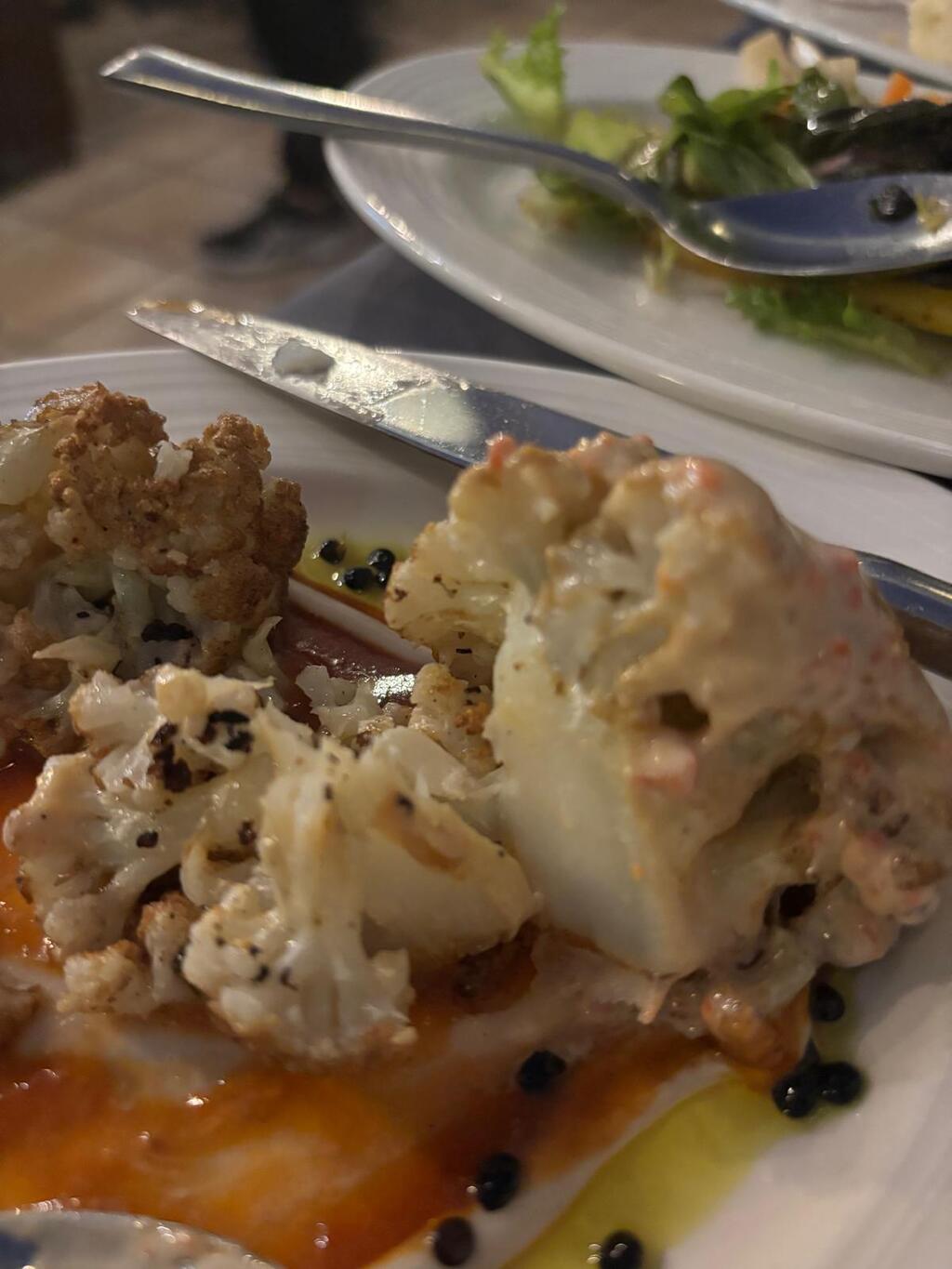
Cauliflower in tomato and tahini sauce
(Photo: Maayan Hoffman/The Media Line)
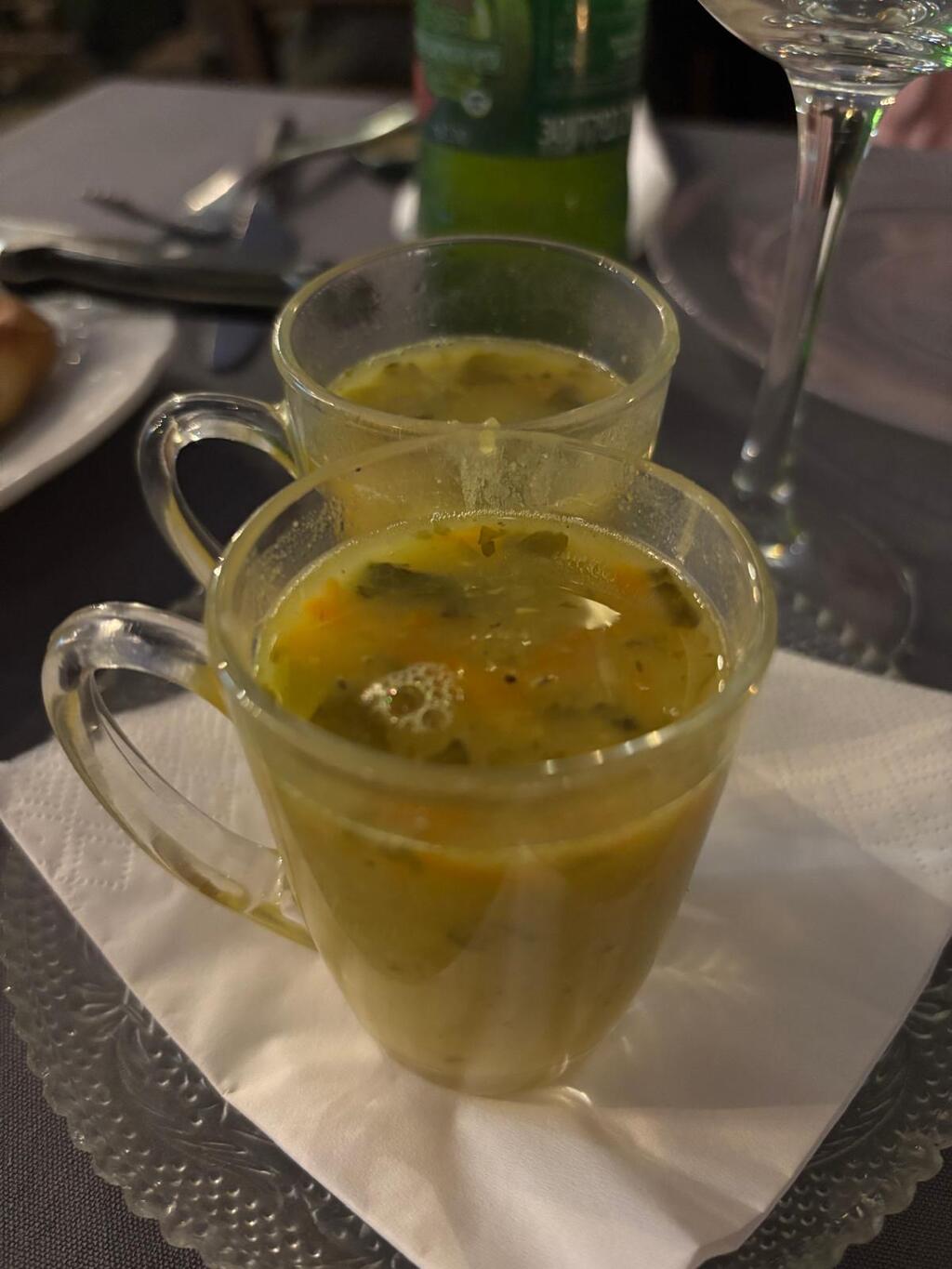
Lentil soup
(Photo: Maayan Hoffman/The Media Line)
Basson said he is finishing a book about the wisdom of Rambam (Maimonides) and cooking. He plans to take people foraging and to speak about ancient local herbs and how to eat well and live a long life. He believes there is a decades-wide gap between the wisdom of nutrition and modern medical science. Food, he said, affects not only how you feel mentally but also diseases that can be prevented through proper eating. He recommends having pomegranates every day.
Basson said that he hopes to work another 20 years and live until 140. The secret to health, he said, is to “stop your anger, reduce your food, and increase your movement.”
Jerusalem residents have also grown emotional about the restaurant’s closing. Sarah Tuttle Singer, who spoke with The Media Line by WhatsApp after posting on Facebook, said, “When I think of Eucalyptus, I think of trees. Of roots. Of our homeland itself being translated into flavor.”
She continued, “I think of Chef Moshe Basson walking through the kitchen with his basket of herbs and greens like a modern-day gatherer, a quiet high priest of taste. I think of leaves and spices that felt pulled straight from the Tanakh and placed gently on a plate. I think of food that didn’t perform Israeli identity, but embodied it, deliciously, unapologetically, without trend or pretense. His cooking did more to connect me to this land than any book I’ve read or speech I’ve heard.”
For Ray Barishansky, a recent immigrant whose late wife, Laura Ben-David, introduced him to the restaurant, the memories are intensely personal. He recalled how kind Basson was to her before her passing last year.
“I think that what sticks out is not only how much she loved the place, but also how good Moshe was to her,” Barishansky said. “I distinctly recall her last birthday. She was in a lot of pain, and I wanted to take her out, and she wanted to go out … but she couldn't really sit up without pain.”
Ben-David remembered the small couches in the back of Eucalyptus, and the couple went there to celebrate.
“They treated her like royalty,” Barishansky said. “She didn't eat a lot that trip, but it was a place of comfort. It was a place for her to do what she did best: live life. She always felt comfortable there, and that's a testament to Moshe and what he built.”
As for what he hopes to leave behind, Basson said one message is to plant trees, not only on Tu B’Shevat. He also urged Jerusalemites to support local restaurants.
“The restaurants in Yerushalayim are suffering,” he said. “People from Jerusalem are going to celebrate in Tel Aviv… The people from Jerusalem should eat more in Jerusalem. There are wonderful restaurants, both kosher and not. There is wonderful street food in Jerusalem.”
Then he laughed. “And I will come cook for you everywhere.”
Finally, he offered one more piece of advice: “This is advice for everyone, if you want to live a long life, be happy, love, and be loved. Enjoy good music, good food, and family.”