

‘It may be over in Tel Aviv, but not here’
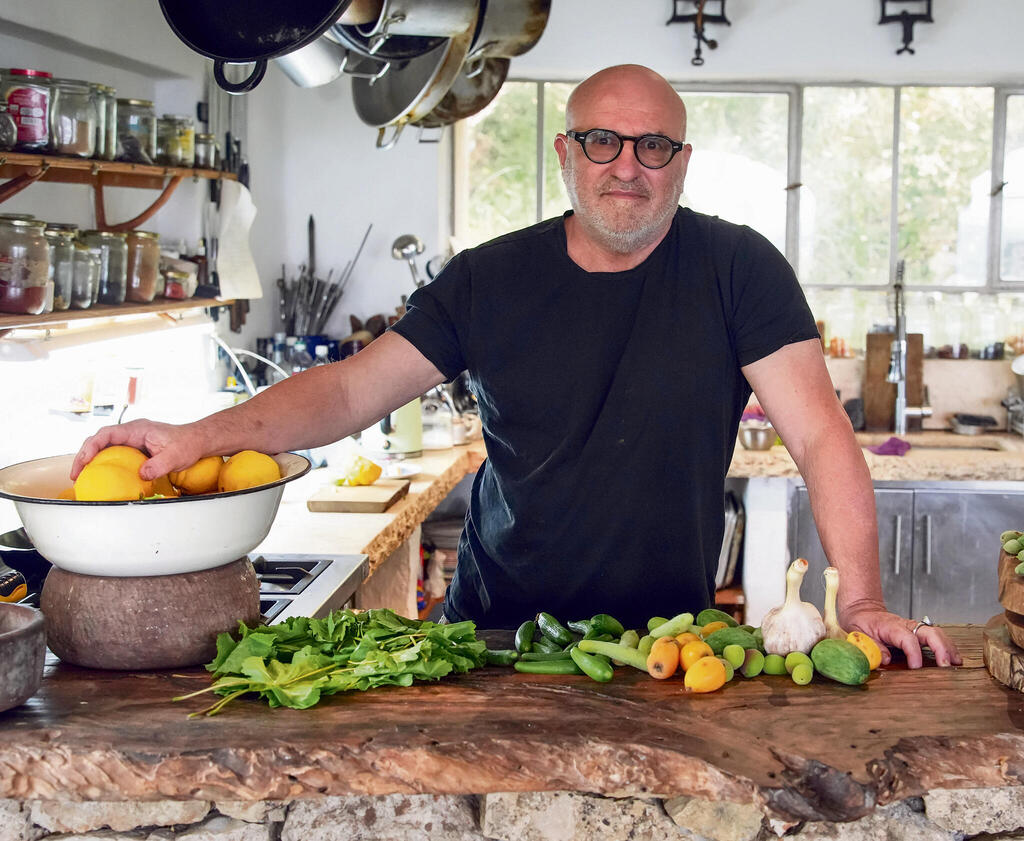
Erez Komarovsky, Matat
War days:
“All chef events and workshops in Matat were canceled,” Komarovsky said. “It’s a shame, because spring is especially beautiful this year after late rains. The wildflowers are incredible with chrysanthemums, irises and cyclamens in bloom.
"Visitors are staying away and even friends are hesitant to come. Over the past month, I spent most of my time cooking at home, drawing from a garden filled with fresh produce. Usually we split our week between Tel Aviv and Matat, but this time we’ve been here much more. It’s colder, we sit by the fireplace.
"Sirens feel different in the north, Komarovsky said. “In Matat, the alarms are quieter, but you hear planes and artillery. I’m glad it’s calmer in Tel Aviv for now, but here it’s not over. The impact on local businesses is severe. Guesthouses, restaurants and cafés are closed, leaving many families without income."
Galilee food:
Komarovsky still finds comfort in local ingredients. “Sometimes we drive to nearby villages for hummus,” he said. “Markets are full of early-season produce, small unripe melons, cucumbers, green almonds. Nature keeps going. It feels strange to have no work at all. I’m used to running at full speed all day, surrounded by the energy of events, customers and cooking. That’s what fuels me. And suddenly, nothing. But the beauty of nature makes up for it. My orchard is full of artichokes, there’s still fennel, and the new tomato plants are just starting to come to life.”
What’s next?
“We never considered leaving,” he said. “Our life is here. I believe when this ends, there will be a real revival in the north and many young people will want to move to the north. I’m optimistic and believe this will end soon, and we’ll be able to get back to cooking and hosting. Israelis step up when needed, and I believe people will come to support businesses here that have been shut all month, just as they have after past crises.”
What he’s cooking:
A fresh cucumber and green almond salad
Ingredients (4 servings):
Large handful green almonds, thinly sliced
3–4 small unripe melons, cut into wedges
3–4 Faqous (Armenian cucumbers), quartered lengthwise
5–6 baby cucumbers, quartered
4–5 cloves green garlic, crushed
1 green hot pepper, seeded and finely chopped
1 cup goat yogurt
1/3 cup olive oil
Mint leaves
1 tbsp lemon zest
Lemon juice, salt
Preparation:
Mix the garlic with the yogurt, lemon zest and green hot pepper, then season with salt.
In a separate bowl, combine the cucumbers, green almonds, faqous and unripe melon. Season with salt, olive oil and a squeeze of lemon juice.
Spoon the seasoned yogurt over or under the vegetables, scatter mint leaves on top, drizzle with more olive oil and serve.
‘We never thought of leaving, and there’s nowhere to hide anyway’
Michael Gratofsky, Bistro Venya, Haifa
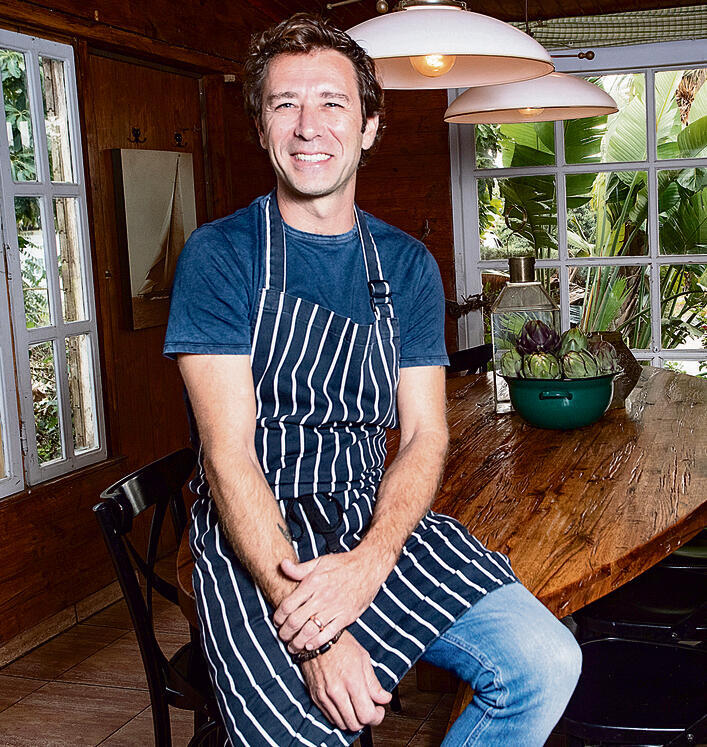
(Photo: Gil Nehushtan)
War days:
"When the war began, Bistro Venya shut down and reopened only after three weeks, initially operating Wednesday through Saturday. Slowly, we’re returning to routine and learning how to navigate it again.
“Haifa is on the front line; it’s attacked from Lebanon and Iran. In a time like this, it’s extremely difficult to run a restaurant. First of all, there’s very little demand because people are afraid to go out, which is understandable. Beyond that, there’s simply no mood to hang out; people are anxious about everything happening around them.
"Reopening the restaurant after three weeks, under restrictions, felt like a form of therapy for everyone. It was mainly about being able to breathe again, helping the staff get back to work and earn a living, and giving those braver customers who were willing a place to go out. That’s the format we’re still operating in.
"With the current ceasefire, there are far fewer sirens, but the streets are still quiet. It doesn’t feel like Independence Day here the way it does in Tel Aviv. Haifa, by nature, is a bit more subdued than the center.”
“When the war broke out, I was abroad with my wife, and we were stuck there until we managed to get on a rescue flight two weeks later. With the kids, we’d already gone through this before, so we had a routine in place and handled it relatively calmly, without major drama.
"Since I got back, I haven’t done much. I spend most of my time at home in Shavei Zion, in a family setting. Nahariya, Betzet and Moshav Liman are under fire, and our routine now is waking up several times a night to go to the safe room.”
The north and us:
“We never considered leaving, not even for a moment, and in any case there’s nowhere to hide. People who don’t live in the north keep asking how we’re getting through this, and I tell them this is our home and we’re good here.
"If I lived in Kiryat Shmona, there’s no way I’d go back, certainly not with a family, where you feel like a sitting duck. The situation is difficult across the entire country. Here, we’re also dealing with Hezbollah on the northern front, but this is the reality.”
What’s next?
"I don’t know what will happen. Haifa will recover; it’s the third-largest city in Israel. It will take time, but we’ve seen this before after previous rounds of fighting.
"As for the north, I think it will take much longer to rebuild. Things haven’t settled yet. There are still sirens, interceptions and rocket impacts. Until there’s a solid agreement that proves itself over time, people won’t rush back to vacation here, and that’s a problem because the region depends heavily on domestic tourism. It will take time before visitors feel safe again. To help the north recover and keep businesses alive, there needs to be real support for local business owners and encouragement of domestic tourism.”
What he’s cooking:
Manti, steamed dumplings filled with meat.
Ingredients (about 40 dumplings):
For the dough:
360 gr. “00” flour
144 gr. durum flour
10 gr. salt
100 ml water
3 eggs
For the filling:
1 lb (500 g) finely chopped rib meat
3.5 oz (100 g) lamb fat, diced
1 lb (500 g) white onion, finely chopped
Salt and black pepper
Directions:
Make the dough:
In a food processor, mix all the dough ingredients until a uniform dough forms. Transfer to a work surface and knead lightly until smooth and elastic. Wrap in plastic wrap and refrigerate for 1 hour.
Prepare the filling:
In a large bowl, mix the chopped onions with a little salt and pepper. Knead for a few minutes until the onions release liquid, then let rest for about 20 minutes.
Add the chopped meat to the onions along with the released juices. Season with salt and pepper and mix well until uniform. Refrigerate the filling for about 20 minutes.
Assemble the manti:
Roll out the dough using a rolling pin or pasta machine to a medium thickness (not too thin). Cut into circles about 3 inches (8 cm) in diameter.
Place some filling in the center of each circle, topping with a bit of lamb fat. Lightly moisten the edges and fold into a manti shape, sealing well to prevent juices from leaking. If shaping classic manti is tricky, fold into any sealed dumpling shape.
Steam:
Lightly oil the dumplings and arrange in a steamer basket or sieve set over a pot of water. Steam over boiling water for about 40 minutes, until the dough is tender and the filling is fully cooked.
Shifka vinaigrette
Ingredients:
3/4 cup (200 ml) shifka pepper brine
Juice of 2 fresh lemons
1 tbsp finely chopped red onion
Small handful chopped herbs (mint, oregano, parsley, cilantro)
1 tsp crushed garlic
Pinch of salt
Directions:
Mix all ingredients well until combined.
Spoon a little of the vinaigrette over each dumpling and serve.
‘Everything should be thriving, but instead it’s quiet’. I'm still optimistic
Yossi Haiv, Rouge restaurant, Golan Heights
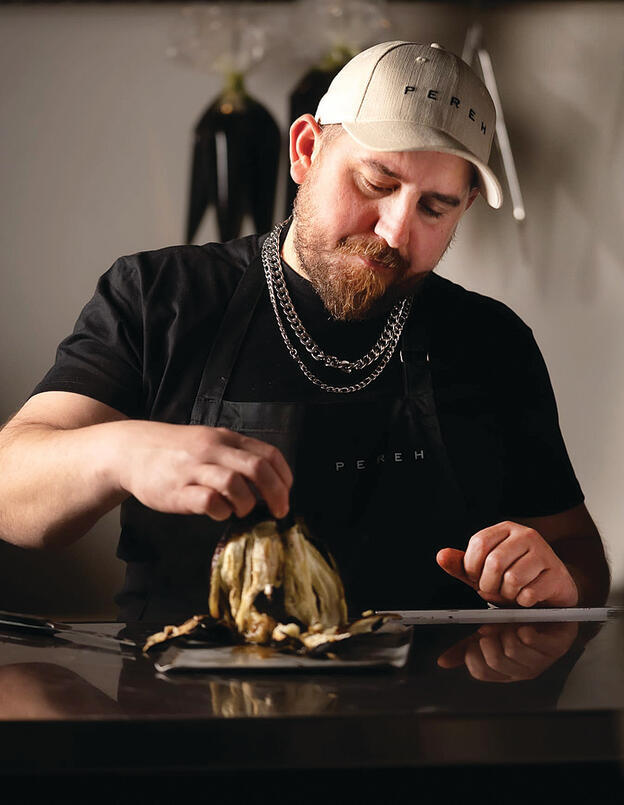
War days:
“The restaurant has been closed since the latest round of fighting with Iran began. The past month has been difficult, and it still is. We’re living with constant sirens and the sound of explosions. It’s not easy being here with two young kids, ages 11 and 9. It’s tough.
"We were evacuated for nearly two years, moved to Nof HaGalil, and only returned to the north this past June. Over the last month, I’ve spent a lot of time in the shelter. Luckily, I have one at home under the living room, and from the first day of the war, we went down there and have been sleeping there together ever since. Most of our time is spent in the shelter, with occasional breaks outside.
"When the previous operation began (Operation Rising Lion), we closed the restaurant, and as soon as it ended, we reopened and quickly returned to full capacity. The place had incredible momentum; we were at our peak, demand was huge, there was a waiting list, and weekends were fully booked with great feedback. Then suddenly, it all stopped. It’s frustrating, especially because we had become a culinary gem in the north. People were coming from Haifa and Tel Aviv to experience the food here and the hotel where the restaurant is located.
"This is already the fourth time I’ve had to reopen the restaurant, and each time I have to train new staff from scratch because previous employees have left. It’s tough. I went by the restaurant a few times this past month, and it’s heartbreaking to see it now.
"I used to arrive in the morning and see guests having breakfast, the kitchen buzzing, chefs preparing for dinner and working in the garden. Then in the evening, the energy would build, the dining room full, the interaction with guests. Now it’s empty. The kitchen is silent, no sound of pans, no service noise. All that energy has been replaced by silence, which is discouraging.”
The north and us:
“The thought of leaving comes up every time there’s a war. After we came back, we were told things would be okay, and then the first round with Iran started. Those thoughts pop up, then fade because you’re busy with work and doing what you love. But then another war with Iran begins, and those thoughts resurface. I ask myself what will happen, will it happen again?
"I think it’s a legitimate thought to consider leaving the north given everything. The problem is that I feel deeply connected to this land. I grow vegetables here with my father, and the quiet, the greenery of the north, it’s mesmerizing. One of the things that keeps me here is the incredible open space.”
What’s next?
“We’re trying to figure out how to get back to operating. I know other businesses in the Golan are struggling too, activity hasn’t really returned, and many are just limping along. I drove out today and saw the bloom, the spring, the beauty here, and it’s hard to believe we’re living through a moment like this. Instead of the whole region buzzing, everything feels subdued.
"But despite it all, I’m optimistic. I believe the sadness will give way to joy, and we’ll go back to hosting people the way we did before the war.”
What he’s cooking:
Ta’amiya, Egyptian-style falafel.
Ingredients (6 servings):
1 lb (500 g) dried broad beans, soaked for 24 hours in water
7 oz (200 g) fresh green fava beans, chopped
1 bunch parsley
1 bunch mallow leaves
1 bunch cilantro
1 bunch green onions
2 medium onions, diced
4–5 cloves green garlic, including some of the stalk
1 green hot pepper (adjust to taste)
Salt
2 tbsp preserved lemon (optional)
1 tsp baking soda
Directions:
Place the soaked broad beans, fresh fava beans, parsley, cilantro, green onions, mallow leaves, onion, garlic, hot pepper and preserved lemon in a bowl. Mix well.
Grind the mixture in a food processor or meat grinder until smooth and uniform.
Add the baking soda, cover and let the mixture rest in the refrigerator for about 1 hour. Do not add salt at this stage, as it will draw out moisture and make the falafel less juicy.
Remove from the refrigerator and heat neutral oil (such as canola) in a deep pan over medium heat.
Season the mixture with salt and adjust to taste. You can add cumin and coriander seeds if desired, though the herbs provide plenty of flavor. Mix well.
Form into small balls, about the size of traditional falafel, and fry in hot oil until golden brown. The oil should be hot but not smoking, so the inside cooks through without burning the outside.
Serve with sour cream, a dipping sauce and grated tomato.
‘We’ve already closed twice, and we’re not even a year old’
Eden Dor, Raia Wine Bar, Degania Alef
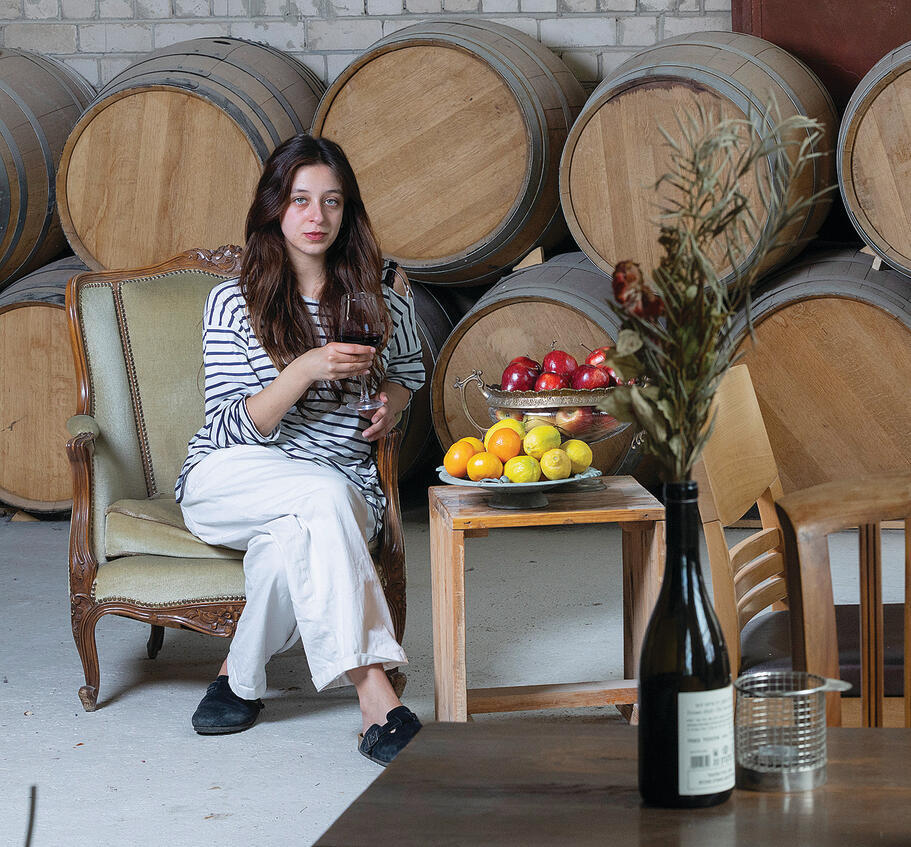
(Photo: Gil Nehushtan)
War days:
“On the day I opened Raia, the previous Iranian attack began, so my business has already been shut down twice because of the war, and we haven’t even been open a year. Altogether, the place has been closed for a month and a half due to the fighting. It’s incredibly frustrating. During the latest escalation, I was in shock. For the first time, I had big events scheduled, and I felt like I was finally making progress and improving, and then suddenly everything was canceled and fell apart. It’s an extremely frustrating feeling.
"The last time, Raia was closed for two weeks. This time it was 10 days. I didn’t know if I should open, when to open or what would happen. Even when I did reopen, it was only partially. People are afraid to leave their homes, and when the news says Lebanon might attack that day, the bar is empty that night. You realize you opened for nothing. People make reservations and cancel, or don’t even bother canceling, because it’s understood no one will show up on a night like that.
"But then there were days when there was no fighting at all. After a month, people start wanting to go out again, and most places in the area are still closed. There were days I opened and no one came, and then one Thursday we were shocked by how many people showed up, we weren’t prepared for it at all.
"Even now, the situation isn’t clear. On one hand, my sisters are going back to school. On the other, I was in the Golan Heights yesterday and it felt like a war zone.”
The north and us:
“Many people are thinking about leaving the north, even leaving the country, but for me, the war has actually strengthened my desire to stay. It’s an incredible season here, everything is green, full of nature and flowers, so the thought of leaving hasn’t really crossed my mind.
"I’ll admit that conversation has been all around me lately, and it shook me for a moment, but it’s hard for me to imagine leaving the north. And even if I did, where would I go, to another place under fire? It feels like in this war, everyone is being hit in one way or another.”
What’s next?
“I feel unsettled thinking about building a business here, putting everything into it, investing money, and then wondering if in two months there’ll be another war that shuts it all down again. I try to stay optimistic, but the pessimism seeps in, from COVID to the military operations and October 7 and the wars since. It feels like we take two steps forward and ten steps back. I want to believe things will get better, but right now it’s hard to hold on to that.”
What she’s cooking:
Classic hummus.
Ingredients (2 servings):
2 large cups (about 400–450 g) cooked organic chickpeas, very soft
1/2 cup tahini
3 garlic cloves
Juice of 1 lemon
1–2 tsp olive oil
1 tsp Atlantic sea salt
For serving:
1 tbsp cooked chickpeas, preferably warm
1 tsp zhug (blend together a handful of cilantro, 3 green hot peppers, olive oil and salt)
Directions:
Blend all the ingredients in a mixer or with an immersion blender until smooth. Taste and adjust seasoning.
Transfer the hummus to a serving plate and create a small well in the center. Add warm chickpeas to the well, spoon in the zhug, drizzle with olive oil and serve.
‘No matter what, we’re not closing again’
Tomer Suissa, Tosha Bakery, Achziv; Oli Pizza at the Railway Park, Achziv

War days:
“We opened Tosha 10 years ago. For the first five years we were in Kibbutz Rosh Hanikra, and for the past five years we’ve been in Achziv. I’m from Moshav Shomera, right on the border, and my partner, Shahaf, is from Nahariya. We met through work and opened a pastry shop. From there we grew into a café, built a strong local following and a good reputation.
"Since COVID and into the war, we’ve been facing extreme challenges, operating in an unstable reality where you constantly have to stay flexible and reinvent yourself. The north relies heavily on tourism, and when tourism becomes unstable or disappears entirely, you have to adapt every time, be creative and develop some kind of survival mechanism, otherwise you can’t keep the business going.
"Two days after the second war with Iran broke out, we opened Oli Pizza at the Railway Park near Achziv Nature Reserve. We were supposed to be in a soft opening phase until Passover, but my partner got stuck in Thailand, and I found myself running both Tosha and Oli on my own.
"For now, both the bakery and the pizza place are operating in a limited format, deliveries and takeout only. The nearest protected space is about a one-minute run away, which is far, but there’s no choice. We’re operating in emergency mode, taking all the risks that come with it.”
The north and us:
"At first, I debated whether to keep the business open or shut it down until things passed. In the end, I decided to stay open no matter what, even if it meant losing money. And that’s exactly what’s happening, because if I don’t keep things running in survival mode, there won’t be anything to come back to.
"I realized that during the previous round, when after a year and a half of fighting and uncertainty, we decided to cut our losses and close. We started talks with another chain in central Israel, but after six months, when we didn’t find our place there and a ceasefire was announced, we decided to return to the north and rebuild the business. That time, it took us four months to repair the damage and reopen Tosha. At that point, we made a decision, no matter what happens, we won’t close again.
"During the renovation, the old railway project in Achziv was underway, and an opportunity came up to expand and open another business. Since we had already decided to stay in the north and put down roots here, we opened a pizza place, a dough-based concept, which is what we know best from the bakery.
"We feel like an anchor of normalcy in the area. Beyond the pull of the north itself, it was the customers who brought us back.”
What’s next?
“Our decision to keep operating comes down to this: the damage from the sea, and the employees who might leave and not come back, would hurt the business far more than running at a loss. I know it’s not the most business-minded approach, but it comes from experience. I know what happens if I shut down.
"We’re the largest café in the area, with about 1.5 dunams of seating space, roughly 0.37 acres. Maintaining a garden of that size, especially with the wear and tear from the sea, isn’t simple. If we close now, there may be nothing to come back to.
"Over the past eight months, we started to see some signs of recovery. We were slowly returning to routine, residents were coming back home. It’s true many young people left and tourism didn’t return, but there was a sense of recovery, the beginning of rebuilding. And now we’re back in the same chaos. It’s tough.
"Out of everything, from COVID to the different rounds of fighting, this time has been the hardest, mainly because I was left on my own, without my partner, and I didn’t know how I’d get through it. At the start of the war, my cousin, Or Damari, was killed in Lebanon, and that completely upended my reality. There were two weeks when I couldn’t function at all.
"I try to stay optimistic and keep my head up, but what’s really on my mind is how to prepare for the next round of fighting. I know that doesn’t sound very optimistic, but that’s the reality I’m dealing with. I haven’t decided whether I’m an optimist or a realist. I understand this is the situation, and I’m preparing for whatever comes next.”
What he’s cooking:
Campfire-style focaccia.
Smoky, fire-roasted flavors baked into one soft, airy dough. Place it in the center of the table and tear it apart by hand.
Ingredients:
For the dough:
8 cups (1 kg) pizza flour
3 cups (700 ml) water
2 tsp (10 g) dry yeast
2 tsp salt
Olive oil
For the topping:
2 small onions, quartered
2 medium potatoes, roughly chopped
Olive oil
Coarse salt
Handful fresh hyssop or oregano leaves
Directions:
In a mixer bowl, combine the flour and yeast. Add about three-quarters of the water.
Knead by hand or with a mixer for about 10 minutes until gluten develops. Add the salt, continue kneading for another 1–2 minutes, then gradually add the remaining water until you have a soft, elastic dough.
Cover and let rise at room temperature for about 1 hour.
While the dough is rising, boil the potatoes in water for about 10 minutes until partially softened.
Grill the onions and potatoes over an open flame until deeply charred and tender. If you don’t have a grill, use a very hot pan until nicely blackened. The deeper the char on the onions, the more depth and smoky flavor you’ll get. Season with a little salt and olive oil.
Transfer the dough to a greased baking pan and gently stretch it out with your hands. Press deep dimples into the dough and tuck the charred onions and potatoes into them.
Drizzle with olive oil, sprinkle with coarse salt and scatter the herbs on top.
Let the dough rise again for 1 to 1.5 hours, until airy and full of bubbles.
Bake in a preheated oven at 450–465°F (230–240°C) for about 15 minutes, until deeply golden with a crisp crust.
First published: 06:34, 04.20.26