

Gelatin is widely used to stabilize and thicken cream desserts, mousses, cold cake fillings and no-bake cakes, especially cheesecake-based desserts.
It is derived from collagen protein found in animal tissue and is sold either as granules or powder, available in supermarkets, or as gelatin sheets, thin transparent leaves that are not kosher and sold in specialty stores. A plant-based alternative made from seaweed, known as agar-agar, is also available.
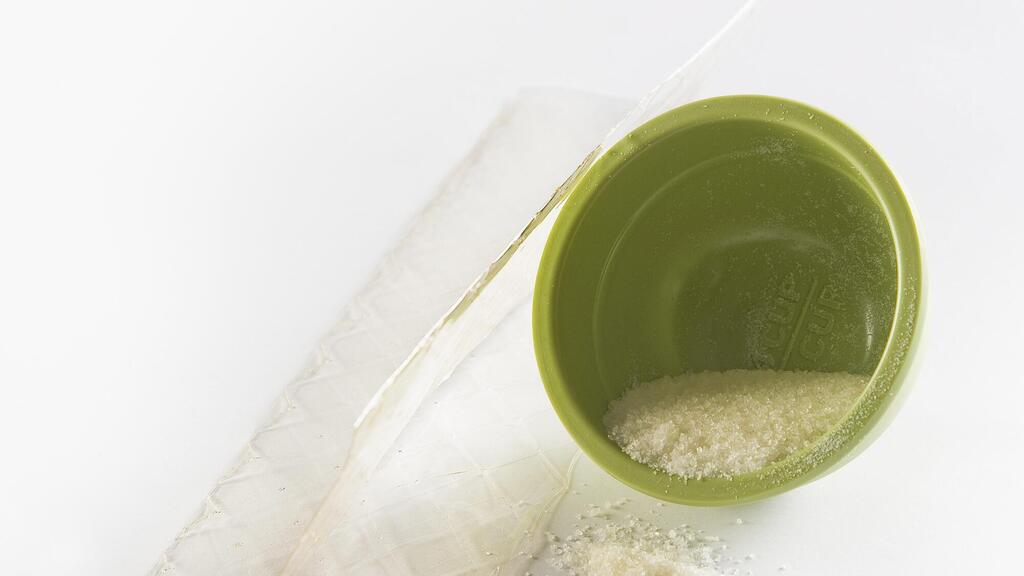
Whether you use granules or sheets, the most important rule when working with gelatin is to follow the recipe instructions and measurements precisely. Using too much or too little can result in unwanted flavors or an unpleasant texture.
Which type of gelatin should you choose?
Some bakers insist gelatin sheets are superior and should be used exclusively. I do not share that view. My recommendation is to try both forms and decide which works best for you, both in terms of ease of use and final results.
How to work with gelatin granules
The key rule when using gelatin granules is maintaining the correct ratio between gelatin and liquid. The ratio is 1:5, meaning one part gelatin to five parts liquid. For example, one teaspoon of gelatin granules to five teaspoons of water.
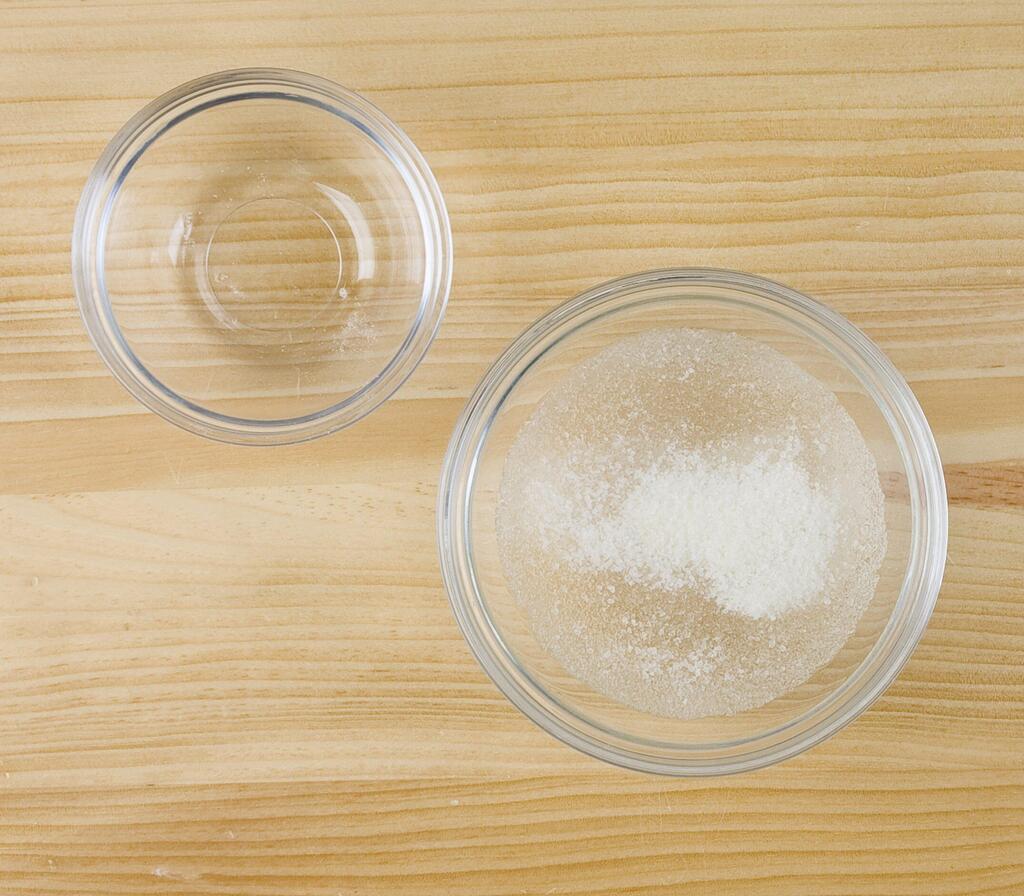
(Photo: Yossi Salis)
Too little liquid will prevent the gelatin from absorbing enough moisture, while too much liquid can disrupt the balance of the recipe.
- Place the liquid, usually water unless the recipe specifies otherwise, in a small bowl. Sprinkle the gelatin granules evenly over the liquid.
- After about 20 minutes, depending on the quantity, the granules will absorb the liquid and appear swollen and spongy.
- Transfer the bowl to the microwave and heat for 10 seconds until the gelatin dissolves. If needed, heat for a few more seconds and check again. Stir once fully dissolved. This step can also be done using a double boiler.
How to work with gelatin sheets
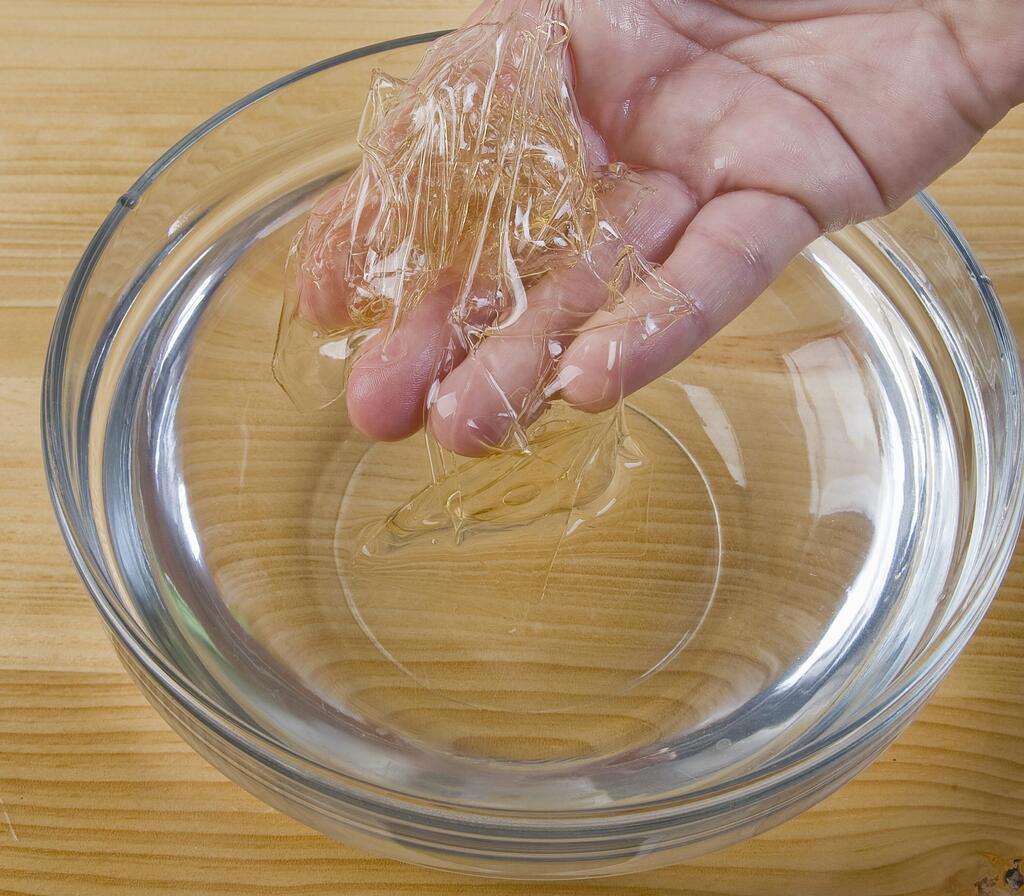
Gelatin sheets should be soaked in plenty of cold water, fully submerged and then some, to ensure proper softening. Unlike granules, there is no need to measure a specific water ratio.
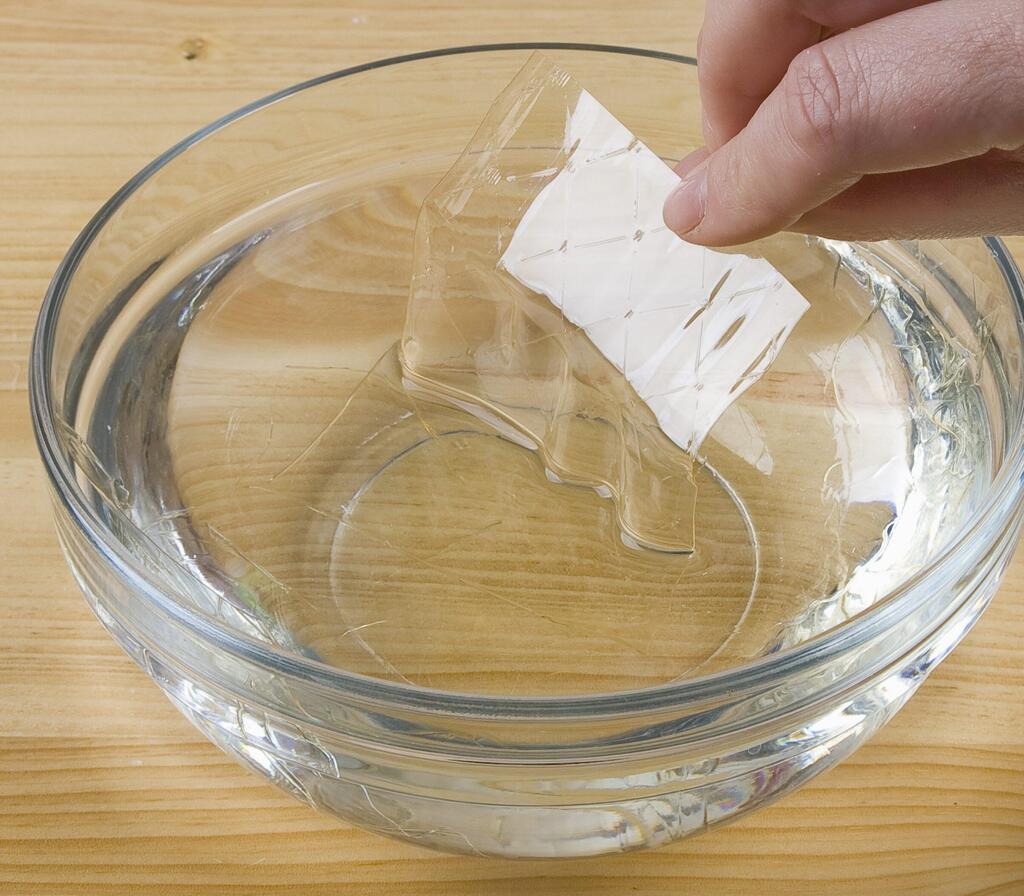
(Photo: Yossi Salis)
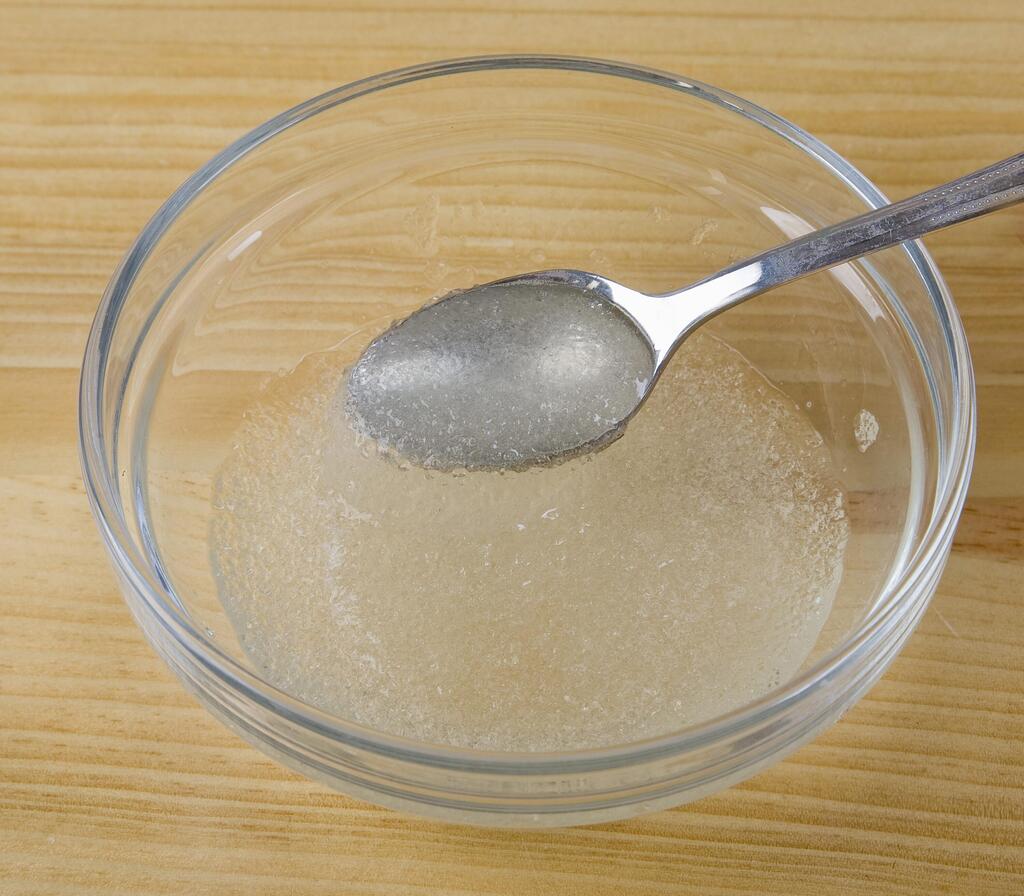
(Photo: Yossi Salis)
Once softened, the sheets should be removed promptly, as soaking them too long can cause them to dissolve.
- Fill a large bowl with cold tap water and add the gelatin sheet.
- Let it soak for about five minutes, until it becomes soft, flexible and easy to squeeze.
- Gently squeeze out excess water.
- Transfer the sheet to a suitable container and microwave for 10 seconds until melted. If needed, heat for a few more seconds and check again. Melting gelatin sheets in a double boiler is slow and inefficient and therefore not recommended.
(Photo: Yossi Salis)
Tips for guaranteed success
- Stick to the recipe and measure carefully. Too much gelatin will make the dessert rubbery and may leave an aftertaste. Too little will prevent proper setting.
- Heat the gelatin gently and according to instructions. Direct heat or overheating in the microwave can burn, dry out and ruin it.
- Gelatin takes several hours to fully set, so desserts containing gelatin are best prepared a day ahead.
A shortcut
If the recipe calls for mixing gelatin into a very hot liquid, such as hot cream, you can skip the melting step, but not the soaking step. Once softened, the gelatin can be added directly to the hot liquid and stirred until fully dissolved.