


In the age of social media, selfies, Instagram and cameras everywhere, few physical features are more coveted than a toned, muscular stomach. Abs have become a symbol of fitness, discipline, sex appeal and a healthy lifestyle. They look great in photos, perform well on social media, enhance a person's image and sometimes even help attract followers, creating an instant impression without a single word.
So it's no surprise that so many people are willing to do almost anything to get them. The real question is how — and which common beliefs are based on science and which are simply fitness myths packaged in an appealing way.
Gallery
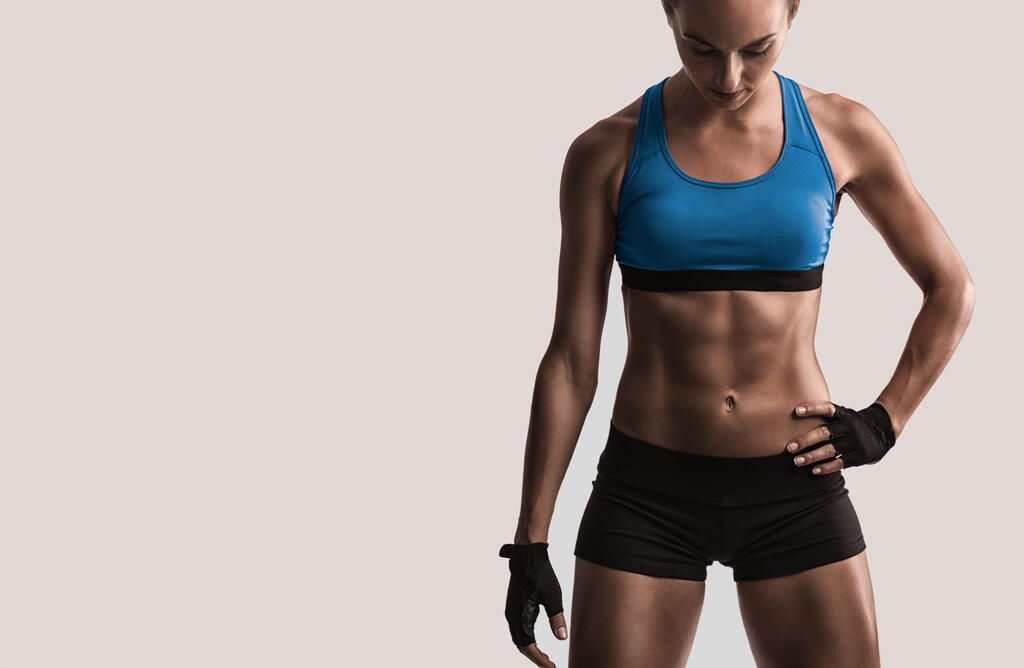
Abs have become a symbol of fitness, discipline, sex appeal and a healthy lifestyle
(Photo: Shutterstock)
More than just looks
"Today, in the era of social media, when people show off their bodies and want to look aesthetically impressive, the abdominal muscles play a very central role," says Sharon Vosco, an exercise physiologist at the Levinsky-Wingate Academic Center.
"When you see someone with visible abs, it immediately creates the impression that they're in excellent shape, that they train regularly and have high physical abilities. It's an impressive look that both men and women want."
Before discussing how to achieve visible abs, it's important to understand what the abdominal muscles actually are.
"When we talk about the abdominal muscles, we're really talking about several muscles," Vosco explains. "The main muscle responsible for the six-pack appearance is the rectus abdominis, but it doesn't work alone. We also have the external and internal obliques, as well as the transverse abdominis. Altogether, we're talking about four muscles."
These muscles are far more than an aesthetic feature. They allow the torso to bend forward, sideways and rotate. They are active when we sit up, get out of bed or twist our upper body.
"They're extremely important postural muscles," says Vosco. "They can work statically, through isometric contractions, or dynamically to stabilize the body depending on the movement being performed."
They also increase intra-abdominal pressure, help stabilize the spine and protect the internal organs.

Sharon Vosco, an exercise physiologist at the Levinsky-Wingate Academic Center
(Photo: Personal album)
"In cases of trauma, such as a fall, accident or impact, they help absorb some of the force and reduce damage to the internal organs," he says. "They also assist with breathing, especially exhalation."
In other words, while the six-pack may be the most visible part, it is simply the outward expression of a much larger and more important muscle system that allows us to move, stabilize, bend, rotate, lift, breathe and protect the body.
They're already there — you just can't see them
Visible abs may signal fitness, but their appearance depends not only on muscle strength or training frequency. Body fat percentage — and where fat is stored — is just as important.
"Remember that there's a layer of fat covering the abdominal muscles," Vosco explains. "A person can have very strong, well-developed abs, but if that layer of fat is relatively thick, you won't see the anatomical structure of the six-pack."
According to him, one of the key requirements for visible abs is maintaining a relatively low body fat percentage, particularly around the abdomen.
"Fat distribution is a major factor," he says. "Men tend to store more fat around the abdomen and waist, while younger women generally store more around the hips."
That's why two people with similar body fat percentages can look completely different. If one stores more fat around the stomach, the abdominal muscles will remain hidden. If fat is stored elsewhere, the abs may still be visible even without exceptionally low body fat.
"There are significant differences from person to person," Vosco says.
Genetics matter too
Genetics also plays a major role in whether your abs become visible.
"It starts with what's known as a body fat set point," Vosco explains. "Some people naturally maintain a higher body fat percentage, making it harder for them to lose fat. Others naturally stay leaner, so their abdominal muscles become visible more easily because there's less fat covering them."
Genetics also determines the structure of the abdominal muscles themselves.
"Everyone's anatomy is slightly different. Some people naturally have eight visible segments instead of six. Connective tissue divides the muscle vertically and horizontally, creating the appearance of individual blocks. It's one muscle, but the connective tissue shapes its appearance."
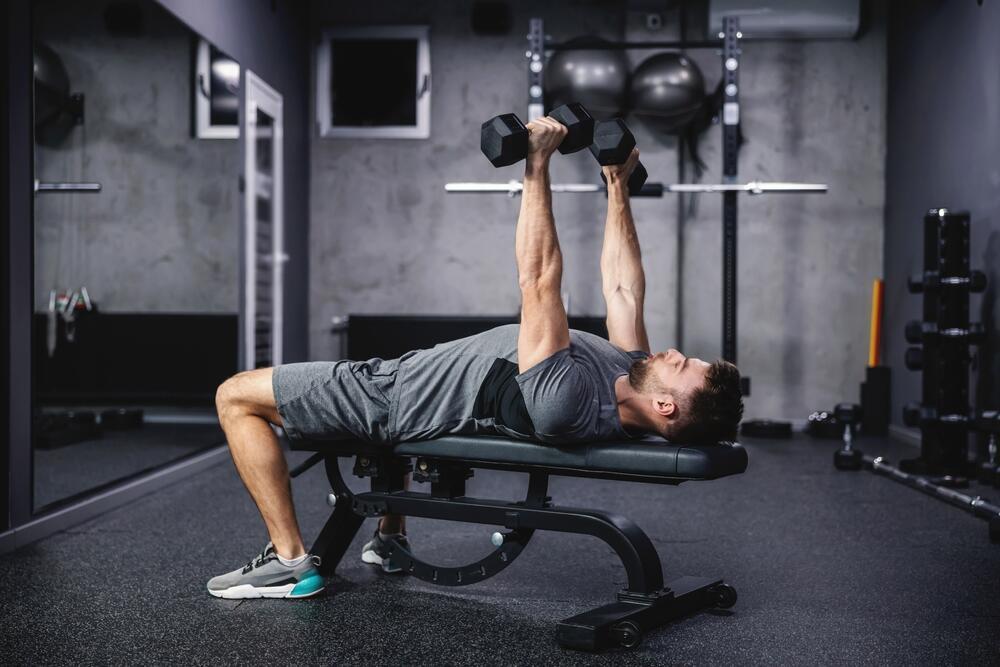
If fat is stored elsewhere, the abs may still be visible even without exceptionally low body fat
(Photo: shutterstock)
That means even after losing body fat and training correctly, your abs may not resemble the ones you've saved on Instagram.
"That's something you can't change through training," he emphasizes.
Nutrition comes first
One of the biggest fitness myths is that endless sit-ups alone will reveal a six-pack.
"That's simply not true," Vosco says. "The main key to visible abs is low body fat. Above all, it's about nutrition — controlling body fat percentage and ideally reducing fat around the abdomen."
Unfortunately, people have almost no control over where the body burns fat first.
"The body doesn't let us choose where it stores or loses fat unless you're using hormonal manipulation, which isn't something we do," Vosco says.
"The realistic approach is reducing overall body fat. That's what ultimately improves the appearance of the abdominal muscles."
How is that done? "The body needs to be in an energy deficit, meaning it burns more energy than it consumes. That's how it starts using stored fat for fuel."
What about ab exercises? Ab exercises won't burn belly fat directly, but they do strengthen and develop the muscles underneath.
"Strength-training exercises for the abs increase muscle strength," Vosco says. "They can also increase muscle mass. Like any other muscle, the abdominal muscles can undergo hypertrophy and grow larger."

'Above all, it's about nutrition — controlling body fat percentage and ideally reducing fat around the abdomen'
(Photo: Shutterstock)
To achieve that, the muscles need effective resistance.
"The exercises should challenge the muscles enough to bring them close to muscular failure, using a variety of movements."
Technique matters
There are countless abdominal exercises, with the traditional crunch remaining the best known. But even that exercise has its drawbacks.
"There are many ways to perform crunches, but most people do them incorrectly," Vosco says.
"They create unnecessary stress on the lower back or neck, use momentum and reduce both effectiveness and safety. When performed with proper technique, the results are much better."
Planks, another highly popular exercise, also have strengths and weaknesses.
"Many people perform isometric exercises like planks," he says. "They're simple and effectively challenge the abdominal muscles through static stabilization."
However, daily life isn't static. "In everyday life, we're constantly moving, especially during physical activity. That's why I recommend combining static work with dynamic abdominal exercises, where the muscles shorten and lengthen against effective resistance."
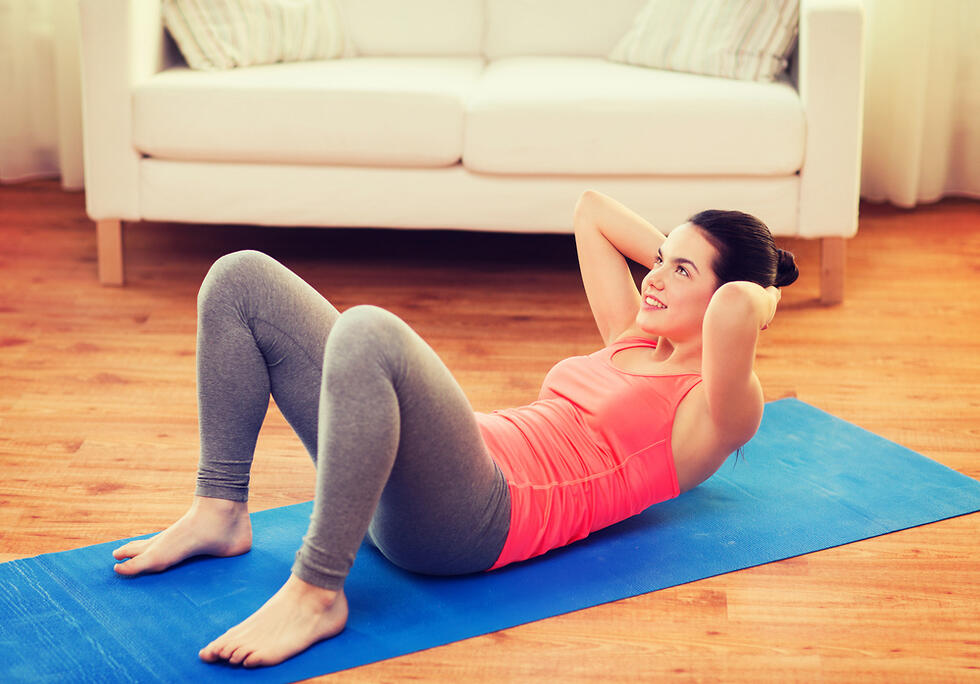
There are countless abdominal exercises, with the traditional crunch remaining the best known
(Photo: Shutterstock)
That resistance can come from body weight, machines, resistance bands or free weights. Even planks can be made more dynamic instead of simply timing how long you can hold the position.
"You can actively contract the abdominal muscles while raising the body, using body weight as resistance, then return to the starting position. That creates more dynamic work and generally produces better results."
Train every movement
Another common mistake is focusing only on bending the torso forward and backward. "Many people neglect two important functions of the abdominal muscles: side bending and rotation," Vosco says. "As a result, they're weaker in those movements and fail to optimally stimulate the oblique muscles."
His recommendation is to build workouts that include several movement patterns: forward flexion, lateral flexion, rotation and stabilization.
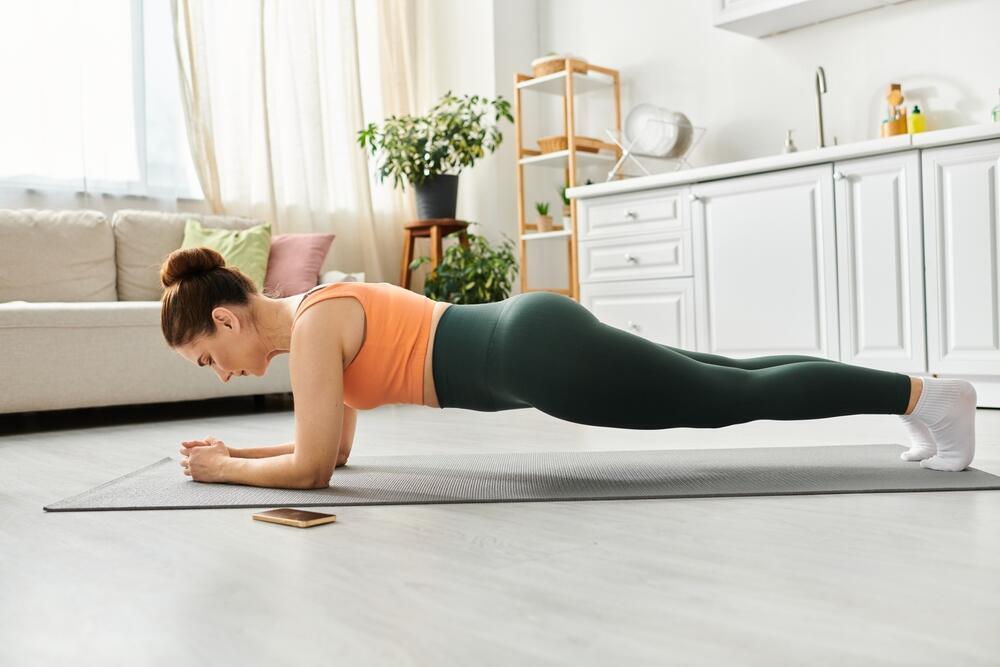
According to Vosco, most people don't need daily ab workouts
(Photo: shutterstock)
"The goal is to strengthen the muscles and achieve reasonable hypertrophy," he says. "You don't have to overdo it. It also depends on your aesthetic goals. Some people want a narrower waist rather than a wider or more prominent look. The key is training smart, not simply training more."
How often should you train?
According to Vosco, most people don't need daily ab workouts, and certainly not long, exhausting sessions. "For beginners, two to three abdominal workouts per week are usually enough," he says.
He also notes that many compound exercises already engage the abdominal muscles, providing additional stimulation.
The muscles also need time to recover. "I recommend about 48 hours between workouts."
Another common mistake is treating ab training as a marathon of endless repetitions. "We don't want to do a million crunches," Vosco says. "Instead, increase the challenge in different ways and stay within about 20 to 25 repetitions. Beyond that, you're mostly wasting your time."
The workouts themselves can be surprisingly short. "Ten minutes of effective abdominal training is enough," he says. "Even two or three good exercises performed for several minutes can do the job. There's no need to overdo it."
Beginners can perform two exercises with two sets each. More advanced trainees can do two exercises with three sets each and perhaps add a third exercise.
Building visible abs doesn't come from a miracle exercise, a sweat belt or another hundred crunches in front of the television.
It comes from a much less glamorous but far more reliable combination: maintaining relatively low body fat, following an appropriate diet, performing proper strength training, training the abdominal muscles intelligently, accepting the role of genetics and exercising patience.
Six-pack abs may have become a status symbol, but the body doesn't care about trends. It responds to consistent effort over time — and there's still no substitute for hard work.