

“Now drag the dumbbell toward the target,” the coach shouts at us in a sweaty room filled with the smell of iron mixed with a faint aroma of Lululemon leggings. A dozen women, all in plank position, try to drag a weight across a rubber floor toward a target point. Who has time to think about wording when it’s 15 kilos that must be moved with one hand toward the groin line while the other hand prevents the body from collapsing? Technique is what matters, precision is everything, and don’t forget to breathe.
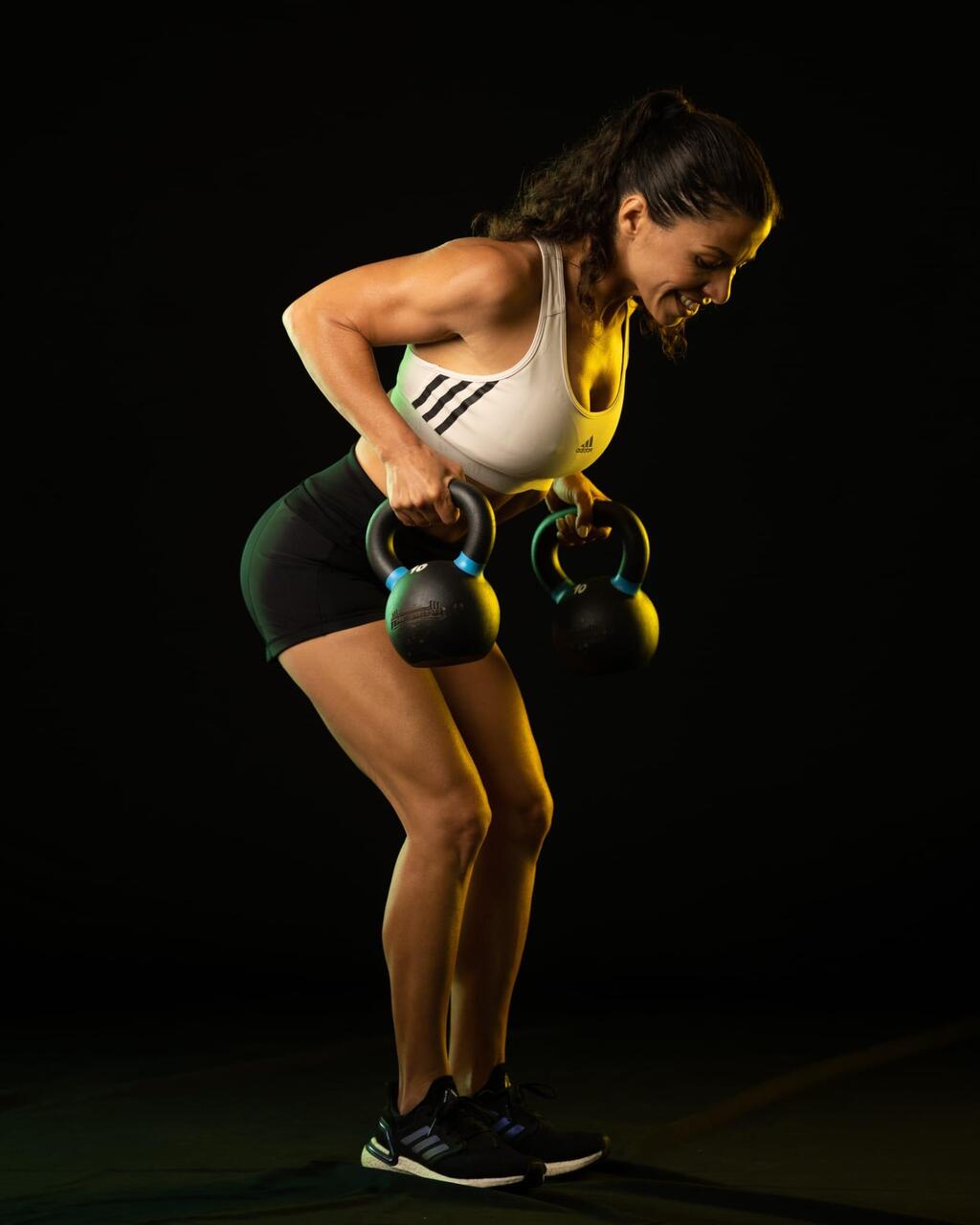
But let’s pause here for a moment, because language creates reality or at least suggests that something about it has changed: in the strength training class at the Tel Aviv Port, open to both men and women, there is not a single man who might feel embarrassed by the coach’s command simply because there are no men here. The testosterone-soaked atmosphere that characterized weight rooms since the early 20th century has been replaced by something else: not soft, not polite and not cute like step aerobics. Just feminine. Women lifting, pulling, pushing and pressing weights wherever needed.
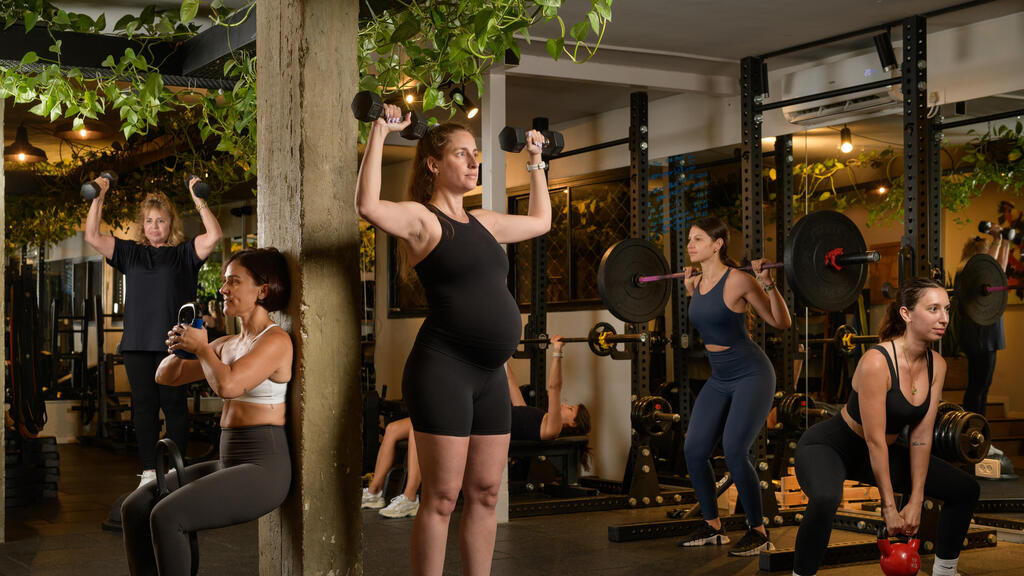
Only a decade and a half ago it was quite alone in the weightlifting scene, women were forced to deal with annoying questions such as: “But what will happen to your uterus?” or “Won’t you turn into Arnold Schwarzenegger’s daughter?” Today it can be said calmly: I did not become Schwarzenegger’s daughter, and the two children my uterus produced sometimes come with me to strength training sessions and see how all the mothers lift.
It is official: women have taken over weight spaces in Israel and worldwide. A series of studies and reports from recent years shows a sharp rise in the number of women turning to strength training. A study published last year in Sports Medicine and Health Science journal showed that more women are lifting weights in gyms. The annual report of the American College of Sports Medicine named weight training the leading global fitness trend among women, and a Business Insider article from the same year described how gyms in the United States have become “graveyards of elliptical machines” due to the rising demand for strength training among women. In Israel too, more women are adopting weight and strength training as part of their workout routine, and a space once seen as masculine is becoming more mixed.
“When I started training 12 years ago I worked with athletes and bodybuilders, and today 90 percent of my studio is women,” says Aviram Bohbot, owner of “Ability,” a strength training studio in central Tel Aviv. “In the past five years more women have come to the weight lifting. We have 80-year-old women and 18-year-old dancers. My mother is 78 and does deadlifts (straight-leg weightlifting), squats and lunges.”
How do you explain it?
“There is more awareness and knowledge, and women understand that everything starts with strength training. There are no shortcuts, and it’s not just Pilates once or twice a week, but weightlifting and working hard. That’s what really builds you.”
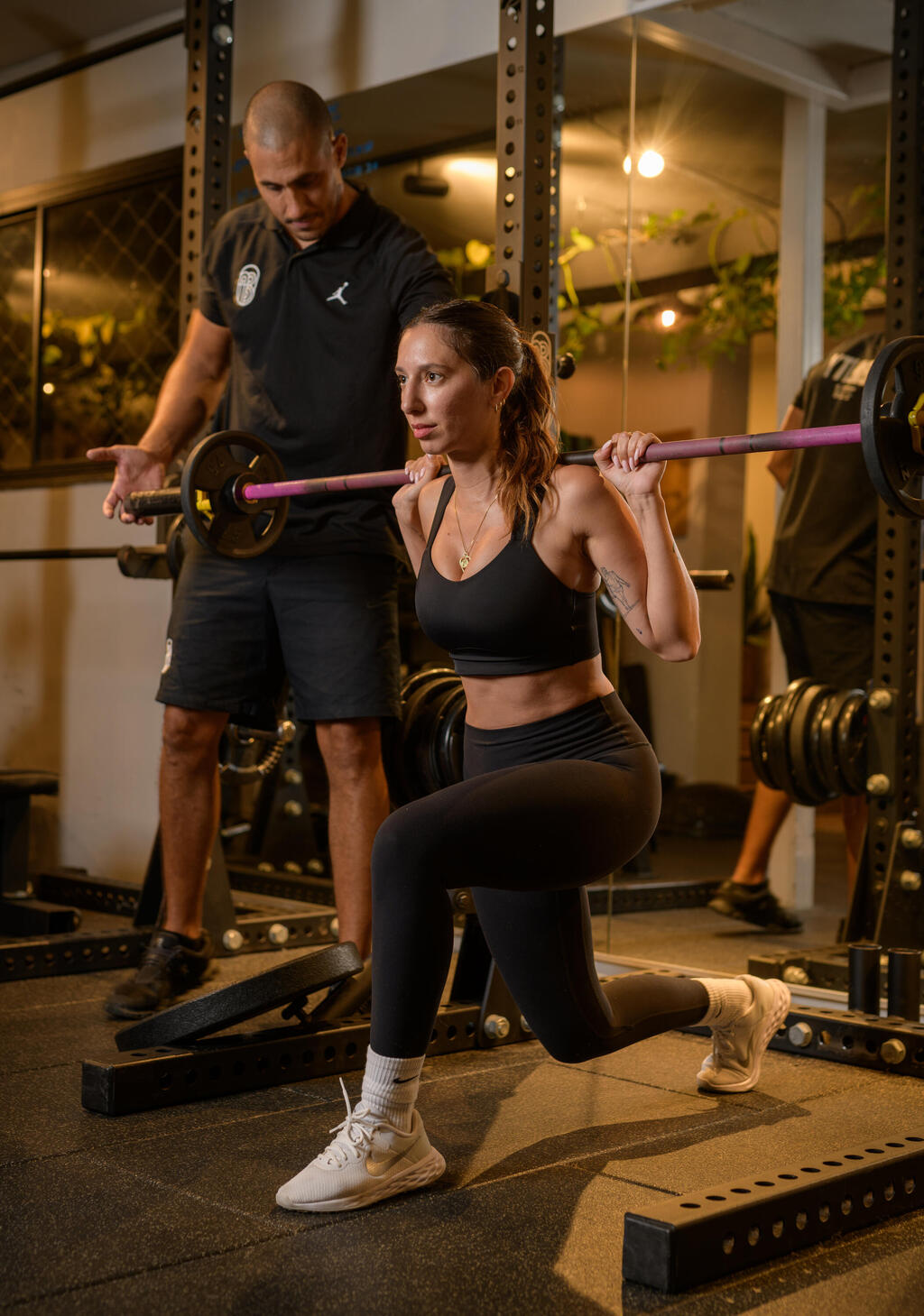
Aviram Bohbot, owner of Ability, a strength training studio in central Tel Aviv
(Photo: Jonathan Bloom)
You’re insulting Pilates instructors here.
“All the yoga and Pilates instructors in Tel Aviv train with me. The world is changing.”
These changes are happening now, after years of stagnation. “At 16 I wanted to start strength training because that’s what I was required to do as an athlete on Israel’s karate national team, but there was not a single woman in the gym,” says Yarden Shavit, 36, a trainer and founder of a strength training app for women from Kiryat Motzkin. “I stood alone in the weight area and I will never forget a coach touching my trapezius muscles and saying, ‘You don’t need this, you’re already muscular enough.’ That was the mindset then.”
“When CrossFit arrived in Israel in 2011 I was exposed again to weightlifting. I walked in, smelled the rubber and said, ‘Wow, I’ve found my place.’ I became a trainer, and in the past seven years I see how super-busy women, with children and careers, are obsessed with strength training. It is the best gift women have received in recent years. Finally you are not measured by how you look but praised for your progress, your consistency, your strength. When you deadlift 100 kilos it captures an entire year-long process, physical and mental. It shows who you are. It is a much deeper world than another abdominal cube.”
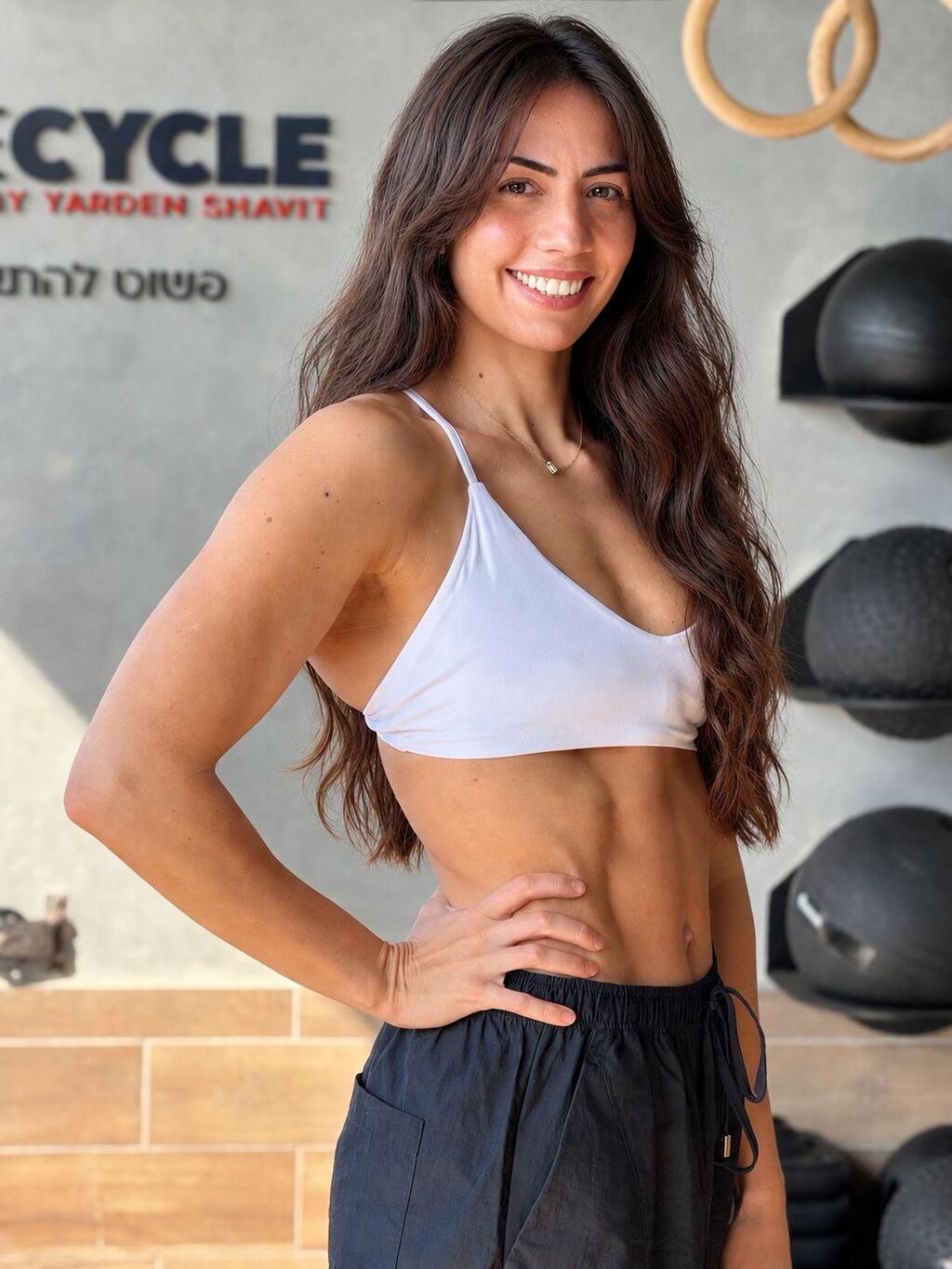
Yarden Shavit, a trainer and founder of a strength training app for women
(Photo: Amit Parnas)
Karina Laufer Dayan, a 51-year-old entrepreneur from Ramat Gan, discovered the power of weights five years ago. Since then she trains three times a week and no one can stop her. “There comes an age when you understand its power. It’s not just about looking good, it’s much deeper.”
Sorry for the tactlessness, but isn’t it hard to lift heavy weights at 51?
“Listen, I don’t yet have menopause symptoms, and I feel it’s because of sport. My friends are sweating at night like horses and I sleep like a baby. I think it’s because of strength training. I also walk more upright, probably since I started back exercises.”
Attorney Maya Calev from Modi’in does deadlifts with 80 kilos at age 49. “I started lifting during COVID. I discovered you can work with very heavy weights and not bulk up, but get toned. Gradually you realize there are so many women in their 20s and 30s lifting insane weights, looking amazing and mostly glowing with confidence and capability.”
What did it do for you beyond the sense of capability?
“Mentally, when I arrive at work after training I’m in a completely different energy. Sharper, more alert, I start the day differently. I can also jump with my kids, climb stairs while carrying a child, and I’m not destroyed. I also think about how my life will look in 20 years, what my capacity will be as a grandmother. Hormone-wise I feel in the zone, it has become my oxygen. Forget gold and diamonds, give me dumbbell.”
The hormonal balance described by Calev and Laufer Dayan is no coincidence: strength training has become, to a large extent, a prescription for women entering their fifth decade of life. This contrasts with prevailing beliefs in the previous century, when doctors warned that intense physical activity was dangerous for women and could, as published in a German journal of physical education, “lead to uterine detachment.”
“In recent years, there is a clear trend of women in pre-menopause and menopause shifting to strength training, sometimes at the expense of flexibility and posture-based training like Pilates,” confirms Dr. Iris Yaish, senior endocrinologist at Ichilov Hospital and head of a multidisciplinary menopause clinic. “The main reason is the understanding that menopause is associated with loss of muscle mass, decreased bone density, increased abdominal fat, slower metabolism, and reduced strength and function. Resistance training is one of the most effective tools to address these changes. I have patients for whom hormone therapy was not an option and this really saves them.”
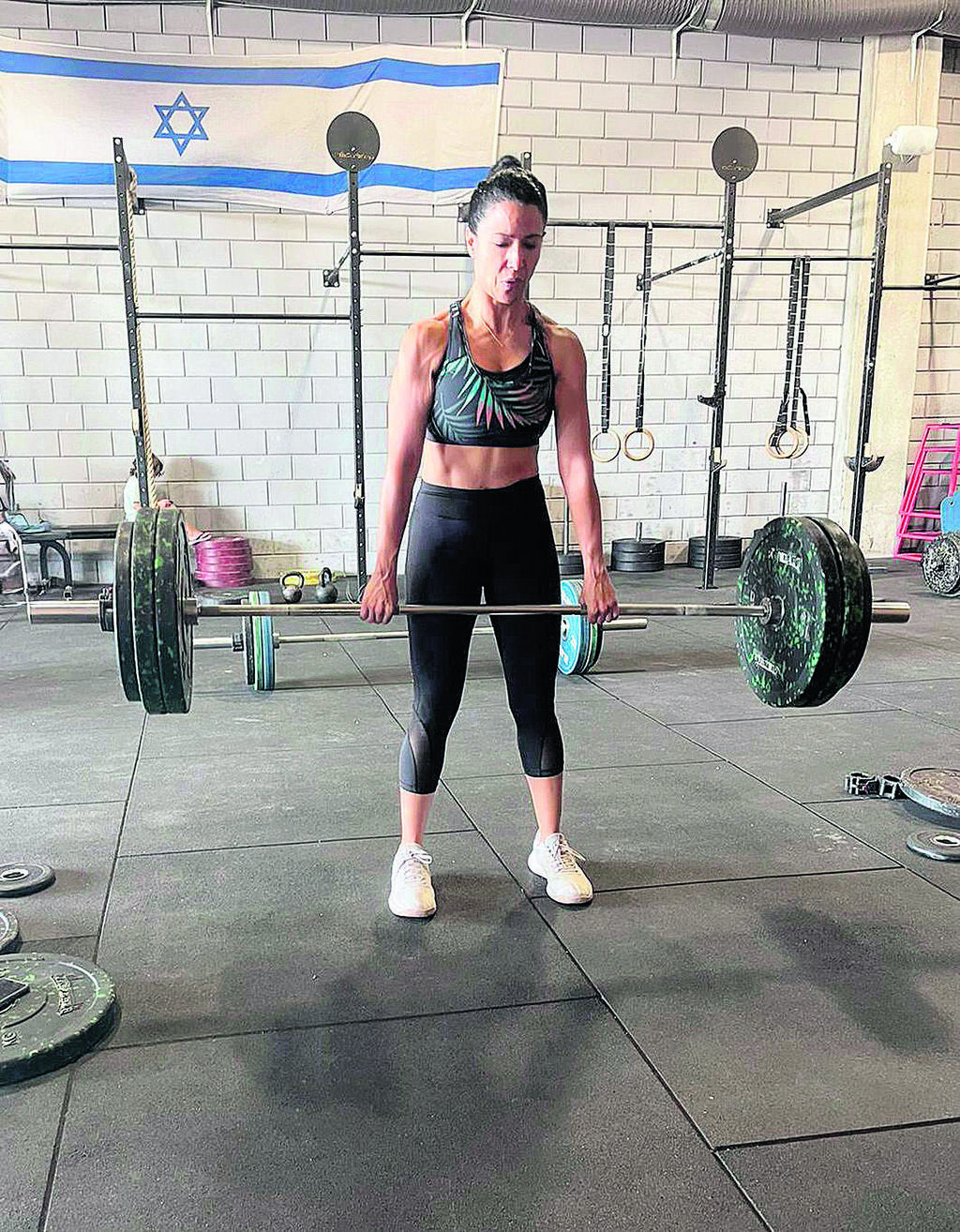
Attorney Maya Calev does deadlifts with 80 kilos at age 49
(Photo: Courtesy)
What does the medical literature show?
“That strength training helps preserve and even increase muscle mass, improves strength and physical function, may help maintain bone density, improves insulin sensitivity and body composition, and is also linked to improvements in mood, sleep and quality of life in some women. Professional bodies such as The Menopause Society (formerly NAMS) and the American College of Sports Medicine include resistance training as a central recommendation for women in menopause. That doesn’t mean Pilates is bad. It is still excellent for flexibility, balance, pelvic floor strength, back pain and posture. But Pilates alone usually does not provide a sufficient anabolic load to muscle and bone compared to progressive resistance training.”
Bottom line?
“I think a gym with weights and load is the foundation of healthy aging. I recommend every woman in pre-menopause and menopause combine strength training with Pilates or yoga. You just need guidance at the beginning to avoid injuries.”
The recommendations of doctors and the availability of research online are already visible in the field. “More women come to me and say ‘I need strength training,’” says Gita Weiss, 40, owner of the “Element” strength studio in Binyamina. “They spoke to a doctor or read articles and understood that what needs investment now is muscle. This is a turning point where many women start seeing themselves differently. There is a mental aspect alongside the physical—the feeling of ‘I am strong’ is the feeling that I am doing something important for myself.”
The strength craze is not reserved for women in their 40s and up. Gen Z girls are also lining up for weights, thanks to Neta Alchimister. “I started strength training between 7th and 8th grade because I wanted to be like Neta Alchimister and saw that this is what she does,” admits Yasmine Shalosh, 20, a Pilates and Pilates-bar instructor from Tel Aviv. “You see what celebrities do online and it influences you. At some point I got deeply into Pilates for a few years and was really afraid to go back to strength training, because Kendall Jenner, Hailey Bieber and all these girls were posting Pilates and there were claims that strength training makes you bulky, that if I do it I’ll look like a man.”

Gen Z girls are also lining up for weights, thanks to Neta Alchimister
(Photo: Amir Meiri)
So what changed?
“When I studied Pilates instruction and took anatomy courses, we were taught about the importance of strength in building bones, and I understood this is a long-term investment and that women must do strength training. Today I do weight lifting twice a week. Heavy weights, reps, sets, long rest between sets. Next to me train high school girls too, it looks like a summer camp. Everyone is lifting weights.”
From Bieber you went back to Alchimister.
“Yes. You see she did strength for years, even during pregnancy, worked hard on muscle mass and became a ‘hot mom.’ In the end we still live in a society that worships beauty, and women want to look good even when they become mothers.”
And maybe that’s where the weight is buried. With generous help from social media, the beauty ideal has shifted—not skin and bones anymore, but skin sitting nicely over well-built muscle. Even in cinema, patriarchal body ideals are being challenged as women finally get to play roles that are not fragile and tiny. Natalie Portman did it in Marvel’s Thor: Love and Thunder in 2022, and Katy O’Brien in Love Lies Bleeding in 2025, portraying a bodybuilder with a powerful physique and a character who dreams of competing in Las Vegas.
Not only in fiction. Muscles have become commercial, with campaigns from Nike, Under Armour and Adidas, as well as lingerie brands like Kim Kardashian’s Skims and Rihanna’s Fenty, now featuring muscular women instead of petite ones. Serena Williams, whose powerful body was once criticized, became a sought-after brand ambassador. The hashtag “muscle mommy” became a massive TikTok trend. “If the beauty model used to be Twiggy, today my daughter talks about ‘being strong,’” says Maya Calev. “Kids love it. They tell me ‘Mom, look at your arm muscles.’”
Laufer Dayan: “We used to just want to be thin, to burn calories no matter what, and today I want a strong body. When I walk in a tank top and see the muscle in my arm it excites me, and if Madonna’s arms and thighs once repelled me—today she does it for me.”
Bohbot also says his trainees are tired of living on lettuce and rice cakes. “Women want to be present, not a hanger for clothes. They want visible muscles,” he says. “If a decade ago women told me, ‘Put me on 800 calories, I want the skinny sick look,’ today there is no starvation. Women want to build muscle mass and understand that to handle life’s intensity you need to be strong.”
“Today the fashion is the athletic look,” says fitness trainer Lee Talchi, known in Tel Aviv for two decades as “Pileplet,” “It’s fashionable to have muscle. And once women understood they can do strength training without getting big, the field exploded because they started entering gyms and weight rooms.
Lee Talchi: 'It’s fashionable to have muscle'
(Photo: Yaniv Cohen)
And there is also the weight-loss injection trend, which has become fashionable in itself.
“This does not replace strength training, on the contrary. With weight-loss injections people eat much less and there is a loss of muscle mass because the body loses weight in a non-natural way. To rebuild muscle and maintain the new weight you need to lift weights. When you do resistance training and maintain a caloric deficit, your muscle mass increases and you become toned. That’s why resistance training preserves muscle mass and metabolism.”
So more women come because they are injecting Wegovy and Ozempic?
“They don’t tell me they inject. They are embarrassed. But I know.”
And there is another heavy question: is this entire strength trend not just the other side of heroin chic? A way of regulating women’s bodies, if not through starvation and thinness, then through protein loading and commitment to the gym. Endless work on appearance that requires time and money.
“That’s a good question, and reality is complex,” admits Prof. Esther Herzog, head of behavioral sciences at the Zefat Academic College, a social anthropologist and feminist activist who has studied gender relations in Israeli gyms. “On one hand it signals that women can excel at everything, which is good and important, and clearly there is positive change in the field. But does it mean patriarchy has ended? Not at all. Because there is still objectification. The objectification is not in lifting weights, but when advertisers use abs to make money—that is objectification. It continues sexist messaging toward women and viewers.”
On the other hand, maybe this represents a new wave of feminism. Women taking ownership of their bodies and insisting on occupying space.
“There is a reflection of ‘we can do everything, we want recognition, opportunities and possibilities.’ It is part of a political strengthening of women in public space. There is something about women showing physical strength that sends an important message, even indirectly. Young women see that women have physical power and understand that women can be strong. It is an alternative image to the woman as victim.”
To this protein cocktail one must also add the security situation in Israel. There is still a lack of quantitative research and data on the issue, but the link between exercise, endorphin release and mood is well established. In the Israeli context, the interviewees say the lack of security and control has also pushed them toward strength work.
“Since October 7, I feel women come to train with me also from a place of wanting to create personal security,” says Weiss. “A woman wants to feel strong because things are hard out there. They want to release the enormous tension we all carry in our bodies. I feel like I am providing emotional support for everything.”
Laufer Dayan: “Just this past weekend we didn’t know if war would break out. If you don’t lift weights, how will you lift yourself in this country we live in?”
Talchi: “Many women came to me not from aesthetics but from physical or emotional weakness. It is also connected to the war. People are in such a weak physical and mental place, and every psychiatrist alongside antidepressants will tell you to exercise. I see it more in women than men. Women tell me, ‘I feel like I’m deteriorating, like I can’t lift my child.’ They discover they have no strength in their body and want to do something about it.”
And do weights solve it?
“When you start lifting weights and later realize they are light for you, you feel like you are winning against yourself. That feeling of strength and the understanding that you are not becoming a bodybuilder—that is what makes women addicted. And in the end you can also run with your child on sports day. Isn’t it worth it?”