

Israel is facing a deepening mental health crisis more than two years after the Oct. 7, 2023, Hamas-led attack, with post-traumatic stress disorder diagnoses surging and health care providers warning that the psychological toll could continue to grow even after the fighting subsides, according to a Telegraph report.
Five Israeli soldiers have reportedly died by suicide this month alone, two of them young women, bringing the number since the start of the year to 19 — a rate higher than at any point in the past 15 years.

The deaths came alongside another tragedy earlier this month involving Bar Asraf, 30, the boyfriend of Liron Barda, who was murdered at the Nova music festival during the Oct. 7 massacre. Asraf died beside Barda’s grave after struggling to cope with her death. He had recently told his mother how difficult life had become without his girlfriend, reportedly saying, “There’s no one who can replace her, no one to cheer me up.”
Those cases represent only the most visible signs of a much broader crisis, according to data obtained by The Telegraph from Clalit Health Services, Israel’s largest health care provider.
Clalit found that diagnoses of post-traumatic stress disorder, or PTSD, in Israel’s general population have risen by 70% in the wake of Oct. 7 and the conflicts that followed.
The underlying rate of PTSD diagnosis is now three to four times its 2018 level, before the COVID-19 pandemic, according to Clalit data through June, and shows no sign of slowing. Figures from Israel’s three other health care providers broadly match that trend and suggest about 60,000 PTSD cases in Israel can be attributed to the conflict — cases that would not otherwise have been expected, The Telegraph reported.
PTSD is a psychiatric disorder diagnosed according to established clinical criteria. Symptoms can include intrusive thoughts and flashbacks, severe anxiety and emotional numbness that persist over time. For some patients, ordinary colors, smells, tastes and sounds can trigger traumatic memories and severely disrupt daily life. War-related forms of the condition were once commonly known as “shell shock.”
‘The level is high and is remaining high’
Prof. Amir Krivoy, director of Clalit’s Geha Mental Health Center near Tel Aviv, told The Telegraph that PTSD rates are likely to rise further, at least in the short term.
“The level is high and is remaining high,” Krivoy said. “Usually, you can see following a stressful event, there should be a decay, with resilience [building] and recovery processes taking place.
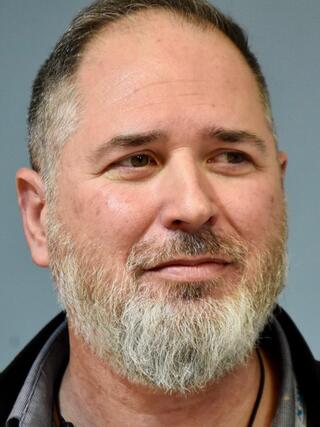 Prof. Amir KrivoyPhoto: Avital Zimmt
“But unfortunately, because of the continuous war situation, with repeated bursts of acute stress activity like the war with Iran, we don’t see that.”
Krivoy said the PTSD figures likely represent only part of Israel’s overall mental health burden.
“I’m using the PTSD as a guide because we have that data, but actually the level of the mental health situation is much larger,” he told The Telegraph.
“Beyond PTSD, there could be double or or three times the number of people in need of mental health services in Israel,” he said. “The PTSD data shows the trend. It is likely to be the same for the other mental health issues like depression, anxiety, eating disorder, even psychosis.”
Clalit’s figures, like those of Israel’s other civilian health care providers, do not include active-duty military personnel. Soldiers receive treatment within the military, and data on their cases are restricted.
A study published last year by Tel Aviv University’s National Center for Traumatic Stress and Resilience, however, followed people serving in combat roles over six years and found that about 12% of those exposed to combat reported severe PTSD symptoms that rendered them unfit for duty.
Krivoy and his colleagues also stressed that the psychological effects of the regional conflicts extend well beyond Israel. Palestinians in Gaza and the West Bank, Lebanese civilians and others exposed to the fighting are also experiencing severe mental health consequences. One medical professional quoted by The Telegraph described the likely prevalence of PTSD and other mental health disorders in Gaza as “unimaginable.”
Mental health system forced to improvise
Unlike in some areas affected by the conflict, mental health treatment remains broadly available in Israel, although the sharp increase in demand has stretched the system and forced health providers to change the way they deliver care.
Clalit has recruited psychology students and others with relevant professional backgrounds to staff mental health hotlines, triage patients and provide basic counseling and therapy.
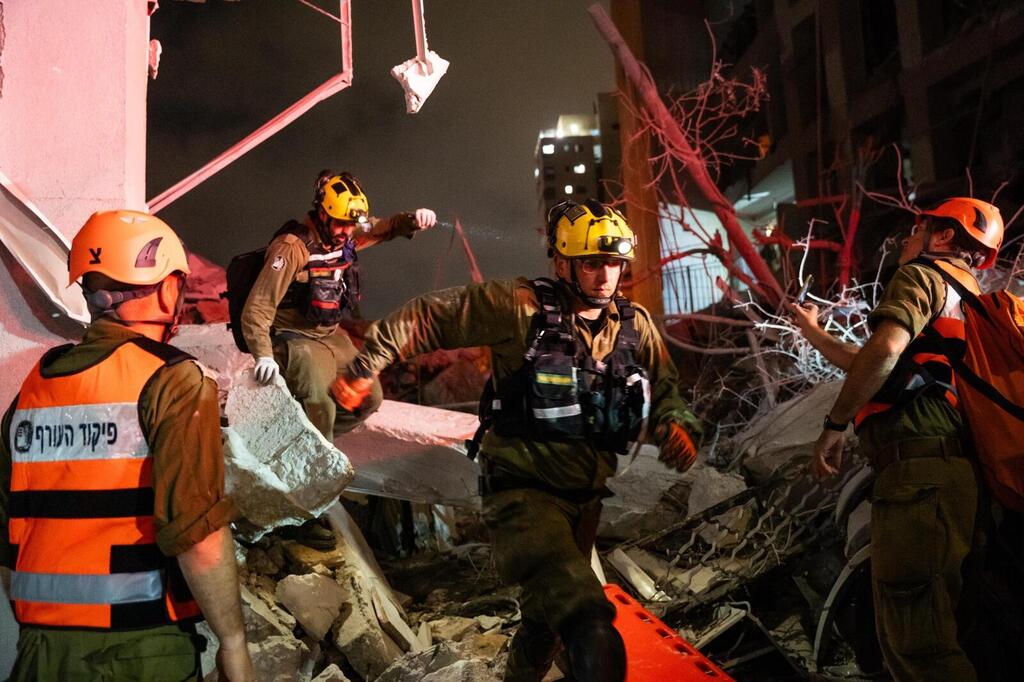
Home Front Command personnel respond to site hit by Iranian missile strike
(Photo: IDF)
“We don’t have enough psychiatrists and trained psychologists, and because it takes 10 to 12 years to train people, we have had to improvise,” Krivoy told The Telegraph.
“So we have given art therapists and other related occupations the tools to treat PTSD. We give them accredited training, and we have trained more than 1,000 people like that in the last two years.”
A second layer of care is being provided by a new group of “resilience coaches” for patients experiencing less severe mental health problems.
“Most are recent graduates with a related degree who are trained to give specific modules of support over one to three meetings with very specific and targeted goals,” Krivoy said.
Those goals can include helping patients sleep, solve practical problems or create a daily schedule.
“As long as there is a fidelity to that advice, and that we know the target is very specific, it provides a good first level of engagement,” he said.
Concerns over medical cannabis
Another concern is self-medication among people who do not receive adequate treatment, including the use of alcohol or drugs.
Medical cannabis has long been available in Israel for certain conditions, and its use has become widespread despite limited evidence supporting it as an effective treatment for many psychiatric disorders.

Medical cannabis
(Photo: Tal Shahar)
“Unfortunately, it became more prevalent in Israel, the rate of prescribing increasing tenfold, with currently about 140,000 people with registration,” Krivoy told The Telegraph.
Cannabis can genuinely help some PTSD patients, he said, but doctors are also seeing significant adverse effects.
“For example, people are becoming more agitated. Sometimes even manic. Sometimes to an extreme level, even psychotic,” he said.
“I have seen grandmothers, like 70 years old, come with psychosis or mania because they use medical cannabis. ... It’s not an innocent treatment.”
Israeli researchers are also studying other psychoactive substances as possible treatments.
A recent study at Clalit’s Emek Medical Center in northern Israel examined MDMA-assisted therapy for IDF soldiers suffering from PTSD. MDMA is the psychoactive drug commonly associated with ecstasy.
About 80% of participants who completed treatment reported a significant reduction in PTSD symptoms, with most no longer meeting the diagnostic criteria for the disorder.
Researchers cautioned, however, that the study was small, follow-up remains limited and the treatment is still experimental.
Finding the right treatment
There is no single treatment for PTSD that works for everyone. Approaches vary depending on the patient and symptoms.
Evidence-based therapies used by Clalit include eye movement desensitization and reprocessing, or EMDR, interpersonal psychotherapy and cognitive processing therapy.
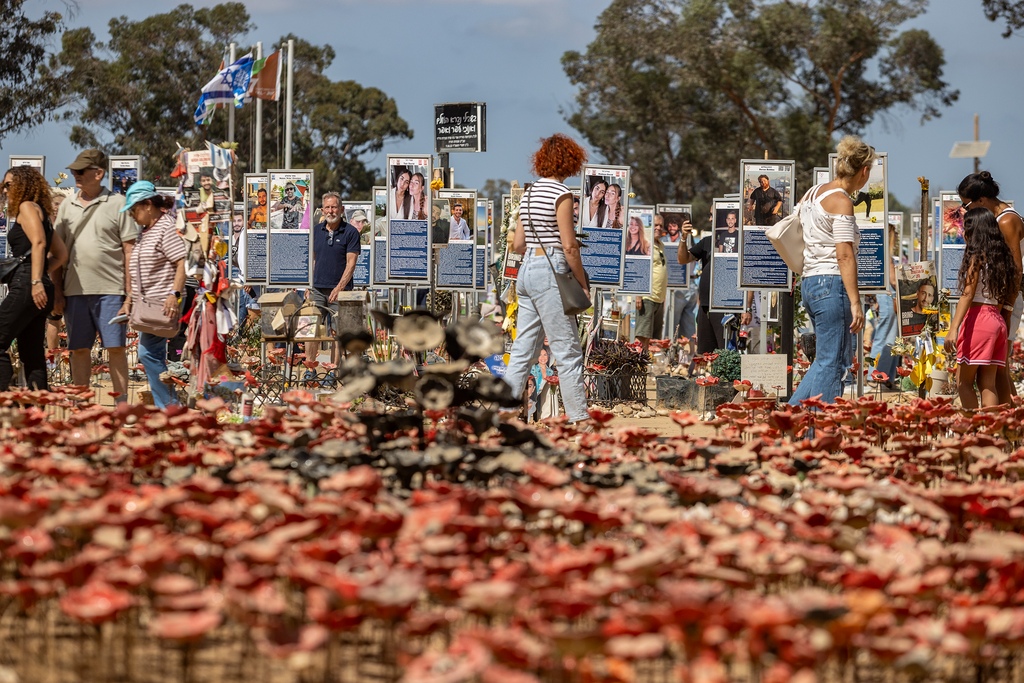
Mourners at the Nova music festival memorial site
(Photo: Ido Erez)
The central challenge, Krivoy said, is achieving a precise diagnosis and matching the individual patient with the appropriate treatment or combination of treatments.
“The holy grail in PTSD is to find the correct treatment for the right person at the right time with the right caregiver,” he told The Telegraph.
For people who receive appropriate treatment, he said, the outlook is relatively encouraging.
“Around 80% will recover and get back to life with minor residual symptoms,” Krivoy said. “However, there are 15% to 20% with chronic symptoms. All need a level of ongoing support.”
The effect of the war on children poses a particularly difficult long-term question.
More than 30,000 Israeli children and teenagers under 18 are recognized by Israeli authorities as victims of terrorism, Krivoy told The Telegraph.
“Some of them lost parents, one or even two parents,” he said. “What will be the outcome of these children? We don’t know, but some already have PTSD and anxiety and depression and suicidality.”
The full consequences could take years to emerge.
“The real question is, what will be the prognosis in the next five to 10 years? We don’t know,” Krivoy said. “But exposure to traumatic events at an early age is a risk factor for developing more severe forms of mental illness.”
‘A national trauma’
Dr. Jordan Lewinski, head of Clalit’s mental health services, told The Telegraph that the problem is now “everywhere,” describing what Israel has experienced as a “national trauma.”
Clalit operates 14 hospitals and about 1,600 clinics across Israel and provides health care to more than half of the country’s population of roughly 10 million. Its scale has given the organization one of the world’s largest longitudinal medical databases.

The Tel Aviv Promenade
(Photo: Ido Erez)
Lewinski said the psychological effects cannot be explained simply by an individual’s proximity to a missile strike, shooting or the Oct. 7 massacre.
Israel’s small population and system of widespread mandatory military service mean that much of the population knows someone directly affected by the war. But Lewinski said Oct. 7 also shattered a more fundamental assumption among Israelis about the state’s ability to protect them.
“The feeling of helplessness right now is widespread among the entire population,” he told The Telegraph.
“Everybody here since birth knows what happened to us in the Holocaust, and Israel was founded on the basis that we won’t let that happen again, but it did happen again.
“This is why the trauma is universal. Everyone was taught, ‘We have a strong army, we will be able to protect ourselves.’ But we weren’t able to protect ourselves, and that’s a disillusionment — a very hard thing.”
Lewinski compared that rupture in trust to a child discovering that the person expected to protect them cannot do so.
“It hits the foundation of what you believe: that the parents should be your protectors,” he said.
Crisis could worsen after the fighting ends
Despite the scale of the crisis, Lewinski and his colleagues remain optimistic that Israel’s mental health system can manage it. People can adapt and recover, he noted, and psychiatric conditions associated with trauma are better recognized and treated today than they were after earlier wars.
But the psychological toll may worsen before it improves.
Lewinski told The Telegraph that research into previous conflicts suggests suicide rates can decline during wartime and then rise after the fighting ends.
“Usually, when there’s a war, there is a decrease in suicide and we see an increase after the war is finished,” he said. “We saw it in the Vietnam War and in Israel also in the previous wars.”
One explanation, he said, is that war creates a sense of shared distress that can diminish once ordinary life resumes.
“It’s because during a war everybody is with you in the same situation. Everybody is anxious, everybody is terrorized, so people understand you and you are not alone,” Lewinski said. “It’s after wars that that changes.”