


Israel will switch to daylight saving time overnight between Thursday and Friday (March 26–27, 2026), moving clocks forward one hour at 2 a.m. to 3 a.m. As every year, the transition revives a familiar question: does losing an hour of sleep harm the heart?
For years, the answer appeared straightforward. Headlines repeatedly cited a concerning figure—based in part on an older Michigan study referenced by the American Heart Association—suggesting a 24% increase in heart attacks the day after the shift to daylight saving time. However, as more data have accumulated, the picture has become more nuanced.

Several studies, including the Michigan research and additional observational analyses reviewed by UT Southwestern, have pointed to a possible increase in heart attacks following the transition. Still, findings are inconsistent, and the magnitude of the effect remains unclear. The American Heart Association itself notes that the link between time changes and cardiac events is not definitive, and is likely related to circadian disruption and sleep loss.
That does not mean there is no impact. In other areas, the evidence is more consistent. A Finnish study on stroke found an approximately 8% increase in cases during the first two days after the time change. Traffic studies published in Current Biology have also shown about a 6% rise in fatal accidents, particularly during morning hours after the shift. In other words, the body does react—even if not always through the heart directly.
When daylight saving meets the biological clock
The main explanation lies in the body’s internal clock, or circadian rhythm, which synchronizes physiological processes with the light-dark cycle. A sudden one-hour shift—especially when it shortens sleep—creates a temporary mismatch between the internal clock and the external environment. The result may include reduced alertness, hormonal disruption and broader physiological effects.
 Prof. Kobi Shaham of Tel Aviv Sourasky Medical Center Photo: Jenny Yerushalmi, Ichilov Spokesperson
Professor Kobi Shaham, head of the cardiac intensive care unit at Tel Aviv Sourasky Medical Center (Ichilov), said the transition this year comes at a time when many Israelis are already experiencing irregular sleep. “When the clock shifts, the body needs time to resynchronize. In such periods, sleep duration is already reduced, and this combination can lead to increased secretion of stress hormones—raising the risk of cardiac events, particularly among those already at risk,” he said. He likened the effect to a mild “jet lag” lasting several days.
At the same time, Shaham emphasized that daylight saving time also has benefits. “Longer daylight hours contribute to improved mood. In countries with less sunlight, we see higher rates of depression and even suicide, so light exposure has a significant impact on vitality and mental health,” he said. “Ultimately, as with any time-zone shift, the body adjusts within a few days.” He added that the advantages—especially for mood and light exposure—likely outweigh the short-term risks.
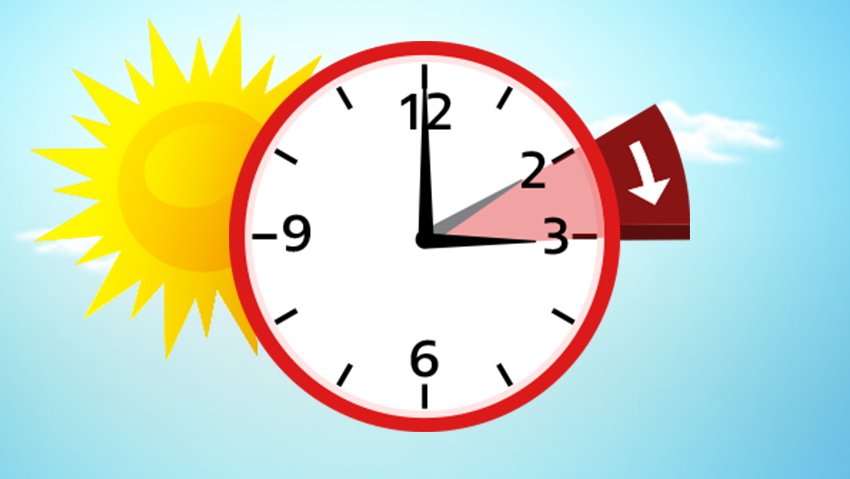
Switching to Daylight Savings Time
(Photo: Sutterstock)
Dr. Bella Kaufman, a cardiology specialist at Maccabi Healthcare Services, noted that not only sleep duration matters, but also its timing. “Nighttime sleep is not the same as daytime sleep, because essential hormones are released during the night,” she explained. Chronic sleep deprivation, she said, can affect the cardiovascular system through multiple mechanisms, including increased blood pressure, disrupted glucose and lipid levels, arrhythmias and accelerated atherosclerosis.

Clock changes disrupt sleep - and the body needs time to resynchronize
(Photo: Shutterstock)
However, she stressed that the time change itself is not the decisive factor. “The focus should not be on one night of change, but on long-term habits. Just as we build healthy nutrition and exercise routines, we need to build healthy sleep habits,” she said. Maintaining consistent sleep schedules, avoiding screens before bedtime and ensuring sufficient nighttime sleep can help reduce cardiovascular risk.
 Dr. Bella Kaufman at Maccabi Healthcare ServicesPhoto: Private album
Their assessments align with broader findings from recent years. A study published in September 2025 in the journal PNAS found that the more significant issue is not the single night of transition, but the cumulative effect of switching clocks twice a year. According to the study’s models, eliminating the biannual change could prevent roughly 300,000 stroke cases and 2.6 million cases of obesity in the United States alone.
The study concluded that stability—whether permanent daylight saving time or permanent standard time—is preferable to repeated shifts. Permanent standard time appears to offer the greatest benefit for most people, largely because it provides more morning light, a key factor in maintaining proper circadian alignment, as also emphasized by sleep research organizations.
The real risk: chronic sleep deprivation
When it comes to heart health, experts say the issue should be kept in perspective. According to the American Heart Association and studies published in the Journal of the American Heart Association and Hypertension, long-term sleep quality and duration are far more significant than a one-time one-hour shift. Chronic sleep deprivation is linked to higher risks of cardiovascular disease, metabolic disruption and elevated blood pressure.
In that sense, the transition to daylight saving time may act as a short-term trigger—but not the primary driver of risk. Most people’s bodies adjust within a few days. By contrast, poor sleep habits, chronic stress and irregular routines place a sustained burden on the heart.

(Photo: Shutterstock)
A recent study published in the European Journal of Preventive Cardiology reinforces this broader view. It found that even small improvements in sleep can have measurable benefits. An additional 11 minutes of sleep per night was associated with a reduced risk of cardiovascular events, as part of broader lifestyle changes. The study followed more than 53,000 adults in the UK over eight years, during which about 2,034 major cardiac events were recorded.
It also found that 8 hours to 9 hours of sleep per night is the optimal range for heart health. When combined with other healthy habits, this was linked to a roughly 57% reduction in the risk of heart attacks and strokes. Researchers emphasized that small, sustainable changes can lead to meaningful long-term improvements.
“Every addition to sleep helps reduce stress and anxiety and positively affects multiple systems in the body,” Shaham said. “During sleep, essential metabolic processes take place—balancing blood sugar and lipid levels and lowering blood pressure. These are key factors influencing cardiovascular risk. That’s why quality, sufficient sleep is one of the most important components of long-term heart health.”
Accordingly, experts’ main recommendation—also reflected in American Heart Association guidelines—is simple: prepare for the transition a few days in advance, get enough sleep, seek daylight exposure and avoid caffeine in the evening. These are small steps that help the body’s internal clock adjust more quickly.
The bottom line: daylight saving time does have an effect—but it is not the major threat it was once thought to be. The real risk to heart health lies not in the night the clocks change, but in the habits that accompany us year-round.