

Rabbi Menachem Perl is best known in the Religious Zionist community as a halachic authority. He heads the Zomet Institute, which develops technological solutions for complex questions of Jewish law, previously led the Military Rabbinate’s halachic division and has also served as rabbi to Israel’s Fire and Rescue Authority.
Far fewer people know what the past three years have done to him.
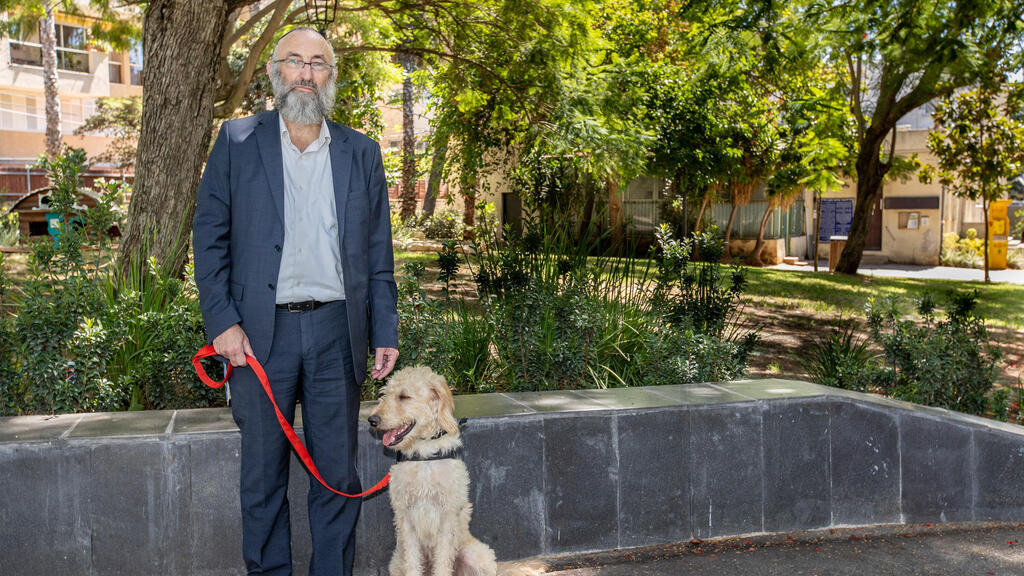
In a candid interview with ynet and Yedioth Ahronoth, Perl, 62, speaks publicly about developing post-traumatic stress disorder after serving at the IDF’s Camp Shura, where the bodies of victims of the Oct. 7 massacre were brought for identification. Today, a service dog accompanies him through daily life.
“A rabbi with a dog is not a common sight,” he acknowledged. “I think I was blessed with a trait that makes me feel difficulties shouldn’t be hidden. I know what I’m doing. I took the service dog only after a great deal of time and thought.”
He said he wrestled with whether the image fit his public role as a rabbi and head of a religious institution. Ultimately, practicality won. “I don’t hide anything,” he said. “I know the dog can help me, so it will help me. We can worry about appearances another time.”
The effects of the trauma still surface in different ways. “There are triggers that bring it back: stories, pictures, even smells,” Perl said. “Sometimes it comes in dreams, nightmares at night that make me move, hit with my hand as if I’m fighting, and then I can accidentally injure myself because I hit the wall. Or worse, I can hit my wife while I’m dreaming. All of those things have happened.”
‘It completely knocked me down’
On Oct. 7, Perl, then already years removed from reserve service, initially did what many Israelis did: looked for somewhere he could help. He joined security efforts in his community of Mevo Horon, donated blood and soon called Chief Military Rabbi Eyal Karim, his former commander.
“I asked where help was needed, and he told me, ‘We have an enormous amount of work identifying the dead. If you’re willing, come.’ They needed more and more hands.”
Perl arrived at Shura without even having a uniform at home anymore. He was quickly assigned to the identification operation, first working with civilian victims and later with soldiers. Within days, he was serving with the military unit responsible for identifying the dead, where teams used photography, dental records, CT scans and other methods before preparing bodies for burial.
The work was relentless. Outside the base near Ramla, families waited desperately for information about missing relatives. Inside, personnel worked through an unprecedented influx of bodies, many in extremely difficult condition.
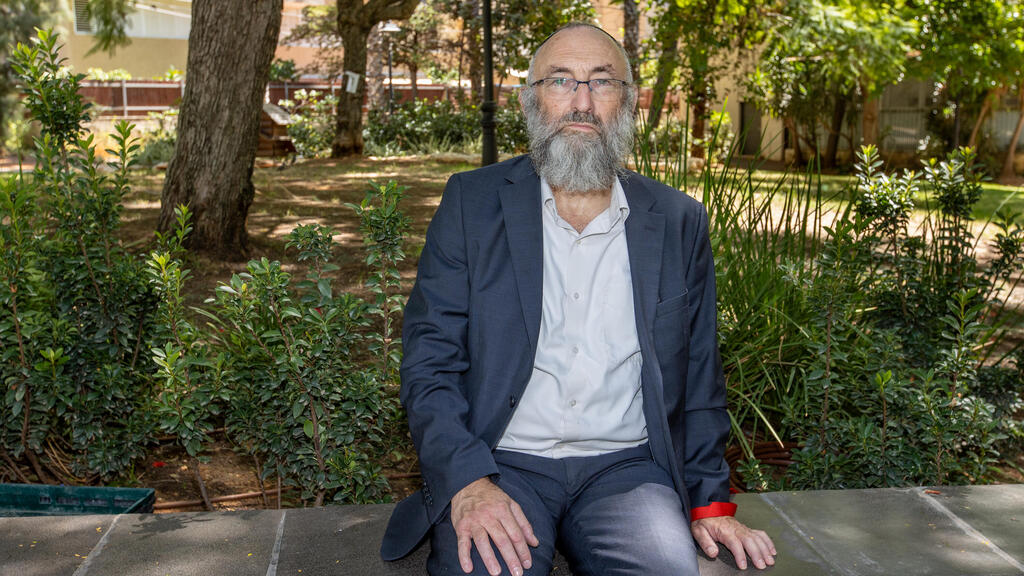
(Photo: Ido Erez)
After about two months, Perl realized something was changing inside him.
“I went to a mental health officer attached to the unit and said I was beginning to feel some difficulty, and maybe it would affect my whole life,” he recalled.
One case became the breaking point. After a particularly difficult mass-casualty incident, Perl discovered that one of the bodies he had helped identify was the son of a Zomet Institute employee, a young man who had sometimes come to help at the institute himself.
“I handled his identification,” Perl said. “That completely knocked me down, and I asked to be released.”
‘What, I’m taking pills now? Am I crazy?’
Leaving Shura did not end the experience. It simply changed its form.
Perl contacted the Defense Ministry’s Rehabilitation Department and began seeing a psychologist specializing in trauma. At their first meeting, he assumed the process would be relatively short.
“I told the psychologist, ‘Listen, I feel this is pretty serious, so one session probably won’t be enough. We’ll need four or five,’” Perl recalled. “He laughed and told me, ‘Forty or 50.’ I was horrified.”
At first, Perl even considered finding someone who could “do it faster.” He soon realized the psychologist had been right. The treatment continued for about a year and a half, followed by additional therapies.
A more dramatic turning point came a little over a year ago, when Perl suffered a severe anxiety attack while traveling abroad with his wife. He experienced nausea, pressure in his chest, muscle tension and a feeling that his entire body had contracted.
“I said, ‘I don’t want to go back to Israel, not to the politics there, not to the security tension. I can’t do it,’” he said. Three hours later, he boarded his flight home.
The attacks continued. Last Sukkot, he entered a residential psychiatric alternative at Kfar Shaul designed for soldiers in acute distress, housing only a handful of patients at a time. From there, he moved into further treatment with a psychiatrist and later at a rehabilitation farm in Tzur Hadassah.
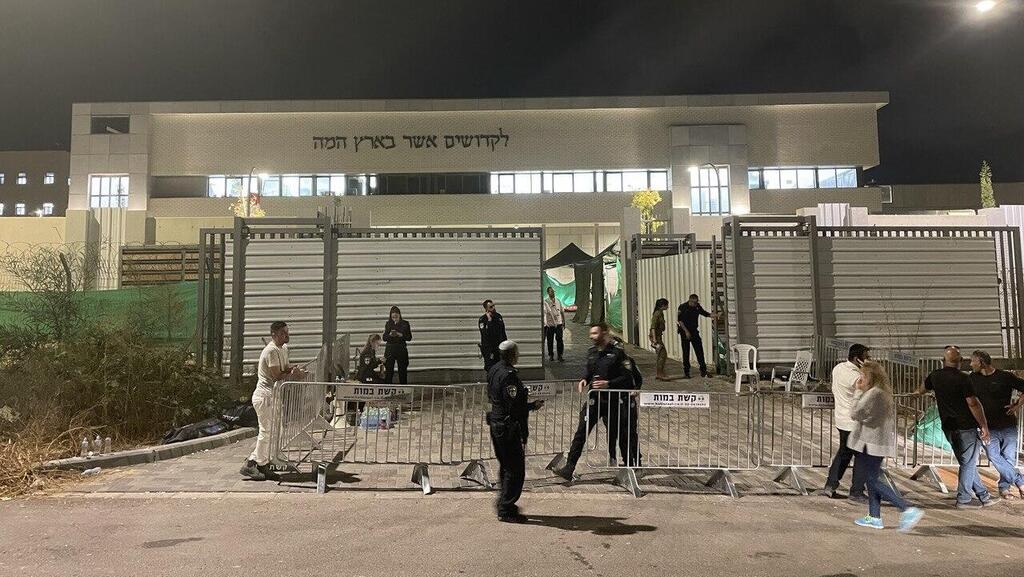
Camp Shura
Throughout the process, he tried to hold on to at least some work and routine, going in about two days a week.
“For someone who feels stable and grounded, it’s uncomfortable to admit you need help,” he said. “I also never thought I would go to a psychiatrist.”
His old image of psychiatric treatment, he now admits, was crude and deeply mistaken. “In my head, someone who needed a psychiatrist was some crazy person drooling into his beard and muttering incoherently. What, I’m taking pills now? Am I crazy?”
“Today I understand that it absolutely helps.”
Perl has also volunteered for experimental treatments and tries new therapeutic tools when they are offered. When a psychologist specializing in biofeedback gave him a breathing and exercise kit, he posted in a WhatsApp group asking whether anyone else wanted one.
Around 20 people contacted him privately within two hours.
“Outwardly, in the group, nobody wanted to admit they had approached me,” he said.
A treatment system that does not always fit Haredi soldiers
Perl is now helping lead an initiative to create a dedicated treatment home for Haredi soldiers suffering from trauma and PTSD.
He is careful to emphasize that his criticism is not directed at the people working in the Defense Ministry’s rehabilitation system. “I think the Rehabilitation Department does wonderful work,” he said, praising staff members who, in his view, often go beyond their formal responsibilities to help wounded soldiers.
The problem, he argues, is that treatment designed for the general population does not always fit Haredi soldiers or more strictly observant religious veterans.
The enormous number of bodies handled after Oct. 7, particularly civilians and victims whose remains were in extremely difficult condition, created a wave of trauma among those assigned to identification work, Perl said. Different people, however, require different kinds of care.
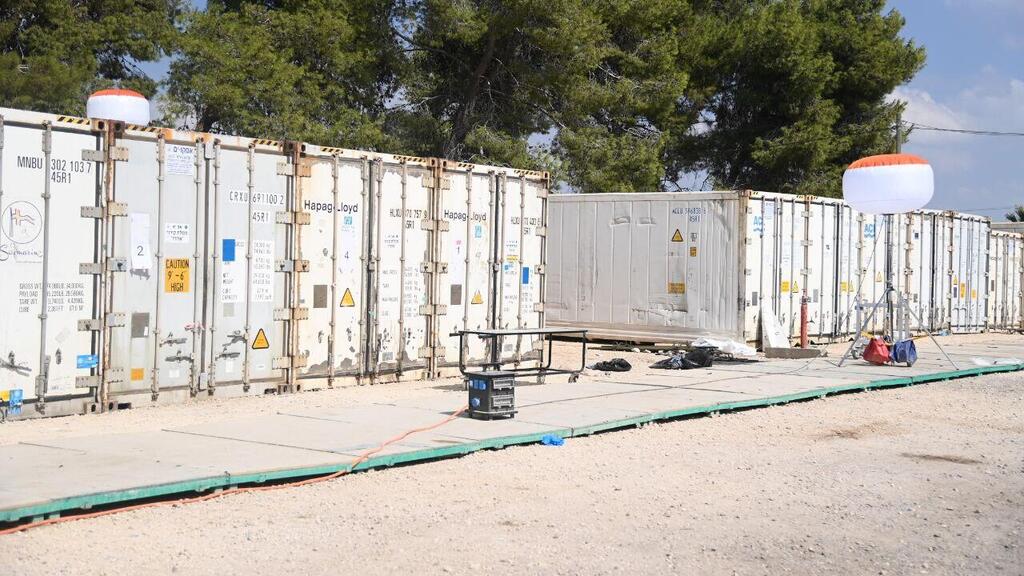
The Shura body identification facility
(Photo: Yair Sagi)
“The treatment I need, for example, is different from what a single 20-year-old needs,” he said.
For Haredi veterans, the gap can be cultural as well as medical. Existing residential programs may house men and women together or offer activities that are incompatible with a soldier’s religious lifestyle. A program may be clinically appropriate, Perl said, but still feel impossible for the patient to enter or remain in.
That can lead veterans to simply abandon treatment.
The proposed facility would provide a religiously and culturally compatible environment rather than reserving separate days at existing centers. Perl said the aim is not to take resources away from secular veterans, but to build an additional framework specifically suited to Haredi soldiers.
He also raised the possibility of eventually establishing a dedicated Beit Halochem, one of Israel’s rehabilitation centers for disabled veterans, adapted to the needs of the Haredi community.
‘We are even more invisible’
The initiative is built around the idea that treating a Haredi veteran requires understanding more than a diagnosis. Therapists must also understand the patient’s family structure, religious values, community and language.
The program includes psychologists, social workers and military mental health professionals familiar with the Haredi community. Activities are adapted to Jewish law, including separate groups for men and women, and participation is handled discreetly.
The project currently assists about 100 soldiers out of an estimated target population of roughly 800. Organizers hope eventually to extend support to spouses and children as well, including family resilience programs, assistance obtaining benefits and economic rehabilitation.
The first center is planned for the Jerusalem area, with additional branches envisioned in central and northern Israel.
Among those waiting for such a framework is “Aryeh,” a pseudonym for a 31-year-old married father of three from Bnei Brak who lives a Haredi lifestyle. He served as a combat soldier in the Kfir Brigade and returned for reserve duty during the war with a unit responsible for recovering, identifying and bringing the dead for burial.
“I was successful at work, a family man,” he said. “When I came home, I realized all of those things had broken. I didn’t understand what was happening to me. I couldn’t work at all. I couldn’t manage my family. My social relationships fell apart. I felt like a stranger.”
He stopped sleeping properly and quickly turned to a military combat-stress unit. But he said several rehabilitation programs were incompatible with his religious life, forcing him to leave.
“They don’t fully understand our needs,” he said. Some programs, he said, mixed men and women or did not provide food meeting his religious standards.
“We suffer from the lack of an appropriate response, my family and I.”
The experience has also shaped what he tells other Haredi men considering military service.
“When people ask me if I recommend joining the IDF, how can I recommend it if I know that if you need help, you won’t receive it?” he said. “In the system dealing with PTSD, they are invisible. We are even more invisible. They don’t see us, they don’t understand us.”
Yehoshua Kalafish, 33, a clinical social worker from Kiryat Malachi and father of four, also serves in the reserves in a unit involved in identifying the dead. His work brought him into close contact with many Haredi and religious reservists.
“From knowing them, I see the enormous need for a response adapted to them culturally, socially and ideologically,” he said. “A response that understands them, where they can feel they belong, and that can lead them through a process of healing and growth.”
“They carried out such a meaningful role, sacred work, with complete devotion and the best intentions, giving everything they had,” Kalafish said. “Now that they are wounded and struggling with themselves, their families and their communities, they deserve a response that can help them heal.”
- To learn more about the initiative and support the creation of culturally tailored PTSD care for Haredi and observant soldiers, visit the project’s donation page.