

The number of rabies cases diagnosed in animals in Israel surged by more than three-and-a-half times (252%) between 2022 and 2025, rising from 29 cases to 102 — the highest annual total recorded in recent years. At the same time, the number of people seeking guidance from district health offices after suspected rabies exposure nearly doubled over 15 years, increasing from 12,343 in 2010 to 24,219 in 2025.
The figures, released Tuesday by the Health Ministry, come amid a rise in rabies cases among animals and the geographic spread of disease hotspots, increasing the risk of exposure for both people and animals.
Gallery
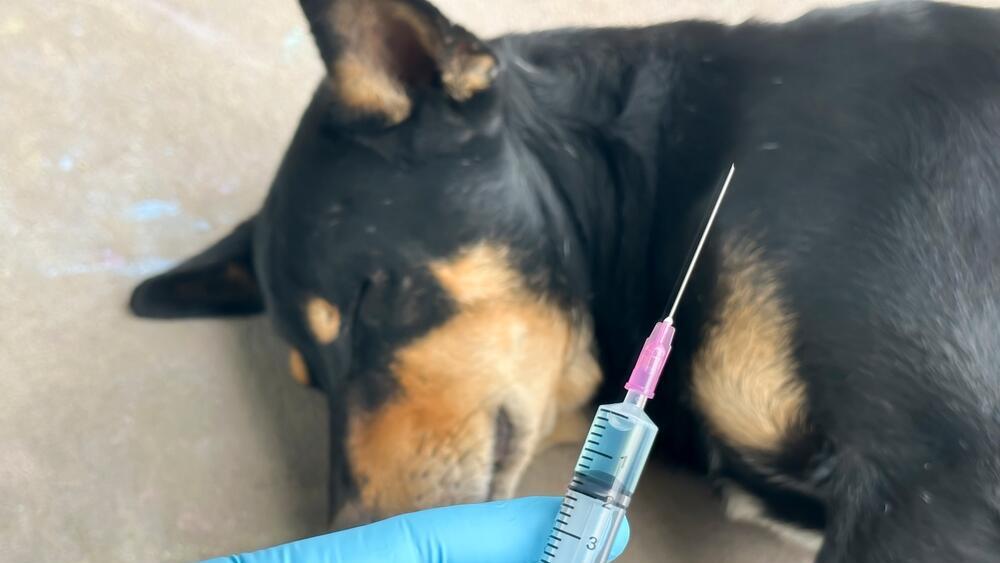
Rabies still causes tens of thousands of deaths worldwide each year, mainly in countries where dogs serve as the primary reservoir of the virus
(Photo: shutterstock)
Despite the steady upward trend, the Health Ministry has not established a dedicated, funded emergency task force to address the problem. In addition, aerial distribution of rabies vaccines for jackals in northern Israel was suspended for a period because of the security situation.
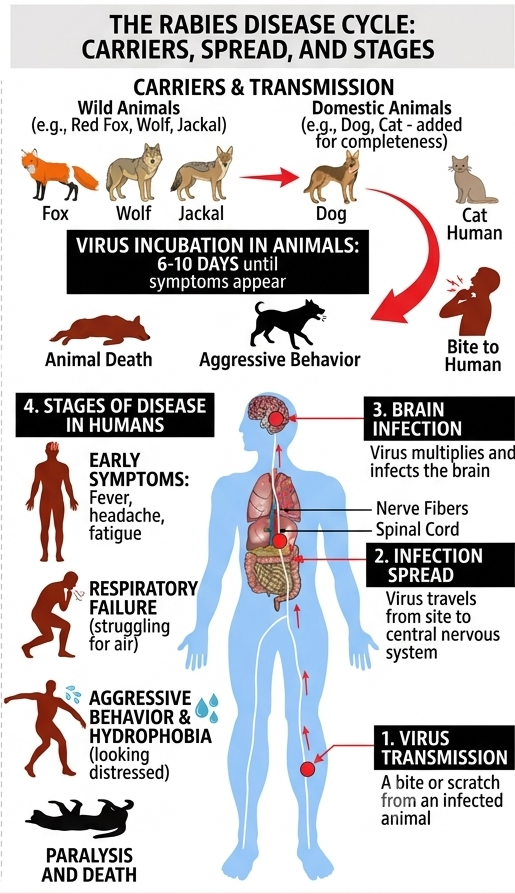
Rabies is a deadly viral disease that attacks the central nervous system of mammals, including humans. It is caused by the rabies virus and is transmitted primarily through bites or contact between the saliva of an infected animal and broken skin or mucous membranes. Once symptoms develop, the fatality rate is nearly 100%, making rabies one of the deadliest zoonotic diseases known.
Prevention measures are highly effective and include vaccinating animals and providing post-exposure prophylaxis to humans. However, according to the World Health Organization, rabies still causes tens of thousands of deaths worldwide each year, mainly in countries where dogs serve as the primary reservoir of the virus and access to vaccines and medical care is limited.
'All of Israel is now an endemic area'
In Israel, rabies is endemic among wildlife, particularly jackals and foxes, posing an ongoing threat to public and animal health.
"I am concerned because there has been a very troubling increase in rabies among wild animals recently. Over the past year, the jump has been even greater. We are seeing the virus spread from jackals to other wildlife, along with much more contact between people and wild animals that are entering cities and becoming increasingly common," said Prof. Siegal Sadetzki, head of the Health Ministry's Public Health Division, during a briefing with reporters.
"It used to be extremely rare to see jackals in Tel Aviv. Today we see them in yards and on city streets. They come here looking for food, both from garbage bins and from feeding stations where people leave food for animals. That's one of the things we want to change, and we want to warn the public not to do it."
Sadetzki said that while rabies cases were once concentrated mainly in northern Israel, the Upper Galilee and the Golan Heights, the disease has now spread much more widely.
"Today, all of Israel is considered an endemic rabies area. Animals can travel quickly and certainly an infected dog transported from one place to another can spread the disease very rapidly. The borders are especially sensitive because we depend on how the issue is handled across the border. We are now seeing spread in the Gilboa region, the Sharon, Hefer Valley, Hadera and Hod Hasharon."
She also pointed to the movement of animals between regions as another growing concern.
"In April 2026, a reservist brought a dog from northern Israel to Hadera and later to Ra'anana. During Passover, the dog was in contact with family members, and it was later confirmed to have rabies. In May 2026, another dog was brought from Ramle to Holon and was also found to be infected. Bringing dogs from the north or south because of the war is absolutely prohibited. We must prevent these cases. We cannot allow people to be exposed to rabies, which is a terrible disease that is almost always fatal."
"People try to rescue animals, but there are consequences," added Dr. Oren Shattach Catabi, director of the Health Ministry's Department of Zoonotic Diseases. "It's important to adopt responsibly, find out where the animal came from, make sure it has been vaccinated against rabies and obtain its full medical history."
Dogs replacing jackals as the main source of cases
Health Ministry data show that 63 rabies-positive animals were identified in Israel between January and May 2026, including 17 cases in May alone.
More than half of all cases — 62% — were found in dogs, compared with just 21% in jackals. This marks a significant shift from previous years, when jackals, the primary wildlife reservoir of rabies, accounted for most cases.
The trend raises concerns about greater risks to humans and wider spread into populated areas, as stray dogs live much closer to people than jackals.
The ministry estimates that animal rabies cases will continue to rise in 2026, reaching approximately 150.
"I believe the trend will continue, and we are preparing accordingly while doing everything we can to prevent further spread," Sadetzki said. "We want to raise public awareness, encourage vaccination of animals, promote responsible adoption and ensure that people seek guidance from district health offices as quickly as possible."
Between January and April 2026, 7,838 people contacted district health offices after possible exposure to animals suspected of having rabies. Of those, 3,924 people — about half — were advised to receive post-exposure prophylaxis (PEP), while 1,815 also received rabies immune globulin (RIG) as part of treatment.
Among those advised to undergo treatment, 165 had been exposed to animals confirmed to have rabies, while 3,770 had been exposed to animals that could not be located or whose health status could not be determined.
The heaviest workload for district health offices was recorded in the Tel Aviv, Jerusalem and Petah Tikva districts. Relative to population size, however, the northern districts of Safed, Kinneret and Afula recorded the highest rates of cases, reflecting the continued presence of major rabies hotspots.
'Human rabies deaths are very rare in Israel'
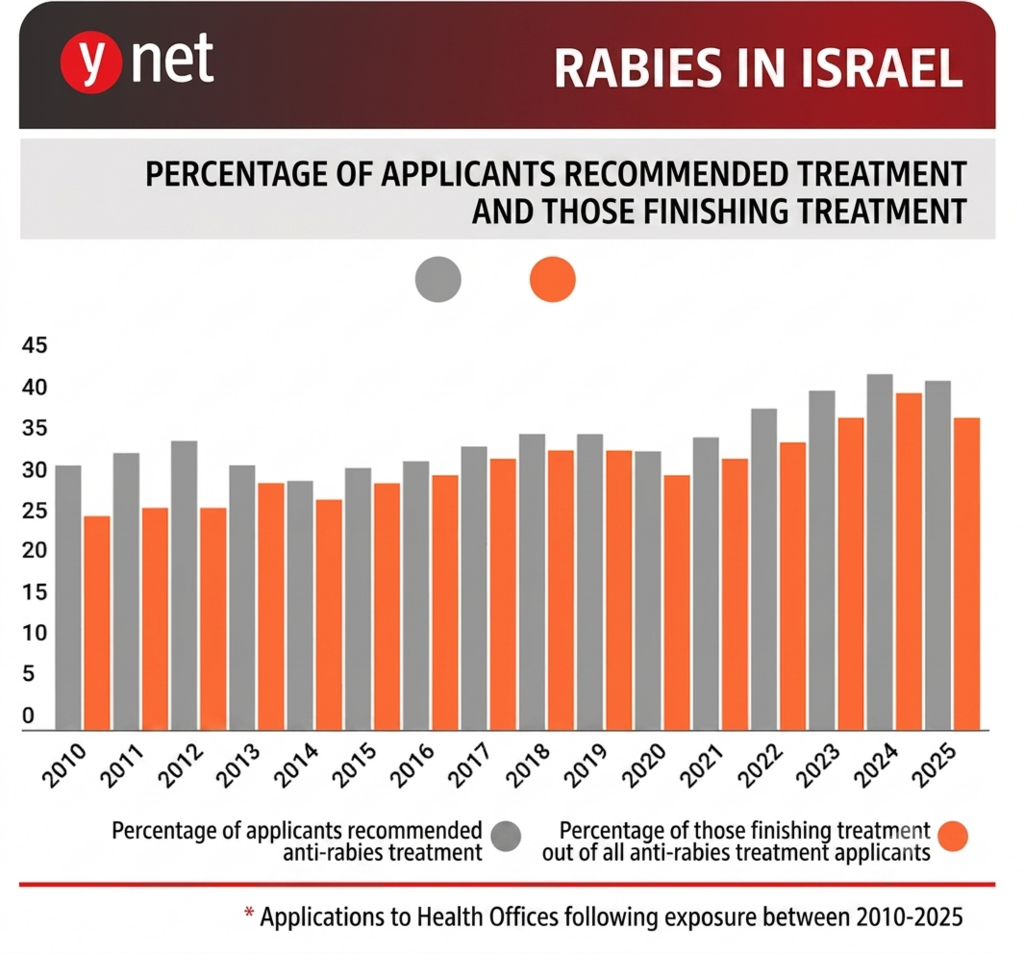
Historical data show a similar pattern. Annual reports to district health offices rose from 12,343 in 2010 to 24,219 in 2025, while the share of people advised to receive preventive treatment increased from 32.2% to 42.5%.

Prof. Siegal Sadetzki, head of the Health Ministry's Public Health Division
(Photo: Yoav Dudkevitch)
The ministry says the trend reflects an increase in exposure events considered high-risk, likely because of the expansion of rabies hotspots and the growing number of confirmed animal cases.
Another concerning trend is a slight decline in completion rates for preventive treatment. Between 2013 and 2024, completion rates remained relatively stable at 91% to 95%. However, the gap between those advised to undergo treatment and those who completed it rose to 4.8% in 2025, compared with 2.7% the previous year — one of the highest rates recorded over the past decade, excluding 2010-2012.
"Human rabies deaths are very rare in Israel," Sadetzki said.
About 23 rabies deaths were reported during Israel's first decade as a state, but the numbers later declined sharply.
Between 1996 and 1997, three people died of rabies: a 20-year-old soldier who was bitten on the lip while sleeping in the Golan Heights by an unidentified animal, a 7-year-old girl who arrived at the hospital unconscious after investigators determined she had been scratched by an unidentified animal in her sleep about two months earlier and a 53-year-old man who sought emergency treatment for difficulty swallowing after investigators found he had been bitten in his sleep by an unidentified animal about three months earlier.
Another fatal case occurred about three years ago, when a caregiver from India died after being bitten there before arriving in Israel. An epidemiological investigation found that symptoms developed several days after she entered the country.
The most recent rabies death — and the first since the early 2000s — occurred in 2024. The Health Ministry said the victim, a 77-year-old shepherd, had been advised to receive preventive treatment but declined.
About a week ago, reports emerged that a 30-year-old Palestinian man from Nablus had died after allegedly contracting rabies following a bite from a stray dog about three weeks earlier. However, the Health Ministry said laboratory testing confirmed that rabies was not the cause.
"We have the test results confirming it was not rabies," Sadetzki said in response to a question from ynet. The ministry did not specify which samples were tested or where.
Shattach Catabi said that when suspected human rabies cases arise in the Palestinian Authority, Israeli authorities receive information and the patient's full medical file through the relevant coordination mechanism.
Cooperation and challenges
Israel's response to rabies is based on cooperation between the Health Ministry and the Agriculture Ministry. Efforts include surveillance and diagnosis, vaccination of pets, distribution of oral vaccines for wildlife, epidemiological investigations and post-exposure treatment for people.
Vaccinating pets, particularly dogs, is considered the most important measure for preventing transmission to humans and other animals. Israeli law requires all dogs to receive annual rabies vaccinations as part of the licensing process, along with microchipping and registration in the national database.
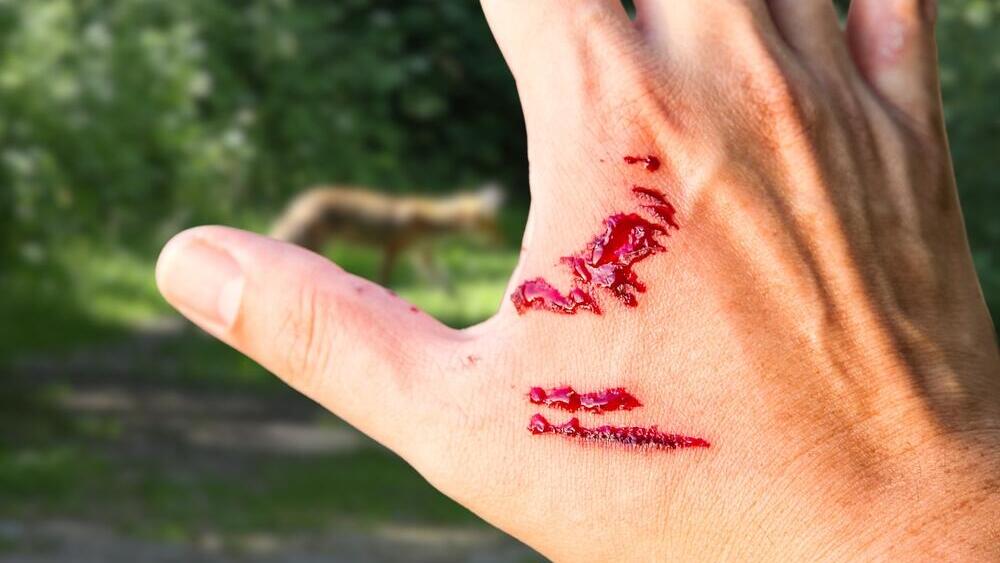
The rabies virus and is transmitted primarily through bites or contact between the saliva of an infected animal and broken skin or mucous membranes
(Photo: shutterstock)
However, because of the war in northern Israel, Shattach Catabi acknowledged that aerial distribution of oral vaccines for wildlife was suspended for a period.
"Because of the situation in the north, there were no flights. Vaccines had to be distributed manually by vehicles and soldiers, and that wasn't sufficient. As soon as conditions allowed, the Israel Nature and Parks Authority launched an extensive campaign to distribute vaccine baits."
The oral vaccine baits are designed for jackals and are not effective for stray dogs roaming open areas, creating an additional challenge as dogs now account for a growing share of infections.
Sadetzki said interministerial forums meet regularly to address the issue, not only in response to individual exposure events.
"The Public Health Division met with the Israel Nature and Parks Authority and toured northern Israel to assess the situation and the work being done to try to eradicate rabies in animals. We invest significant effort in prevention, including public education, because without full public cooperation we will not be able to deal with this problem."
Yael Arkin, CEO of the animal welfare organization Let the Animals Live, said the discussion once again focuses on the symptom rather than the root cause.
"Rabies is a deadly disease, but it can be prevented through a structured policy: enforcing vaccination and registration of pet dogs, preventing stray animals, distributing vaccine baits to wildlife, monitoring high-risk areas, regional cooperation and public education. Emergency responses alone are not enough. Israel needs a permanent, funded national program for managing dog and cat populations. Investing in prevention, surveillance and enforcement will save lives, reduce the need for post-exposure treatment and prove more effective and cost-efficient over time. It's time to move from crisis management to risk management."