

Despite living in an environment severely lacking in nutrients, these organisms have evolved unusually large bodies—a trait that typically requires a significant energy supply. They inhabit the deep ocean, where they face what appears to be a daunting challenge: how to stay alive when food is available only sporadically.
"The region where they live is a kind of cold, dark desert, where food falls like rare snowflakes of dead organic matter," explained Prof. Jianhai Xiang of the Institute of Oceanology at the Chinese Academy of Sciences. "Yet even there, life finds a way."
Gallery
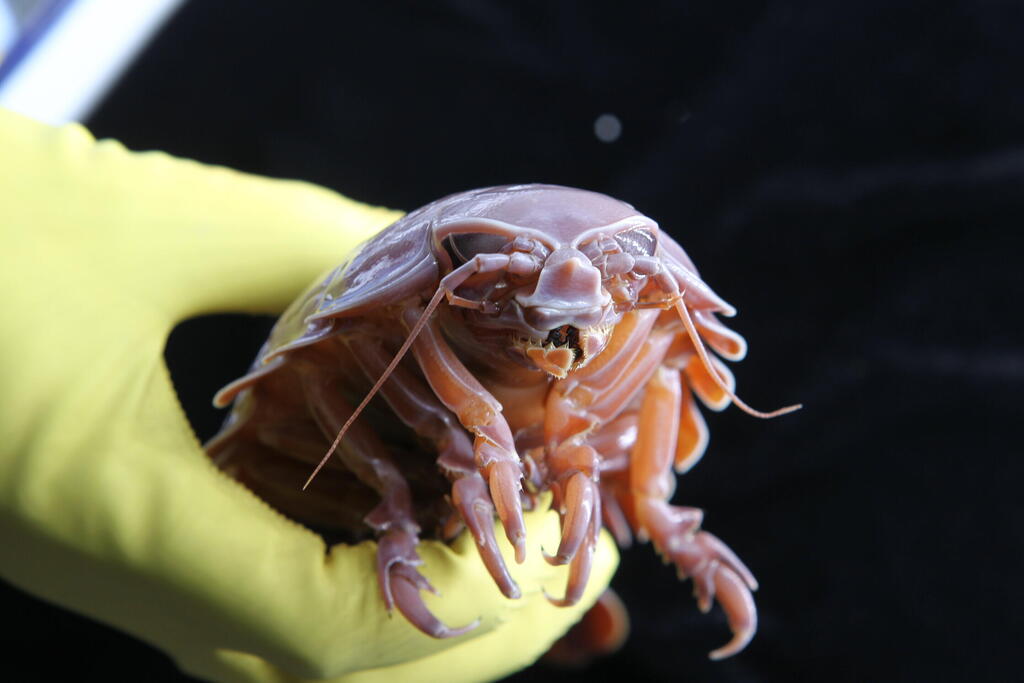
Despite living in an environment severely lacking in nutrients, these organisms have evolved unusually large bodies
(Photo: Prof. Li Xinzheng)
Thanks to their unique biology, these creatures can survive for more than five years without food. A study by Prof. Xiang and his colleagues, published in the journal Cell, found that their solution is both anatomical and genetic: an enormous stomach and an exceptionally low metabolic rate work together with a gene that helps regulate the body's energy production.
The animals are scavengers that inhabit the ocean floor. Equipped with 14 jointed legs and a hard exoskeleton, they thrive in the Atlantic, Pacific, and Indian oceans, with some species growing to more than half a meter in length. Like their terrestrial relatives, they can curl into a ball as a defense against predators.
The researchers focused on two species, Bathynomus doederleini and Bathynomus jamesi, giant isopods that live at depths of about 300 and 900 meters, respectively.
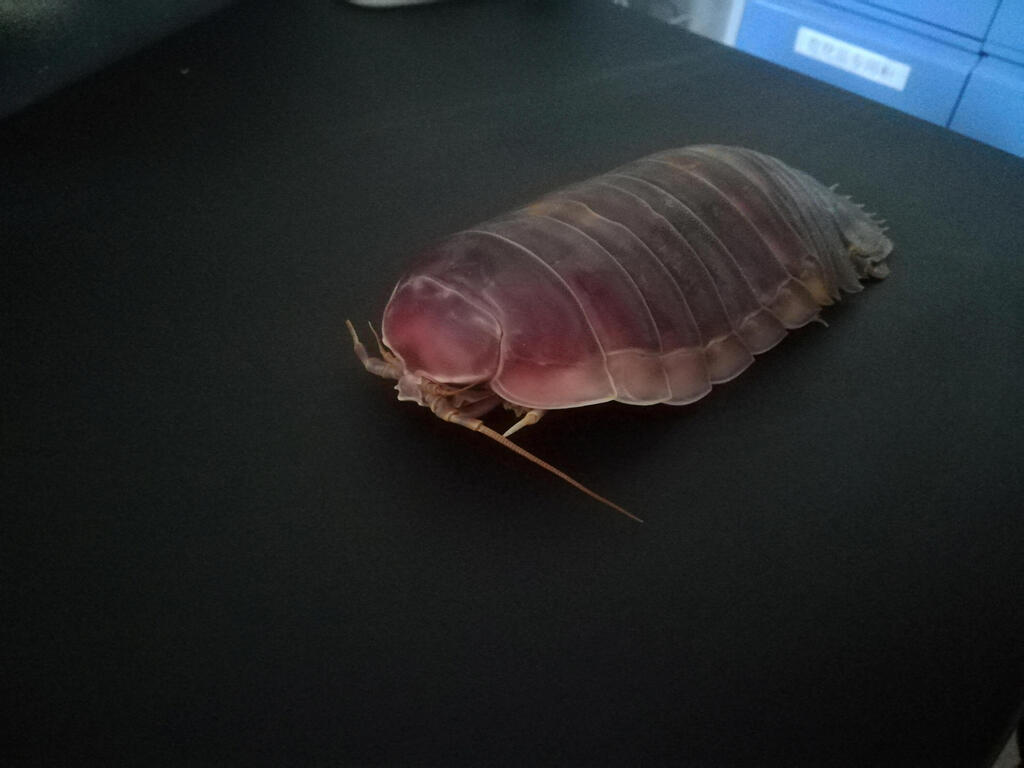
Bathynomus jamesi, giant isopods that live at depths of about 300 and 900 meters, respectively
(Photo: Jianbo Yuan)
"Deep-sea isopods have developed a smart survival strategy of 'earn more, spend less,'" said Dr. Jianbo Yuan of the Institute of Oceanology at the Chinese Academy of Sciences. "In deep-sea species, the stomach occupies about two-thirds of the body cavity, allowing them to store food for extended periods—a stomach far larger than those of their relatives living in shallow waters or intertidal zones. Combined with a low metabolic rate, slow digestion, and efficient nutrient utilization, they can survive on a single meal for years."
The isopods' gut microbiota may also contribute to their remarkable endurance. Chlamydiae bacteria—often associated with disease in humans and other animals—have been linked to fat storage. This may enable the isopods to consume large quantities of food when the opportunity arises and then dramatically reduce their metabolic rate, allowing them to digest and draw on those reserves over long periods.
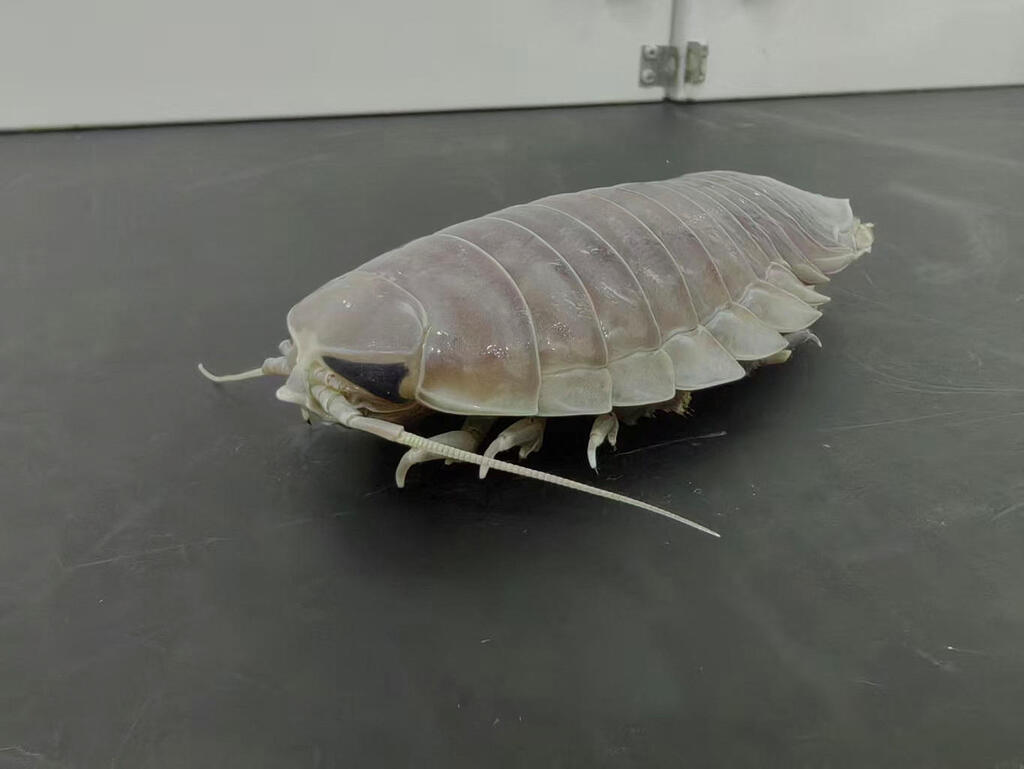
Bathynomus doederleini. Equipped with 14 jointed legs and a hard exoskeleton, they thrive in the Atlantic, Pacific, and Indian oceans
(Photo: Jianbo Yuan)
Their energy regulation may also depend on ND1, a gene that appears to have originated in a symbiotic bacterium that once lived inside these animals before becoming incorporated into their genome. This process, known as horizontal gene transfer, involves the movement of DNA between organisms rather than from parent to offspring.
Because deep-sea isopods are difficult to study alive, the researchers tested the ND1 gene in zebrafish, nematodes, and human cells under laboratory conditions. The gene increased metabolic activity at normal temperatures, but when temperatures dropped—as they do in the deep ocean—it helped conserve energy, supporting long-term survival in the absence of food. In effect, ND1 acts as a metabolic switch, accelerating or slowing energy consumption according to environmental conditions.
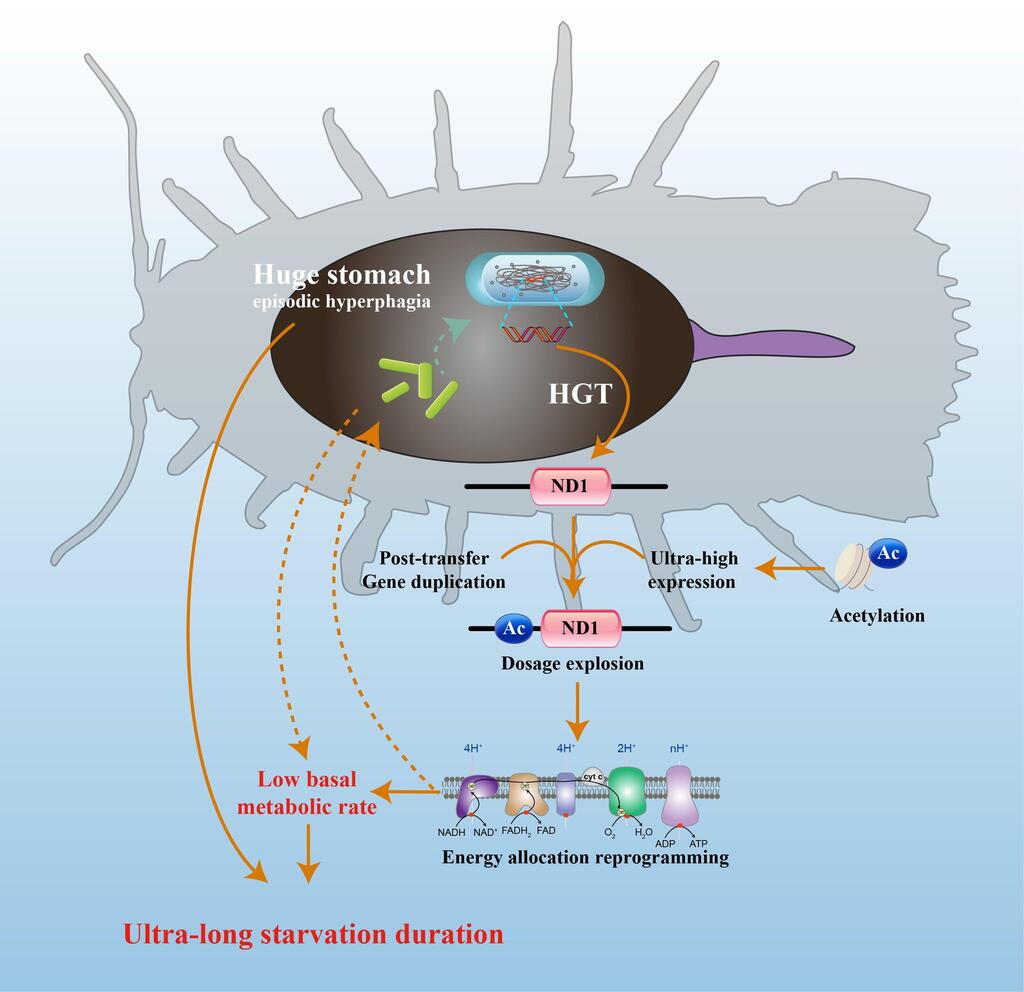
Thanks to their unique biology, these creatures can survive for more than five years without food
(Illustration: Jianbo Yuan)
"Horizontal gene transfer can provide organisms with a faster route to acquiring new traits than conventional inheritance alone, helping some species compete under extreme conditions," said Ka Hou Chu, Professor Emeritus in the School of Life Sciences at The Chinese University of Hong Kong, a member of the research team. "The deep ocean—from 200 meters to nearly 10 kilometers below the surface—is Earth's largest habitat. The extraordinary evolutionary adaptations of life there could lead to future advances in human medicine, energy conservation, and even robotic systems designed to operate for extended periods in extreme environments. Understanding how animals survive severe food shortages may also help us better prepare for life on a changing planet, including disruptions to food webs and climate change," Prof. Xiang added.
According to the researchers, this is the first documented example of an evolutionary strategy in which a deep-sea megafaunal population reprograms its energy allocation through a combination of horizontal gene transfer and epigenetic optimization.
The discovery comes amid growing interest in the deep ocean, as scientists and environmental groups call for a better understanding of biodiversity in these ecosystems before commercial activities, such as deep-sea mining for rare minerals, expand further.