


Many families in Israel are waging a battle with their children in the hope of preventing them from becoming addicted to social media and maintaining a balance between screen time and social life, school, hobbies, physical activity and more. But a new study shows that it is a battle most of us are losing.
The study found that the share of Israeli students in grades 7-12 who are "addicted" to social media has nearly quadrupled in six years, rising from 4.1% in 2019 to 16.3% in 2025. While Israel ranked near the bottom of the European table in this troubling category in 2019, it now ranks fourth, behind Romania, Malta and Bulgaria. The countries where teens have been most successful at escaping this "addictive drug"? Hungary, the Netherlands and Switzerland.
Gallery
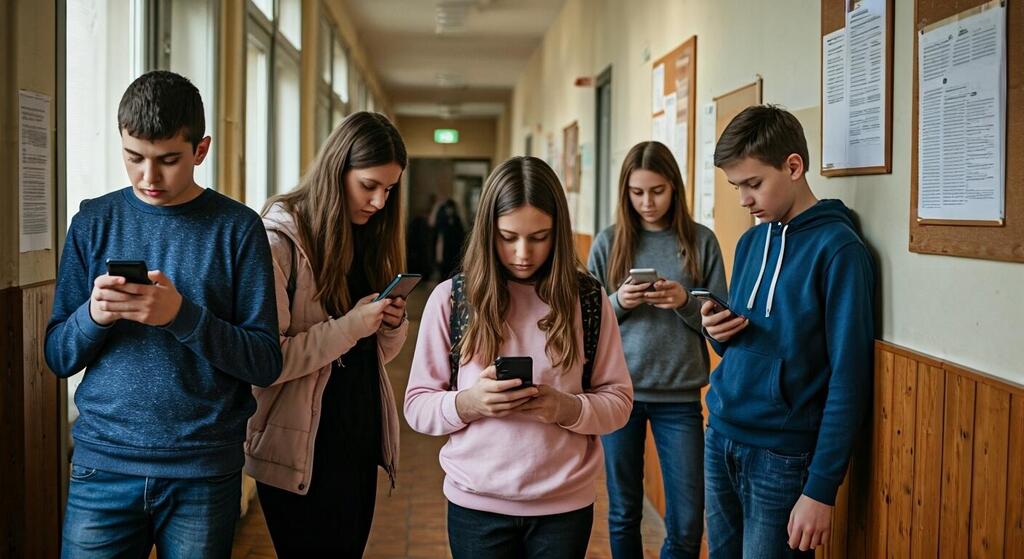
The study found that the share of Israeli students in grades 7-12 who are "addicted" to social media has nearly quadrupled in six years
(Photo: Shutterstock AI)
The findings emerged from the World Health Organization's multinational Health Behaviour in School-aged Children (HBSC) study, whose Israeli component was led by Prof. Yossi Harel-Fisch of Bar-Ilan University's Faculty of Education. The Israeli study was conducted with the cooperation and funding of the Education and Health ministries.
According to the study, which surveyed a nationally representative sample of 7,424 students, 28.7% of teens spend six or more hours a day in front of screens outside school hours. The figure is 32.7% among girls, compared with 24.6% among boys. The share of girls classified as "addicted" to social media is 16.8%, compared with 15.8% of boys. A larger gap was found between population groups: 20.2% of students in Israel's Arab community are addicted to social media, compared with 15.2% of Jewish students.
It is important to note that these are two different measures: screen time and content. While nearly one-third of teens report spending six or more hours a day in front of screens, only about half that number were classified by the study as "addicted" to social media.
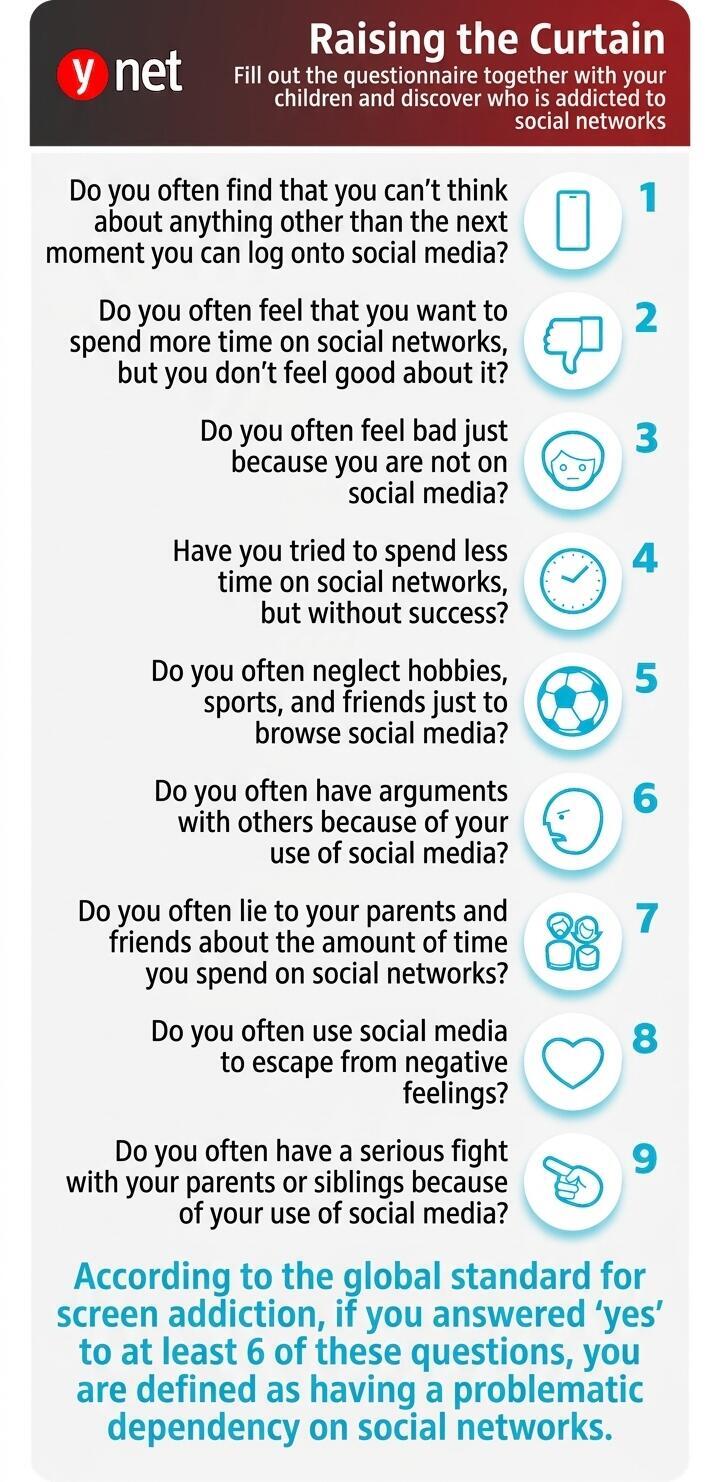
What are they seeing there? Some 32.4% of students said that over the past 12 months they had been exposed on social media to nationalist or antisemitic discourse related to the war.
Another 27.9% of teens were exposed to difficult and offensive content related to the war, while 10.6% of students shared or forwarded such content on social media.
"In 2020, with the outbreak of the COVID-19 pandemic, there was a significant increase in the share of students who developed problematic patterns of use and dependence on social media in all European and North American countries participating in the study, as well as in Israel," Harel-Fisch said. "At that time, when the education system and community frameworks were closed, social media was almost the only means that allowed teens to maintain contact with the outside world, particularly with their friends. However, while screen addiction rates moderated in most European countries after the pandemic ended, the worsening trend continued in Israel, partly because of the prolonged war."

Prof. Yossi Harel-Fisch of Bar-Ilan University's Faculty of Education
(Photo: Bellina Israel, Brookdale Institute)
He stressed that as social media and artificial intelligence occupy an increasingly large role in all of our lives, "the central challenge is not to fight new technologies, but to develop knowledge, skills and habits for safe browsing and smart screen use, in a way that allows for maintaining a healthy balance between the digital world and social encounters, physical activity, community involvement and leisure activities, which are key to reducing addiction."
Dr. Odette Sela, chief scientist at the Education Ministry, said that during the 2026-27 school year, the ban on personal cellphone use during the school day will also be expanded to middle schools. "The decision is based on accumulating research from Israel and around the world regarding the effects of uncontrolled smartphone use on the learning environment, attention and concentration, social interactions and the well-being of children and teens," she said.
Einav Luk, director of the Education Ministry's Psychological Counseling Service, highlighted the important role technology can play: "Research data over the years indicate a steady increase in the extent of screen and social media use. This trend began with the outbreak of the COVID-19 pandemic and intensified throughout the years of the war. The education system, alongside parents, has a significant role in providing tools and skills for responsible conduct in the digital environment. Balanced screen use is essential for developing social and emotional skills, including building relationships, fostering interpersonal communication, strengthening empathy and developing self-image."

Dr. Odette Sela, chief scientist at the Education Ministry
The biggest battle over the issue, as noted, is taking place at home.
"The children are in front of screens from the moment they get home from school until evening, and on vacation days from morning until night — while we come home from work and take their phones away through negotiations," said a mother of three children, ages 8, 11 and 14. "With our oldest, we managed to delay his entry into the world of screens. He was the last child in his class to get a cellphone. The youngest was exposed to screens at age 4.
"It's a complex issue. All three are curious and intelligent children who were accepted into gifted or honors programs, and I have no doubt that their access to information contributed to their development. The youngest, for example, learned to read and write in English at a high level already in first grade, partly because he wanted to understand the games he encountered on screens.
"We want them to have a childhood like ours, with nature trips, ball games, meeting friends and gaining knowledge through experiences, but it's a losing battle. It's hard for the outside world to compete with the thrills the screen offers every second. And we're still looking for the balance, but as parents, we have to admit: We can't keep holding a phone in our hands while at the same time scolding them for putting theirs down. We have a responsibility, too."