

How do you thank someone who donated an enormous sum of $200 million to an institution you lead, while being so intensely private that you have never even met them in person, let alone shaken their hand? Prof. Jonathan Halevy, president of Shaare Zedek Medical Center in Jerusalem, found the perfect solution: he sent Jan Koum, the Jewish-American entrepreneur and WhatsApp co-founder, a short text message.
“I thanked him on WhatsApp. Nothing more natural than that,” he laughs.
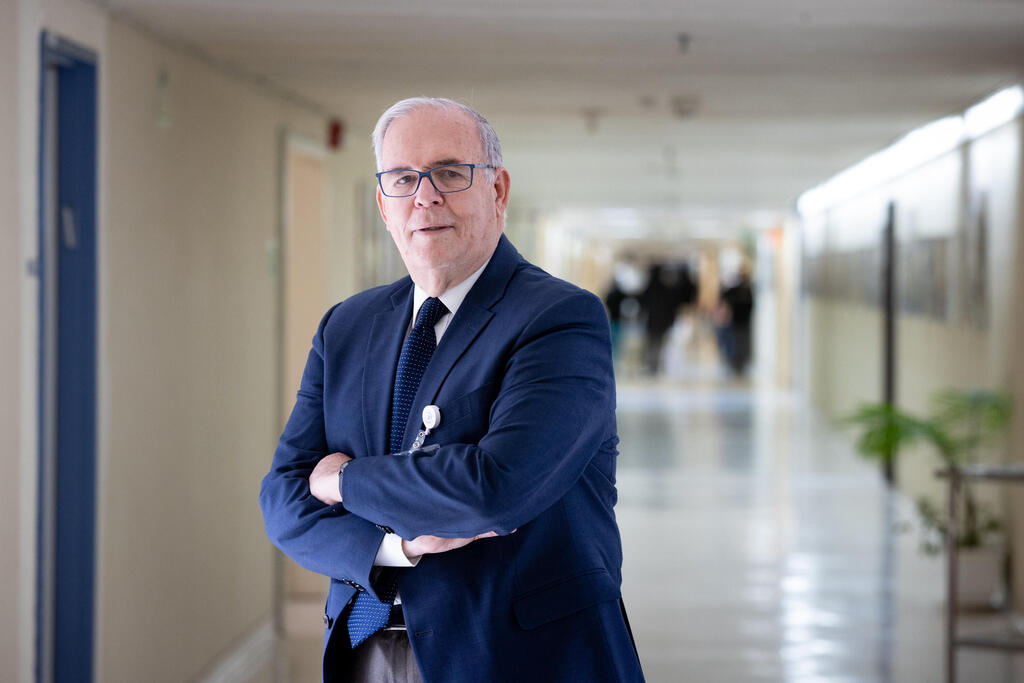
At age 78, Halevy is celebrating on a private vacation with his wife Adina aboard a cruise ship sailing from Hong Kong to Tokyo, marking the largest donation ever made to Israel’s health system. The gift is set to fundamentally reshape medical care in Jerusalem. Behind the staggering sum lies an extraordinary story of modern philanthropy built on trust, extreme discretion, and long-term relationships that have now borne fruit.
Koum, who values privacy to the extent that he refused to include ads in WhatsApp, has never met Halevy face to face. The complex negotiations lasted a full year and were conducted entirely through his foundation’s representative, Yana Kalika.
“Jan Koum is a very discreet person,” Prof. Halevy says in an exclusive interview with Yedioth Ahronoth. “He gave a nanotechnology center to Tel Aviv University, and they awarded him an honorary doctorate. He reviewed every word of the contract with us, every detail had his approval, but there was still no direct meeting. He promised he would come for the cornerstone laying.”
This historic donation, which will be transferred entirely into a restricted account for the new inpatient tower at Shaare Zedek, is the product of a relationship built over a decade. For Prof. Halevy, who led the hospital for 31 years and has served as its president for the past seven, and is also responsible for fundraising, it is nothing less than a life’s work.
“It is certainly an extraordinary achievement to receive a donation of this kind, to earn the trust of such a person,” he says. “Even though the donation process took a year through official channels, the moment of signing itself was very emotional. I immediately called my wife Adina, Ofer Merin the hospital CEO, and my board chairman Ben Zion Hochstein. After 38 years at the hospital, this is a major milestone.”
The agreement did not come overnight. The initial connection with the Koum family foundation began years ago through a smaller project.
“Ten years ago, the foundation requested a proposal for a $15-million project,” Halevy recalls. “We competed with several hospitals. A representative of the foundation received us in the lobby of the Waldorf Astoria in Jerusalem. I presented a plan for a much smaller building of 24,000 square meters, including the pediatric wards and Neonatal intensive care unit, and we won the donation.”
Since then, smaller donations continued regularly, from funding advanced catheterization rooms to special grants during the COVID-19 pandemic. According to Halevy, everything was based on delivery and trust.
“When you keep your word to a donor, when you promise a project will be completed on time and it is, when you stay within budget and deliver naming rights as promised, trust is built,” he says. “Probably two months ago, when Koum turned 50, he rethought things and wanted his name on a hospital in Israel. This time there was no competition. He approached me directly.”
Despite being a record-breaking gift, the negotiations were tough and highly detailed.
“We spoke for a year about the contract wording and the milestones,” Halevy reveals. “I wanted $250 million, he wanted $180 million. In the end, we settled on $200 million. Koum is an architecture enthusiast, he liked the tower design. It’s truly spectacular.”

A new inpatient tower at Shaare Zedek Medical Center
(Illustration: Sadeh Dagan Architects)
The landmark agreement includes six strict payment stages designed to ensure the architectural vision of the tower, designed by renowned hospital architect Dagan Mochly, becomes reality on the ground.
“Their interest was that construction should take as little time as possible,” Halevy continues. “The first $20 million arrived the day after the signing. The next payment will be transferred after we submit a detailed plan of what each floor will contain, and the third when we begin excavation. I committed that this would happen no later than April 2027. Koum stipulated that the funds can only be used for one purpose: building the tower, and I fully support that.”
The personal connection with the donor
In the world of philanthropy, where medical institutions compete for every dollar, Prof. Halevy follows a clear philosophy.
“It doesn’t happen overnight,” he explains. “My assistant Akiva Holzer, who is responsible for special projects in the development department, opens doors for me. Together we held dozens of meetings on this topic, some in San Francisco where the foundation is based.”
Behind major fundraising efforts lie less marketing and public relations and more psychology and meticulous preparation. The personal and social bond Halevy builds with donors is, he says, essential, and he often finds himself acting as their informal physician to build that trust.
“Rule number one in fundraising is people give to people,” he says. “People give to people, not institutions.”
“I’m an internist and gastroenterologist by training, and through that I’ve met many donors,” Halevy shares. “Some I met because their children were in Israel. Twenty-five years ago, Joshua Kushner, brother of Jared Kushner, was studying in a yeshiva here and broke his arm playing basketball. On a Friday afternoon, two hours before Shabbat, his father called our office. I was told to come in. I didn’t even know who Charles Kushner was. I’m not an orthopedic surgeon, but I treated his son. Since then, I’ve treated other family members. That helped secure a $20-million donation.”
Halevy explains that due diligence on donors is at the core of modern fundraising.
“You do your homework on the donor, including why they gave in the past. When you learn that a donor’s father died of colon cancer, you suggest naming a colon cancer unit after him. You talk about genetics and early screening. That’s how the personal connection is formed. All our donors are connected this way.”
He adds with a smile: “And of course, for every big donation, there are many rejections.”
According to Israel’s Ministry of Health report for 2024, total donations to the health system in 2023 amounted to 235 million shekels ($81 million), an 87% increase compared to 2022. The heavy reliance of Israel’s public health system on wealthy donors abroad often sparks justified criticism.
Halevy, whose 31-year tenure transformed Shaare Zedek from a 300-bed community hospital into a 1,000-bed medical center, pushes back against the framing.
“Don’t turn my legacy into a legacy of begging,” he says, but refuses to turn the structural reliance into political criticism. “All hospitals raise funds, some more successfully than others. Thanks to the health funds and the National Health Insurance Law, our operating budget of 2 billion shekels ($690 million ) is balanced. But when it comes to development projects, replacing an MRI after four years instead of ten, or buying a new PET-CT, the Ministry of Health struggles to fund it.”
“For 31 years as CEO, 20% of my time went to fundraising in Israel and abroad. It’s a necessity I don’t condemn. I’m not complaining. Every citizen should be satisfied with the healthcare they receive. The first responsibility of a hospital CEO is to recruit the best doctors, the most humane and professional. 25% of our patients come from outside Jerusalem for complex surgeries. I would have preferred to spend my final years without needing to raise funds, but I’m proud I managed to do both.”
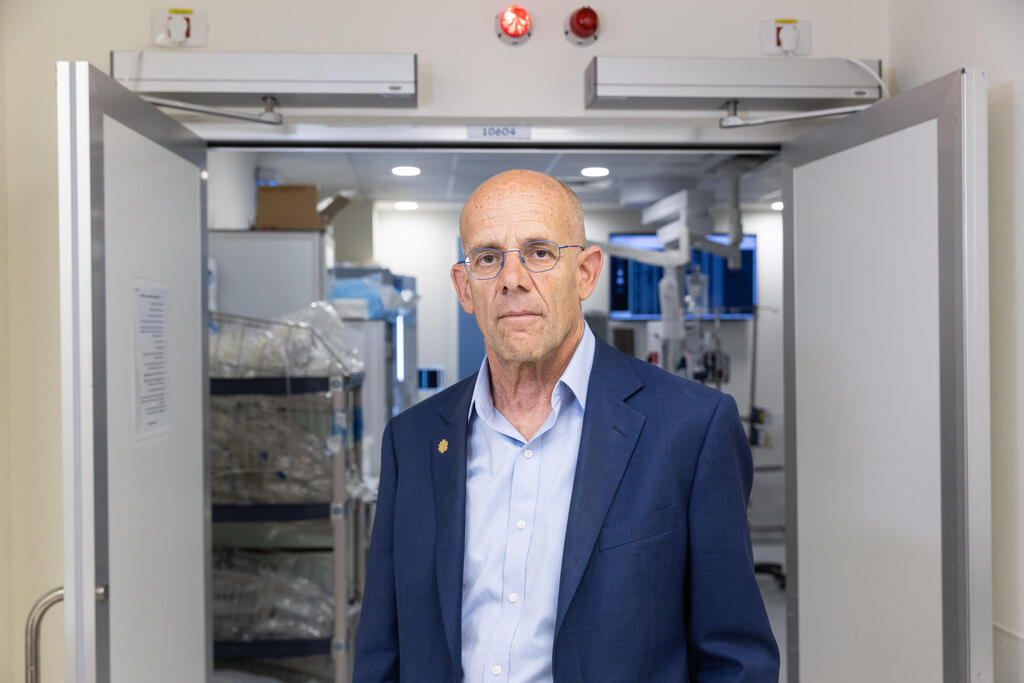
Ofer Merin, the hospital CEO
(Photo: Alex Kolomoisky)
“Are there donations you would refuse? If tomorrow a controversial Russian oligarch or a tycoon involved in criminal cases offers you $100 million that could save the lives of hundreds of children, do you accept or refuse on moral grounds?”
“We always do a background check. If the source of the money is questionable, I won’t take it, and there have been such cases.”
Does the security situation of the past two and a half years make fundraising harder?
“For Jewish donors around the world, antisemitism and anti-Israel sentiment actually strengthen their connection to Israel. I would even say it’s easier to raise funds since October 7. At Shaare Zedek we treated 2,000 wounded patients who were flown in by helicopter from Gaza. That resonates deeply with them.”
Have colleagues from other hospitals called to congratulate you?
“Absolutely. I received many messages. I was a bit disappointed that the director general of Hadassah was not among them.”
Robots in the operating room
A patient walks into a short corridor at the entrance to the new neurology clinic. He does not notice the dozens of tiny embedded ceiling cameras, nor is he aware that every step he takes is being analyzed from thousands of angles. The computerized system silently scans his pelvic stability, walking pace and subtle symmetry of movement invisible to the human eye. When he sits in front of the doctor minutes later, a precise diagnosis already appears on the computer screen, integrating his physical data with tens of thousands of previous patients.
In the adjacent corridor, a dedicated elevator opens without a sound. A small robot emerges carrying a box of medication sent with a single click from the central pharmacy. It navigates smoothly through a sterile route, completely separate from patients and staff, and delivers its cargo to its destination. Several floors below, in the operating rooms, mechanical arms guided by advanced AI algorithms already complete entire parts of complex surgical procedures under the watchful eye of the surgeon.
This description, which sounds like a scene from science fiction, is not a distant vision or the fantasy of Silicon Valley architects. It is the strategic roadmap of the new Shaare Zedek tower, which will span 150,000 square meters (around 179,398 square yard) and be built over six years thanks to Koum. The result is expected to reshape hospitalization in Jerusalem.
The new tower will rise 21 floors above ground (plus three underground levels and a helipad), increasing bed capacity from 1,000 to 1,800. Sixty percent of the building will be fully fortified, in addition to one of the underground floors that will be pre-built as an emergency hospital. “We won’t need to move patients from the 13th floor down underground,” says Prof. Ofer Merin, CEO of the hospital.
Today, Shaare Zedek already serves as a major emergency medical hub for hundreds of thousands of metropolitan residents due to its topographical location. “In designing the new building, the emergency department must be highly accessible,” Merin says. “We will design a separate ambulance route with rapid exit from the highway, and shorten internal distances. Trauma studies show that in centers where the distance between the trauma room and CT exceeds 100 meters (about 109 yards), outcomes are worse. For 5% of these patients, one or two minutes make the difference between life and death. If you optimize that chain, you save lives.”
The main challenge facing planners of the new tower is not only precise architecture or adding hundreds of hospital beds, but designing the medicine of the future through full integration of cutting-edge technology.
“There are several trends in medicine we must prepare for,” Merin says. “The first is population aging. Many patients, especially older ones, are better treated at home in their familiar environment. The system must be ready for that. This will mean doubling intensive care capacity for the most severe cases.”
Hospitals, he predicts, will increasingly focus on extremes: very short admissions for patients who can be treated in a day and discharged, and long-term hospitalizations for patients whose lives can now be extended due to technological advances.
“Less invasive surgeries will allow patients to be quickly transferred to outpatient care,” he says. “On the other hand, there will be very long admissions for complex cases where we manage to save patients who would not have survived before. More and more, we will tailor treatment to the patient rather than the disease.”
Robotics and automation, Merin adds, will completely reshape hospital operations.
“Today, if you need a medication from the pharmacy you ask a staff member to go get it. That will disappear in the coming years. Someone will press a button, and a robot will travel in a dedicated elevator and deliver the medication.”
The change will also reach the operating room, where surgery is increasingly algorithm-driven.
“Robots already assist in surgery today, but in the next generation, AI will perform significant parts of operations,” says Merin, a cardiac surgeon by training. “In our lifetime, we will not see a surgeon sitting in a café while a robot removes a gallbladder, but its presence will gradually diminish.”
Communication with patients will also change completely.
“There will be WhatsApp communication — which Koum will appreciate — between caregivers and patients. Families will be able to schedule 10-minute update calls with doctors in the evening from home, instead of waiting in hospital corridors for hours.”
For Merin, technology is not replacing doctors but restoring the human element.
“If today I spend 15 minutes with a patient, 10 minutes are spent synthesizing data and typing. In the near future, conversations will be automatically transcribed and entered into the medical record. The computer will synthesize lab results, and the freed-up minutes will be used to hold the patient’s hand and speak with the family.”
Alongside this ultra-modern innovation, which also includes a sweeping shift to private inpatient rooms for one or two patients to ensure maximum privacy, Prof. Merin draws a firm and unequivocal line about what will not happen in the new tower: private money will not buy priority treatment or preferential conditions. The future tower, he argues, will remain public and equal.
“There will be no VIP rooms here,” he says firmly. “Those kinds of rooms create deep social resentment. I say this as a matter of personal conviction.”
Some would argue that sounds naïve.
“If there is one thing the state must preserve at a value level, it is that healthcare remains public and equal. It is unthinkable that someone with money gets different food or a different room. This is not Assuta. We are a public hospital and we will remain so. The beauty is that people from different parts of the city will lie side by side, no matter where they come from. That will not change, I guarantee it.”
Chronic staffing shortages
Building a monumental 24-story medical tower also carries major operational and financial risks. Large modern infrastructures bring with them astronomical maintenance costs. If physical expansion is not perfectly aligned with budgets, regulation and human resources, they can become expensive white elephants that drain institutional resources.
The strategic response of Shaare Zedek’s leadership is based on a cautious, modular approach to phased opening. The tower is expected to be completed within six years, but occupancy and operations will be implemented in controlled stages.
“The operating cost is very high,” says Prof. Merin. “That’s why we won’t open the entire tower at once. In the first years, entire sections will remain closed behind temporary drywall as we scale up. We aim to open beds and services gradually, carefully, in line with budgets and staffing capacity.”
Another layer of operational readiness involves built-in infrastructure redundancy for critical equipment that has not yet been invented.
“We are already planning the new emergency department, which will span 10,000 square meters (around 12,000 square yards) on a single floor. Today a major part of emergency care is imaging. I want ultrasound, CT and MRI. But in 10 years a device will exist that I don’t even know the name of. So we are reserving space for it already.”
One of the most acute challenges the hospital will face in the coming years is human capital. Israel’s healthcare system is experiencing a deep and chronic national shortage of doctors, nurses and paramedical staff. New hospital beds and advanced facilities cannot function without caregivers.
“There is a doubling in the number of medical students, and the state is working toward a better doctor-to-population ratio, and phased opening will ease demand,” says Merin. “I am more concerned about our ability to recruit the best people. Jan Koum’s donation will also help us with that. When I tell potential staff where we are headed, it attracts them.”
Competition with Hadassah
Jerusalem’s healthcare system in recent years has been shaped by an intense clinical duopoly that sometimes resembles fierce corporate competition more than cooperation between hospitals. The rivalry between Shaare Zedek and Hadassah creates an ongoing battle over budgets, staff and reputation. The arrival of a mega-donation of this scale into Jerusalem not only strengthens Shaare Zedek, which has gained popularity in recent years at the expense of its long-standing rival, but may also trigger what industry observers describe as an “arms race” in technology and infrastructure, with each institution fighting for patients.
“Healthy competition is good for the consumer, and in our case the consumers are the patients,” says Prof. Halevy. “The people of Jerusalem will only benefit from this.”
“Of course there is competition, everyone wants to be the best. I cannot exempt myself from that,” agrees Prof. Merin. “But it must be done with mutual respect and collegiality. I’ve been in this role for seven years. No one has ever heard me say anything disrespectful about our neighbors.”
Alongside the dramatic changes at the hospital, there will also be a symbolic one: the addition of the donor’s name to the medical center, a recognition usually reserved for top figures in the healthcare system.
“I made it clear from the beginning that the hospital will continue to be called Shaare Zedek,” says Prof. Halevy. “It will be ‘Koum Shaare Zedek Medical Center.’ He accepted that.”
Do Koum or his representatives have veto power or influence over the nature of the departments in the new tower?
Prof. Merin: “Koum was very focused on the architectural side. He wanted to see how the building looks, when excavation begins and when plans are approved. We have a clear agreement with him. He will not say: I want an internal medicine department or a surgery department. Absolutely not.”
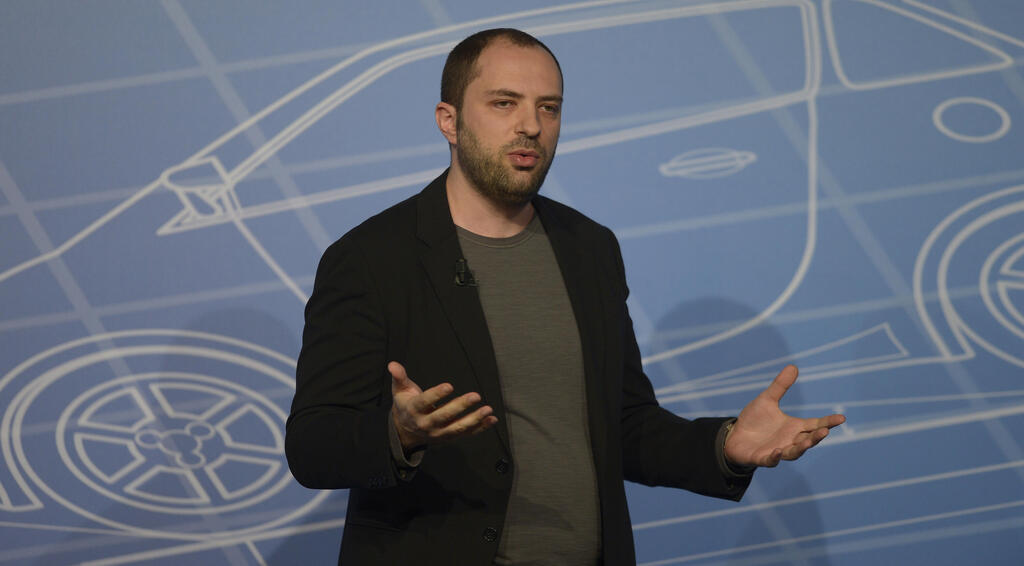
Jan Koum
(Photo: Manu Fernandez/AP)
Who is Jan Koum? The Jewish immigrant who became a billionaire
When people say the United States is the land of limitless opportunity, they are referring to inspiring stories like that of Jan Koum. He was born in 1976 in the Soviet Union to a Jewish family in a town near Kyiv. It was the late twilight of the Soviet empire — antisemitism was rising and the economy was on the verge of collapse. Koum later said he grew up in a poor home without hot water.
In 1992, he immigrated to the United States with his mother and received refugee status. They settled in Mountain View in Silicon Valley.
Sixteen-year-old Koum enrolled in a local high school and had to quickly master English. To help support the family, he worked cleaning and stocking shelves in a grocery store while his mother relied on welfare food stamps.
But Koum built himself from the ground up with determination and some luck. He later worked at Yahoo as a programmer alongside his friend Brian Acton, who helped him get the job. A decade later, they left and founded WhatsApp.
They secured backing from venture capital firm Sequoia Capital, which invested tens of millions of dollars in the company.
In 2014, WhatsApp was sold to Facebook for $19 billion. Koum’s fortune is estimated at more than $10 billion. He stepped down from WhatsApp and Facebook’s leadership and now focuses on investments and philanthropy.
Even before the Shaare Zedek donation, Koum had donated more than $150 million to Jewish and Israeli organizations. He is considered one of the world’s major Jewish philanthropists and has funded groups fighting antisemitism in the United States. His worldview is often described as politically conservative, and among the organizations he has supported is the Elad Association, which promotes Jewish settlement in East Jerusalem.
“We are proud to partner with an institution that defines medical excellence in Jerusalem and beyond," he said on the Shaare Zedek donation. "This donation reflects our confidence in the future of medical innovation and research that will benefit patients in Israel and around the world.”