


Bars remain a gathering place for young people, but alcohol is playing a less central role than it once did. Something is changing in the way young people socialize. Alcohol is no longer always considered an essential part of a night out, and alongside beer and cocktails, more nonalcoholic drinks and soft drinks can be found.
At the same time, running groups and fitness classes are becoming gathering places in their own right. Data from various sources points to a shift in habits among at least some young people: less drinking, more spending on fitness and other ways of spending time together.
Gallery
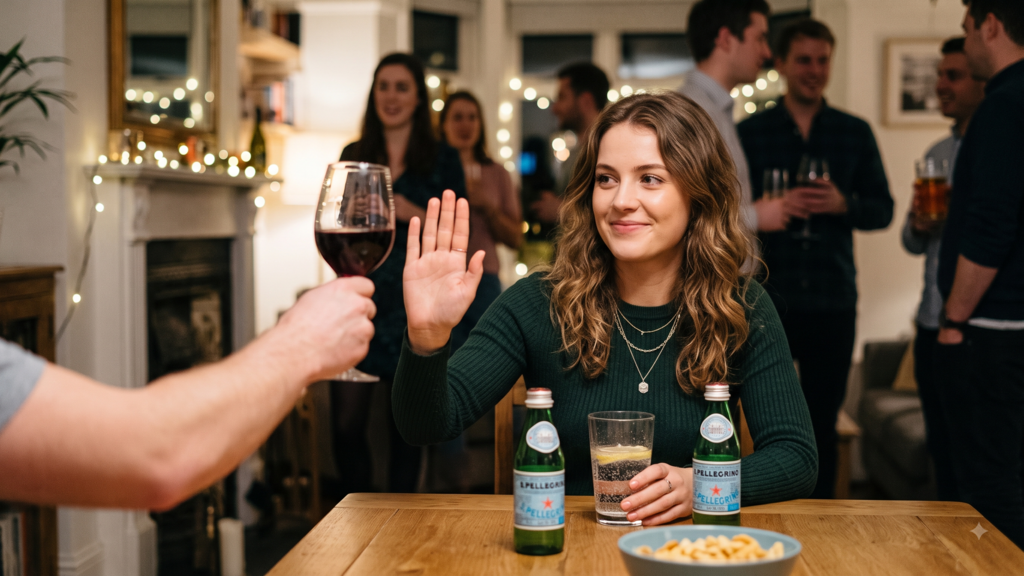
Alcohol is no longer always considered an essential part of a night out
(Photo: AI-generated image)
According to Gallup’s 2025 consumption habits survey, only 54% of adults in the United States said they consume alcohol. This is the lowest rate since Gallup began tracking Americans’ drinking habits in 1939. Among young adults ages 18 to 34, the share of drinkers fell from 59% in 2023 to 50% in 2025.
Additional evidence of the trend comes from the annual National Survey on Drug Use and Health conducted by the U.S. Substance Abuse and Mental Health Services Administration. Data from 2025, published by ABC News, shows that, among those ages 12 to 17, there was a decline in the share reporting tobacco use, alcohol consumption and binge drinking in the month before the survey. A decline was also recorded among teenagers reporting illicit drug use during the previous year.

More young people are abstaining from alcohol, but are they converting one addiction into another?
(Photo: Shutterstock)
Among those ages 18 to 25, there was a decline in the share reporting use of nicotine products, tobacco, cigarettes and alcohol, as well as binge drinking, during the 30 days before completing the survey. A decline was also recorded in the use of illicit drugs, prescription stimulants and opioids during the previous 12 months.
From bar stools to weights
At Bank of America’s research institute, the phenomenon has already been given a name: “The Great Moderation.” In a new report, the institute’s economists analyzed aggregated credit and debit card spending data from 70 million accounts belonging to individual customers and small businesses. According to the report, young people are changing not only their drinking habits, but also the places and ways in which they choose to meet and socialize, USA Today reported.
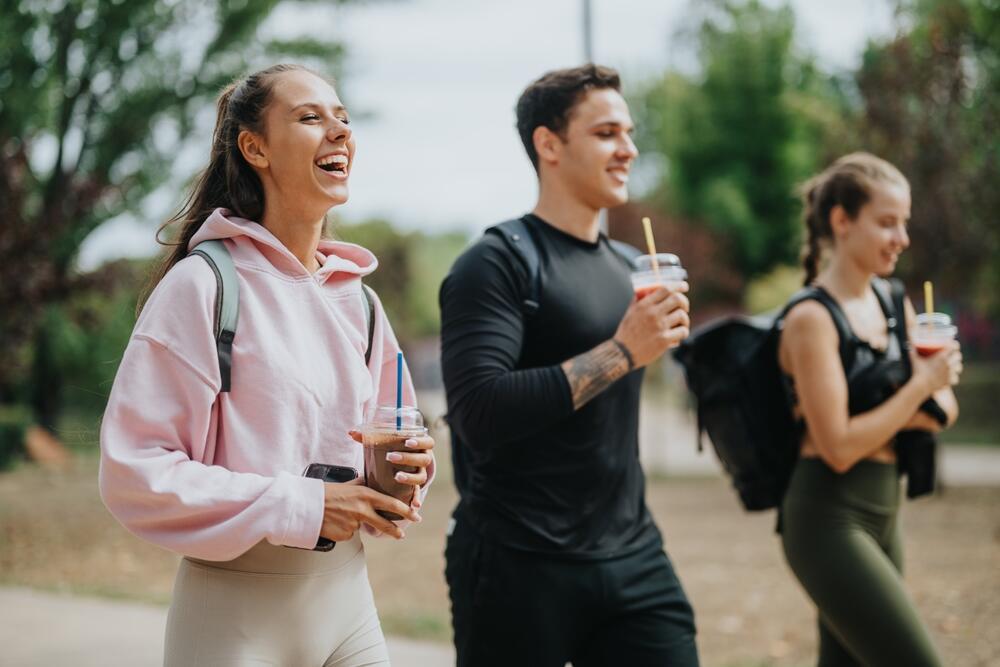
More young people today choose to go out without alcohol being a necessary part of the evening
(Photo: Shutterstock)
According to data from the U.S. Substance Abuse and Mental Health Services Administration cited in the report, the number of people ages 50 and older who reported binge drinking has increased over the past decade. In contrast, the number of people ages 21 to 34 who engaged in binge drinking declined by nearly 3.9 million, offsetting the increase among older adults. At the same time, the share of household budgets allocated to alcohol is now close to the lowest level recorded in nearly 40 years, according to data from the U.S. Bureau of Labor Statistics.
The decline in alcohol spending is not solely the result of price changes. In January, spending at liquor, wine and beer stores fell 5% compared with the previous year, while spending at bars increased by 4%. According to the report, people may be drinking less at home while still maintaining their desire to go out and socialize. Bars, for their part, have adapted to the shift by expanding their selection of nonalcoholic cocktails and beers and adding food options and social activities. The choice to go out without drinking also has become more socially accepted.
At the same time, young people are spending more on physical activity. Bank of America data showed a roughly 9% increase in Generation Z spending on fitness-related categories, compared with growth of less than 4% in spending at bars. In a survey by fitness app Strava, which included more than 30,000 participants, 30% of Generation Z respondents said they planned to spend more on fitness in 2026. The number of new sports and activity groups created on the app quadrupled in 2025, and roughly 1 million groups are now available on the platform.
What is happening in Israel?
In Israel, the picture is more complex. The latest wave of the longitudinal study by the Israel Center on Addiction and Mental Health (ICA), based on a series of samples, does not indicate an overall decline in problematic alcohol use. The data was collected in April and May 2026 from a sample designed to approximately represent Jewish adults in Israel ages 18 to 70. The rate of problematic alcohol use stood at 12%, exactly the same as in February 2025.
 Prof. Shauli Lev-RanPhoto: Rami Zarnagar
It is important to distinguish between these figures and the Gallup survey. Gallup examined how many people consume alcohol, while ICA examined problematic use through the ASSIST questionnaire, a widely used research tool for assessing the level of risk associated with substance use. Therefore, the Israeli figure does not refer to everyone who drinks and does not necessarily indicate addiction.
“In Israel, the data does not indicate particularly low rates of alcohol consumption among young people, nor does it show a significant decline compared with the past,” said Professor Shauli Lev-Ran, founder and academic director of ICA — the Israel Center on Addiction. “However, it is important to emphasize that we are talking about young adults ages 18 to 25 and not teenagers. Compared with other adult age groups, this age group showed relatively low rates of problematic use of tobacco, any drug or alcohol. In that sense, the data aligns with the trend being described around the world.”
However, lower rates compared with other age groups are not necessarily low in absolute terms. In an analysis of 930 people ages 18 to 35, about a quarter of participants, 25.4%, reported problematic use of alcohol or another substance. Problematic alcohol use was found among 20% of men compared with 8.3% of women. When alcohol and drug use were examined together, 30.9% of men and 21.5% of women crossed the threshold.

Running groups and fitness training are also becoming meeting places and part of social entertainment
(Photo: Shutterstock)
The problem does not necessarily end after military service or studies. Problematic substance or alcohol use was found among 28.5% of people ages 27 to 35, compared with 22.5% among those ages 18 to 26. Among those who served in the military or reserve duty, problematic alcohol use was found at a rate of 20.7%, compared with 10.7% among those who did not serve. The data indicates an association, but does not prove that military service caused the increase, as the groups may differ in other characteristics.
Less alcohol, more screens?
According to Lev-Ran, if young people are indeed drinking less, it does not necessarily mean they are experiencing less distress or need fewer external tools to help them cope. “The starting point is that when we, as individuals or as a society, have difficulty regulating ourselves, we turn to an external behavior that helps us regulate ourselves,” he explained. “One possibility is that young people are simply better regulated and therefore need fewer external tools, but there is no reason to assume that this is the case, especially when we are seeing more young people dealing with anxiety and depression. If they are truly turning less to alcohol, it is possible that there has been a shift to another behavior.”

creens, social media and other behaviors may take the place of alcohol
(Photo: Shutterstock)
Those entering their twenties today are effectively the first generation to grow up with smartphones. In 2013 and 2014, children around the age of 10 began receiving their first smartphones. Screens existed before that, but the technology became available everywhere and at all times. According to Lev-Ran, this means that even when the difficulty is not extreme — for example, during a moment of boredom, frustration, an argument with parents or a feeling of social rejection — people can immediately reach for their phones and disconnect from the negative emotion.
Availability is not the only difference. Unlike an alcoholic drink, which remains the same with every sip, algorithms learn the user and tailor content personally to them. Behind the apps are corporations, programmers and behavioral experts whose goal is to keep users in front of the screen. Social networks add constant comparison with others, which can make people feel worse about themselves and once again increase the need to disconnect.
ICA data also points to this possibility. Among younger age groups, researchers found lower rates of problematic use of some substances, but higher rates of problems related to computer games, gambling, social media, internet use and irregular eating patterns. Problematic internet and social media use was found to be almost as common as problematic alcohol use. Therefore, a decline in one substance does not necessarily indicate that the underlying difficulty has disappeared, but may reflect a change in the way it is expressed.
The reality in Israel adds another layer. An ICA study conducted during the Iron Swords war among 1,084 young adults ages 18 to 26 found that those who had been evacuated from their homes reported higher levels of anxiety and depression, as well as more problematic alcohol use and higher levels of gambling. The link between evacuation and problematic alcohol use and gambling was particularly notable among men. This study also found correlations only and does not prove that the evacuation itself caused the increase.
Another study by the center, conducted among the same age group during the war, found that the more young people felt their lives had meaning, purpose and direction, the less they reported depression and anxiety and problematic use of alcohol, cannabis and prescription drugs. A stronger sense of meaning was also associated with less gambling, computer gaming and problematic pornography use. The links remained even after researchers accounted for differences in age, gender, economic and family status and religiosity.
An attempt to regain control
Alongside screens and addictive behaviors, some young people may be turning in a completely different direction: fitness, nutrition, wellness and longevity. According to Lev-Ran, the growing focus on these areas is not necessarily only about appearance. In a world that feels chaotic, amid wars, canceled flights and constantly changing plans, the body may become one of the few areas where people feel they still have control.
“When a young person feels that the world around them is chaotic and unstable, they may try to regain a sense of control through the only thing they can still influence — themselves,” Lev-Ran said. “In that sense, focusing on wellness and fitness may serve as a coping mechanism. It is not only about wanting to look good, but also about trying to gain control over the body in a reality of uncertainty.”

Engaging in fitness and wellness may provide a sense of control in an unstable reality
(Photo: Shutterstock)
According to him, both trends are occurring simultaneously in Israel. On one hand, physical fitness occupies a central place in a society where many people train before and during military service. On the other hand, a reality filled with trauma can also trigger a desire to disconnect or “numb yourself.” Therefore, it is difficult to point to one clear direction: different young people turn to different, and sometimes opposite, coping mechanisms.
The health cost of alcohol
Another possible explanation for the decline in drinking is growing awareness of alcohol’s harms. For years, public attitudes toward drinking were more forgiving than attitudes toward smoking, and it was sometimes claimed that moderate consumption could protect health. According to Lev-Ran, only in recent years has information about the risks associated even with amounts once considered small begun to take hold.
These messages are supported by a growing body of research. Professor Tzipi Strauss, director of the Longevity Center at Sheba Medical Center, points to a large meta-analysis published in 2023 in JAMA Network Open that included 107 cohort studies and about 4.8 million participants.
 Prof. Tzipi StraussPhoto: Sheba
After correcting for methodological biases, low alcohol consumption was not found to be associated with a significant reduction in all-cause mortality. Among women, a significant increase in mortality risk was found beginning at consumption of about 25 grams of alcohol per day or more. A British study involving more than 135,000 adults also found no reduction in heart disease risk among moderate drinkers compared with those who drank only occasionally.
The data is also significant regarding cancer. An article by World Health Organization experts published in 2023 in The Lancet Public Health emphasized that alcohol is classified as a known human carcinogen and is causally linked to at least seven types of cancer. These include breast, colorectal, liver, esophageal, stomach, head and neck cancers. Even low consumption carries risk. According to a report by the American Association for Cancer Research, alcohol was associated with 5.4% of cancer cases in 2019.
“From a longevity medicine perspective, cumulative exposure to alcohol already at young ages has implications for future risk of chronic disease,” Strauss explained. “The goal is not only to add years to life, but to reach later decades with as many healthy years as possible. What we do at age 20 is part of the health we will have when we reach 60.”
According to Strauss, alcohol is not a tool for improving health and there is no medical justification for beginning to drink in order to “protect the heart.” “There is no need to turn an occasional glass of wine into a threat, but there is also no reason to attribute health benefits to it,” she said. This is compounded by the possible effect on sleep: even drinking one glass a day can harm restorative sleep, reduce REM sleep, increase awakenings and worsen anxiety.
he harms of alcohol can accumulate from a young age and affect health later in life
(Photo: Shutterstock)
Another study published in the journal Cancer, which followed more than 88,000 people for up to 20 years, found a link between heavy, prolonged alcohol consumption and colorectal cancer. Compared with people who drank less than one drink per week throughout their lives, consuming 14 drinks per week or more was associated with a 25% increase in colorectal cancer risk and nearly double the risk of rectal cancer. Among people who drank heavily throughout adulthood, the risk of colorectal cancer increased by 91%.
Not only the total amount matters, but also the way alcohol is consumed. A study involving more than 8,000 adults found that binge drinking even once a month was associated with an increased risk of liver scarring. Among people with metabolic fatty liver disease, consuming four or more drinks per day for women and five or more for men at least once a month was associated with a nearly threefold higher risk of advanced fibrosis. Even when the total weekly amount was similar, the risk was higher among those who consumed a large amount at once.
The damage may also reach the brain. A study published in the journal Neurology that examined 1,600 adults hospitalized after intracerebral hemorrhage found that those who drank three or more drinks per day suffered hemorrhagic strokes at an average age of 64, compared with 75 among those who drank less. Their brain hemorrhages were about 70% larger on average, and they showed more signs of damage to the brain’s small blood vessels, which is associated with the risk of dementia and cognitive decline.
Is one substance replacing another?
The decline in alcohol consumption and cigarette smoking is not evident across all substances. According to the annual National Survey on Drug Use and Health conducted by the U.S. Substance Abuse and Mental Health Services Administration, the share of people ages 12 and older who reported nicotine vaping in the month before the survey rose from 8.3% in 2022 to 10.1% in 2025. The share of people ages 12 and older who reported cannabis use in the previous year increased from 19% to 21.2%.
Cannabis may also be perceived in Israel as a less harmful alternative. According to Lev-Ran, Israel is a country where cannabis use is relatively accepted, and its branding as “medical” cannabis sometimes reinforces the perception that it is safe. This is compounded by the belief that a “natural” substance is automatically healthier. According to him, other factors, including the nature of cannabis’ effects and the backpacking culture common among many young Israelis, may contribute to the preference for cannabis over alcohol.
Taste is also a social matter
The way taste develops may also play a role. According to an article published by Brandeis Stories, the experience of taste is not determined only by the tongue, but is created through a combination of smell, sound, appearance, texture and social context. In a study conducted in Germany, for example, the sound of crunching played to participants through headphones affected how they rated the taste of potato chips. Other studies have shown that even changing the color of candy can alter the taste people associate with it, despite the ingredients remaining identical.
Preferences considered an “acquired taste” also develop through experience and social context. Beer may initially taste unpleasant, but become more appealing when drinking takes place in an enjoyable environment that strengthens a sense of belonging. If the connection between alcohol and socializing weakens, the attraction to the drink itself may also decline. However, this is only a possible explanation and has not been proven to be the reason some young people are drinking less.
Britain shows a different picture
The trend is not uniform. A report published by University College London (UCL) in March 2026 was based on data from nearly 10,000 young people born in Britain between 2000 and 2002. Researchers compared their alcohol and drug use habits at ages 17 and 23.

Rate of daily vaping has risen, however
(Photo: Shutterstock)
The share of respondents who reported binge drinking at least once a year increased from 53% at age 17 to 68% at age 23. The share of those who engaged in binge drinking once a month or more nearly tripled, from 10% to 29%. Binge drinking was defined as consuming six or more alcoholic drinks in a single sitting. The rate among Generation Z was also slightly higher than that found among millennials at a similar age a decade earlier, 29% compared with 25%.
The increase was not limited to alcohol. The share of young people who reported trying cannabis rose from 31% at age 17 to 49% at age 23, while the share who had tried harder drugs, including cocaine, ketamine and ecstasy, jumped from 10% to 32%. The rate of daily vaping also increased, from 3% to 19%.
The overall picture is far from a simple story of a generation turning its back on alcohol. In some measures, young people are indeed drinking less, but in other places and among other groups, binge drinking is actually increasing. Even as alcohol loses some of its status, the need to cope with anxiety, loneliness, boredom and uncertainty does not necessarily disappear. Sometimes it is redirected toward running and gym workouts, and sometimes toward screens, cannabis, gambling or other behaviors. The question is not only whether young people are drinking less, but also what is taking alcohol’s place in their lives.