

A new global ranking measuring where artificial intelligence is actually being developed has challenged traditional perceptions of academic prestige. Stanford University has taken the top spot, while Harvard — long considered one of the world’s most influential universities — placed 17th.
The first-ever 5W AI Higher Education Index ranks 50 universities based on their ability to produce AI talent, research, startups and industry impact. Unlike traditional university rankings that measure broad academic reputation, the index focuses specifically on “AI production capacity” — where the next generation of artificial intelligence is being built.
The ranking found that a small group of universities dominates the global AI ecosystem. Stanford, MIT, Carnegie Mellon and Berkeley together account for a significant share of the technical leadership behind leading AI companies, including OpenAI, Anthropic, Google DeepMind and xAI.
A new measure of AI leadership
The report emphasizes that the ranking is not a measure of overall academic quality.
“A university that trains world-class lawyers and cardiologists but has no major presence in transformer research will score low here,” the report states. “That is the point.”
Technion ranks first in Israel and 25th worldwide
Among Israeli universities, the Technion — Israel Institute of Technology emerged as the country’s leading institution for AI production capacity, ranking 25th worldwide and fourth in Europe.
The ranking also placed the Technion among the global leaders in AI entrepreneurship, ranking it eighth worldwide for producing graduates who go on to found AI companies.
Technion President Prof. Uri Sivan said the achievement reflects decades of investment in engineering, mathematics, computer science and industry partnerships.
“Despite the dramatic disparity in resources between the Technion and leading American universities and other top institutions worldwide, the Technion has secured a place among the world’s leading universities and at the top of the Israeli rankings,” Sivan said.
He noted that Technion researchers were among the early pioneers of machine learning and that artificial intelligence now plays a central role across the university’s academic programs.
“AI is the defining field of our time, and the Technion is at the forefront globally,” Sivan said.
Technion outperforms larger and wealthier universities
The ranking highlighted the Technion’s performance despite its smaller size and budget compared with many elite universities.
The university surpassed Harvard in several key areas, including AI entrepreneurship and the strength of its faculty and alumni connections to the AI industry. The report found that when adjusted for institutional size, the Technion’s ability to produce AI entrepreneurs is comparable to Stanford, which ranked first overall.

The index focuses specifically on 'AI production capacity' — where the next generation of artificial intelligence is being built
(Photo: ChatGPT)
The Technion also ranked ahead of several prestigious universities, including Duke, Northwestern and the University of Pennsylvania.
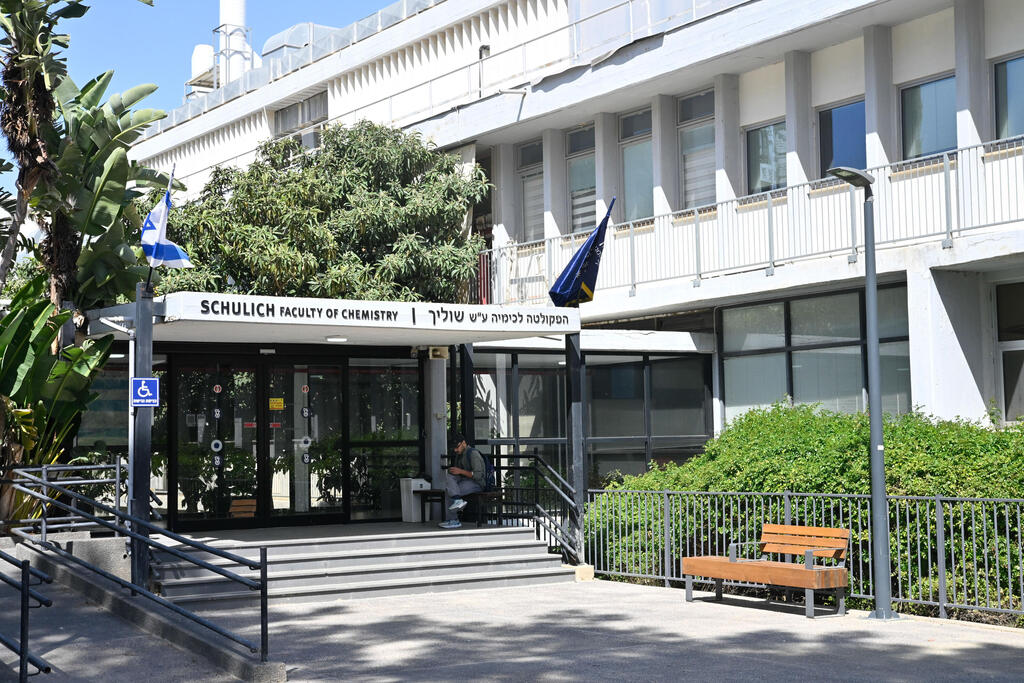
Israel placed two universities among the top 30 worldwide, with Tel Aviv University ranking 28th.
China’s AI strength and the language challenge
Two Chinese universities — Tsinghua University and Peking University — placed among the global leaders, ranking fifth and seventh respectively.
The report suggested that their scores may have been affected by a language bias in AI visibility measurements because many generative AI systems rely heavily on English-language sources.
According to the index, both institutions could rank even higher under a language-neutral evaluation system.
The future of university AI rankings
The 2026 index is the first edition of the benchmark. The creators plan to release future reports tracking how universities rise or fall as AI research, infrastructure and entrepreneurship evolve.
Additional institutions being considered for future editions include the Weizmann Institute of Science, University of Amsterdam, Fudan University, KU Leuven and several universities in Asia, Australia and South America.
The results point to a changing academic landscape: in the AI era, prestige alone is no longer enough. The universities shaping the future are those that combine research breakthroughs, entrepreneurial talent, computing power and strong connections to the companies building the world’s most advanced AI systems.