

The successful journey of the Artemis 2 mission and its four-person crew concluded as planned after traveling more than one million kilometers in space and completing the first crewed flight near the moon since 1972. At 3:07 a.m. Israel time on Saturday, the Orion spacecraft splashed down in the Pacific Ocean, not far from the coast of San Diego in Southern California, exactly on schedule and at the planned location. Seconds after landing, mission commander Reid Wiseman reported that all crew members were “green,” meaning in excellent physical condition.
The crew includes Victor Glover, Christina Koch and Jeremy Hansen of the Canadian Space Agency. They became the first African American, the first woman and the first non-American to travel to the moon, after the Apollo program sent only 24 white American men. “I couldn’t imagine a better crew to serve as our ambassadors on the return to the moon,” NASA Administrator Jared Isaacman said while speaking aboard the USS John P. Murtha as he awaited the astronauts’ recovery. “This is not a once-in-a-lifetime mission. This is just the beginning. We will land on the moon in 2028. We are returning to the moon to stay, and we are bringing all our international partners with us.”
“The many teams involved in the mission did everything right. Every component functioned well,” added NASA Deputy Administrator Amit Kshatriya in an interview from mission control. “We took a big step forward, and the path to a lunar landing is now open.”
A smooth landing
Just over half an hour earlier, the crew completed preparations for reentry and separated from the service module provided by the European Space Agency. The module includes the spacecraft’s propulsion system, solar panels and life-support systems. As in the Apollo missions, it was not designed to return to Earth and burned up upon reentry.
After separation, Orion exposed its heat shield, which protects it from temperatures approaching 2,000 degrees Celsius caused by atmospheric friction as the spacecraft reentered at about 40,000 kph. Like Apollo, Orion uses an ablative heat shield made of materials that burn away, carrying heat with them and preventing damage to the capsule and crew.
Friction with the atmosphere created a plasma layer around the spacecraft, cutting off radio communications for about six minutes. The longer blackout, roughly twice that of Apollo, is due to a maneuver that uses Earth’s atmosphere to slow the spacecraft. Orion descends to about 50 kilometers, then briefly climbs back to nearly 100 kilometers before descending again, reducing its speed to about 500 kph. In the final minutes before splashdown, a series of drogue parachutes deployed to slow the capsule further, followed by three main parachutes that brought it down to the ocean at about 30 kph.
Gallery
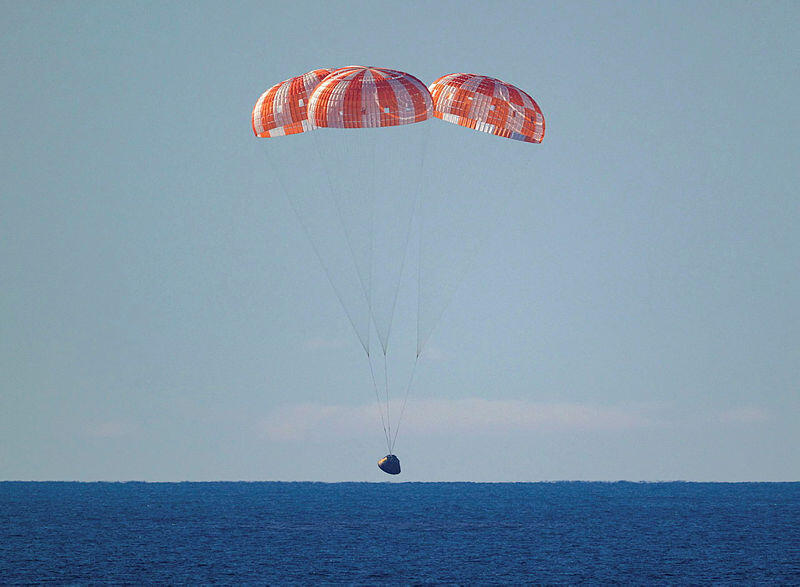
The Artemis 2 astronauts splash down in the Pacific Ocean after their journey to the moon
(Photo: NASA/Bill Ingalls/Handout via Reuters)
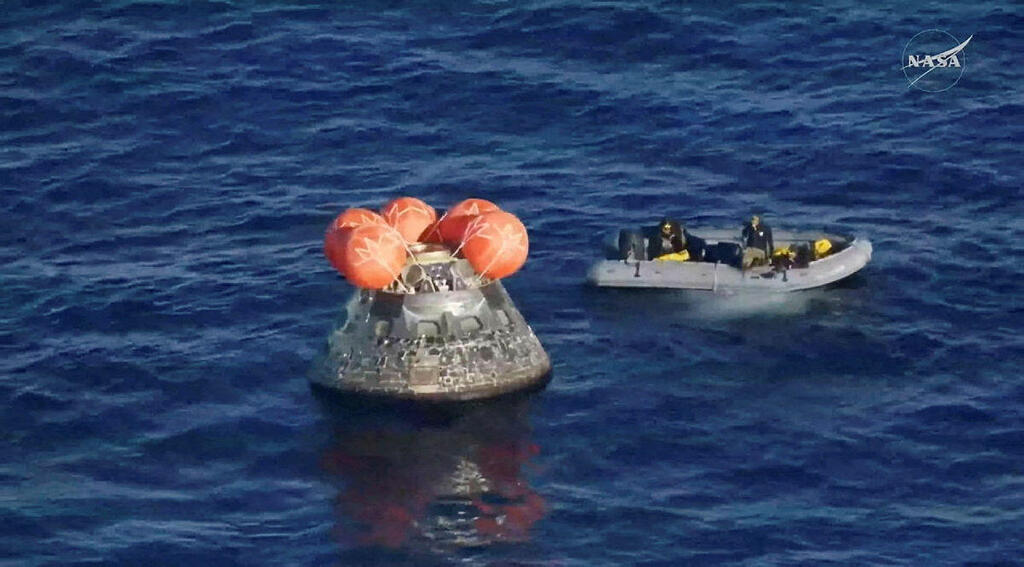
(Photo: NASA/Handout via Reuters)
A communications malfunction with recovery vessels emerged after landing, delaying the final phase of the mission. More than 40 minutes after splashdown, recovery teams opened the hatch, and four Navy divers with medical training entered the capsule to conduct initial checks. An inflatable raft was then attached to the spacecraft, and the astronauts were transferred one by one to helicopters that carried them to the recovery ship about three kilometers away. About two hours after splashdown, the crew was aboard the vessel undergoing medical evaluations. The spacecraft itself was later retrieved.
All objectives met
Artemis 2 was the first crewed flight near the moon since the Apollo program ended in 1972. Its primary goal was to test the Orion spacecraft on its first crewed mission and the Space Launch System rocket in its first human flight. This followed Artemis 1, an uncrewed mission that sent Orion around the moon more than three years ago. The mission began with an extended orbit around Earth lasting about a day to test all spacecraft systems before departing for the moon. Orion then performed the critical Trans-Lunar Injection maneuver, firing its engines to enter a trajectory toward the moon. The spacecraft followed a “free return” trajectory, ensuring it would return to Earth using the gravitational forces of Earth and the moon even without further engine burns. This is considered the safest path for an initial crewed test flight.
Artemis 2 commander speaks about his late wife after record-breaking mission
(Footage: NASA)


Four days later, Orion passed within 6,544 kilometers of the lunar surface. The close approach allowed the crew to capture high-resolution images of areas on the far side of the moon never seen directly by human eyes from that angle. They also observed a unique solar eclipse near the moon, providing scientists with valuable data on the sun’s corona. During the mission, the crew reached a distance of 406,684 kilometers from Earth, making them the farthest humans have ever traveled, about 6,500 kilometers farther than the Apollo 13 astronauts in 1970.
The solar eclipse observed by the Artemis 2 astronauts
(Footage: NASA)
Originally, Artemis 3 was expected to land humans on the moon. However, NASA announced last month that the mission, now planned for 2027, will instead test a lunar lander in Earth orbit alongside Orion. The first human landing on the moon in this century has been pushed to Artemis 4, currently targeted for 2028. Unlike Apollo, the development of lunar landers has been assigned to private companies. SpaceX’s Starship is slated for early missions, while Blue Origin’s Blue Moon is planned for later landings.
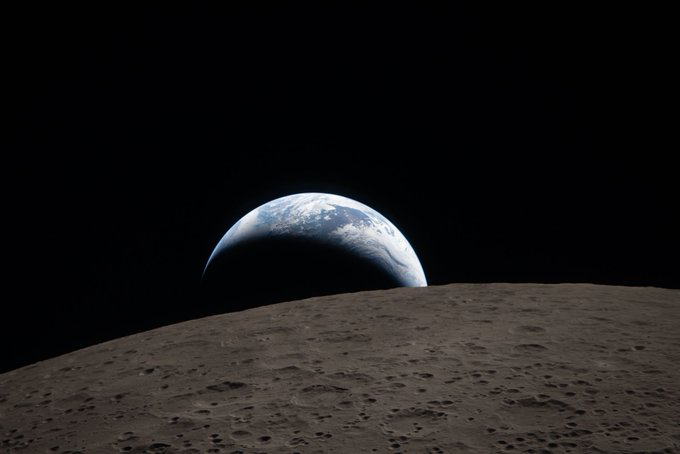
Earth as seen from the far side of the moon
(Photo: NASA)
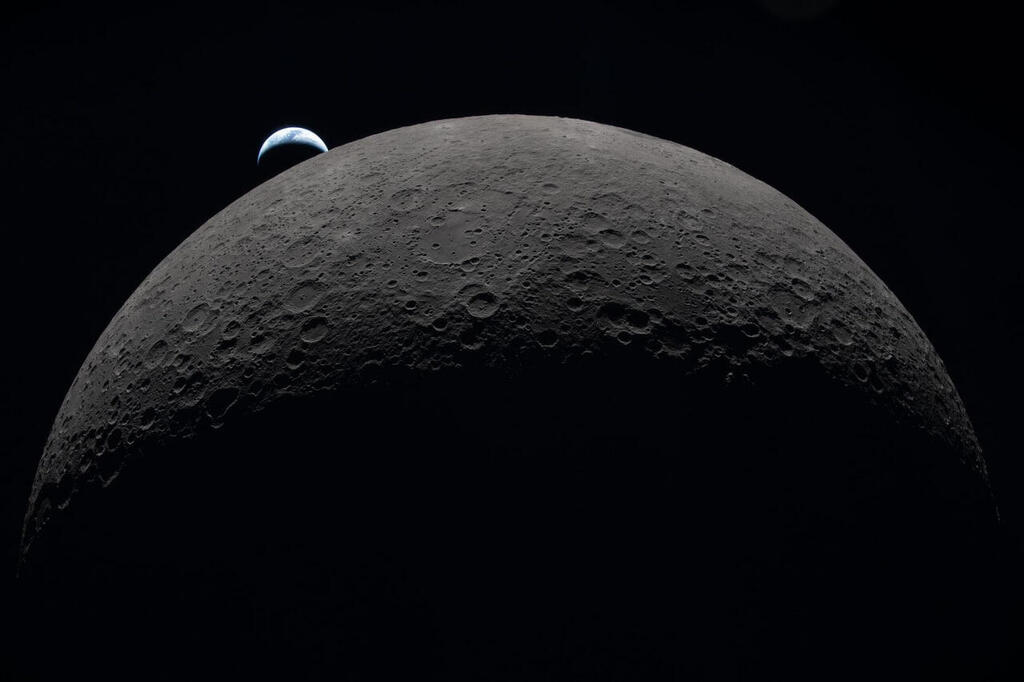
Earth as seen from the far side of the moon
(Photo: NASA)
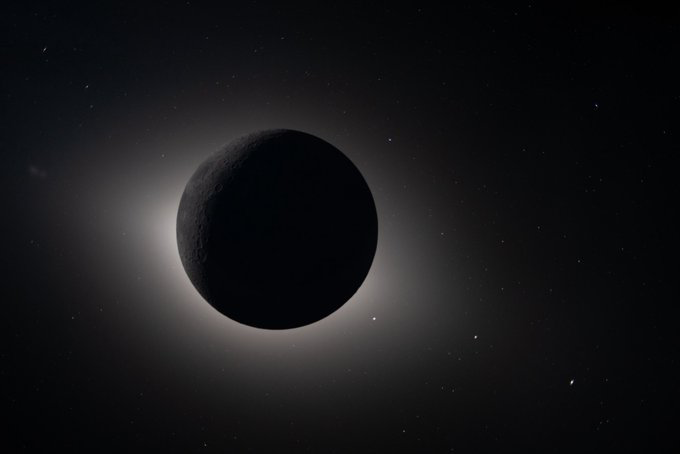
The solar eclipse observed by the astronauts
(Photo: NASA)
Due to delays in Starship’s development, NASA has said it may adjust the sequence if Blue Origin’s system is ready first. At present, it appears unlikely that either will be ready for a crewed test flight next year, meaning NASA’s ambitious timeline may slip.

The Artemis 2 crew members
(Photo: NASA TV/Reuters)
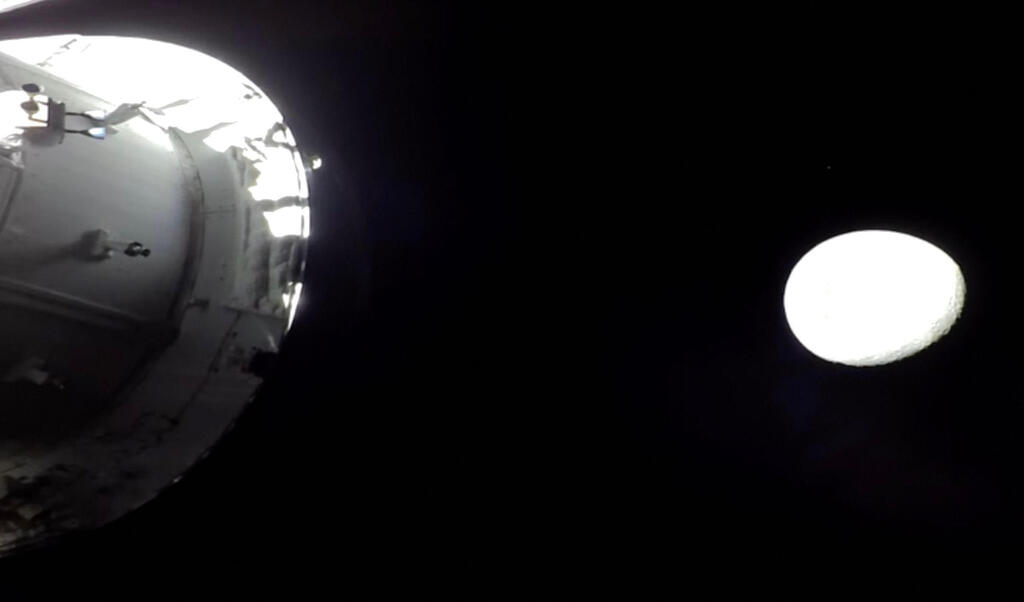
The Orion spacecraft and the moon
(Photo: Nasa/Handout/AFP)
Looking further ahead, Orion itself could eventually become unnecessary. Once reliable lunar landers are available, NASA may no longer need a separate spacecraft and complex docking maneuvers in lunar orbit. For now, however, Orion has proven itself as the first spacecraft to successfully carry humans back to the vicinity of the moon.