

Different reasons were given by the sages for the tradition of reading the Book of Ruth on Shavuot. The first is linked to Ruth’s identity as a convert: “When Israel received the Torah, they also converted and came under the wings of the Divine Presence, and Ruth the Moabite also came under the wings of the Divine Presence.”
A well-known quote from Ruth’s words to Naomi expresses her acceptance of the people of Israel: “Your people will be my people, and your God will be my God.” Another reason is that the book is entirely about kindness, and the Torah given on Shavuot is entirely about kindness. A further explanation relates to the timing of the story, described as “at the beginning of the barley harvest” — the harvest season. But there is yet another reason.
Gallery
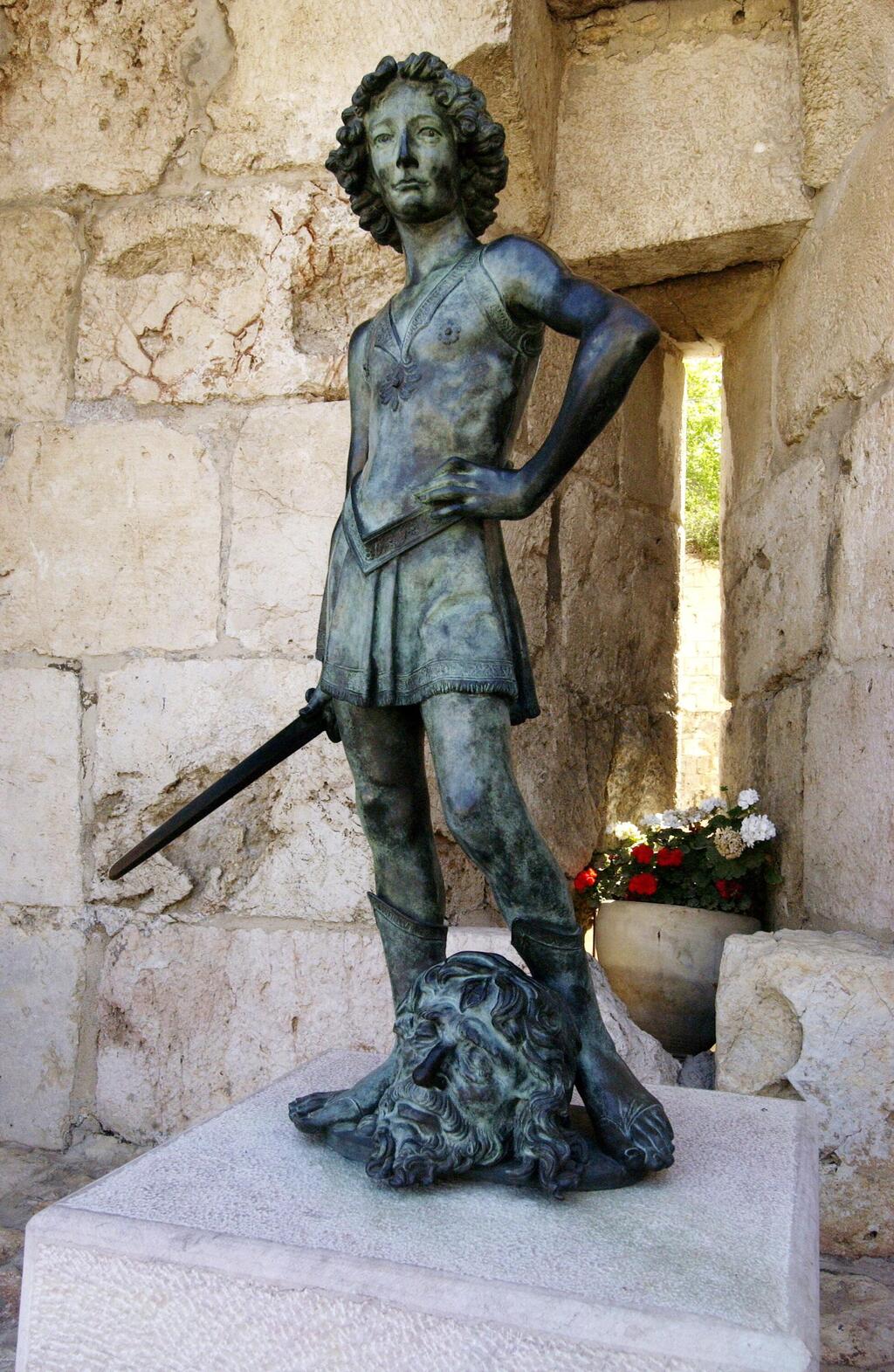
Statue of David, with the head of Goliath, in the Tower of David. A replica of a statue created by the Italian sculptor Andrea del Verrocchio
(Photo: Mark Neiman, National Photo Collection)
According to tradition mentioned in the Jerusalem Talmud, King David was born and died on Shavuot. This provides another explanation for reading the Book of Ruth on this holiday: the closing verses of the scroll include the genealogy of King David. According to the biblical account, David, the sweet singer of Israel whose life and deeds have long inspired the imagination of generations, is in fact a descendant of Ruth and Boaz.
The biblical David was born in Bethlehem, the town to which the prophet Samuel was sent to anoint him king of Israel. The Bible describes how Jesse presented his sons, but none were deemed worthy in Samuel’s eyes to rule Israel. Before leaving, Samuel asked Jesse: “Are these all the young men?” and Jesse replied: “Here is still the youngest, but he is tending the sheep.”
That shepherd, ruddy and handsome, called from the fields of Bethlehem to kingship, sparked reflection among the sages on the connection between shepherding flocks and leadership of a nation — a link also familiar from the story of Moses and other patriarchs.
Legend has it that King David was an exceptional shepherd who knew the feeding times for each type of animal and the appropriate food for each: he would take out the young goats and feed them the tips of the grass. He would take out the lambs and feed them the middle of the grass, and he would take out the old sheep and feed them the heartiest part of the grass. God said: Since he knows how to tend my sheep, he will tend these sheep of Israel.
The well of King David
At the very beginning of David’s reign, the Philistines invaded deep into Judah and seized Bethlehem. The Bible recounts: “And David was then in an hold, and the garrison of the Philistines was then in Bethlehem. And David longed, and said, Oh that one would give me drink of the water of the well of Bethlehem, which is by the gate! And the three mighty men brake through the host of the Philistines, and drew water out of the well of Bethlehem, that was by the gate, and took it, and brought it to David” (2 Samuel 23:14–16).
The biblical description strongly resembles the scene visible to visitors in Bethlehem today: a hill city, whose inhabitants still partly rely on agriculture, grain crops and vineyards like Boaz, or sheep like David. The eastern and southern edges of the city border the Judean Desert. In the northern part, within a courtyard sacred in Christian tradition, a rainwater cistern is carved into the rock. According to tradition, this well is associated with King David and is called in Arabic “Beit Dawud.”
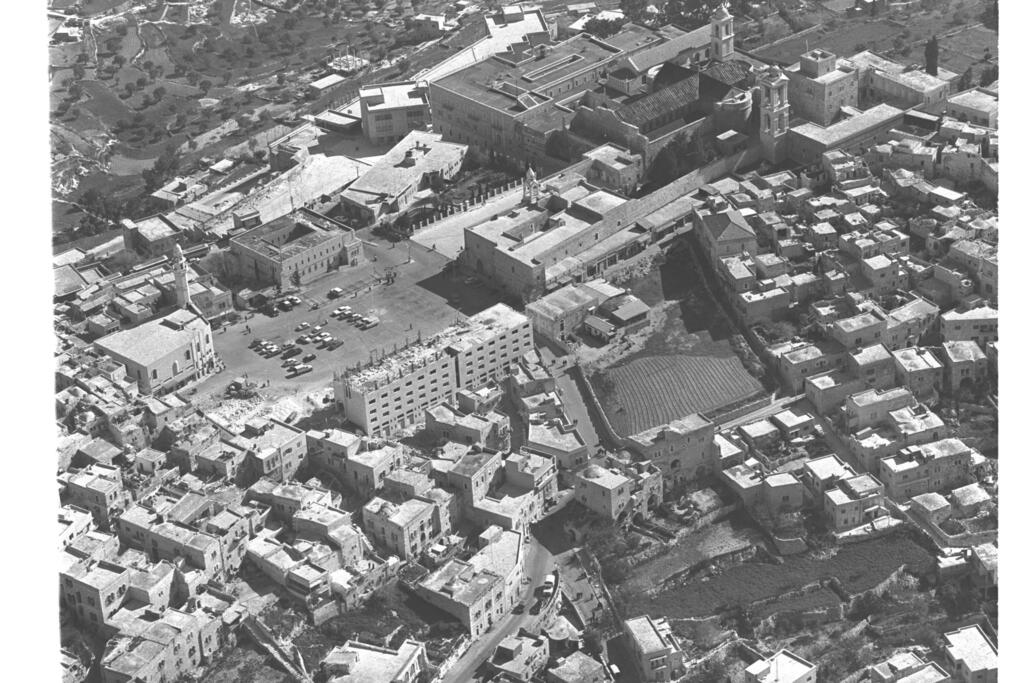
Bethlehem in 1970
(Photo: Moshe Milner, National Photo Collection)
From childhood, David was a brave, curious and ambitious boy. He was still young when he left his father’s flock and went to the Valley of Elah, west of Bethlehem, to witness the battle between the Philistines and Israel. The Bible describes how on the battlefield he did not hesitate to confront the Philistine giant Goliath, fully armed. With a shepherd’s sling and five smooth stones from the stream, weapons from his youth, David defeated the enemy commander. Why five stones? The sages interpreted them as representing the Holy One, the three patriarchs and Aaron the priest.
Jealousy as a shield
Jealousy is a human trait that appears in varying degrees among different people. The Bible describes how King Saul suspected his young son-in-law David, husband of his daughter Michal, of seeking to take the crown and seize the monarchy from his family. The people’s song “Saul has struck down his thousands, and David his tens of thousands” intensified the king’s fear, turning it into hostility and psychological instability.
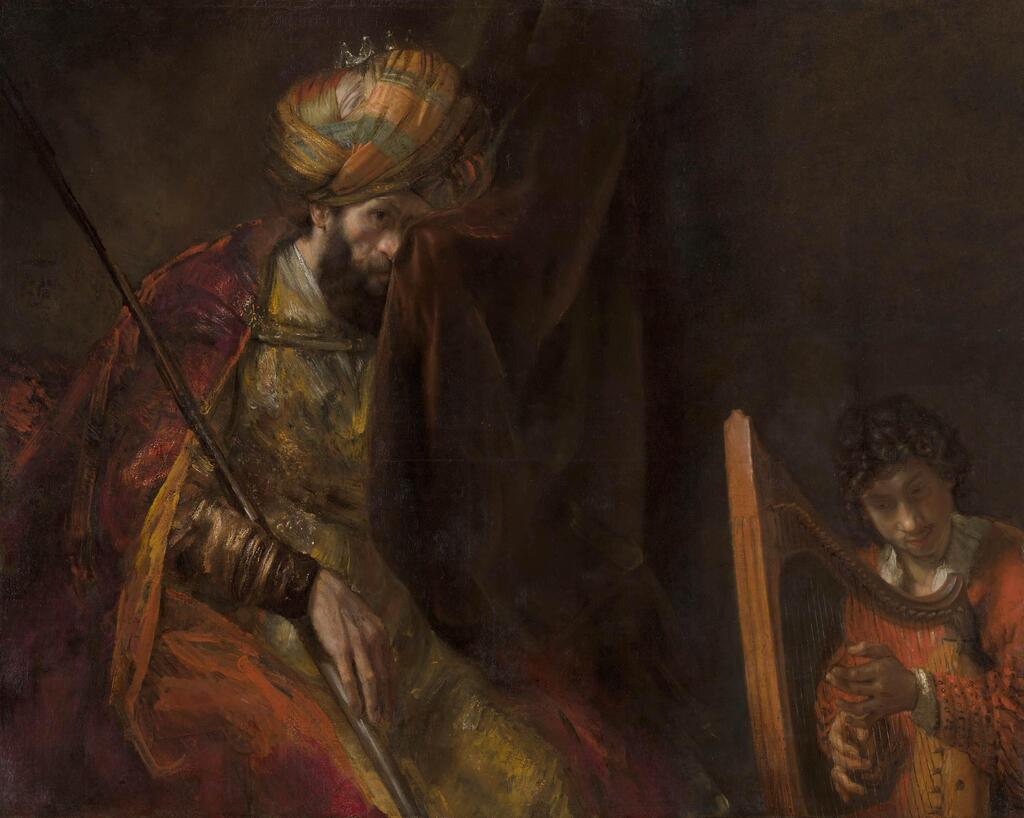
Saul and David by Rembrandt
David, persecuted by Saul, found refuge in the Cave of Adullam near the Valley of Elah. Rabbinic tradition tells a legend about his experiences in the cave: once David sat in his garden and saw a wasp eating a spider. He said to God: what benefit are these creatures? The wasp destroys honey and is of no use; the spider weaves all year and produces no clothing. God replied: David, you mock My creatures; a time will come when you will need them.
When David hid in a cave from King Saul, God sent a spider that wove a web across the entrance, sealing it. Saul arrived, saw the web and concluded no one had entered, since it would have been torn, and left. When David emerged and saw the spider, he kissed it and said: blessed be your Creator and blessed are you.
Wonders of Ein Gedi
David and his men sought refuge in the frontier settlements of the Judean Desert, which David knew well from his years as a shepherd. As Saul’s reach extended there as well, David and his men moved to the strongholds of Ein Gedi. Only after exhausting their options in the area did they turn to hiding among Israel’s enemies, the Philistines.
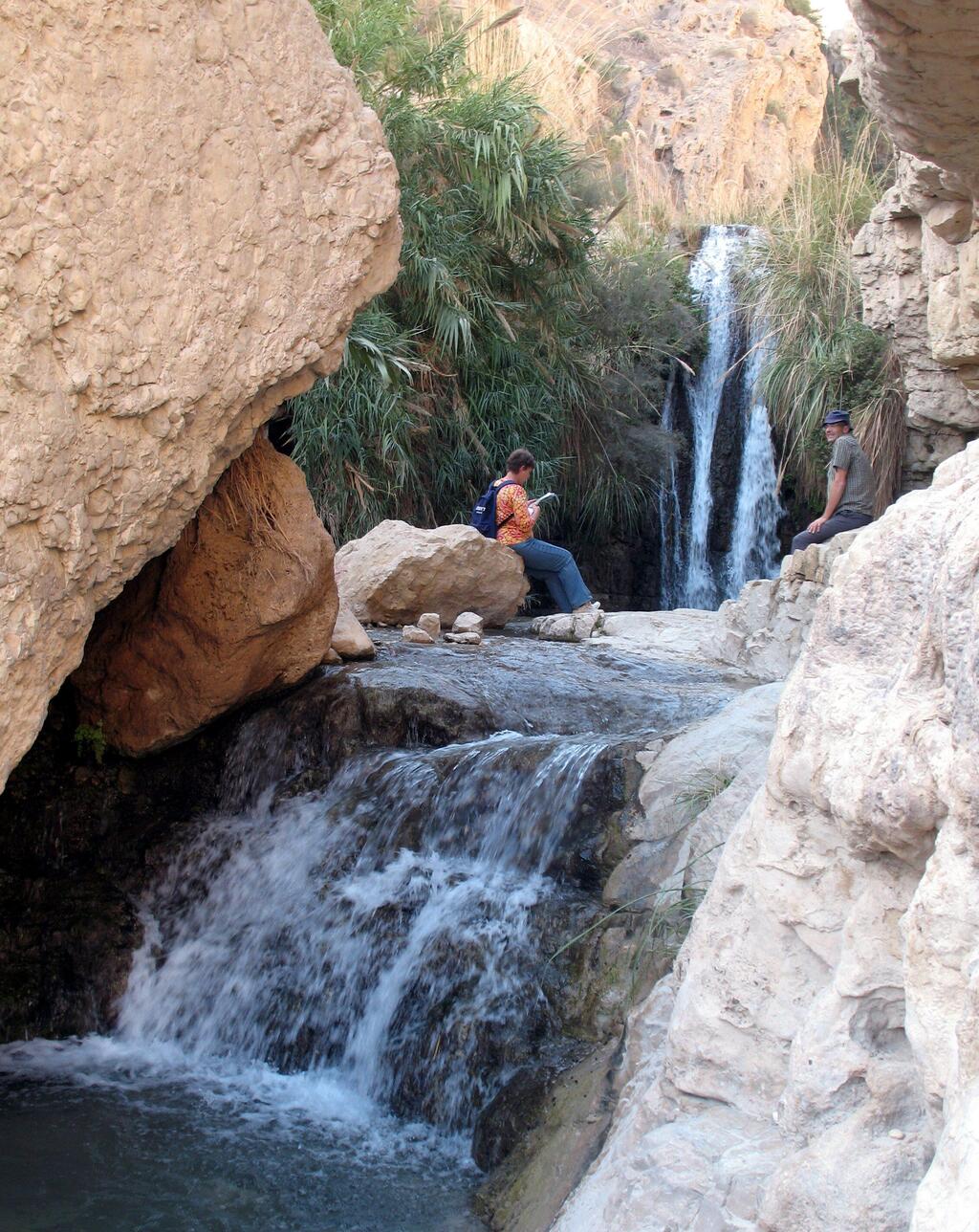
David Stream
(Photo: Einat Anker, National Photo Collection)
In those days, Ein Gedi was known for its vineyards and balsam plantations, and its landscape is poetically described in the Song of Songs and preserved today in the nature reserve that attracts tens of thousands of visitors each year. The green oasis, with springs flowing year-round, waterfalls and streams cutting through lush canyons, stands in stark contrast to the surrounding desert. The name of David, who according to tradition hid in this area, is preserved in David Stream and in the spring flowing in the heart of the desert, Ein Gedi’s David Spring.
According to tradition, one of David’s descendants will be the Messiah, who will also be born, like him, in Bethlehem. The centrality of the city around which the story of the Book of Ruth unfolds is reflected in the words of the prophet Micah: “But you, Bethlehem Ephrathah, though you are small among the clans of Judah, from you shall come forth for me one who will rule in Israel.”