

An anonymous online form urging people in Italy to identify and report Jews and Israeli tourists has alarmed the country’s Jewish community, whose leaders described the initiative as “a real manhunt” and warned that it recalled the persecution of the 1930s.
The form, circulated widely in recent days on social media and local messaging groups in Milan, asked users to report the arrival of Jews, Israelis or anyone believed to have ties to “Zionists” at hotels and vacation rentals, as well as their presence in stores and other businesses.
Its stated purpose was to “map Zionist tourism” in Italy.
The document also called on users to report tourism, property purchases and what it described as “Zionist neo-colonization” in the country. People were encouraged to continue sharing the form during the summer vacation season in order to “take a stand” and remain aware of their surroundings.
The form was removed from the internet following the intervention of Italy’s commissioner for combating antisemitism, Gen. Pasquale Angelosanto. But Jewish leaders said its appearance marked a dangerous escalation, transforming hostility toward Israel into an organized effort to identify people on the basis of their religion, nationality or perceived political affiliation.
Victor Fadlun, president of Rome’s Jewish community, called the initiative “simply horrifying.”
He said it should be condemned by every political party and civic organization in Italy as an attack on fundamental rights and on the principles underpinning the Italian republic.
Fadlun thanked Angelosanto for helping remove the form but warned against what he described as “a real manhunt, in which people are identified and exposed through every stereotype solely because of their Jewish religion or their alleged connection to the State of Israel.”
He called on authorities and civil society to remain alert to antisemitism in Italy.
Walker Meghnagi, president of Milan’s Jewish community, told the Italian news agency ANSA that the initiative evoked the “hunting of Jews” and the atmosphere of ethnic and religious persecution that prevailed in Europe during the 1930s.
Meghnagi said the community had chosen to approach the authorities rather than fuel a public confrontation on social media. The materials were handed to the relevant agencies with a request for judicial intervention, he said.
He warned that circulating such a list could encourage copycat initiatives and attacks, while providing extremists or unstable individuals with easily identifiable targets.
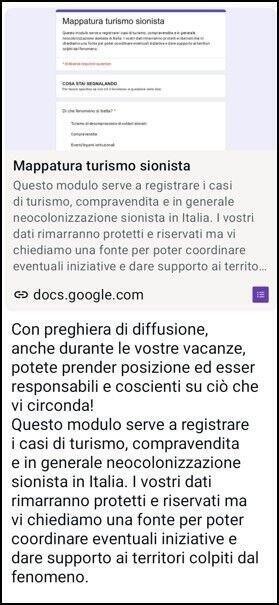
The form
Livia Ottolenghi, president of the Union of Italian Jewish Communities, described the form as a significant escalation in antisemitism and said the effort to map Jews amounted to a “new yellow badge.”
She also condemned the form’s reference to alleged “Zionist settlements on Italian soil,” saying the language reflected conspiracy theories reminiscent of Italy’s 1938 racial laws under fascist rule.
Ottolenghi said the document was not an isolated case but part of a wider pattern of efforts to spread and normalize antisemitism in public discourse.
She accused much of Italian civil society of responding with silence, with only limited exceptions.
The initiative may also have legal implications.
Under Italian and European Union privacy law, information about a person’s religion is considered sensitive personal data and is subject to heightened protection. Collecting such information without transparency for the purpose of identifying people on the basis of their actual or perceived religion could violate privacy rules.
Critics also said the form appeared to conflict with Article 3 of the Italian Constitution, which guarantees equality without distinction based on religion.
Italian Senate President Ignazio La Russa condemned what he called a “map of Jews in Zionist tourism,” saying it violated basic civil rights and reflected deep antisemitism.
“We must not remain indifferent to such serious incidents, which awaken the demons of the past,” La Russa said.
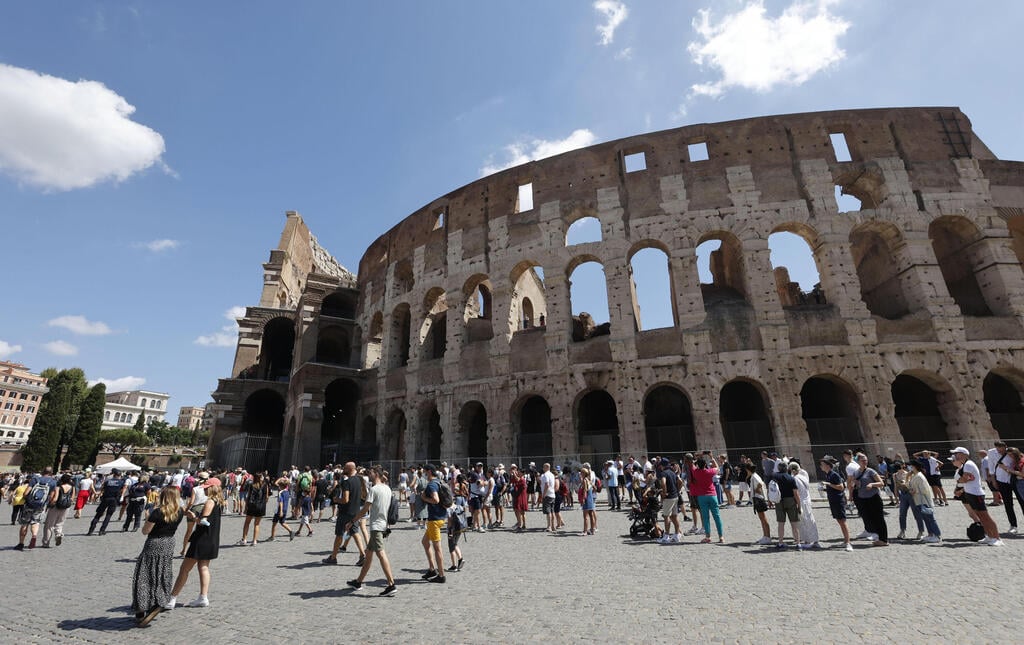
Tourists outside the Colosseum
(Photo: AP Photo/Riccardo De Luca)
Members of Prime Minister Giorgia Meloni’s governing coalition, including her Brothers of Italy party and Forza Italia, also condemned the document. They said Italians could not remain indifferent to conduct recalling “the darkest periods of the 1930s.”
The controversy comes amid a sharp rise in recorded antisemitism in Italy.
A 2025 report by the Milan-based Center of Contemporary Jewish Documentation, known as CDEC, documented 963 antisemitic incidents across the country.
That represented an increase of 10% from 2024, 100% from 2023 and 400% from 2022, according to the monitoring group.
The number of physical assaults rose by 225%, with most incidents recorded in the regions of Lombardy and Lazio.
One case cited in the report involved three Orthodox Jewish children who were stopped and searched in a Milan store after being mistaken for Israelis.
CDEC said the incident illustrated how efforts to label people and compile lists under the guise of political protest were already producing direct and intolerable consequences in everyday life.
Hostility toward Israelis has also intensified in tourist destinations.
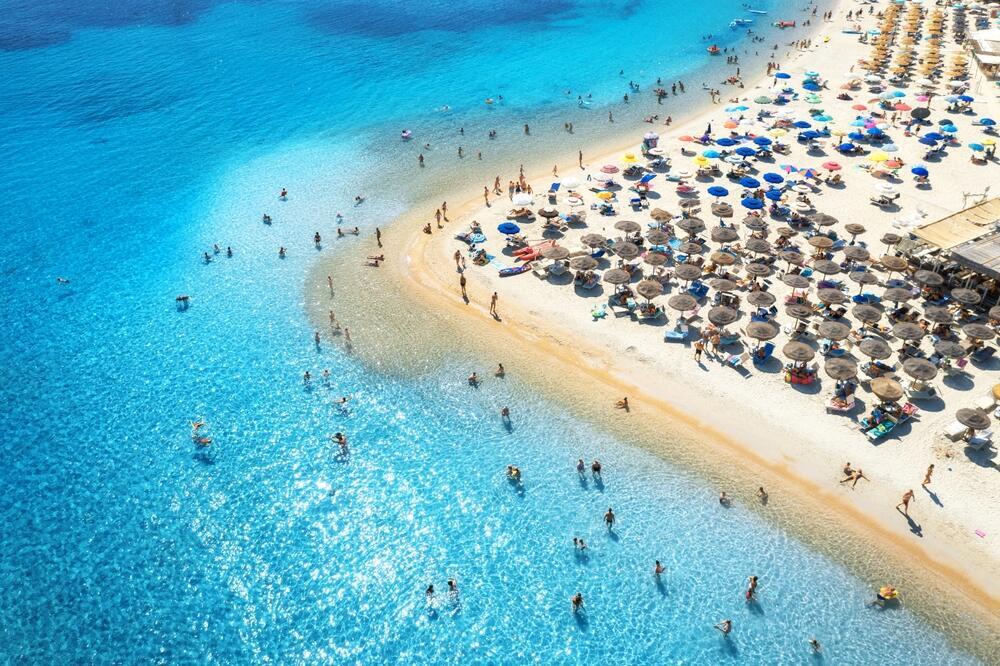
Tuerredda Beach in Sardinia
(Photo: Denis Belitsky / shutterstock)
Sardinia has become a focal point for campaigns against Israeli visitors, with activists organizing protests and circulating petitions calling for Israeli tourists and Israeli soldiers to be prevented from vacationing on the island.
Social media posts have repeatedly warned of aircraft arriving with Israeli soldiers who, according to the activists, were seeking a break from the war in Gaza.
Demonstrators have also appeared at airports to confront Israeli tourists with anti-Israel slogans and accusations concerning Israel’s military operations in Gaza and Lebanon.
Jewish leaders say criticism of Israel has increasingly crossed into hostility directed at Jews as individuals and at Jewish institutions.
Members of the Jewish Brigade, whose volunteers fought with Allied forces and helped liberate Italy from fascism during World War II, have faced hostility and removal from events marking Italy’s Liberation Day.
A Jewish LGBTQ group was also expelled from an Italian Pride march in a separate incident cited by community leaders.
Jewish officials said the anonymous form represented a particularly alarming development because it sought to turn hostility into a systematic effort to identify and track people.
They called on Italian authorities to determine who created and distributed the document and whether its circulation violated privacy, anti-discrimination or criminal laws.