

Today, more than 80 years after the Holocaust, his story and those of many other prominent Jewish figures are at the heart of guided tours led by Nirit Ben-Joseph, 65, a veteran Israeli tour guide and expert on Berlin and Germany who has lived and worked in the German capital since 1987.
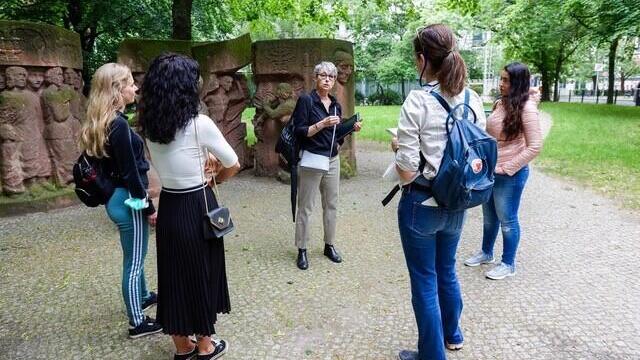
Born in Pardes Hanna and educated in Hadera, Ben-Joseph witnessed some of Berlin's defining historical moments, including the fall of the Berlin Wall and the city's reunification. She studied film and television at Tel Aviv University and film and communications at the Free University of West Berlin, specializing in Berlin's history, culture and heritage.
Ben-Joseph began working as a tour guide nearly three decades ago, initially leading tours exclusively for Israeli groups or employees of the Israeli Embassy in Berlin.
"Following the COVID-19 pandemic and the October 7 terrorist attack, I changed the target audience for the tours I conduct around the city," she says. "At first, I received requests to develop in-depth tours about the Jews who lived in Hansaviertel, a neighborhood in the central Mitte district that had been a thriving center of Jewish life before World War II."
The tour proved more successful than expected, prompting Ben-Joseph to develop six additional tours exploring the history of Berlin's Jewish population. Her goal was clear: to show Germans, particularly Berlin residents, just how significant the Jewish community's contribution to the city had been.
"Faced with the growing wave of antisemitism, I'm trying to do everything I can," Ben-Joseph emphasizes. "Germans think they know everything, but during the tours they discover that, in fact, they know nothing."
"The vast majority of participants don't know basic facts about Jews who lived in the city and contributed enormously to medicine, the thriving textile industry and many other fields, all of which were devastated by the Nazis."
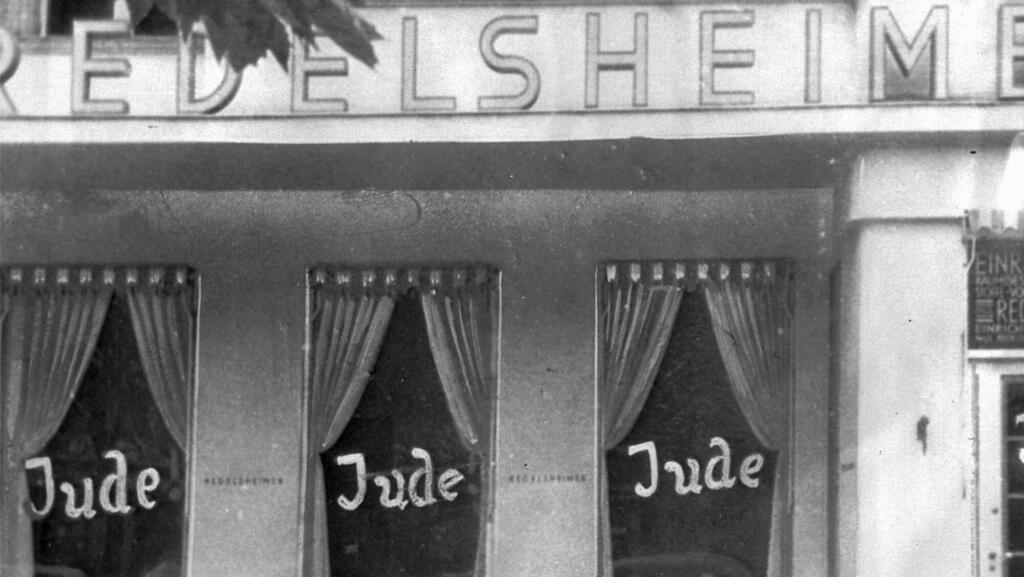
Jewish-owned businesses marked in Berlin, June 19, 1938
(Photo: AP)
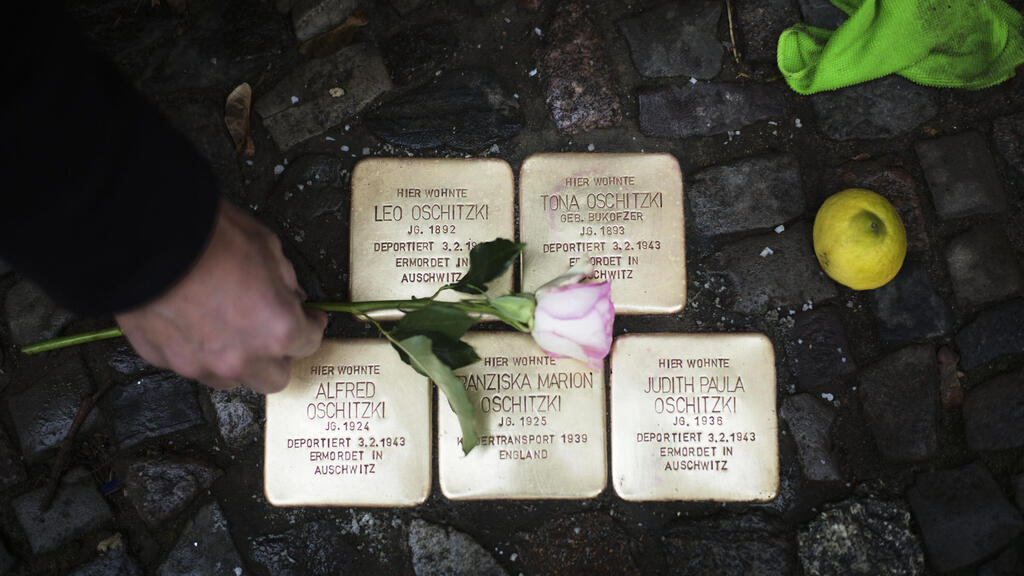
Stolpersteine memorial stones commemorating Holocaust victims in Berlin
(Photo: Markus Schreiber / AP)
The tours are free for participants, with Ben-Joseph receiving payment from the organizations that commission them, such as major museums or hospitals.
According to her, local authorities consider it important to demonstrate that Berlin's Jewish community holds a respected place in the city's history. The community numbered more than 172,000 people in 1925 but lost approximately 55,000 members who were murdered in the Holocaust.
"Although people might initially assume that most participants in my tours are older adults, there's also demand among younger generations, including students in their first years of medical school," Ben-Joseph says.
"The feedback I receive is very flattering, but it also points to a deep-rooted problem. Participants are deeply impressed by the explanations and by the contributions Jews made to the city and to Germany as a whole, but they're also embarrassed by how little they know about the subject.
"Learning about Nazi activities in the city also makes them uncomfortable. Sometimes, I'll tell them about a famous person who made an enormous contribution, and only during the explanation do they discover that the person was Jewish."
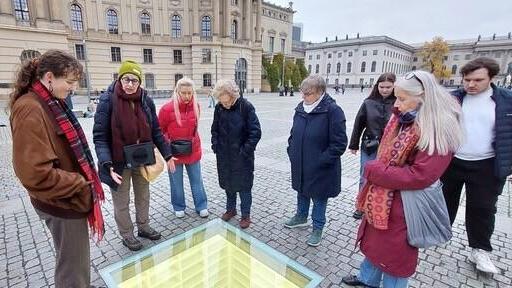
Ben-Joseph leads a tour group in Berlin
(Photo: Private album)
Refusing to give in to hatred
Ben-Joseph's guided tours cover a wide range of fields in which Berlin's Jewish community had a significant influence.
These include Jewish banking and its impact on the development of Germany's economy and industry, Jewish art collectors in Berlin and their role in the rise of modernism in Germany, and Jewish doctors and scientists at Charité University Hospital and their contributions to the advancement of German and global medicine.
Other tours explore the history of antisemitism at the University of Berlin, from its founding in 1810 through the Third Reich, as well as at the Technical University of Berlin and the city's University of the Arts.
Ben-Joseph also leads tours of the memorial featuring signs displaying the Nuremberg Laws in Berlin's Bavarian Quarter, the Jewish communities of Badstraße and the Grunewald neighborhood, and the Jewish cemeteries on Schönhauser Allee and in the Weißensee district. Her tours also examine the history of Jewish communities in Leipzig and Potsdam.
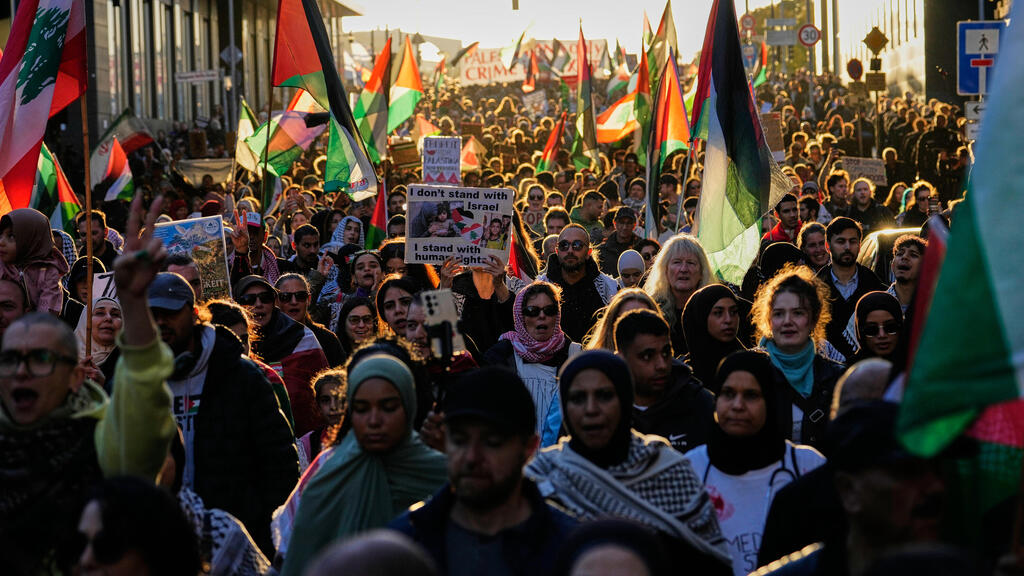
Pro-Palestinian demonstration in Berlin
(Photo: Ebrahim Noroozi/AP)
In 2025, more than 8,700 antisemitic incidents were recorded in Germany, a figure reflecting persistently high levels of hostility toward Jews and Israelis alike.
Nevertheless, Ben-Joseph makes clear that she is not afraid of finding herself caught up in such incidents. On more than one occasion, she has confronted pro-Palestinian activists wearing keffiyehs.
The electoral victory of Germany's radical-left Die Linke party in Berlin has not helped matters, but Ben-Joseph is doing everything she can to engage local residents and help them understand why accusations and insults directed at Jews are unjustified.
German Chancellor Friedrich Merz has also addressed the state of antisemitism in his country.
"In some cases, we are witnessing radical and open antisemitism in Berlin," he said. "The fact that Jewish life in Germany is no longer safe is, in my view, the heaviest burden of recent years."
Ben-Joseph is outraged by the phenomenon and notes that she has not seen those same activists, who view the city's Jewish community unfavorably, demonstrating against Russians living in Berlin over Russia's attacks on and invasion of Ukraine.
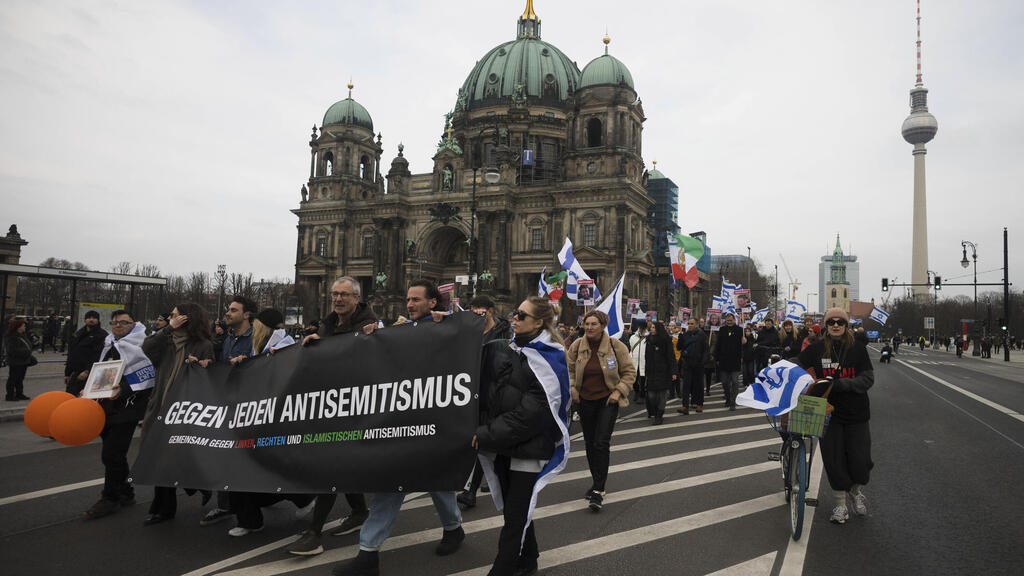
Protest against antisemitism in Berlin
(Photo: Markus Schreiber/AP)
"My son studies philosophy at Humboldt University in the city, and he was feeling desperate about the situation," Ben-Joseph says.
"I suggested that he take action, and he went on to establish a group that fights antisemitism and operates at several other universities as well.
"It's important to emphasize that much of what's happening stems from a lack of knowledge. If we can change that, people will make different, better-informed decisions."