

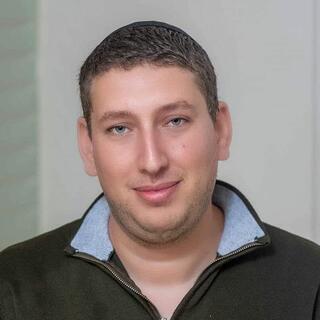
About 23,000 Israelis were in Uman, Ukraine, as of Saturday night, and tens of thousands more are on their way to be there for Rosh Hashanah at the grave of Rabbi Nachman of Breslov, organizers said.
Since Russia’s full-scale invasion of Ukraine in 2022, the effort to reach Uman for the holiday has become more complicated. Breslov rabbis have also instructed followers who have not reported to military draft offices not to fly, out of concern they could be detained at Ben Gurion Airport.
Saturday night in Uman
(Video: אומן תשפ"ו - עדכונים שוטפים)


Yaakov Bernoi, the gabbai, or caretaker, of the synagogue located next to Rabbi Nachman’s grave, arrived in Uman with several of his children. “I am a father of 10, I work year-round for the Elad municipality, and I serve as gabbai at our rebbe’s burial site during the holidays,” he told Ynet. “This year I traveled with some of my children: a 17-year-old, one who is pre-bar mitzvah, and an 8-year-old. We flew to Romania and then to Chișinău. It wasn’t crowded because we left a week and a half before the holiday.”
Gallery
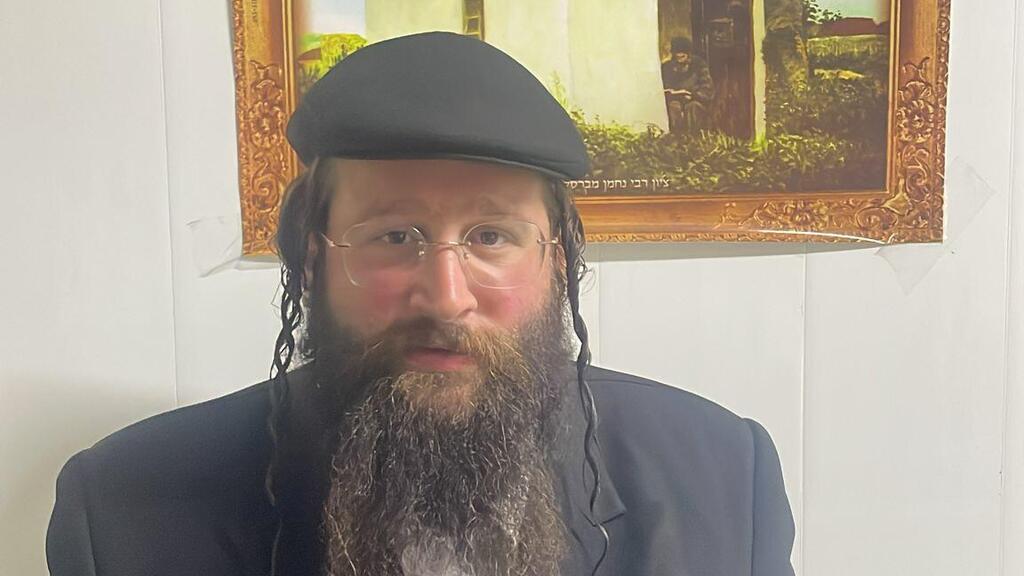
Yaakov Bernoi, the gabbai, or caretaker, of the synagogue located next to Rabbi Nachman’s grave
(Photo: Courtesy)
He described tight security and baggage checks at the land crossings. “They checked for drugs and inspected the bags,” Bernoi said. “Even in Ukraine, when we entered the country they checked the luggage. We then took a taxi for several hours to Uman. The whole trip was almost a day — from 11 a.m. when we left Israel until 6 a.m. the next morning when we reached Uman. When we arrived there were 3,000 people; now there are tens of thousands, and during the holiday we will peak at about 55,000.”
Some pilgrims who planned to go to Uman this year are staying home. Avi Ben Silman, a Breslov Hasid, will spend the holiday at home with his wife and children rather than traveling to Uman as he has in past years. “Being in Uman for Rosh Hashanah is for me much more than nigunim and dances,” he said, using a Hebrew term for devotional melodies. “It is very hard to make this journey every year. I have a wife and children and every year I still chose to go.”

Post-Shabbat celebrations in Uman
( Photo: אומן תשפ"ו - עדכונים שוטפים)
On staying in Israel this year, he said: “This year nobody can understand the yearning and longing to be there. There you feel the tzaddik [the righteous leader] cleanses everything and you see the success throughout the year blessed by the tzaddik. There’s this hunger that maybe we will succeed in getting there, because it’s something very hard to give up.”
This year, more than ever, Breslov pilgrims face special challenges getting to Rabbi Nachman’s grave in Uman. Since the Russia-Ukraine war began more than three and a half years ago, travel has become complex and exhausting, with long lines and hours of waiting at each land border crossing.
Those bottlenecks have often led to very long delays, missed flights and frustration. But as Breslov followers say, “there is no despair in the world,” and a creative solution that has grown in popularity in recent years is now the preferred route for many: a long train journey across Europe to stations near Uman.
Last week an important coordination meeting was held at the train station in Vinnytsia, near Uman, to prepare authorities for the influx of tens of thousands of pilgrims. Attendees included Rabbi Natan Ben Nun, chairman of the “Breslov Union in Uman;” and Rabbi Shaul Horowitz, the Chabad emissary in Vinnytsia, who works year-round for Ukraine’s Jewish community and visiting worshippers. Representatives of the Vinnytsia railway administration and border police also took part.
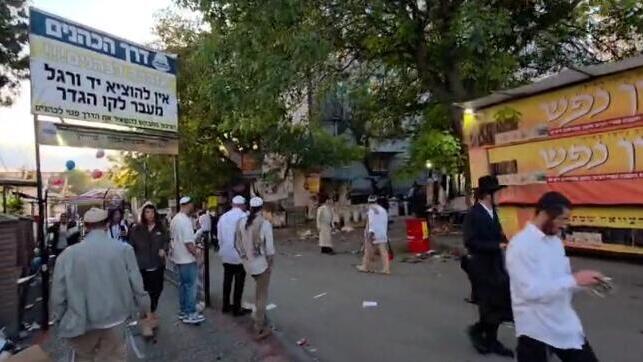
Erev Shabbat in Uman
( Photo: אומן תשפ"ו - עדכונים שוטפים)
Participants discussed ways to streamline passenger flows on trains, ensure pilgrims’ safety and minimize delays ahead of the expected surge of travelers through Vinnytsia station and the Mohyliv-Podilskyi border crossing en route to Uman.
Demand for train travel is so great that an entire industry has sprung up to organize the journey. Yaakov, a longtime pilgrim who has traveled to Uman for a decade, said: “Every year it’s a race. The moment the rail operators open ticket sales on their websites, seats are snapped up within minutes. You have to be ready with all the details at hand, because if you hesitate, it’s all gone.”
Part of the demand stems from agents who buy entire rail cars as soon as sales open, to create a Jewish atmosphere for the long ride. Breslov organizers also arrange special charter trains exclusively for pilgrims. Those charters are especially popular because they avoid the complexity of sticking to regular schedules and often offer additional services. “They are highly sought after in the community,” said Yosef, one of the organizers. “People want to travel together, with friends, in an atmosphere of spiritual elevation from the very start.”
Eitan, another pilgrim, described last year’s ordeal: “We were stuck at the Polish border for more than 20 hours. It was a real nightmare. We stood in an endless line of vehicles, and every passing hour is precious on the way to the Rebbe. When we came back, there was the same nerve-wracking wait that caused us to miss our flight home.”
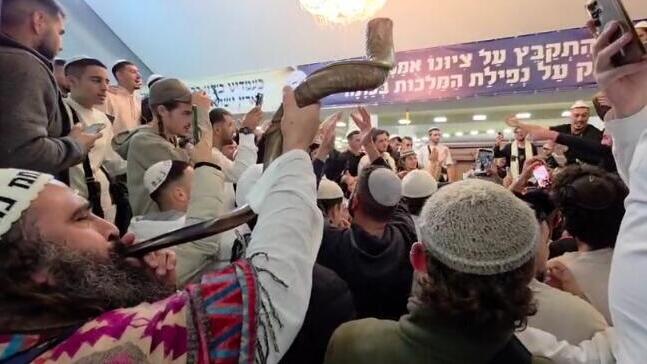
At Rabbi Nachman's graveside
( Photo: אומן תשפ"ו - עדכונים שוטפים)
His solution was the train, where passport checks and security inspections are carried out while the train is in motion. “It saves hours of waiting and hassle. You just sit in the car, study, pray, and the train keeps going,” he said.
Train options range from standard seating to more luxurious compartments, allowing each pilgrim to choose the comfort level they prefer. Prices vary, from about $250 per person for a regular trip to roughly $400 per person for a premium ride.
“The long, tiring trip becomes an experience of rest and renewal,” explained Meir, who is traveling this year on a luxury train to Uman. “Instead of arriving exhausted, you get there calm, refreshed and ready for the Rosh Hashanah prayers.”
The most luxurious trains offer hotel-level amenities. Some even hire kosher caterers to provide varied, strictly kosher meals for passengers throughout the journey. “It was amazing,” said Abraham, who rode one last year. “It felt like a hotel on wheels. The food was excellent, the atmosphere was wonderful, and the journey became part of the spiritual experience itself.”
One organizer said more than 1,500 pilgrims are expected to travel this year on special charter trains organized from Poland alone. “And that’s only a small part of the picture,” he added. “Many more are making their way to Uman by rail from across Europe. It has become the preferred solution for those who value time and convenience.”