

Ukrainian President Volodymyr Zelensky took part Tuesday in the annual memorial ceremony for the tens of thousands of Jews murdered in the Babi Yar massacre near Kyiv on September 29 and 30, 1941.
The ceremony was held under heavy security, including a special air defense system and the deployment of numerous snipers, amid fears of an attempt to target the president, including with Russian drones.
Zelensky at the Babi Yar ceremony
(Credit: Office of the President of Ukraine)


The extraordinary security measures came amid an escalation in Russian attacks on Kyiv in recent weeks, including missile strikes and drone launches that have left dozens of casualties. Among those killed was Israeli teenager Daniel Umansky, who died Friday when a Russian drone struck his home in Kyiv.
As he entered the ceremony, Zelensky received an update from representatives of the Federation of Jewish Communities of Ukraine on preparations to fly Umansky’s coffin to Israel. The coffin is expected to depart Chisinau for Israel on Wednesday and the teenager will be buried at a cemetery in central Israel, at his family’s request.
In his speech, Zelensky said: “We must remember the terrible things that happened here many years ago and now they are happening again, this time at the hands of the Russians.”
The ceremony in Kyiv
(Credit: FJCU)
Representatives of about 50 countries attended the ceremony, including Israel’s new ambassador to Ukraine, Roi Rosenblit, and the ambassadors of all G7 nations: the United States, Canada, France, Germany, Britain, Italy and Japan. Rabbis in Ukraine and Chabad emissaries also attended.
Zelensky thanked the ambassadors and the international community for “helping in the struggle against the terrible things the Russians are doing to us, to humanity and to civilization.”
As in previous years, the ceremony was organized by the Ukrainian presidential office, the Babi Yar memorial complex and the Federation of Jewish Communities of Ukraine.
Participants included Moshe Reuven Azman, one of Ukraine’s chief rabbis; Rabbi Jonathan Markovitch, chief rabbi of Kyivr; and Chabad emissary in Kyiv Rabbi Motti Levenhartz.
Gallery
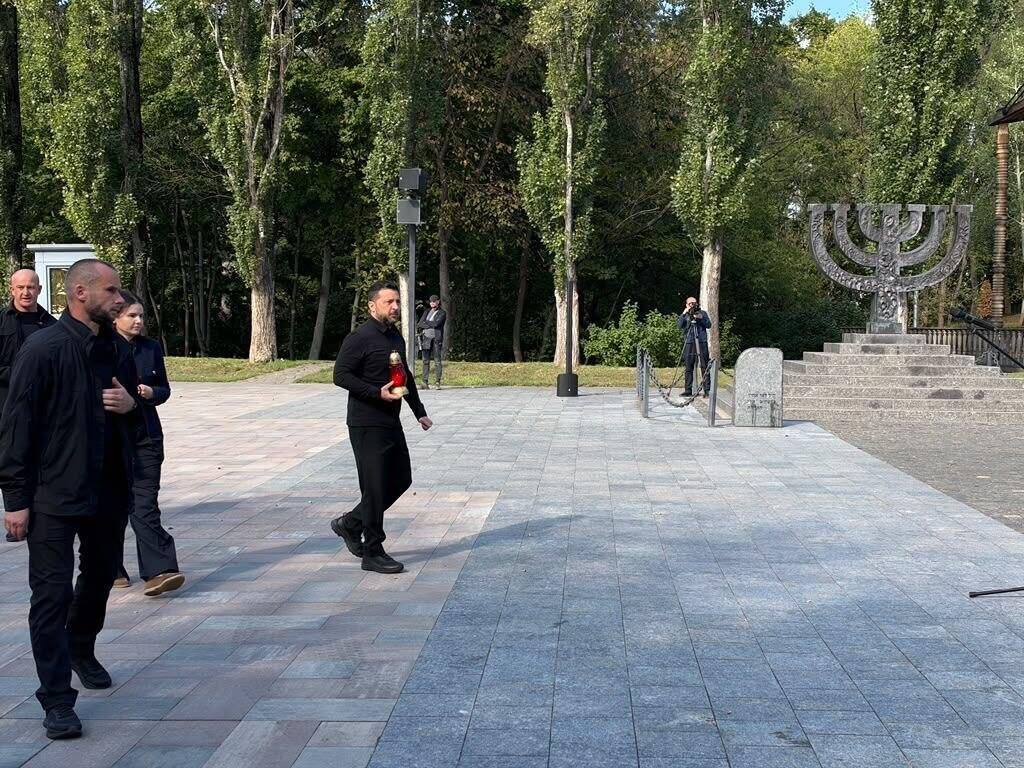
Ukrainian President Volodymyr Zelensky at a ceremony marking 85 years since the Babi Yar massacre
(Photo: FJCU)
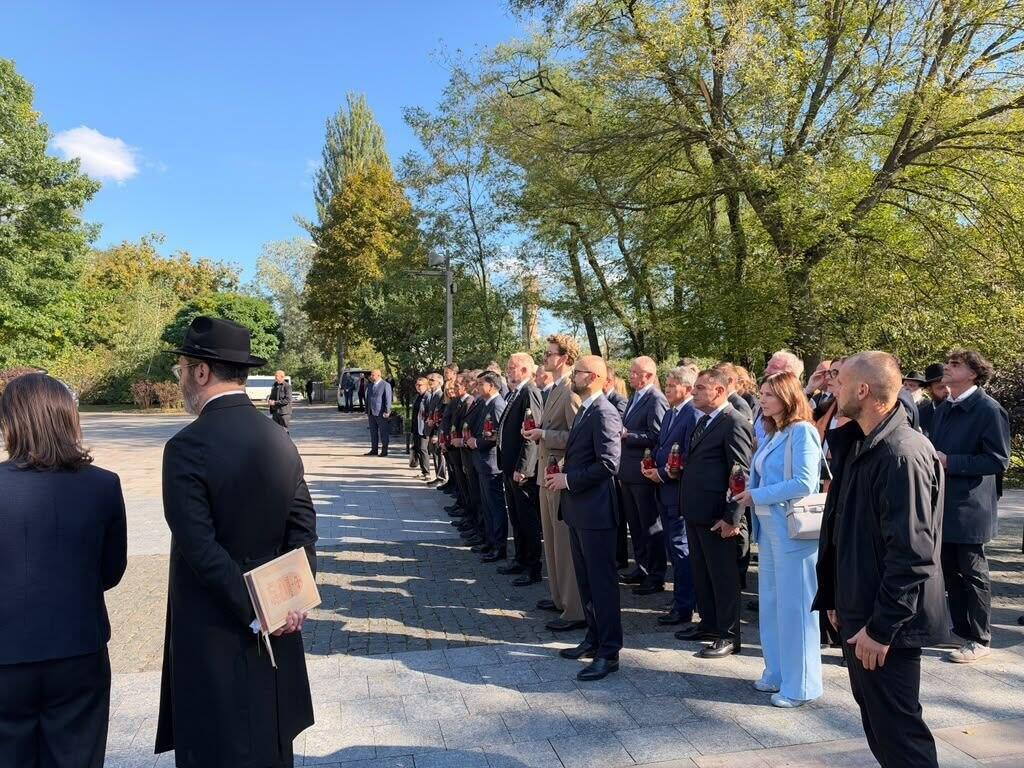
Ceremony marking 85 years since the Babi Yar massacre
(Photo: FJCU)
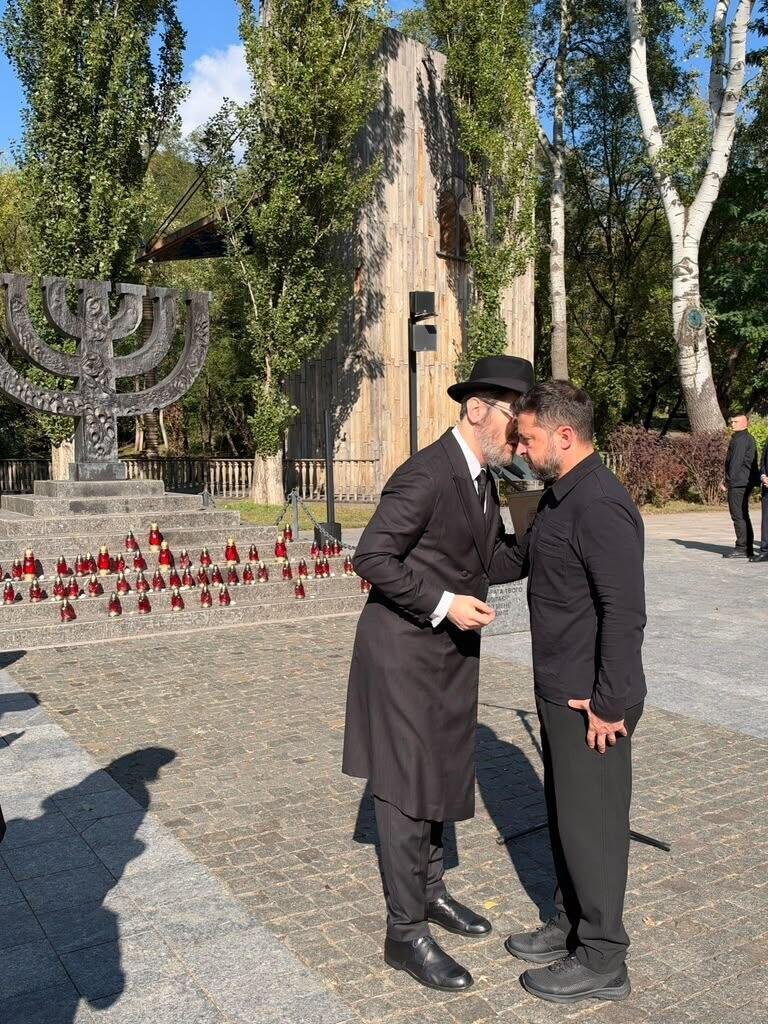
Ukrainian President Volodymyr Zelensky at a ceremony marking 85 years since the Babi Yar massacre
(Photo: FJCU)
Rabbi Rotman recited the El Maleh Rachamim memorial prayer for the victims, Rabbi Markovitch recited a chapter of Psalms and Rabbi Levenhartz recited the Kaddish in their memory.
For Rebbetzin Devorah Leah Levenhartz, who attended the ceremony alongside her husband, the event held special family significance. Her great-grandmother, Sonia Posner, was among the tens of thousands of Jews murdered at Babi Yar on the eve of Yom Kippur 85 years ago.
On Sept. 29 and 30, 1941, the Nazis and their collaborators rounded up Jews from Kyiv and the surrounding area at Babi Yar, where they murdered 33,771 Jews in two days.
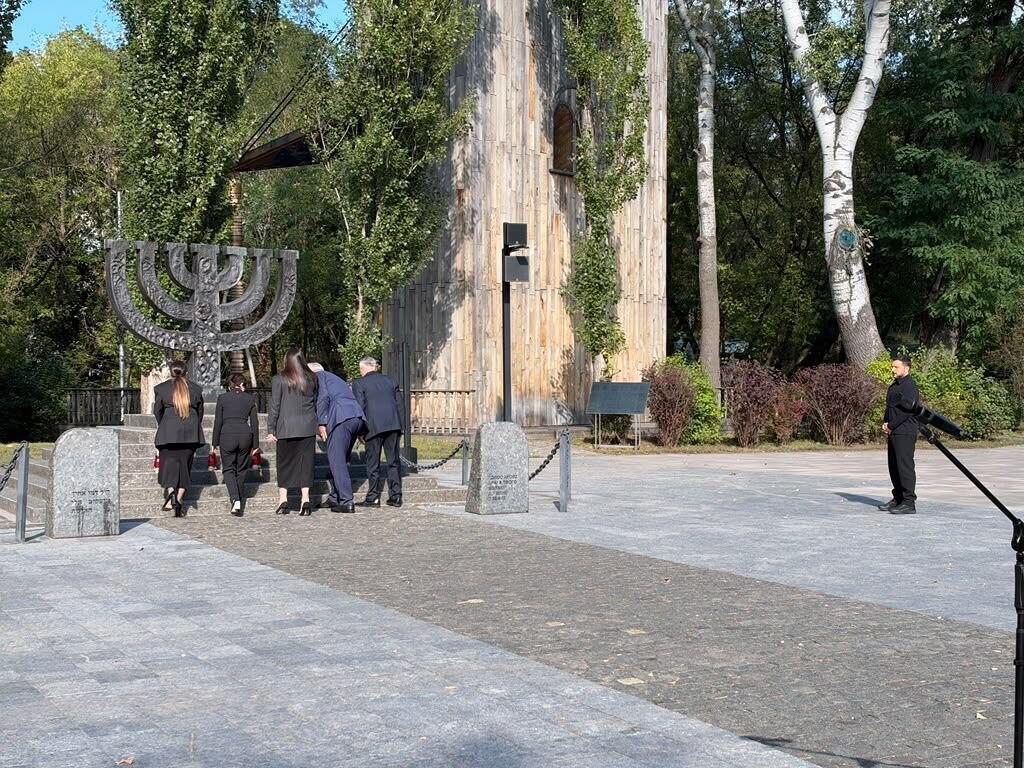
Wreaths are laid at Babi Yar
(Photo: FJCU)
Sonia Posner lived in Romny in Ukraine’s Sumy region. Her husband, Rabbi Yitzchak-Zalman, was murdered several years before World War II after being thrown from a ferry by non-Jews. Posner later came to Kyiv, from where she was taken to Babi Yar and murdered.
Rebbetzin Levenhartz, who together with her husband has run Kyiv’s Jewish community and educational institutions for nearly 30 years, said: “Grandmother Sonia was murdered in her 50s. We have not been able to find a photograph of her, but we recently located testimony at Yad Vashem containing her details. It turns out that before she was murdered, she lived not far from the place where we have lived and where we have been privileged to be part of a thriving community that we established as emissaries of the Rebbe. It is impossible to comprehend.”
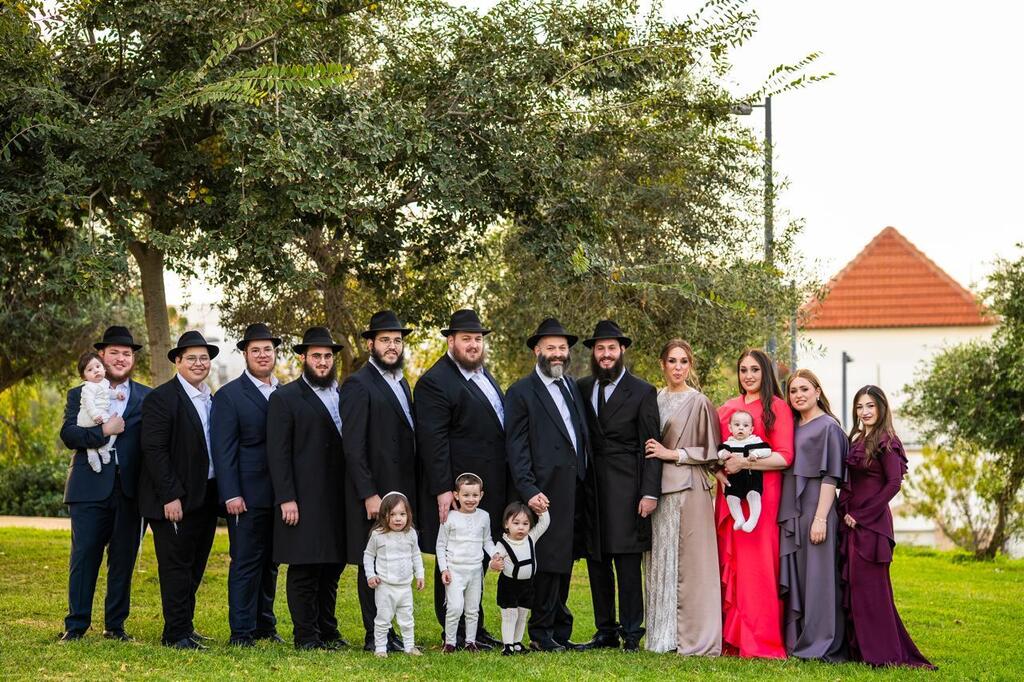
The Levenhartz family, ‘Jewish revenge’ in Kyiv
(Photo: FJCU)
She added that, for her, the continuation of Jewish life in Kyiv is the most meaningful form of commemoration.
“When rabbis suggested to the Lubavitcher Rebbe that an empty chair be added around the Seder table in memory of the six million Jews murdered in the Holocaust, he said: ‘Instead of adding an empty chair, another Jew should be seated at the table.’
“That is my motto and that is the most meaningful commemoration: that the synagogues here be filled with Jews. This year, to mark the 85th anniversary, it was important for me to take part in the ceremony in addition to the activities we carry out in her memory.”