

The Bible introduces Rahab by saying Joshua’s spies “entered the house of a prostitute whose name was Rahab.” It is a description that has hardly helped her reputation over the centuries. Some commentators have argued that the Hebrew word zonah may be connected to food and that Rahab was actually an innkeeper. But on a straightforward reading of the biblical text, her profession was providing sexual services to men.
What, then, was the story of the woman whom rabbinic tradition would later describe not only as one of the four most beautiful women in history, but also as a courtesan so famous that rulers and nobles crossed great distances to spend a night with her? And why did the sages ultimately portray her as converting to Judaism and marrying Joshua himself?
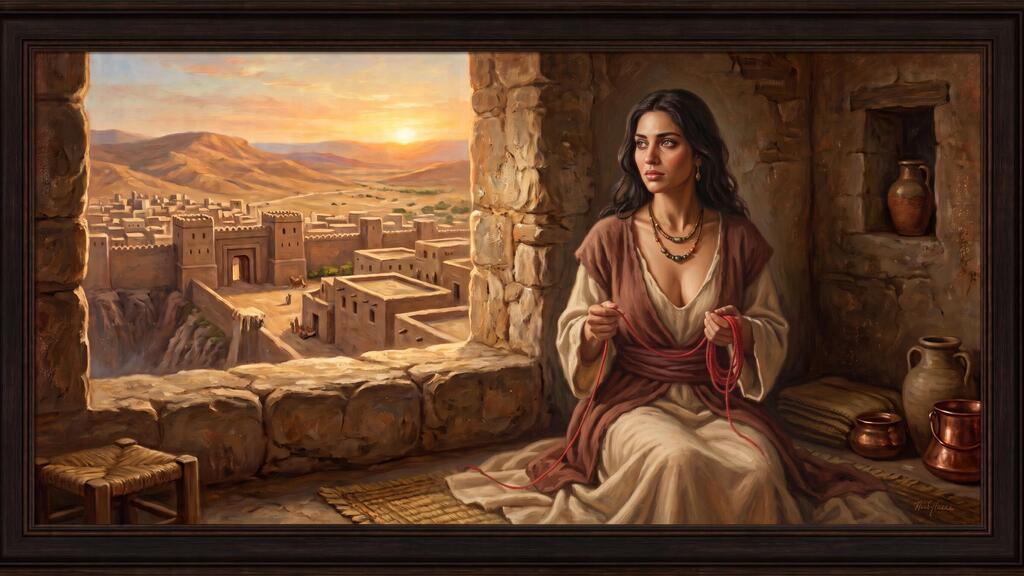
The fear changes sides
The story begins less than a month after the death of Moses. The people who had escaped Pharaoh’s rule in Egypt 40 years earlier are mourning their revered leader. Now, on the plains of Moab at the threshold of Canaan, a new leader takes command: Joshua son of Nun, the man who will lead a wandering people into a new land.
Thirty-one kings await him across the border, and Joshua decides to act. The Bible says he “sent two men secretly from Shittim as spies.” According to midrashic tradition, they were Caleb son of Jephunneh and Phinehas son of Eleazar. The two infiltrate Jericho and choose as their lodging a house built into the city wall: Rahab’s establishment.
Why her house? Rabbi Dr. Benjamin “Benny” Lau argues that the realpolitik logic is obvious. Anyone seeking the pulse of a society, he says, looks to the house on the wall, a place that by definition sits at the edge of authority and attracts outsiders. History is filled with stories of spies, underground movements and revolutions centered on port cities and border towns, where order and disorder meet.
The infiltration is quickly discovered. Messengers from the king of Jericho arrive at Rahab’s door and demand that she hand over the visitors for questioning. But the spies are already hidden among stalks of flax on her roof. Rahab misleads the king’s men, telling them: “True, the men came to me, but I did not know where they came from.” She then sends their pursuers toward the Jordan.
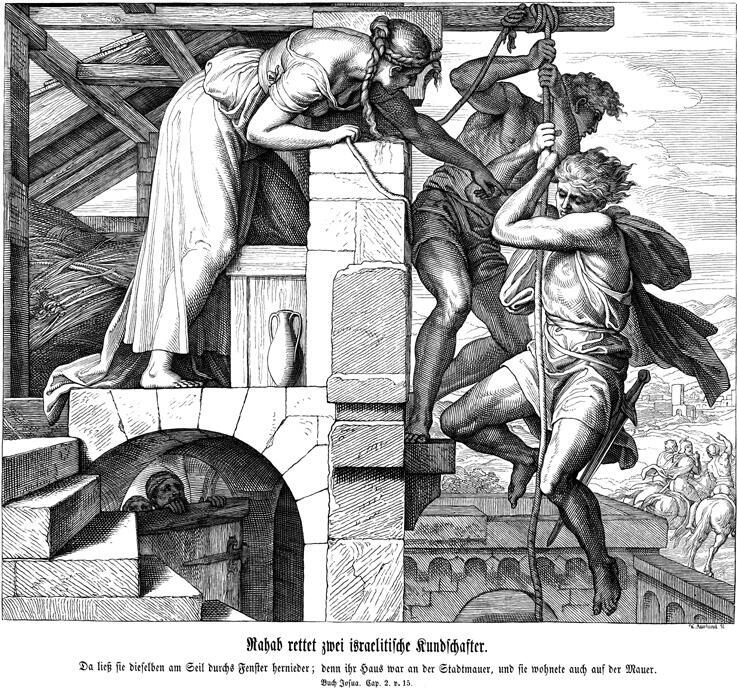
Rahab’s house escape, by German painter Julius Schnorr von Carolsfeld, from 'The Bible in Pictures'
The pursuers race away and the city gate is shut behind them. The spies, meanwhile, remain hidden. Before they settle down for the night, Rahab comes to them on the roof and delivers the speech that changes the entire meaning of their mission.
Forty years earlier, the spies sent into Canaan under Moses had returned terrified by what they had seen. “There we saw the Nephilim,” they reported, adding that “to ourselves we seemed like grasshoppers, and so we seemed to them.” Now the fear has changed sides.
Rahab tells Joshua’s men: “I know that the Lord has given you the land and that dread of you has fallen on us.” She goes on to describe the effect Israel’s advance has had on the people of Canaan: “our hearts melted, and there was no courage left in any of us because of you.”
Rahab does more than reveal the mood inside Jericho. She also proves herself a shrewd political operator, using the moment to secure survival for herself and her family. The spies swear to protect them, and the two sides agree on a sign: a scarlet cord tied to the window. Anyone inside the marked house will be spared when the city is attacked.
According to the Book of Joshua, that is what happens. Jericho falls, but Rahab and her family survive: “But Rahab the prostitute, with her family and all who belonged to her, Joshua spared. Her family has lived in Israel ever since.”
How the sages transformed Rahab
For the biblical text, Rahab’s story could have ended there. Rabbinic tradition, however, gave it a far more dramatic continuation.
The sages said Rahab was 50 when Joshua’s spies arrived, and still exceptionally beautiful. The Talmud lists her alongside Sarah, Abigail and Esther as one of the four great beauties of the world.
Then comes the remarkable turn. Midrashic tradition says Rahab converted and married Joshua. It also portrays a distinguished line of priests and prophets descending from her, including Jeremiah and, according to one opinion, the prophetess Huldah.
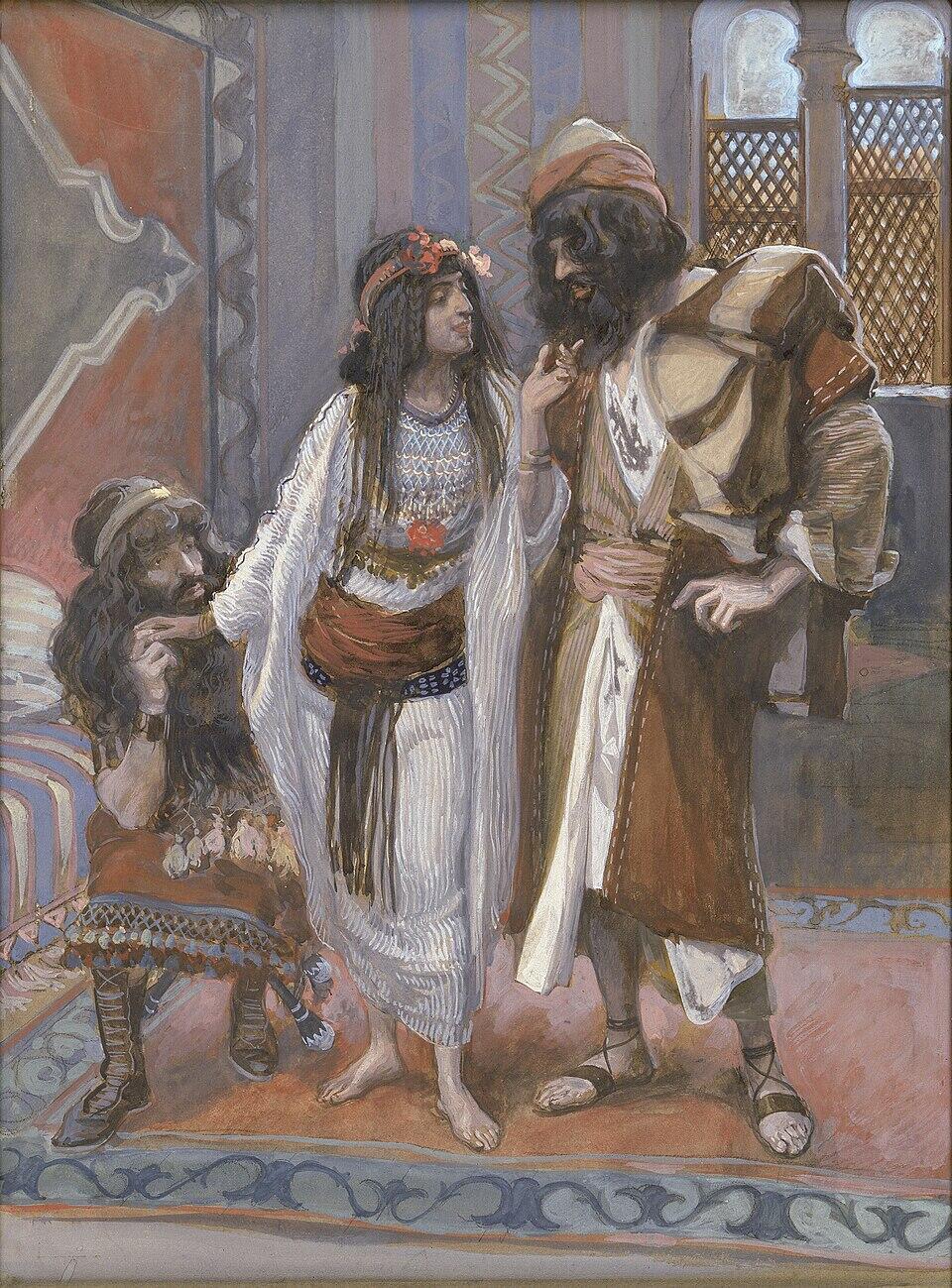
Rahab with the two spies, in a painting by James Tissot
The sages went further still. One tradition says Rahab was 10 years old when the Israelites left Egypt and spent the next 40 years in prostitution. Rabbi Eyal Vered reads that chronology as more than a biographical detail.
In his interpretation, the Exodus and the splitting of the Red Sea shook the young Canaanite girl deeply enough that she wanted to join the people of Israel. But then came the sin of the Golden Calf, only weeks after the revelation at Sinai. The people who had seemed to embody freedom and holiness had themselves fallen into idolatry. Rahab, in this reading, lost hope and gradually descended in social status until prostitution became her life.
Four decades later, after Israel’s victories over the Amorite kings and its arrival at the gates of Canaan, that hope returned. Two representatives of the people she had watched from afar suddenly appeared in her home.
That interpretation also helps explain a detail in Rahab’s speech that can easily be missed. She refers not only to Israel’s recent victories, but to an event that had taken place 40 years earlier: “For we have heard how the Lord dried up the water of the Red Sea before you when you came out of Egypt.” Who still remembers news from four decades ago? Rahab did. In this reading, memory is central to her identity.
From Rahab to Huldah
Among the descendants attributed to Rahab in rabbinic tradition, Benny Lau highlights one figure in particular: Huldah the prophetess.
Generations later, the young King Josiah orders repairs to the Temple in Jerusalem. During the work, a scroll of the Torah is discovered. Alarmed by what he reads, Josiah tears his clothes and sends his officials to consult Huldah.
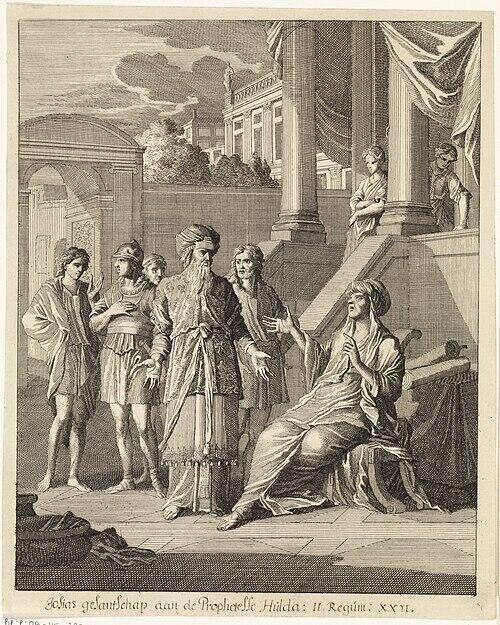
Huldah prophesies the destruction of Jerusalem
(Print: Caspar Luyken, 1708)
Why Huldah rather than Jeremiah, who was active at the time? The sages suggested that Josiah believed a woman might respond more mercifully. Yet Huldah’s message is anything but gentle: “Thus says the Lord: I will indeed bring disaster on this place and on its inhabitants.” She explains that the people have abandoned God, warning that “my wrath will be kindled against this place, and it will not be quenched.”
That creates a striking literary circle. Rahab, the Canaanite outsider at Jericho, declares at the beginning of Israel’s entry into the land: “I know that the Lord has given you the land.” Centuries later, Huldah, whom rabbinic tradition links to Rahab’s family, announces that the same people will lose that land because of their sins.
For Lau, that connection carries the deeper message the sages sought to convey: Israel is not the unconditional master of the land. At the threshold of conquest, it is Rahab, the foreign woman from Jericho, who recognizes that the land has been given to Israel. Generations later, her supposed descendant closes the circle by declaring that possession of the land remains subject to divine judgment.
In that reading, Rahab is far more than the prostitute who hid two spies. She becomes the figure who opens a prophetic dynasty and embodies one of the Bible’s most unsettling ideas: entry into the land may be granted, but remaining there is never presented as automatic.
- Dr. Eliezer Hayun is a senior researcher at the Jerusalem Institute for Policy Research. His book “Nation and Not Nation” was published by Alumot in 2026. His previous books include “King and Not King,” “Prophet and Not Prophet,” “Judge and Not Judge” and “People and Not People,” which connect biblical narratives with contemporary sociological questions.