

In Parashat Tetzaveh, the Torah shifts its focus from the construction of the Mishkan’s (Tabernacle's) vessels to the sacred garments of the Kohanim (priests): “You shall make sacred garments for Aharon your brother, for honor and for splendor.”
Within the details of these garments, a specific motif repeats three times: pituchei chotam, or “seal engravings.” This motif appears on the two shoham (onyx) stones on the shoulders of the Ephod, the twelve stones of the Choshen (breastpiece) and the Tzitz (gold plate) worn on the forehead.
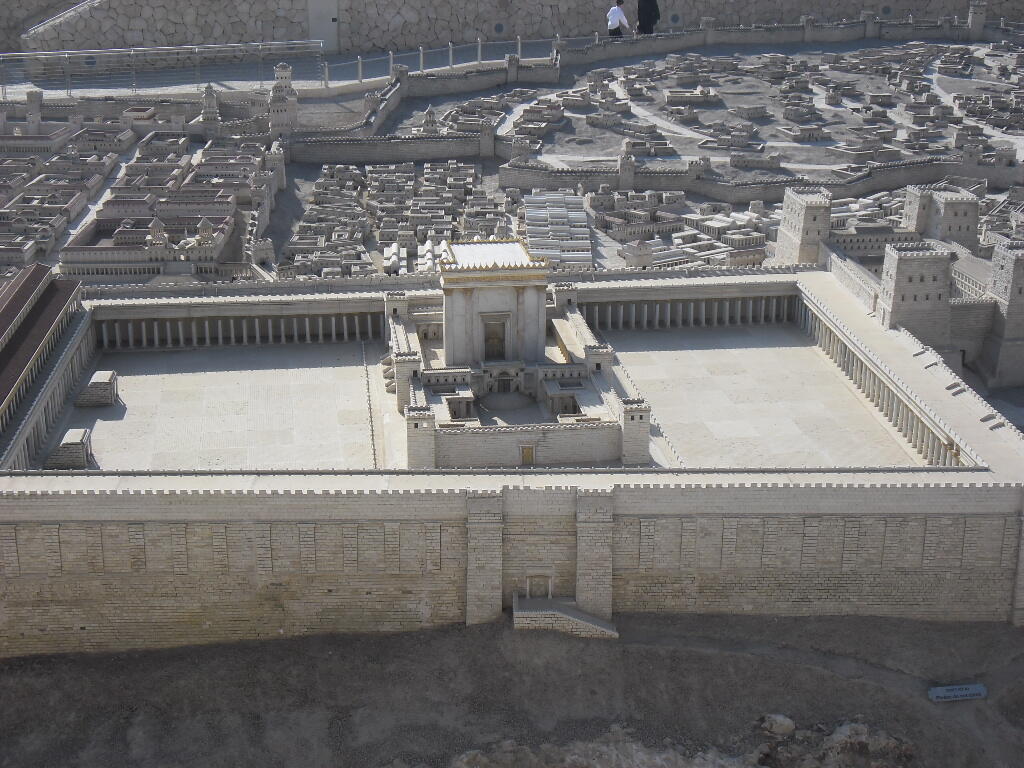
The nature of the engravings: sunken vs. raised
While the phrase pituchei chotam is used for all three, Targum Onkelos and the Babylonian Talmud reveal an essential distinction in how these letters were formed. For the Ephod and the Choshen, the engravings were inward, sunken carvings similar to a signet ring.
The names of the tribes engraved on the stones (one tribe on each stone of the Choshen, and six tribal names on each of the Ephod stones) represent “historical data” - “the stones of remembrance” as it is characterized in the verses. They hold within them the traits and achievements of the past, representing an identity that serves as the inner infrastructure of the nation and its tribes.
By contrast, the inscription on the golden Tzitz: “Kodesh laHashem” (Holy to Hashem) was not sunken, but raised and projecting outward, “like gold coins.” This represents the future outcome and a will that drives progress. It is not about what is implanted in the system’s heart, but about positive initiatives and active agency. The raised letters in the public space reveal that living desires are holy. Even initiatives that fail are accepted out of appreciation for the effort.
Thus, while the sunken letters of the Choshen are a static impression of the past, the raised writing of the Tzitz is the imprint we stamp upon reality to change the future. This Tzitz is fastened with a cord of techelet (azure), representing the sky, the horizon, and infinite horizons.
The 'geography' of anatomy
The High Priest bears these engravings in three anatomical areas: the Choshen over the heart, the Ephod stones on the shoulders, and the Tzitz on the forehead. While both the heart and head express thoughts, they represent different dimensions of consciousness.
- The Head (Tzitz): Expresses objective consciousness and awareness of one’s surroundings. It atones for decisions and scales of values.
- The Heart (Choshen): Expresses personal, emotional and subjective thought. This is why the Choshen is divided into twelve different stones, each with its own color and narrative, symbolizing the private inner movement of individuals and tribes.
- The Shoulders (Ephod): The shoham stones on the shoulders represent responsibility and the public load, which must be divided equally among the tribes.
The Torah states that the Choshen must not move away from the Ephod, which teaches that carrying the collective burden on the shoulder is the foundational demand; only after everyone shoulders the burden can the layer of diversity of the twelve stones be added. When individual activity is rooted in this collective responsibility, disputes become "for the sake of Heaven."
In this framework, the Tzitz performs "creative destruction" - clearing away the guilt of failed initiatives and old orders so after all the disputes, and differences, we can look toward the future and try once again to stamp our seal upon reality.
From the sanctuary to daily life
The connection between these garments and daily life is found in Tefillin. The raised letter Shin (ש) on the head-tefillin parallels the raised letters of the Tzitz, and both are placed high on the forehead. The Talmud derives the obligation to be constantly aware of one’s Tefillin from the Tzitz: if the Tzitz, which contains only one name of God, requires constant mindfulness, Tefillin, which contains many names, certainly do.
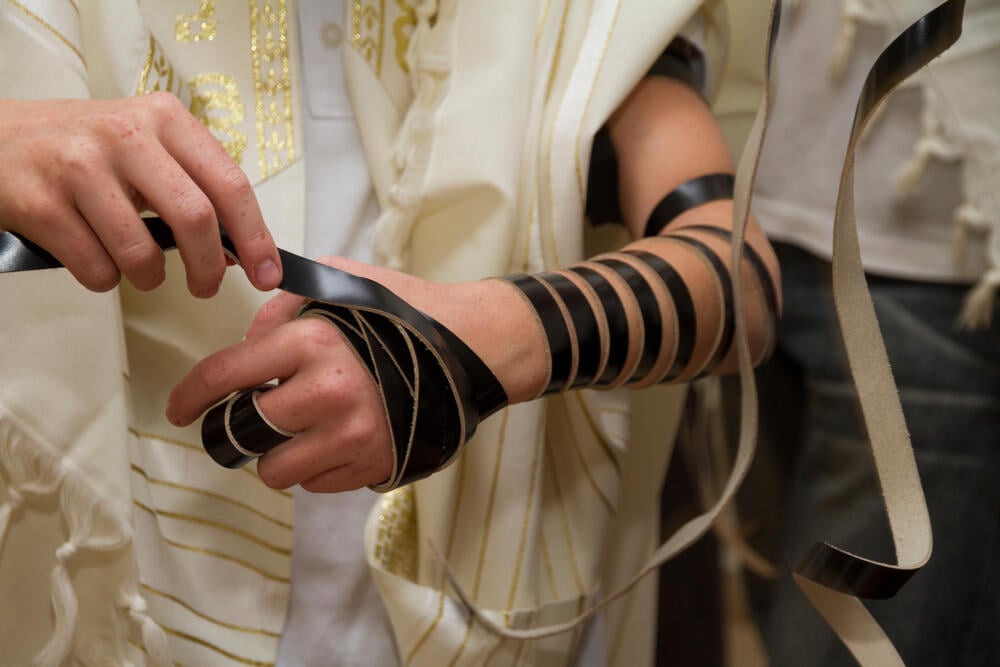
Tefillin
(Photo: Shutterstock)
The Meshech Chochmah explains that the Tzitz corresponds to the head-tefillin, while the Ephod and Choshen correspond to the arm-tefillin, which is directed toward the heart. This suggests that the model of the High Priest applies to every person in every place.
As Rabbi Yitzhak Arama writes, these garments were never truly hidden away; every person of Israel can "make them for himself" through their service to God, fulfilling the call to be a "kingdom of priests." Tefillin are the vessels through which we move from the heart to the head, and from "my I" to that which is "Holy to Hashem" through the view of taking responsibility.
Artificial intelligence and the value of uniqueness
This movement from the individual to the objective has profound implications for the age of artificial intelligence. Currently, AI models operate in the opposite direction: from the world to the person. These models are trained on general statistics and return answers based on averages. Such output is "sunk deep within the stone of generic statistics."

(Illustration: Anggalih Prasetya/Shutterstock)
While AI knows everything, it knows no one; it is detached from the user’s subjective identity. This creates a danger of flattening human creativity, where general reality "stamps" its seal into the person, rather than the person stamping their seal upon reality.
The ideal interface, potentially represented by strategies that prioritize personal data and privacy, would reverse this. It would connect the "Choshen on the heart" (personal data) to the "Tzitz on the forehead" (broad knowledge) in the right direction, beginning with the individual and rising toward the general.
In this coming age, the value of uniqueness will rise. Those who stand out like the distinctive stones of the Choshen will be most valued when they, and anyone else, channel their unique traits, purposeful plans and capabilities toward worthy goals, advancing our world and all of humanity.