


Jewish community leaders in Iran publicly declare their loyalty to the regime in Tehran and one of them recently even called for the assassination of Prime Minister Benjamin Netanyahu. But behind the official statements lies a very different reality. Jews in the country describe constant fear, surveillance, dismissals, damage to businesses and restrictions that make their lives more difficult. This is according to an investigation by the British newspaper Jewish Chronicle, which was based on testimonies from Jews living in Iran.
According to the Jewish Chronicle investigation, after the 12-day war between Israel and the Islamic Republic, Iran’s chief rabbi publicly declared his support for Supreme Leader Ali Khamenei, who was killed in a February Israeli strike.
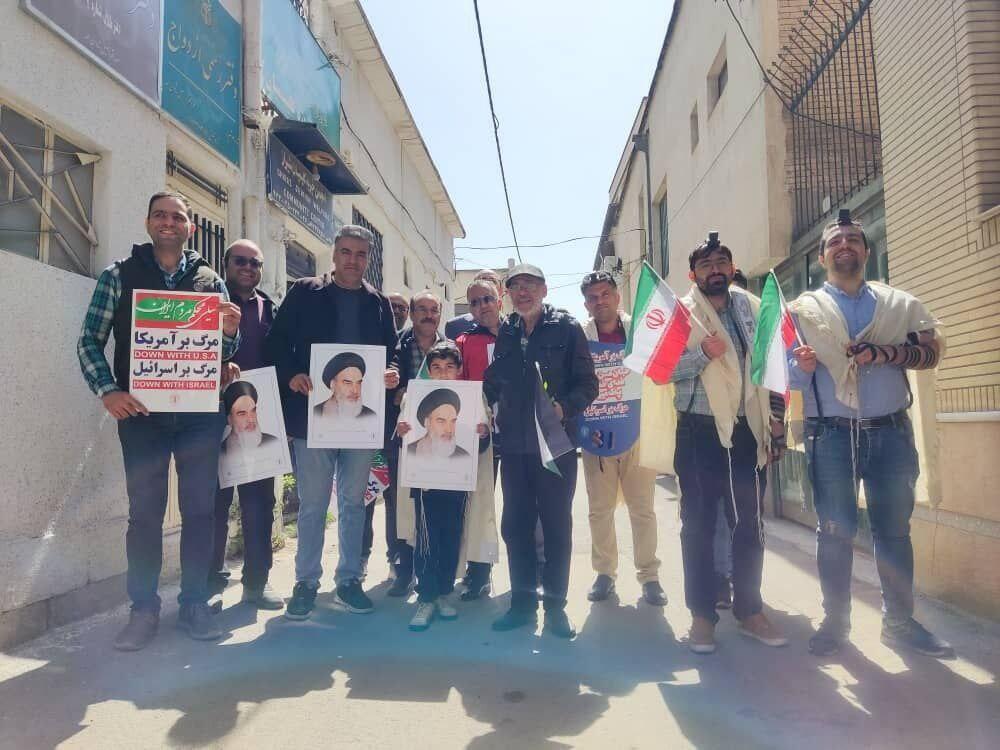
“We, the Jewish community of Iran, stand today with all our hearts alongside the Islamic Republic and the Iranian people,” he said, while also condemning Israel, saying that “Zionism is at war with the Iranian nation.”
However, Iranian Jews who spoke with the Jewish newspaper said the statements were made under heavy pressure from the authorities.
“We do not take him seriously,” Leah, a young Jewish entrepreneur from Iran, told the newspaper. “He repeats what he is told to say. We are Iranians and we hate the regime just like everyone else.”
She said members of her family took part in protests against the regime last January despite the risks. “We know that if they arrest us, they could accuse us of working for Israel,” she said. “People have been executed on charges of spying for the Mossad. We fear that as Jews we are even more vulnerable.”
One interviewee, “Jalil” — a pseudonym for a Jewish man from Tehran — said pressure on the community has increased since tensions in the region escalated. He said his small shop in central Tehran was vandalized twice over the past year.
“One morning I arrived at my shop and found the windows smashed,” he said. “Someone had painted on the wall in black: ‘Zionists, leave.’”
Jalil stressed that he does not believe local residents were responsible for the attack. “Everyone in our neighborhood knows which businesses are owned by Jews, and ordinary people have always treated us with respect,” he said. “It was probably done by regime supporters — the same people who gather every evening at rallies in support of the government.”
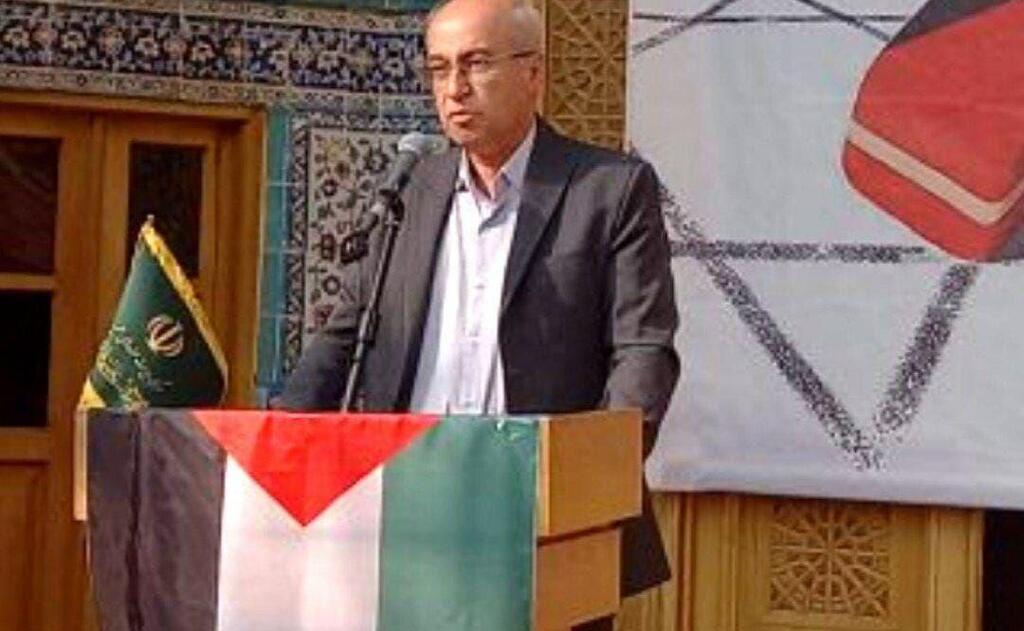
Dr. Homayun Sameyah, Jewish representative in the parliament in Tehran, with the Palestinian flag
The pressure is not limited to attacks on businesses. Five Iranian Jews told the Jewish Chronicle that they had lost their jobs over the past year in either the public or private sector.
One of them, “Jacob,” who had worked for more than two decades at a financial organization, said he was summoned for questioning by Harasat, an internal security unit that operates in government ministries and state-linked organizations.
According to him, investigators asked whether he had relatives in Israel and showed him pictures of Israeli citizens with the same family name. They later allegedly demanded that he publish content on social media against Israel and Zionism. After refusing, saying he was not a political person, he was fired.
“I could not find another job in my profession,” he said. “I even tried working as a driver for Snapp, the Iranian equivalent of Uber, but my application was rejected.”
Children are also not immune from the pressure. “Roya,” a pseudonym for a Jewish mother, said her children are taken to regime-support rallies at school. According to her, because the school knows they are Jewish, they are required to burn Israeli flags and chant anti-Israel slogans.
The interviewees in the investigation repeatedly mentioned the fate of Habib Elghanian, a businessman and president of Tehran’s Jewish community who was executed shortly after the 1979 revolution on charges that included ties to Israel and Zionism.
“The older generation has never forgotten what happened to Habib Elghanian,” one interviewee said. “Every time the pressure increases, people start talking about him again.”