

Australia’s domestic intelligence chief told an inquiry Monday that his agency had shifted resources away from counterterrorism and toward espionage and foreign interference investigations in the years before two gunmen killed 15 people at a Sydney Hanukkah celebration.
Mike Burgess, director-general of the Australian Security Intelligence Organisation, known as ASIO, said the agency made the move after Australia lowered its national terrorism threat level in November 2022 from “probable” to “possible,” the second-safest level on a five-tier scale.
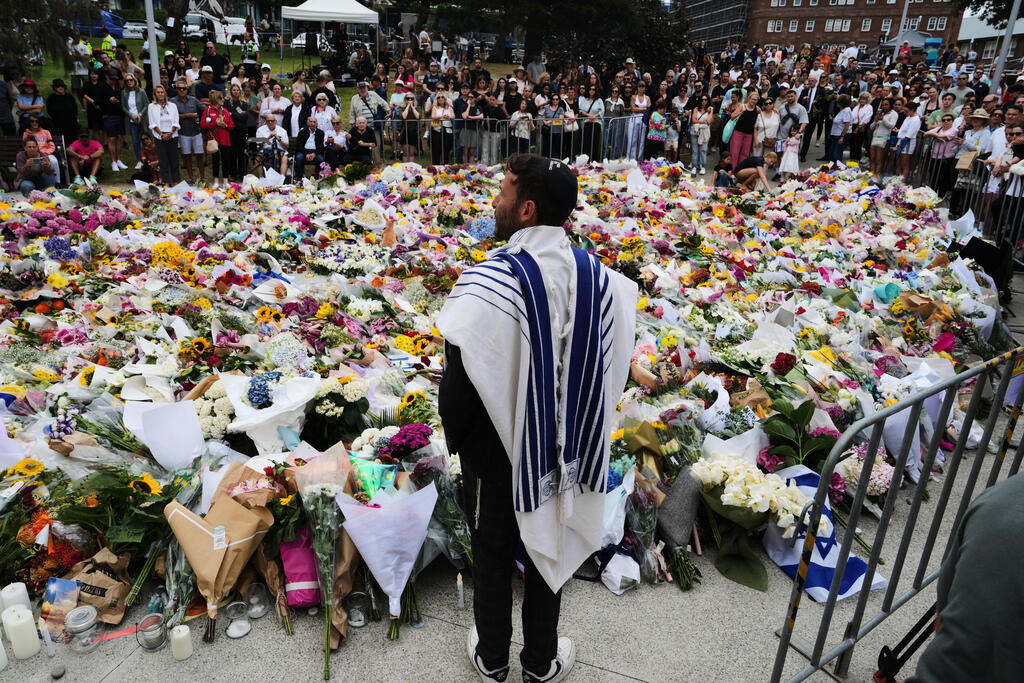
The decision followed the defeat of the Islamic State group in the Middle East and a decline in foreign fighter recruitment, Burgess told the Royal Commission on Antisemitism and Social Cohesion.
“Because terrorism has the potential to cause people to lose their lives or get harmed, it always remained a priority for us,” Burgess said. “There was just less activity that we were investigating because the nature of the environment had changed and the number of tasks we were looking at had reduced.”
“Every rock we lifted up we found espionage or foreign interference that needed to be inquired and investigated and so resources were moved over there,” he said.
Burgess was testifying at public hearings examining the spread of antisemitism in Australia and the events leading up to the Dec. 14 attack at Bondi Beach, where 15 people were killed during a Jewish Hanukkah celebration. The royal commission, Australia’s highest form of inquiry, is due to report to the government before the first anniversary of the massacre, the country’s worst mass shooting since 1996.
He said antisemitism had been left unchecked after the outbreak of the Israel-Gaza war in October 2023, fueling violence against Jewish Australians.
“There is no doubt that the war in the Middle East invoked a range of emotions in Australia,” he said. “Some of those violent aspects ... and those behaviors, including antisemitism that, in our view, were left unchecked, were therefore normalized and gave more permission for violence ... and Jewish Australians were on the receiving end.”
Five days after the Hamas-led attack on Israel on Oct. 7, 2023, Burgess said he took the unusual step of issuing a public warning that inflamed language could lead to violence.
“Before the Israeli government responded to that horrific attack, we saw the strong emotions appear in this country where we had people celebrating the Hamas terrorist attack,” he said.
ASIO recorded threatening and intimidating behavior directed at Jewish Australians through the end of 2023, particularly in New South Wales, Victoria and Queensland. By late 2024, Burgess said, the threat had escalated to the direct targeting of Jewish people, businesses and places of worship, including vandalism and arson attacks on homes, schools, synagogues and vehicles.
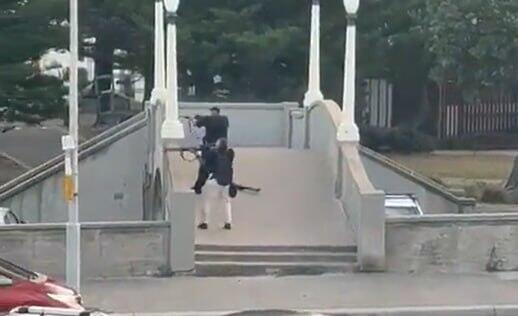
The spike in antisemitic incidents contributed to ASIO’s decision to raise Australia’s terrorism threat level back to “probable” in August 2024, he said.
Burgess also told the inquiry that ASIO had concluded Iran’s Islamic Revolutionary Guard Corps was behind two antisemitic attacks, one on a kosher restaurant in Sydney and another on Melbourne’s Adass Israel Synagogue. That finding led Australia to expel Iran’s ambassador in August.
Iran was likely involved in additional attacks, Burgess said, though ASIO could not reach a firm enough assessment to attribute responsibility.
“They use their network of proxies and agents to do their bidding, and that is to bring harm to Jewish people wherever they are in the world,” he said.
The Bondi attack was carried out by father and son gunmen Sajid and Naveed Akram, who prosecutors allege were inspired by Islamic State and brought handmade IS flags to the scene.
Both were wounded in a gunfight with police less than eight minutes after the shooting began. The father was fatally wounded. The son has been charged with committing a terrorist act, 15 counts of murder and 40 counts of attempted murder. He has entered no pleas.
Richard Lancaster, senior counsel assisting the Royal Commission, said only four police officers were at the Hanukkah celebration when the gunmen opened fire on a crowd of about 1,000 people.
Within 29 seconds, 10 people had been fatally shot and an 11th had been wounded, Lancaster said. Within five minutes, 11 police officers were at the scene, three of whom were wounded.
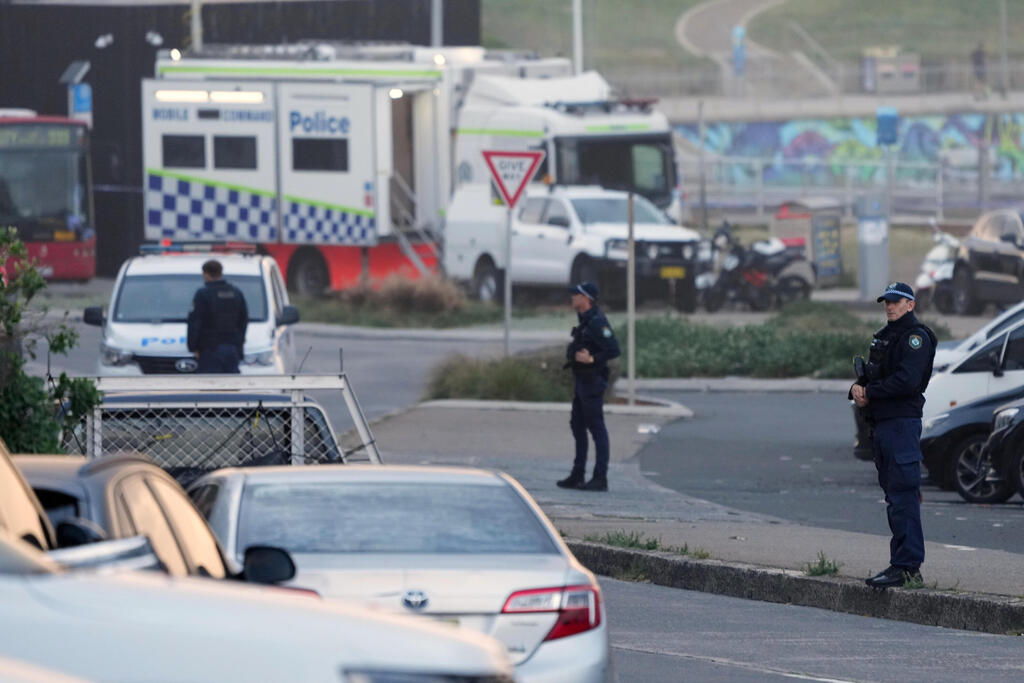
(Photo: AP Photo/Mark Baker)
Lancaster said the Community Security Group, a Jewish security organization, had asked New South Wales Police to post officers at the beachfront park for the duration of the Hanukkah event. Instead, officers were instructed to attend from time to time.
Police classified the celebration at the lowest level on a three-tier security priority scale, leaving resources to be managed by a local commander. By contrast, Jewish High Holy Days in September and October were treated as top-tier events, with police resources managed by the specialized Police Force Major Events Group in coordination with the paramilitary Police Force Counter Terrorism and Special Tactics Command.
“There is no evidence that any intelligence agency or law enforcement agency had any actual knowledge or specific information to suggest there might be an armed attack on the Hanukkah celebration,” Lancaster said.
“In that sense, it was a surprise attack,” he added.
The commission’s first block of hearings this month focused on the nature and prevalence of antisemitism in Australia, including testimony from members of the Jewish community.